
Navigating the landscape of tax obligations can often feel like a complex journey, fraught with deadlines, forms, and the critical question: “Where exactly do I send my IRS payments to?” For individuals, businesses, and various other entities, understanding the correct, secure, and most efficient methods for submitting payments to the Internal Revenue Service (IRS) is paramount. A misstep can lead to delays, penalties, or unnecessary stress. This comprehensive guide aims to demystify the process, providing clear, actionable insights into all the legitimate avenues for fulfilling your federal tax responsibilities, ensuring your payments are accurately directed and processed.
Understanding Your IRS Payment Obligations
Before diving into the “how” and “where,” it’s crucial to grasp the fundamental reasons and requirements behind IRS payments. Tax obligations extend beyond just April 15th, encompassing a variety of scenarios that demand financial interaction with the federal government.
Who Needs to Pay the IRS? Individuals, Businesses, and Estimated Tax Payers
Virtually every income-earning individual and profit-generating business in the United States has some form of tax obligation to the IRS. For most employed individuals, federal income taxes are withheld from their paychecks by their employers, often minimizing or eliminating the need for a direct payment at tax time. However, many find themselves owing additional tax after filing their annual return.
Self-employed individuals, independent contractors, freelancers, and those with significant income not subject to withholding (such as from investments, rental properties, or certain business profits) are generally required to pay estimated taxes throughout the year. This system ensures that tax liabilities are paid as income is earned, rather than in one lump sum at the end of the tax year. Similarly, corporations and partnerships also have their own set of payment requirements, often making quarterly estimated tax payments. Understanding your specific tax status is the first step in determining your payment frequency and methods.
Types of Payments You Might Make: Income Tax, Estimated Tax, Penalties, and More
The IRS collects a wide array of taxes and related payments. The most common include:
- Income Tax: The primary federal tax on earnings, paid annually or through withholding/estimated payments.
- Estimated Tax: Quarterly payments made by individuals and businesses to cover tax liabilities on income not subject to withholding.
- Excise Tax: Taxes on certain goods, services, or activities, such as fuel, air transportation, or tanning services.
- Employment Tax: Taxes withheld from employees’ paychecks (Social Security, Medicare) and employer contributions.
- Estate and Gift Tax: Taxes on the transfer of wealth, either at death or through gifts.
- Penalties and Interest: Fees incurred for late filing, late payment, underpayment, or other non-compliance issues.
Each type of payment might have specific forms or identification requirements, making it important to correctly identify the nature of your payment to ensure it’s applied appropriately by the IRS.
The Importance of Timely Payments
Failing to pay your taxes on time can result in significant penalties and interest charges. The IRS imposes penalties for failure to file, failure to pay, and underpayment of estimated tax. Interest may also be charged on underpayments, even if an extension to file has been granted (an extension to file is not an extension to pay). Therefore, understanding your due dates—whether it’s the April 15th income tax deadline, quarterly estimated tax dates, or specific dates for other taxes—is fundamental to maintaining good standing with the IRS and safeguarding your financial health.
Navigating the Digital Landscape: Online Payment Methods
In the age of digital convenience, the IRS has significantly expanded its online payment options, offering taxpayers secure and efficient ways to fulfill their obligations without ever needing a stamp. These methods are generally preferred for their speed, convenience, and immediate confirmation.
IRS Direct Pay: Your Free Bank Account Link
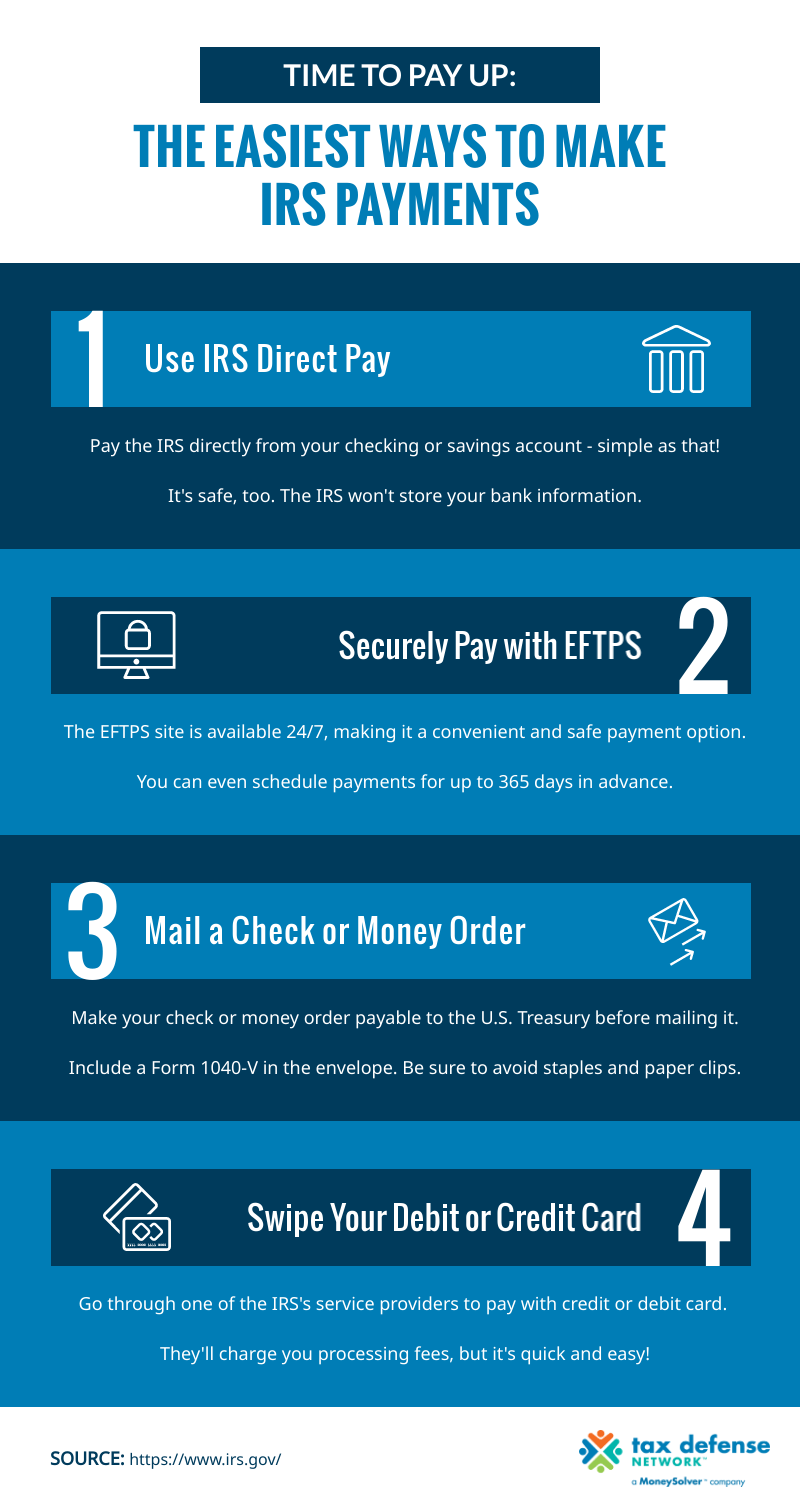
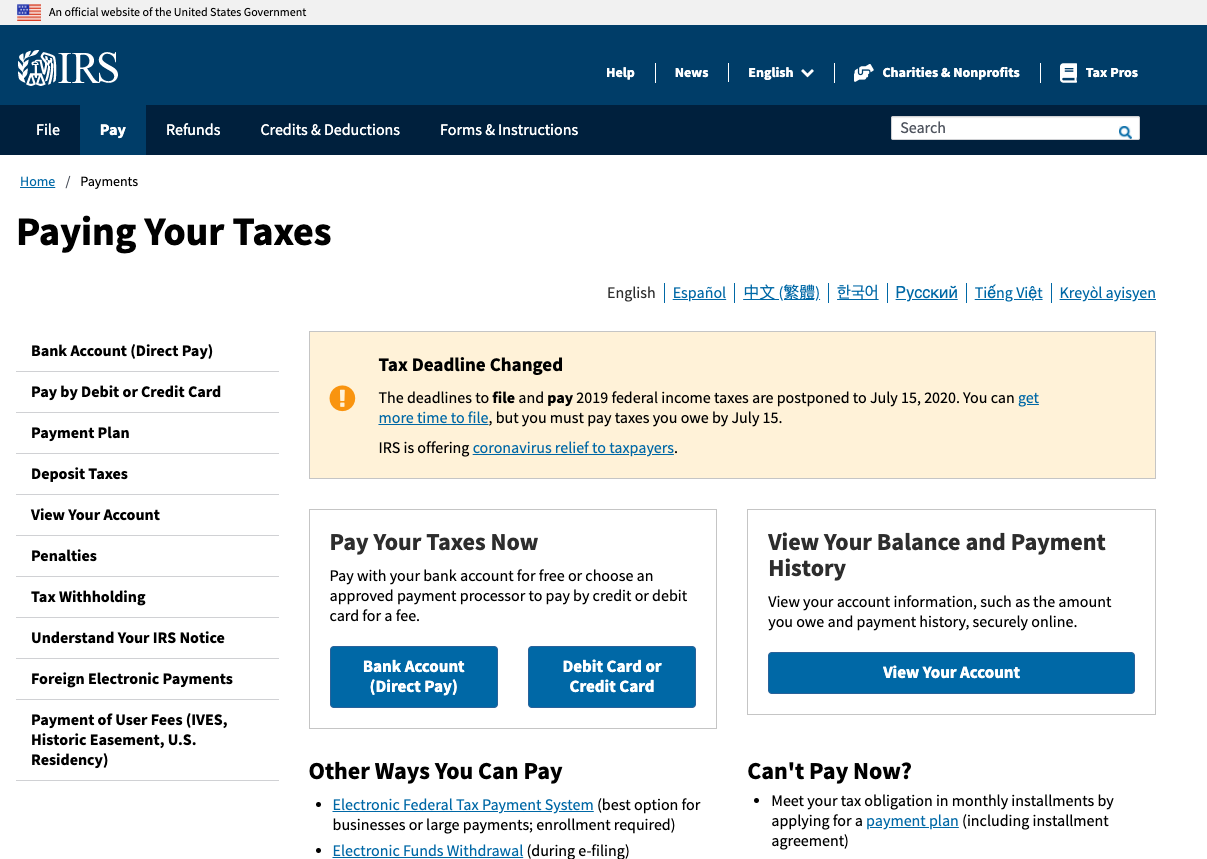
IRS Direct Pay is a free, secure online service that allows individuals and businesses to pay their tax bills directly from their checking or savings account. It’s a straightforward process: you select the reason for your payment (e.g., income tax, estimated tax), the tax year, and the amount, and provide your bank account and routing numbers. You’ll receive an immediate confirmation number via email. This method is highly recommended for its zero transaction fees and reliability, making it a popular choice for millions of taxpayers annually.
Paying with Debit Cards, Credit Cards, or Digital Wallets: Convenience at a Fee
For those who prefer the flexibility of credit or debit cards, or the simplicity of digital wallets (like PayPal or Click to Pay), the IRS partners with third-party payment processors. While these methods offer unparalleled convenience and the potential to earn rewards points on credit cards, they do come with a processing fee, typically ranging from 1.87% to 2.25% for credit cards, and a flat fee for debit cards. These fees are paid directly to the processor, not the IRS. It’s crucial to weigh the convenience against the cost, especially for large payments, and to ensure you’re using an authorized processor listed on the IRS website.
Electronic Federal Tax Payment System (EFTPS): For Businesses and Estimated Taxpayers
The Electronic Federal Tax Payment System (EFTPS) is a robust and secure online payment system specifically designed for businesses and individuals who make estimated tax payments. While it requires prior enrollment, EFTPS offers greater flexibility, allowing users to schedule payments up to 365 days in advance and review their payment history. It’s particularly beneficial for employers making federal tax deposits and for self-employed individuals consistently paying estimated taxes. Once enrolled, you can pay various federal taxes directly from your bank account, ensuring timely and accurate submissions.
Traditional Approaches: Sending Payments Via Mail
Despite the proliferation of digital options, mailing a check or money order remains a legitimate and widely used method for sending payments to the IRS. This approach is often favored by those less comfortable with online transactions or who simply prefer a paper trail.
The Art of Sending a Check or Money Order
When mailing a payment, precision is key. Your check or money order should be made payable to the “U.S. Treasury.” On the memo line, you must clearly write your name, address, daytime phone number, taxpayer identification number (Social Security Number for individuals, Employer Identification Number for businesses), the tax year, and the related tax form or payment type (e.g., “2023 Form 1040”). This information helps the IRS accurately credit your account. Never send cash through the mail. Ensure your check is signed and dated correctly.
Locating the Correct IRS Mailing Address: State-Specific and Form-Specific
One of the most critical aspects of mailing a payment is ensuring it reaches the correct IRS address. Unlike a single central hub, the IRS operates multiple processing centers across the country, and the appropriate mailing address depends on two primary factors:
- Your State of Residence: Different states are typically assigned to different IRS processing centers.
- The Form You Are Filing (or the Payment Type): The address for a Form 1040 balance due payment might differ from that for estimated taxes (Form 1040-ES) or certain business tax forms.
The IRS provides detailed mailing addresses in the instructions for each tax form. For instance, if you’re mailing Form 1040 with a payment, you’d consult the Form 1040 instructions. A common practice is to visit the “Where to File” section on the IRS website (IRS.gov) and search for the specific form you are using to find the most current and accurate mailing address for your location. Using the wrong address can significantly delay the processing of your payment and potentially lead to penalties.
Essential Information to Include with Your Mailed Payment
Beyond the correctly filled-out check or money order, you must include the appropriate payment voucher (such as Form 1040-V for individual income tax payments, or Form 1040-ES voucher for estimated taxes). This voucher acts as a cover sheet, providing the IRS with summarized information about your payment and helping them accurately associate it with your tax account. If you’re paying a balance due with your return, simply attach the check/money order to the payment voucher and enclose it with your tax return. For estimated payments, the voucher is submitted separately.
Alternative Payment Avenues: In-Person and Other Options
While online and mail payments cover the vast majority of transactions, the IRS also offers specialized options for certain situations, including cash payments and arrangements for those facing financial hardship.
Paying with Cash: Partner Retailers and Taxpayer Assistance Centers
For taxpayers who prefer or need to pay with cash, the IRS has partnered with various retail stores, including certain 7-Eleven, Family Dollar, and Casey’s General Stores, among others. To use this method, you first need to obtain a payment barcode from an authorized payment processor on the IRS website. You’ll then take this barcode to a participating retail location, present it along with your cash payment, and receive a receipt. There may be a small fee for this service.
Additionally, in-person payments can be made at designated IRS Taxpayer Assistance Centers (TACs). However, TACs often require an appointment and may have specific operating hours and payment limitations, so it’s advisable to check with your local TAC beforehand.
Special Payment Scenarios: Installment Agreements and Offers in Compromise
For taxpayers who cannot pay their full tax liability by the due date, the IRS offers solutions to help manage the debt. An Installment Agreement allows you to make monthly payments for up to 72 months. This option is available if you owe a combined total of under $50,000 (tax, penalties, and interest) for individuals, or $25,000 for businesses. While interest and penalties still accrue, an installment agreement prevents further collection actions.
An Offer in Compromise (OIC) is another option for individuals or businesses facing severe financial hardship. An OIC allows certain taxpayers to resolve their tax liability with the IRS for a lower amount than what they originally owe. This is typically considered when there’s doubt as to collectibility, doubt as to liability, or effective tax administration (exceptional circumstances). Both installment agreements and OICs are formal arrangements that require an application and approval process, providing a structured path to resolving tax debts.
Ensuring a Smooth Payment Experience and Avoiding Pitfalls
Paying taxes effectively requires more than just knowing where to send the money; it demands meticulous attention to detail and proactive record-keeping.
Double-Checking Before You Send: Accuracy is Key
Before finalizing any payment, whether online or via mail, take a moment to double-check all information. Verify the payment amount, tax year, and your taxpayer identification number. For online payments, confirm your bank account details. For mailed payments, ensure the check is signed, the memo line is complete, and the correct mailing address is used. A small error can lead to significant delays and potential issues with the IRS.
Record Keeping: Your Proof of Payment
Maintain meticulous records of all your tax payments. For online payments, save or print the confirmation screen and any confirmation emails you receive. For mailed payments, keep a copy of the check (front and back), the payment voucher, and obtain proof of mailing (e.g., a certified mail receipt with a return receipt requested). These records serve as invaluable proof of payment should any discrepancies arise with the IRS. It’s advisable to keep these records for at least three to seven years, depending on the specific tax situation.

What Happens If You Can’t Pay On Time?
If you find yourself unable to pay your tax liability by the due date, it’s crucial to act promptly. The worst thing you can do is nothing. Always file your tax return on time, even if you can’t pay the full amount. This avoids the failure-to-file penalty, which is generally much higher than the failure-to-pay penalty.
As discussed, you can explore options like an installment agreement. You may also qualify for a temporary delay in collection or, in certain hardship cases, an Offer in Compromise. The IRS is generally willing to work with taxpayers who make a good-faith effort to resolve their tax obligations. Proactively communicating with the IRS about your situation can help prevent more severe collection actions.
In conclusion, paying your taxes to the IRS doesn’t have to be an intimidating ordeal. By understanding the various methods available, choosing the one that best suits your needs, and adhering to best practices for accuracy and record-keeping, you can confidently and securely fulfill your federal tax responsibilities. Whether you opt for the digital convenience of IRS Direct Pay, the structured approach of EFTPS, the traditional reliability of mail, or specialized in-person options, the key is to be informed, precise, and proactive.
aViewFromTheCave is a participant in the Amazon Services LLC Associates Program, an affiliate advertising program designed to provide a means for sites to earn advertising fees by advertising and linking to Amazon.com. Amazon, the Amazon logo, AmazonSupply, and the AmazonSupply logo are trademarks of Amazon.com, Inc. or its affiliates. As an Amazon Associate we earn affiliate commissions from qualifying purchases.