
In the intricate world of personal and business finance, certain pieces of information are indispensable for seamless money management. Among these, your bank routing number stands out as a critical identifier, essential for a myriad of financial transactions. While frequently requested, many individuals aren’t immediately sure where to locate this crucial nine-digit code. Understanding its purpose and knowing how to quickly retrieve it is not just a matter of convenience; it’s a cornerstone of efficient financial stewardship.
This comprehensive guide will demystify the bank routing number, explaining its significance in your financial life and providing clear, actionable steps on exactly where to find it. Whether you’re setting up direct deposit, initiating a wire transfer, or paying bills online, having this knowledge at your fingertips is a vital component of sound financial practice.

Understanding the Bank Routing Number: Your Financial GPS
Before diving into where to find your routing number, it’s paramount to understand what it is and why it holds such importance in the financial ecosystem. Often likened to a financial GPS, the routing number ensures your money reaches the correct financial institution.
What is a Routing Number?
Officially known as an ABA (American Bankers Association) routing transit number, a routing number is a nine-digit code assigned to U.S. financial institutions. Its primary purpose is to identify the specific bank responsible for processing a payment. When you send or receive money, this number acts as an address, directing funds to the right bank, after which your individual account number directs the funds to your specific account within that bank.
The system was developed in 1910 by the ABA to facilitate the sorting and delivery of paper checks. While checks are less prevalent today, the routing number remains the standard for electronic funds transfers (EFTs) and other digital financial transactions.
Why Your Routing Number is Crucial for Financial Transactions
The routing number is not just a relic of the past; it’s a vital component of modern financial infrastructure. Its importance is underscored in several key areas:
-
Direct Deposits: For receiving your salary, tax refunds, or government benefits directly into your account, your employer or the issuing agency will require your routing number alongside your account number.
-
Automated Clearing House (ACH) Transactions: This includes automatic bill payments (e.g., utilities, mortgage, loan payments), which rely on ACH transfers that use your routing number to debit funds from your account.
-
Wire Transfers: Both domestic and international wire transfers require a routing number (or a SWIFT/BIC code for international transfers) to ensure funds are sent to the correct bank.
-
Check Processing: Even though less common, checks still require a routing number for the bank to process the transaction and clear the funds.
-
Online Payment Services: Many online payment platforms and financial apps integrate with your bank using your routing number and account number to facilitate transfers.
Without the correct routing number, financial transactions can be delayed, rejected, or even sent to the wrong institution, leading to significant financial inconvenience and potential security risks.
Routing Number vs. Account Number: A Clarification
It’s common for individuals to confuse their routing number with their account number, or to assume they are interchangeable. However, they serve distinct, albeit complementary, roles:
-
Routing Number: Identifies your specific bank or financial institution. Think of it as the street address of a building.
-
Account Number: Identifies your specific account within that bank. Think of it as your apartment number within that building.
Both are required together to ensure funds are accurately directed to your individual account at your particular bank. Sharing one without the other is generally not sufficient for completing a transaction.
Common Places to Locate Your Routing Number
Now that we understand its significance, let’s explore the most reliable and common places to find your bank routing number. Knowing these locations will empower you to quickly access the information whenever needed for your financial dealings.
Your Checkbook
For many, the most traditional and readily accessible place to find their routing number is on a physical check.
-
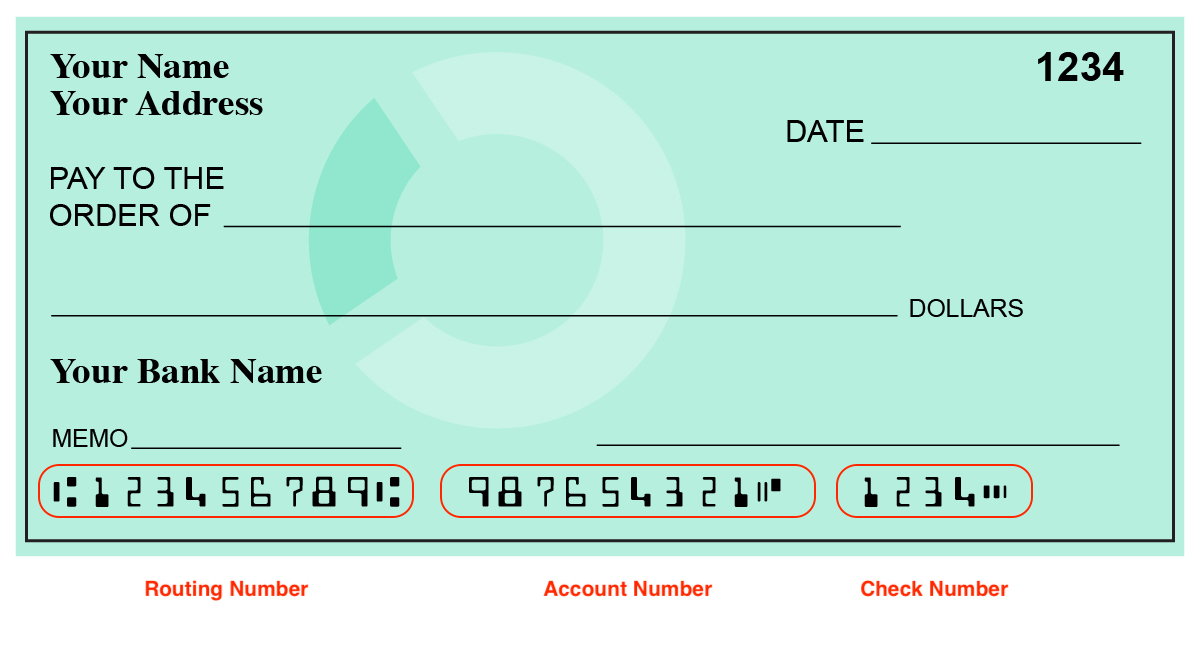
Location: On most standard checks, the routing number is the first set of nine digits printed at the bottom, typically on the left side. It’s usually followed by your account number, and then the check number.
-
Visual Aid: It’s important to differentiate it from your account number, which is usually the middle set of numbers, and your check number, which is usually the last set. The magnetic ink character recognition (MICR) line at the bottom of a check contains these three pieces of information in a specific order.
Your Online Banking Portal
In an increasingly digital financial landscape, your bank’s online platform is an excellent and often the quickest resource.
-
Step-by-Step: Log in to your bank’s official website or mobile app. Navigate to your account details or summary page. Many banks prominently display the routing number alongside your account number. Look for sections like “Account Information,” “Direct Deposit Information,” “Statements,” or “Service.”
-
Security: Always ensure you are on your bank’s legitimate website (check the URL for “https” and the correct domain name) or using the official app to protect your financial data.
Bank Statements
Both physical and electronic bank statements typically include your bank’s routing number.
-
Physical Statements: Scan your paper statement for a section usually labeled “Account Information,” “Important Numbers,” or similar. It’s often found near your account number, bank address, or customer service details.
-
Electronic Statements: If you receive e-statements, you can download a PDF version through your online banking portal. Open the PDF and look for the same sections as you would on a physical statement.
Bank’s Official Website
Most banks provide a dedicated section on their public website where you can look up their routing numbers, often without needing to log in.
-
Finder Tools: Many banks have a “Routing Number Finder” tool, especially useful if you have multiple accounts or different types of accounts (e.g., checking, savings, money market) that might sometimes have different routing numbers based on when or where they were opened.
-
Contact/FAQ Pages: Check the “Contact Us” or “Frequently Asked Questions (FAQ)” sections, as routing numbers are common inquiries.
Calling Your Bank Directly
When all else fails, or if you prefer direct assistance, calling your bank’s customer service line is a reliable option.
-
Verification: Be prepared to verify your identity with personal information (e.g., account number, date of birth, last four digits of your Social Security Number) to ensure you are the legitimate account holder.
-
Specifics: Clearly state whether you need the routing number for direct deposit, a wire transfer, or another specific purpose, as some banks might have different numbers for different transaction types (though this is less common for standard checking/savings).
Specific Scenarios and Financial Considerations
While the general methods cover most situations, certain scenarios warrant additional attention to ensure you obtain the correct routing number for your specific financial needs.
Multiple Accounts or Branches
It’s a common misconception that all accounts within the same bank share a single routing number. While often true for standard checking and savings accounts opened at the same time, there can be exceptions:
-
Different Account Types: Some banks might use different routing numbers for checking accounts versus savings accounts, or for specialized accounts like money market accounts.
-
Geographical Variations: Historically, banks with multiple branches across different states might have had different routing numbers based on the region where the account was opened. While less common with large national banks today, it’s worth verifying, especially with regional institutions.
-
Mergers and Acquisitions: If your bank has undergone a merger or acquisition, the routing number associated with your account might change or be transitional. Always confirm the current routing number.
When in doubt, always refer to your online banking portal or a recent statement for the specific account you intend to use.
International Transfers: SWIFT/BIC Codes
For international wire transfers, a routing number alone is typically not sufficient. Instead, you’ll need a SWIFT code (Society for Worldwide Interbank Financial Telecommunication) or BIC code (Bank Identifier Code).
-
Purpose: SWIFT/BIC codes are international identifiers that serve a similar purpose to routing numbers but on a global scale, identifying a specific bank and branch for international transfers.
-
Location: You’ll usually find your bank’s SWIFT/BIC code on their official website (often in the international transfer section), by calling customer service, or sometimes on your bank statement. It’s distinct from your domestic routing number.
What to Do if You Can’t Find It
If you’ve exhausted the common methods and still can’t locate your routing number:
-
Review all account documents: Check welcome packets, loan agreements, or any other official documents from your bank.
-
Utilize bank’s online chat: Many banks offer a secure online chat feature on their website where you can quickly ask for assistance.
-
Visit a branch: As a last resort, a visit to your local bank branch with your ID will allow a teller to provide you with the correct routing number for your account.
Safeguarding Your Financial Information
While knowing where to find your routing number is important, understanding how to protect it is equally critical for sound financial management.
Importance of Security
Your routing number, when combined with your account number, acts as a key to your financial accounts. Misuse of this information can lead to:
-
Unauthorized Transactions: Fraudsters could attempt to initiate unauthorized debits from your account.
-
Identity Theft: While a routing number alone isn’t enough for full identity theft, it’s a piece of the puzzle that criminals might seek to exploit in conjunction with other personal data.
-
Financial Disruption: Even if funds are recovered, dealing with fraud can be time-consuming and stressful, disrupting your financial flow.
When and How to Share Your Routing Number Safely
Sharing your routing number is often necessary, but it should always be done with caution:
-
Legitimate Entities Only: Only provide your routing number to trusted entities for legitimate purposes (e.g., your employer for direct deposit, a reputable biller for automatic payments, or for setting up a secure online payment service).
-
Secure Channels: When sharing online, ensure the website uses encryption (look for “https://” in the URL and a padlock icon). Avoid sending sensitive financial information via unsecured email or text messages.
-
Verify Requests: If someone contacts you unexpectedly asking for your routing number, especially via email or phone, be highly suspicious. Always verify the request independently by calling your bank or the requesting entity using a phone number you know to be legitimate.

Best Practices for Financial Data Management
-
Regular Monitoring: Periodically review your bank statements and online banking activity for any unauthorized transactions.
-
Strong Passwords: Use strong, unique passwords for your online banking and financial accounts, and enable two-factor authentication whenever possible.
-
Shred Documents: Safely dispose of physical bank statements or checks by shredding them to prevent unauthorized access to your financial information.
-
Educate Yourself: Stay informed about common financial scams and phishing attempts.
In conclusion, your bank routing number is a small but mighty component of your financial life, underpinning countless transactions and financial services. Knowing where to find it readily and understanding its role allows for efficient and secure management of your money. By adopting the best practices for locating and safeguarding this information, you empower yourself to navigate the financial landscape with confidence and peace of mind.
aViewFromTheCave is a participant in the Amazon Services LLC Associates Program, an affiliate advertising program designed to provide a means for sites to earn advertising fees by advertising and linking to Amazon.com. Amazon, the Amazon logo, AmazonSupply, and the AmazonSupply logo are trademarks of Amazon.com, Inc. or its affiliates. As an Amazon Associate we earn affiliate commissions from qualifying purchases.