
In the modern financial landscape, your bank account number serves as a primary identifier, a digital fingerprint that facilitates the movement of capital across the global economy. Whether you are setting up direct deposit for a new career opportunity, automating your monthly utility payments, or initiating a wire transfer for a significant investment, knowing exactly where to find your account number is an essential skill in financial literacy. Despite its importance, this unique string of digits is often tucked away behind layers of security or buried within complex documents.
Understanding how to locate and protect this information is not just a matter of convenience; it is a fundamental aspect of managing your personal or business finance effectively. This guide provides a comprehensive overview of the various methods available to retrieve your account number, the distinctions between different financial identifiers, and the security protocols you should follow to safeguard your assets.
Understanding the Role of Account Numbers in Modern Personal Finance
Before diving into the “where,” it is crucial to understand the “what.” In the context of the banking system, an account number is a unique series of digits assigned by a financial institution to a specific account held by a customer. This number allows the bank to identify which specific pool of funds should be credited or debited during a transaction.
The Critical Difference Between Account Numbers and Routing Numbers
One of the most common points of confusion for individuals managing their personal finance is the distinction between an account number and a routing number (also known as an ABA routing transit number). While they often appear together, they serve very different purposes.
The routing number is a nine-digit code that identifies the specific financial institution within the United States. Think of the routing number as the “address” of the bank’s headquarters or regional branch. The account number, by contrast, identifies your specific “room” within that building. For any domestic transaction, such as a domestic wire or an ACH (Automated Clearing House) transfer, both numbers are required to ensure the funds reach the correct destination. Confusing these two can lead to failed transactions, late fees, or funds being misdirected.
Why Your Account Number is the Key to Financial Connectivity
In an increasingly cashless society, your account number acts as the bridge between your stored wealth and the external world. It is the backbone of the ACH network, which handles trillions of dollars in transactions annually. Without a readily accessible account number, you cannot easily participate in the modern digital economy. It is required for:
- Direct Deposits: Ensuring your salary or government benefits are deposited automatically.
- Automatic Bill Pay: Allowing service providers to pull funds directly from your account, preventing missed payments.
- Peer-to-Peer (P2P) Transfers: Linking platforms like Venmo, PayPal, or Zelle directly to your primary funding source.
- Wealth Building: Linking your checking account to brokerage accounts for seamless investing.
Traditional Methods: Locating Your Account Number on Physical Documents
While the world is moving toward paperless banking, physical documents remain a reliable and “offline” way to verify your financial details. For many, these tangible records provide a sense of security and a clear audit trail.
The Anatomy of a Paper Check
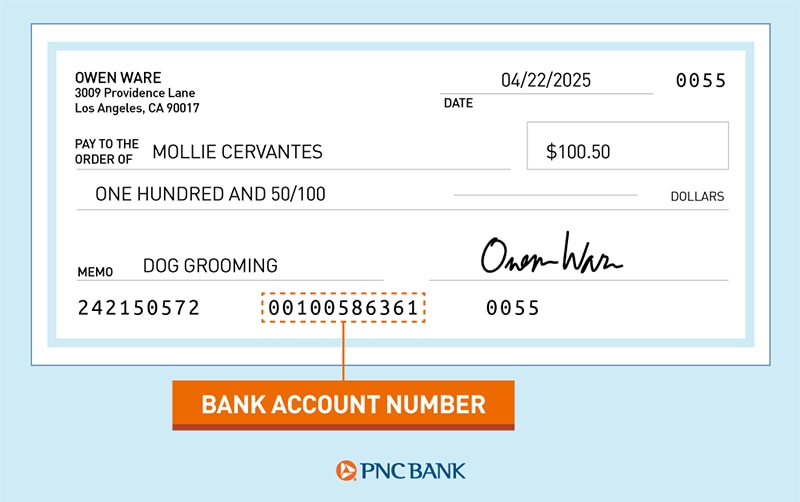
If you still use a physical checkbook, you have the most direct map to your account details at your fingertips. At the bottom of every check, there is a string of numbers printed in a specialized font known as MICR (Magnetic Ink Character Recognition). This line is designed to be read by high-speed processing machines at the Federal Reserve and commercial banks.
The MICR line typically follows a standard format:
- Routing Number: The first nine digits on the far left.
- Account Number: The middle set of digits (this can vary in length depending on the bank).
- Check Number: The final set of digits on the far right, which matches the number in the top-right corner of the check.
It is important to note that some banks may place the account number before the routing number, or include symbols to separate the strings. Always look for the longest string of digits that does not match the check number or the nine-digit routing code.
Decoding Your Monthly Bank Statements
Your monthly bank statement is a comprehensive legal record of your financial activity. Regardless of whether you receive this via traditional mail or as a PDF download, the account number is prominently displayed.
Typically, the account number is located in the top-right or top-left corner of the first page, often labeled clearly as “Account Number” or “Account ID.” In an effort to enhance security, some institutions may “mask” the first several digits (e.g., XXXX-1234). However, the full, unmasked number is usually available on the summary page of the statement. If you are using a statement for a loan application or verification of assets, ensure you are looking at the full version rather than a truncated summary.
Digital Solutions: Finding Your Account Number via Online Banking and Mobile Apps
For the modern consumer, digital platforms are the fastest way to retrieve financial data. Financial institutions have invested heavily in user experience (UX) to ensure that these details are accessible yet secure.

Navigating the User Interface of Major Financial Institutions
Whether you bank with a multinational corporation or a local credit union, the process for finding your account number online is relatively uniform. After logging into your secure portal:
- Select the Account: Click on the specific checking or savings account you are inquiring about.
- Look for “Account Details” or “Settings”: Most interfaces hide the full account number by default to protect against “shoulder surfing” (people looking at your screen).
- The Toggle Feature: Look for an icon that resembles an eye or a link that says “Show Account Number.” Clicking this will reveal the full digits.
- Electronic Statements (e-Statements): If you cannot find the number on the main dashboard, navigating to the “Statements” or “Documents” section and opening a recent PDF will provide the full, unmasked number.
Utilizing Digital Wallets and Third-Party Financial Aggregators
If you use financial management tools or digital wallets, your account number may be stored within those ecosystems. However, for security reasons, many third-party apps use “tokenization” or “linking” via services like Plaid, meaning they don’t always display your full account number back to you. If you need the number for a new setup, it is always best to go directly to the source—your bank’s official app or website—rather than relying on a secondary aggregator.
Industry-Specific Locations: Beyond Standard Savings and Checking
The search for an account number often extends beyond simple banking. In the broader world of business finance and investing, different types of accounts use different naming conventions.
Locating Numbers for Investment and Brokerage Accounts
Brokerage accounts (such as those at Fidelity, Charles Schwab, or Vanguard) operate differently than retail bank accounts. While they still have account numbers, these identifiers are used for transferring securities (ACATS) or for liquidating assets into cash.
For brokerage accounts, the account number is usually found on your “Position” or “Portfolio” page. If you are attempting to wire funds into a brokerage account, you will often need the brokerage’s general routing number and your specific 8-to-10-digit brokerage account number. Unlike retail banks, brokerage statements are often issued quarterly, so ensure you are looking at the most recent document to confirm the account is still active and the number remains unchanged.
Finding Account Identifiers for Credit Cards and Loans
It is a common misconception that your 16-digit credit card number is your account number. While they are related, they are not the same. In the credit industry, the card number is a front-facing identifier used for point-of-sale transactions, while the underlying “account number” is the internal record used for billing.
For mortgages, auto loans, or personal loans, your account number is your “Loan Number.” This is found on your monthly billing statement or the original closing documents. When making a payment via your bank’s bill pay service, you must use this specific loan number to ensure the payment is applied to your principal and interest correctly.
Financial Security: Protecting Your Account Number in a Digital Age
Because your account number is a gateway to your wealth, it is a primary target for bad actors. In the realm of personal finance, data integrity is as important as capital growth.
Best Practices for Storing Financial Information
Once you have located your account number, you may be tempted to store it for easy access. However, how you store it dictates your level of risk. Avoid saving your account and routing numbers in unencrypted formats, such as a “Notes” app on your phone or a plain-text email to yourself.
The most secure methods include:
- Password Managers: Use a reputable, encrypted password manager that includes a “Secure Notes” section.
- Physical Safes: Keep a physical copy of a bank statement or a voided check in a fireproof, locked safe.
- Biometric Locks: Ensure your banking app is protected by FaceID or fingerprint recognition, as this provides an extra layer of defense even if your device is stolen.

What to Do if Your Account Number is Compromised
If you suspect that your account number has fallen into the wrong hands—perhaps through a phishing scam or a lost checkbook—time is of the essence. Unlike a credit card, which can be easily “frozen” and replaced with a new number, changing a bank account number is a more complex process. It often involves closing the existing account and opening an entirely new one, which requires moving all your direct deposits and automated payments.
If a compromise occurs:
- Notify the Institution Immediately: Call the bank’s fraud department to flag the account for suspicious activity.
- Monitor Transactions: Review your daily transaction history for small “test” debits, which hackers often use to verify an account’s validity.
- Update Authorized Users: Ensure that no unauthorized individuals have been added to the account’s access list.
In conclusion, your account number is a cornerstone of your financial identity. By knowing where to find it—whether on a physical check, through a digital portal, or within a brokerage statement—you empower yourself to navigate the world of money with confidence and precision. Treat this information with the same level of care you would a physical vault, for in the digital age, those digits are the key to your financial security and growth.
aViewFromTheCave is a participant in the Amazon Services LLC Associates Program, an affiliate advertising program designed to provide a means for sites to earn advertising fees by advertising and linking to Amazon.com. Amazon, the Amazon logo, AmazonSupply, and the AmazonSupply logo are trademarks of Amazon.com, Inc. or its affiliates. As an Amazon Associate we earn affiliate commissions from qualifying purchases.