
In the landscape of modern personal finance, the bank routing number serves as a fundamental coordinate, ensuring that funds travel securely between institutions. Whether you are setting up a direct deposit for a new job, authorizing an electronic tax payment, or linking a third-party investment app to your primary checking account, knowing exactly where to find and how to verify your routing number is essential. Despite the rise of digital-first banking, the routing number remains a constant, anchored in a system designed for accuracy and security.
Understanding the Nine-Digit Identity of Your Financial Institution
Before locating the number, it is helpful to understand what it represents. A routing number, often referred to as an ABA (American Bankers Association) routing transit number (RTN), is a nine-digit code used to identify a specific financial institution within the United States. Established in 1910, this system was created to simplify the processing of paper checks, but it has since evolved into the backbone of the Automated Clearing House (ACH) network and domestic wire transfers.

The nine digits are not random; they follow a specific formula. The first two digits indicate the Federal Reserve bank district where the institution is located. The next two digits identify the specific Federal Reserve processing center. The following four digits represent the unique identifier for the bank itself, and the final digit is a “check digit” calculated using a complex algorithm to verify that the previous eight digits are valid. This internal logic prevents many manual entry errors, as most financial software can immediately detect if a routing number is mathematically impossible.
For the consumer, the routing number acts as the “address” of the bank, while the account number acts as the “apartment number” for your specific funds. Without both pieces of information, the financial system cannot guarantee that a transfer will reach its intended destination.
Practical Ways to Locate Your Routing Number
Finding your routing number is generally a straightforward process, provided you know where to look. Depending on your preference for physical or digital banking, there are several reliable methods to retrieve this information.
1. The Bottom of a Physical Check
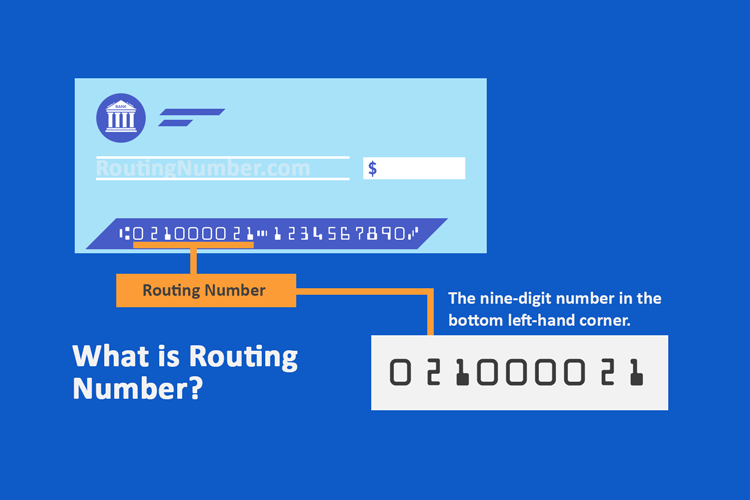
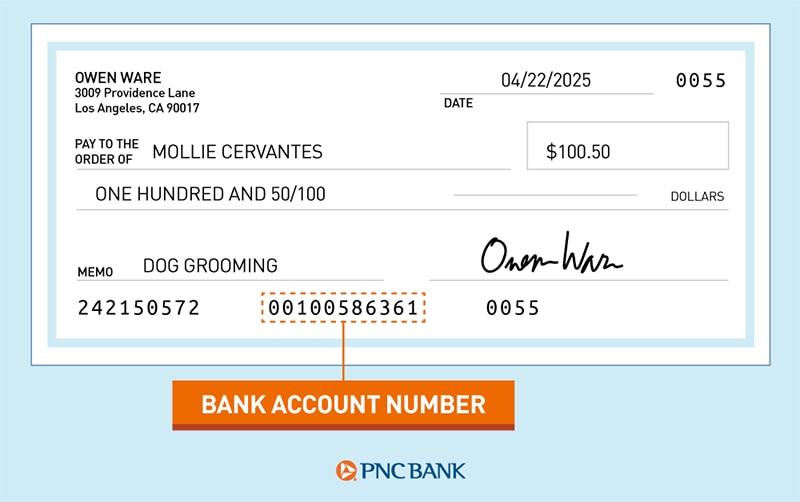
The most traditional and often fastest way to find your routing number is by looking at a physical check associated with your account. At the bottom of every check, you will see a string of numbers printed in a specialized font known as MICR (Magnetic Ink Character Recognition). These numbers are typically organized into three distinct groups:
-
The Routing Number: This is almost always the first set of nine digits on the far-left side. It is flanked by a specific symbol that looks like a vertical bar and a colon.
-
The Account Number: This is usually the middle set of digits. It can vary in length and is followed by another unique symbol.
-
The Check Number: The shortest set of digits, usually on the far right, which matches the number printed in the top-right corner of the check.
2. Online Banking Portals and Mobile Apps
As more consumers transition to paperless banking, the reliance on physical checks has diminished. Most financial institutions now place the routing number in a prominent location within their digital ecosystem.
-
Mobile Apps: After logging into your bank’s app, navigate to the specific account you wish to use (e.g., your primary checking account). Look for tabs labeled “Account Details,” “Account Info,” or “Direct Deposit Information.”
-
Web Portals: On a desktop browser, the routing number is often listed on the main account summary page. If it is hidden for security reasons, clicking on “Show Account Details” or viewing a digital version of your monthly statement will reveal it.
3. Monthly Bank Statements
If you do not have a checkbook and cannot access your app, your monthly bank statement is an official document that contains all necessary routing information. Whether you receive your statement via mail or download it as a PDF, the routing number is typically listed at the top or bottom of the first page, near your account balance and summary.
4. The Bank’s Official Website
Many large national banks use a single routing number for all accounts within a specific state or region. You can often find these numbers on the bank’s public website by searching for “routing number” in the site’s help center or FAQ section. However, use caution with this method: some banks use different routing numbers for ACH transfers (like direct deposits) than they do for domestic wire transfers. Always ensure you are selecting the number that corresponds to your specific transaction type.
5. The American Bankers Association (ABA) Lookup Tool
For those who want to verify a number independently, the ABA provides an online lookup tool. By entering the name and location of your bank, you can confirm their official routing transit number. This is particularly useful if you are trying to send money to someone else and want to double-check that the information they provided is accurate.
The Distinction Between Routing, Account, and SWIFT Numbers
In the world of finance, precision is paramount. A common point of confusion for many users is the distinction between the various strings of numbers required for different types of transactions.
Routing vs. Account Numbers
The routing number identifies the bank, while the account number identifies you. If you provide the wrong routing number but the correct account number, your money may end up at an entirely different bank—or more likely, the transaction will be rejected and returned. If you provide the correct routing number but the wrong account number, the funds could potentially be deposited into someone else’s account at your same bank. Always double-check both.
ACH vs. Wire Routing Numbers
Some larger institutions maintain separate routing numbers for different types of electronic transfers.
-
ACH Routing Numbers: Used for “low-value” transactions like payroll, social security benefits, and automatic bill payments.
-
Wire Routing Numbers: Used for “high-value,” real-time transfers. Wire transfers are often used for large purchases, such as a down payment on a home, where the funds need to be cleared and available immediately.
SWIFT and BIC Codes
If you are looking for a routing number to receive an international transfer, you might actually need a SWIFT (Society for Worldwide Interbank Financial Telecommunication) code or a BIC (Bank Identifier Code). While a routing number is specific to the U.S. banking system, the SWIFT code is the international standard for identifying banks globally. If a sender in Europe wants to send you money, they will likely ask for your bank’s SWIFT code in addition to your domestic routing and account numbers.
The Strategic Role of Routing Numbers in Personal Finance Management
Beyond the simple logistics of moving money, the routing number plays a vital role in the strategic management of your personal finances. Understanding how these numbers work allows you to take full advantage of modern financial tools.
Automating Your Income
The most common use of a routing number is the setup of direct deposit. By providing your employer with your routing and account numbers, you bypass the need for physical checks, ensuring that your salary is available on payday without a trip to the bank. From a financial planning perspective, this is the first step toward automation. Many employers allow you to split your direct deposit into multiple accounts; you can send a portion of your check to a high-yield savings account using one routing number and the remainder to your checking account using another.
Streamlining Bill Payments
Using your routing number to pay bills directly through the ACH network is often superior to using a credit or debit card. Many service providers, such as utility companies or landlords, prefer ACH payments because they carry lower processing fees. In some cases, companies may even offer a small discount for “paying by check” electronically. Furthermore, because routing numbers don’t “expire” like credit cards do, you won’t have to update your payment information every few years when a new card arrives in the mail.
Linking Investment and Fintech Apps
The rise of financial technology (Fintech) has made it easier than ever to invest in the stock market or manage cryptocurrency. When you link an app like Robinhood, Acorns, or Betterment to your bank, the “bridge” is built using your routing and account numbers. This connection allows for the seamless “sweeping” of funds from your low-interest checking account into investment vehicles that offer higher potential returns.
Security and Best Practices in Modern Banking
Because a routing number is public information—any person who sees one of your checks has it—it is not considered a “secret” in the same way your password or Social Security number is. However, the combination of your routing number and your account number is highly sensitive.
Protecting Your Information
While you must share these numbers to conduct business, you should do so through secure channels. Avoid emailing your routing and account numbers in plain text. Instead, use secure portals provided by your bank or the institution you are dealing with. If you must send this information to a professional, such as an accountant or an attorney, ensure you are using an encrypted file-sharing service.
Monitoring for Unauthorized ACH Transfers
Since your routing and account numbers are the only things needed to initiate an ACH “pull” (where a company takes money from your account), it is critical to monitor your transactions regularly. Modern banking apps allow you to set up alerts for any debit over a certain dollar amount. If you see an unauthorized transaction, contact your bank immediately. Under federal law, your liability for unauthorized electronic transfers is limited, provided you report the discrepancy within a specific timeframe (usually 60 days from the statement date).
Verification during Large Transactions
For significant financial events, such as closing on a house, never rely on a routing number sent via email without verifying it through a second medium. “Wire fraud” is a growing concern where hackers intercept emails from real estate agents or title companies and replace the routing numbers with their own. Always call a trusted, known phone number to verify the routing and account details before hitting “send” on a large wire transfer.
The bank routing number may seem like a relic of the paper-check era, but it remains the fundamental DNA of the American financial system. Whether you find it on the bottom of a check or within the sophisticated interface of a mobile app, this nine-digit code is the key to unlocking efficient, automated, and secure personal finance management. By mastering the use of these numbers, you ensure that your capital is always exactly where it needs to be.
aViewFromTheCave is a participant in the Amazon Services LLC Associates Program, an affiliate advertising program designed to provide a means for sites to earn advertising fees by advertising and linking to Amazon.com. Amazon, the Amazon logo, AmazonSupply, and the AmazonSupply logo are trademarks of Amazon.com, Inc. or its affiliates. As an Amazon Associate we earn affiliate commissions from qualifying purchases.