
For the American taxpayer, Form 1040 is more than just a document; it is the definitive annual record of their financial life. As the central pillar of the U.S. individual income tax system, Form 1040 captures everything from earned wages and investment dividends to self-employment income and capital gains. However, once the meticulous work of calculating deductions and credits is complete, a critical logistical question remains: where exactly does this form go?
Determining the correct filing destination is not merely a matter of administrative compliance; it is a vital step in ensuring the security of your financial data and the speed of your tax refund. In an era where digital transformation meets legacy bureaucratic systems, taxpayers have several paths to choose from. Whether you are a digital native looking for the fastest electronic route or a traditionalist who prefers the tangibility of a paper return, understanding the “where” of filing is essential for sound financial management.

Understanding the Modern Filing Landscape: Digital vs. Paper
The Internal Revenue Service (IRS) has undergone a significant technological shift over the last two decades. Today, the vast majority of taxpayers opt for electronic filing, or “e-filing,” which has become the gold standard for both the government and the public. However, the choice of where to file still depends heavily on your specific financial situation, your comfort with technology, and your geographic location.
The Efficiency and Security of E-filing
E-filing is the method recommended by the IRS and financial professionals alike. When you e-file, your Form 1040 is transmitted through encrypted channels directly to IRS servers. This method significantly reduces the margin for human error, as the software used for e-filing performs real-time calculations and checks for missing signatures or social security numbers.
From a financial perspective, e-filing is the fastest way to trigger a refund. While a paper return might take six to eight weeks to process, an e-filed return combined with direct deposit often results in a refund within 21 days. For individuals managing tight cash flows or looking to reinvest their tax savings immediately, the “where” of filing is almost always a secure digital portal.
The Continued Relevance of Paper Filing
Despite the push toward digitalization, paper filing remains an active channel. Some taxpayers prefer the physical trail of a paper return, while others may be required to file via mail due to specific complex attachments that are not yet supported by certain e-file providers.
If you choose to file a paper Form 1040, the “where” becomes a question of physical geography. The IRS operates several processing centers across the United States, and the specific center you must mail your return to is determined by the state in which you live and whether or not you are enclosing a payment.
Where to Mail Paper Returns: State-by-State Jurisdictions
Filing by mail requires precision. Sending your Form 1040 to the wrong IRS service center can lead to significant processing delays, potentially pushing back your refund by months or resulting in late-payment penalties if a check is involved. The IRS divides the country into specific jurisdictions to balance the workload across its regional centers.
Determining Your Specific Service Center
The destination for your paper Form 1040 is primarily dictated by your state of residence. For example, a taxpayer living in Florida, Louisiana, Mississippi, or Texas will generally mail their return to a different facility than a taxpayer living in Alaska, California, or Washington.
Furthermore, the IRS distinguishes between returns that include a payment (a check or money order) and those that do not. If you are receiving a refund or owe nothing, your return is typically sent to a dedicated processing center designed for high-volume data entry. If you are including a payment, your return is often routed to a different address—frequently a “lockbox” at a financial institution—to ensure that the funds are deposited into the U.S. Treasury as quickly as possible. It is imperative to consult the official IRS instructions for the current tax year to verify the exact street address or P.O. Box, as these can occasionally shift due to facility updates.
Essential Mailing Tips for Financial Compliance
When filing a physical Form 1040, the method of delivery is just as important as the destination. To protect your financial interests, it is highly recommended to use a Private Delivery Service (PDS) approved by the IRS or USPS Certified Mail with a Return Receipt Requested.
This provides a “proof of filing” that is legally recognized. If the IRS claims they never received your return, having a certified mail receipt can save you from costly failure-to-file penalties. In the world of personal finance, documentation is the best defense against administrative errors.
Leveraging Technology: Where to File Online for Maximum Accuracy
For those moving away from paper, the question of “where to file” shifts from a physical address to a digital platform. The ecosystem of online filing is diverse, offering options that cater to different income levels and financial complexities.
IRS Free File and Commercial Software
The IRS Free File program is a public-private partnership that allows taxpayers with an Adjusted Gross Income (AGI) below a certain threshold (typically $79,000) to use brand-name tax preparation software at no cost. For those who exceed this income limit, commercial software providers like TurboTax, H&R Block, and TaxSlayer offer robust platforms that guide users through the filing process.
These platforms act as the “where” in the digital sense. They serve as the interface between the taxpayer’s raw financial data and the IRS’s receiving systems. By using these tools, taxpayers gain access to sophisticated error-detection algorithms and optimization engines that help identify often-overlooked deductions, such as home office expenses or student loan interest.
Direct File: The New IRS Frontier
A new development in the tax landscape is the IRS Direct File pilot program. This represents a significant shift in where Americans file their taxes. Direct File is an IRS-owned and operated interview-based filing tool that allows eligible taxpayers to file their Form 1040 directly with the government, bypassing third-party software altogether. While currently limited to specific states and simple tax profiles, it represents the future of direct government interaction in personal finance, aiming to make filing as seamless as possible.
Strategic Considerations for Different Taxpayer Scenarios
The “where” of filing Form 1040 can become more complex depending on your residency status and the nature of your financial activities. Specialized scenarios require specialized filing routes.
Filing from Overseas
For U.S. citizens and resident aliens living abroad, the filing process involves unique logistical challenges. International taxpayers generally mail their Form 1040 to the IRS service center in Austin, Texas. However, many expats find that e-filing through specialized international tax software is a more reliable way to ensure their returns reach the IRS, especially when dealing with the unpredictable nature of international postal services. Filing from abroad also requires a keen understanding of the Foreign Earned Income Exclusion and Foreign Tax Credits, making the choice of a sophisticated digital filing platform even more critical.
Amended Returns and Special Circumstances
If you discover an error after your initial filing, you do not file a new Form 1040. Instead, you file Form 1040-X. Historically, amended returns had to be filed by mail, but the IRS has recently expanded e-filing capabilities to include many 1040-X scenarios. If you must mail an amended return, the destination may differ from the original filing address, often requiring submission to the specific regional office that processed your original return.
Similarly, if you are filing for a deceased taxpayer or filing a “protective claim” for a refund, you must follow specific mailing instructions that ensure the return reaches the specialized units within the IRS equipped to handle these sensitive cases.
Optimizing the Filing Process for Financial Health
Ultimately, knowing where to file Form 1040 is a foundational component of a broader financial strategy. The goal is not just to “send the form,” but to do so in a way that maximizes efficiency and minimizes risk.
Direct Deposit and Refund Timelines
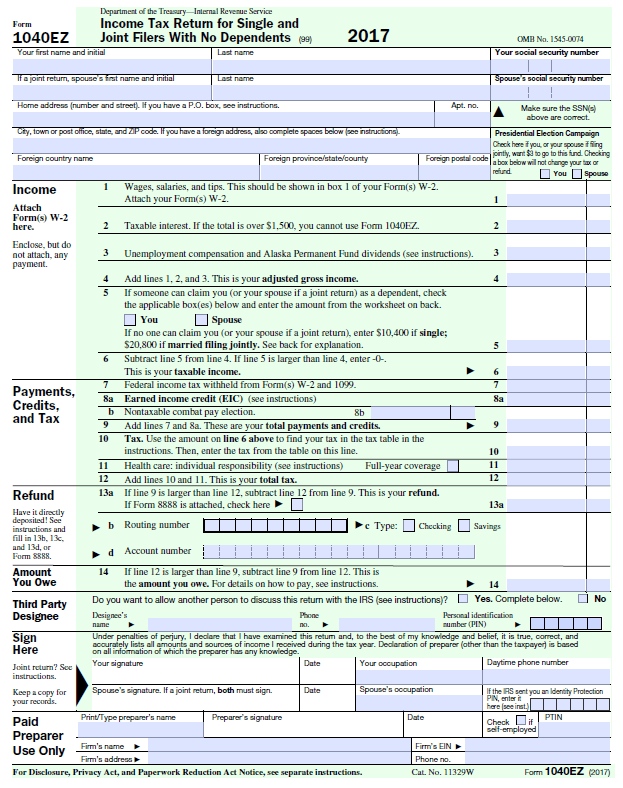
Choosing an electronic filing destination allows you to utilize direct deposit. By providing your routing and account numbers directly on Form 1040, you eliminate the risk of a refund check being lost or stolen in the mail. From a wealth-management perspective, getting your refund weeks earlier allows those funds to be put to work—whether that means paying down high-interest debt or contributing to a tax-advantaged investment account like an IRA.
Protecting Against Identity Theft
In the digital age, the “where” of filing is also a matter of cybersecurity. Tax-related identity theft is a significant concern. By filing early and using secure, reputable e-file providers or the official IRS website, you “occupy” your Social Security number for the tax year, making it much harder for fraudsters to file a fraudulent return in your name. Ensuring you are on a legitimate government-affiliated or trusted commercial site is a critical step in protecting your financial identity.
By mastering the logistics of Form 1040 submission—whether by identifying the correct regional processing center or selecting the right digital gateway—taxpayers can transition from a state of seasonal anxiety to one of organized financial control. Filing is the final act of the tax year, and doing it correctly ensures that your hard work in managing your finances is accurately reflected and rewarded.
aViewFromTheCave is a participant in the Amazon Services LLC Associates Program, an affiliate advertising program designed to provide a means for sites to earn advertising fees by advertising and linking to Amazon.com. Amazon, the Amazon logo, AmazonSupply, and the AmazonSupply logo are trademarks of Amazon.com, Inc. or its affiliates. As an Amazon Associate we earn affiliate commissions from qualifying purchases.