
Tax season often brings a mixture of anxiety and anticipation. For many Americans, the prospect of navigating complex tax codes is daunting, and the high cost of professional preparation or premium software only adds to the burden. However, a significant portion of the population is eligible to file their federal and state taxes for free, yet many remain unaware of the available resources.
In the realm of personal finance, minimizing expenses is just as crucial as maximizing income. Paying $100 or more for tax software can represent a significant chunk of a potential refund. By identifying the right financial tools and government-sponsored programs, you can ensure that more of your hard-earned money stays in your pocket. This guide explores the most reliable avenues for free tax filing, ranging from public-private partnerships to community-led initiatives.

Understanding the IRS Free File Program
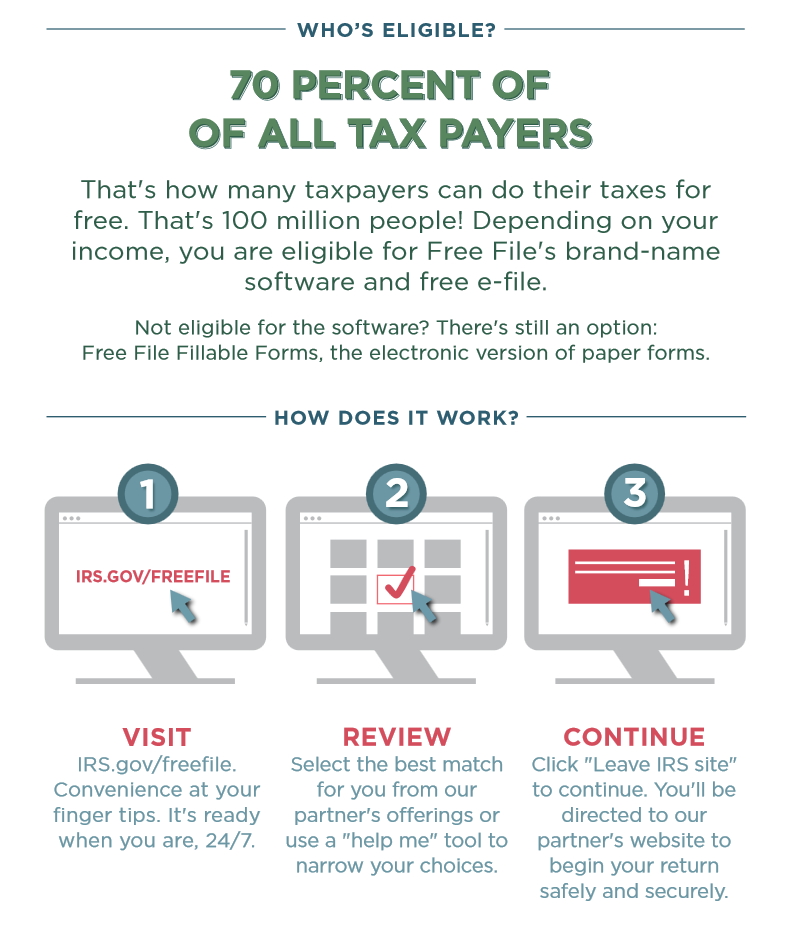
The cornerstone of free tax preparation in the United States is the IRS Free File program. This initiative is a public-private partnership between the Internal Revenue Service and the Free File Alliance, a group of industry-leading tax software companies. The primary goal is to provide high-quality filing services to low-to-moderate-income taxpayers at no cost.
Eligibility and Income Thresholds
The eligibility for IRS Free File is primarily determined by your Adjusted Gross Income (AGI). For the 2023 tax year (filed in 2024), the threshold is typically set at an AGI of $79,000 or less. If your income falls within this range, you can access full-featured tax software from reputable providers that would otherwise charge a fee. It is important to note that each participating company has its own specific criteria; some may have lower income limits or age requirements, while others may only offer free state filing in certain jurisdictions.
How to Access the Program
To ensure you are truly using the free version of these services, you must access them through the official IRS.gov website. Navigating directly to a provider’s homepage (such as TurboTax or H&R Block) may lead you to their “Free Edition” products, which often have much stricter limitations regarding what types of income and deductions can be reported. The IRS Free File portal acts as a gateway, ensuring that the software remains free regardless of the complexity of your return, provided you meet the AGI requirement.
Free File Fillable Forms
For taxpayers whose income exceeds the $79,000 limit but who are comfortable preparing their own taxes without step-by-step guidance, the IRS offers “Free File Fillable Forms.” These are electronic versions of federal paper forms. While they do not provide the interview-style guidance of software, they do perform basic calculations. This is a powerful tool for those with a strong grasp of tax law who wish to avoid software fees entirely.
Leading Digital Platforms for Free Tax Preparation
Beyond the IRS-sponsored partnerships, several private-sector tools have emerged as disruptors in the financial services market. These platforms often provide “truly free” filing for both federal and state returns, even for those who might not qualify for the IRS Free File program.
Cash App Taxes (Formerly Credit Karma Tax)
One of the most popular options in the personal finance community is Cash App Taxes. Since its acquisition from Credit Karma, this service has maintained a reputation for being 100% free for both federal and state returns, regardless of income level. Unlike the “Free Editions” of major competitors, Cash App Taxes supports complex situations, including self-employment income (Schedule C), rental property income, and capital gains from stock or crypto sales. This makes it an invaluable tool for freelancers and retail investors looking to optimize their finances.
FreeTaxUSA
FreeTaxUSA is frequently cited by financial experts as one of the most transparent and reliable low-cost options. While they charge a small, flat fee for state returns (typically around $15), their federal filing is completely free for everyone, with no income restrictions. The platform supports almost all major IRS forms and schedules. For many, the nominal fee for state filing is a worthy trade-off for a user interface that is straightforward and lacks the aggressive “upselling” common in bigger-name software.
The “Big Box” Trap: TurboTax and H&R Block
It is a common misconception that the “Free Editions” offered by giants like TurboTax and H&R Block are available to everyone. In reality, these products are generally limited to “simple returns” only. This typically means you can only file if you have W-2 income, take the standard deduction, and have limited interest or dividend income. If you have student loan interest, unemployment income, or any form of itemized deductions, these companies will often prompt you to upgrade to a paid version mid-way through the process. For those seeking a truly cost-free experience, it is vital to read the fine print before starting.
Government-Sponsored and Community-Based Resources
For taxpayers who prefer a more human touch or those who do not feel comfortable using digital tools alone, there are several government-backed and non-profit programs designed to provide hands-on assistance.
IRS Direct File: The New Frontier
In a landmark move, the IRS launched the “Direct File” pilot program in 2024. This is a free, mobile-friendly, IRS-run service that allows eligible taxpayers to file their taxes directly with the government. Unlike the Free File program, which uses third-party software, Direct File is an internal government tool. While currently limited to specific states and simple tax situations, it represents a significant shift toward a public utility model for tax filing, aimed at reducing the financial friction of compliance.
Volunteer Income Tax Assistance (VITA)
The VITA program offers free tax help to people who generally make $64,000 or less, persons with disabilities, and limited English-speaking taxpayers. VITA sites are usually located in community centers, libraries, schools, and shopping malls. These sites are staffed by IRS-certified volunteers who provide tax counseling and filing services. This is an exceptional resource for ensuring that eligible individuals claim important credits like the Earned Income Tax Credit (EITC) and the Child Tax Credit (CTC).
Tax Counseling for the Elderly (TCE)
The TCE program is specifically geared toward taxpayers aged 60 and older. It focuses on questions about pensions and retirement-related issues unique to seniors. Like VITA, these sites are staffed by volunteers and offer free electronic filing. Often, these services are coordinated through AARP’s Foundation Tax-Aide program, which operates thousands of sites across the country during tax season.
Strategic Considerations for Maximizing Your Financial Health
Filing for free is not just about saving the preparation fee; it is about the broader strategy of managing your personal finances and ensuring you receive every dollar you are owed.
Organizing Documentation for Efficiency
To successfully use free filing tools, organization is key. Before starting, gather all W-2s, 1099s, and 1098s. If you are a freelancer or a side-hustler, ensure your expense tracking is finalized. Using free software is much smoother when you aren’t hunting for receipts in the middle of a session. Many free tools allow you to import data from financial institutions, which reduces the margin for manual entry error.
The Impact of Tax Credits on Your Bottom Line
When using free filing services, pay close attention to the “interview” questions regarding tax credits. Credits like the EITC are “refundable,” meaning they can reduce your tax liability to zero and then provide a refund for the remaining amount. This is a direct injection of capital into your household budget. High-quality free software and VITA volunteers are specifically trained to identify these opportunities, ensuring that your “free” filing results in the highest possible net gain.

Long-Term Financial Planning
Filing your taxes is a yearly “financial physical.” It provides a snapshot of your income, investments, and savings. Use the process of filing—especially when using tools that allow you to see your tax liability in real-time—to adjust your withholding for the following year. If you receive a massive refund, you are essentially giving the government an interest-free loan. By adjusting your W-4 based on the insights gained during tax season, you can increase your monthly take-home pay, allowing you to invest that money or pay down debt throughout the year instead of waiting for a single annual windfall.
In conclusion, the era of paying high fees for standard tax preparation is largely over for the average American taxpayer. Whether through the IRS Free File program, disruptive digital platforms like Cash App Taxes, or community-based initiatives like VITA, there are numerous ways to file accurately and securely for free. By leveraging these resources, you can protect your wealth and take full control of your financial future.
aViewFromTheCave is a participant in the Amazon Services LLC Associates Program, an affiliate advertising program designed to provide a means for sites to earn advertising fees by advertising and linking to Amazon.com. Amazon, the Amazon logo, AmazonSupply, and the AmazonSupply logo are trademarks of Amazon.com, Inc. or its affiliates. As an Amazon Associate we earn affiliate commissions from qualifying purchases.