
Selling a vehicle is more than just parting with an old mode of transport; it’s a significant financial transaction that, when executed strategically, can either put a substantial amount of cash back into your pocket or help you mitigate a financial loss. Whether you’re upgrading, downsizing, or simply need to free up capital, understanding the various avenues available and their respective financial implications is paramount. This guide delves into the financial intricacies of selling your vehicle, offering insights to help you maximize your return and navigate the process with confidence.
Understanding Your Vehicle’s Financial Value
Before you even think about where to sell your vehicle, the most critical first step is to accurately understand its true market value. This financial assessment forms the bedrock of your selling strategy, influencing everything from your asking price to your negotiation power. Overpricing leads to stagnation, while underpricing means leaving money on the table.

Accurate Valuation Tools & Resources
Several reputable online platforms offer valuation services that provide a snapshot of your vehicle’s worth. Tools like Kelley Blue Book (KBB), Edmunds, and NADAguides are industry standards, each employing sophisticated algorithms to analyze vast datasets of sales, market trends, and vehicle specifics. It’s crucial to consult multiple sources, as their valuations can vary. KBB, for instance, often provides a range for “private party,” “trade-in,” and “retail” values, each representing a different financial scenario.
-
Trade-in Value: This is typically the lowest valuation, representing what a dealership would offer you. While convenient, it’s a financial trade-off for speed and reduced hassle.
-
Private Party Value: This is the estimated price you can expect to get from a private buyer. It’s generally higher than the trade-in value, reflecting the absence of a dealer’s profit margin.
-
Retail Value: This is what you might expect to pay if you were buying the vehicle from a dealer. It’s useful for understanding the upper limit of the market but not a realistic selling price for a private seller.
Beyond these online tools, local market analysis is invaluable. Browse classifieds and online marketplaces for similar vehicles in your area to gauge what competitors are asking and, more importantly, what they are actually selling for. This localized insight can fine-tune your financial expectations.
Impact of Condition and Maintenance on Price
The physical and mechanical condition of your vehicle directly correlates with its financial worth. A well-maintained car with a clean interior, minimal cosmetic damage, and a robust service history will always command a higher price. Potential buyers are financially motivated to avoid immediate repair costs, and a history of diligent maintenance signals reliability.
Consider the financial wisdom of pre-sale repairs. Minor cosmetic fixes like paint touch-ups, dent removal, or professional detailing can yield a significant return on investment. Similarly, addressing small mechanical issues that might raise red flags during a pre-purchase inspection could prevent a buyer from low-balling your offer or walking away entirely. However, major repairs might not always be financially justifiable; the cost of fixing a significant engine problem could outweigh the potential increase in selling price. A professional mechanic’s assessment can help you decide which repairs offer the best financial ROI.
The Role of Mileage and Age in Depreciation
Depreciation is a vehicle’s biggest financial adversary, and mileage and age are its primary drivers. As a vehicle accumulates miles and years, its value naturally declines. Understanding this depreciation curve is key to setting a realistic price and managing your financial expectations. Newer cars generally depreciate rapidly in their first few years, while older cars depreciate more slowly, but consistently. High mileage for its age typically signals more wear and tear, reducing its financial appeal. Conversely, a low-mileage vehicle for its age can be a significant selling point, often allowing for a higher asking price. Factor in specific models and brands, as some vehicles are known to hold their value better than others due to reputation, reliability, or demand.
Exploring Different Avenues for Sale and Their Financial Implications
Once you have a clear financial understanding of your vehicle’s worth, the next step is to choose the optimal selling channel. Each avenue presents a unique set of financial trade-offs regarding convenience, potential profit, and time investment.
Selling to a Dealership (Trade-in or Direct Sale)
This is often the quickest and least cumbersome method, especially if you’re purchasing another vehicle from the same dealer.
-
Pros (Financial convenience): The primary financial benefit is convenience. You get an immediate offer, avoid the hassle of advertising, showing the car, and dealing with private buyers. If you’re trading in, some states offer tax savings where you only pay sales tax on the difference between your new car’s price and your trade-in value, which can be a significant financial perk. The transaction is typically swift, with the dealer handling all paperwork.
-
Cons (Lower financial return): The significant financial drawback is that you’ll almost always receive less money than you would through a private sale. Dealerships need to purchase at a price that allows for reconditioning, marketing, and a profit margin. This method is a financial sacrifice for speed and ease.
-
Financial Strategy: This option is best when speed and convenience are prioritized over maximizing profit, or when the tax benefits of a trade-in are substantial enough to offset the lower offer. Always get multiple quotes from different dealerships to encourage competitive offers.
Private Party Sale
Selling your vehicle directly to another individual generally offers the highest financial return.
-
Pros (Maximizing financial gain): By cutting out the middleman (the dealership), you capture the full market value, potentially pocketing thousands more. This is the financially savvy choice if your goal is to maximize profit.
-
Cons (Financial and time investment): This method demands a significant investment of your time and effort. You’ll be responsible for advertising (which may incur costs), cleaning and preparing the vehicle, responding to inquiries, arranging test drives, negotiating, and handling all the necessary paperwork. There’s also the element of risk, dealing with strangers and ensuring secure financial transactions.
-
Financial Strategy: To succeed in a private sale, be prepared to invest time in creating an attractive listing with high-quality photos and a detailed description. Research current market prices thoroughly to set a competitive yet profitable asking price. Be ready to negotiate, but also know your financial bottom line. For payment, prioritize secure methods like cashier’s checks verified by the issuing bank, wire transfers, or using an escrow service for larger transactions to mitigate financial fraud risks.

Online Marketplaces & Auction Sites
Platforms like Autotrader, CarGurus, eBay Motors, and Facebook Marketplace bridge the gap between dealership and private sales, offering wider exposure.
-
Pros (Wider reach, good financial return): These platforms allow you to reach a vast audience of potential buyers, increasing your chances of a quick sale at a good price. They offer the potential for a higher return than a dealership, often approaching private sale values without some of the direct marketing hassles.
-
Cons (Fees, competition): Many online marketplaces charge listing fees or success fees, which eat into your profit. You also face significant competition, requiring a compelling listing to stand out. Communication and logistics (showing the car, arranging inspections) still fall on you.
-
Financial Strategy: Compare platform fees versus their reach and ease of use. For example, eBay Motors can reach a nationwide audience but has more complex selling processes and higher fees. Facebook Marketplace is often free but might have a more local reach. Optimize your listing with professional photos, a detailed description, and transparency about the vehicle’s condition to attract serious buyers and secure a better financial outcome.
Cash-for-Car Services & Wholesalers
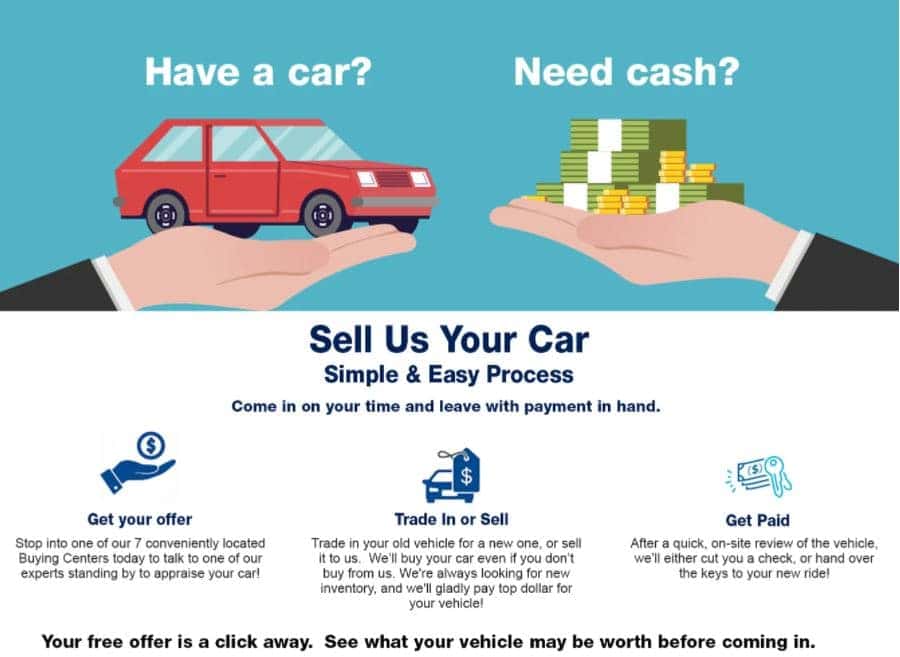
Companies like CarMax, WeBuyAnyCar, or local wholesalers specialize in buying vehicles quickly and efficiently.
-
Pros (Instant cash, extreme convenience): The ultimate in convenience, these services provide an instant, no-haggle cash offer. It’s often the fastest way to offload a vehicle, especially if it has issues or you need cash urgently. The process is typically straightforward with minimal paperwork on your part.
-
Cons (Lowest financial return): Expect to receive the lowest financial offer through these channels. These buyers operate on high volume and need substantial profit margins, so their offers will be significantly below private party value and often even below dealership trade-in offers.
-
Financial Strategy: This method is ideal for vehicles that might be difficult to sell privately (e.g., very old, high mileage, significant mechanical issues) or when your primary goal is speed and convenience, even at a considerable financial sacrifice. It’s also useful for getting a quick baseline offer to compare against other options.
Financial Preparation and Transaction Safeguards
Regardless of the selling method, meticulous financial and legal preparation is essential to ensure a smooth, secure, and financially sound transaction.
Title and Loan Payoff Management
A clear title is paramount for any vehicle sale. If you own the vehicle outright, ensure your title is free of liens and readily available. If there’s an outstanding loan, the process is more complex but entirely manageable. You’ll need to contact your lender to understand their payoff process. Typically, the buyer’s funds will be used to pay off the loan, with any remaining balance going to you. For instance, if you sell for $15,000 and owe $10,000, the lender receives $10,000, and you receive $5,000. It’s critical to have all documentation from your lender to prove the loan has been satisfied, ensuring a clear title can be transferred to the new owner. Mishandling this can lead to significant financial and legal headaches for both parties.
Documentation for a Smooth Financial Transaction
Prepare all necessary paperwork in advance. This includes:
-
Vehicle Title: Essential for transferring ownership.
-
Bill of Sale: A legally binding document detailing the transaction, including sale price, date, and buyer/seller information. This protects both parties financially and legally.
-
Maintenance Records: A full history of service and repairs can add significant value and build buyer confidence, proving the financial investment you’ve made in the car’s upkeep.
-
Vehicle History Report (e.g., CarFax, AutoCheck): While often purchased by buyers, having one ready can expedite the sale and demonstrate transparency, potentially commanding a better price.
-
Release of Liability Form: In some states, this form officially notifies the DMV that you are no longer the owner, protecting you from future financial liabilities related to the vehicle.
Secure Payment Methods
Protecting yourself from financial fraud is non-negotiable. For private sales, never accept large sums of cash unless you can immediately deposit and verify it at your bank. Avoid personal checks, which can bounce.
-
Cashier’s Checks: These are generally safer, but still require verification. Call the issuing bank directly (using a number you find, not one provided by the buyer) to confirm the check’s validity before handing over the keys and title.
-
Wire Transfers: A secure method, as funds are transferred directly between bank accounts. Ensure the transfer is complete and funds are in your account before concluding the sale.
-
Escrow Services: For higher-value vehicles, a third-party escrow service can hold the funds until all conditions of the sale are met, offering the highest level of financial security for both parties, albeit with a small fee.
Post-Sale Financial Considerations
The financial implications of selling your vehicle don’t end the moment the buyer drives away. There are a few crucial steps to take to tie up loose ends and manage your newfound capital.
Notifying Authorities and Insurance Adjustments
Promptly notify your state’s Department of Motor Vehicles (DMV) or equivalent authority that you’ve sold the vehicle. This officially removes your liability for any future parking tickets, traffic violations, or accidents involving the car, protecting you from unexpected financial burdens. Immediately contact your insurance provider to cancel or adjust your policy. Continuing to pay for insurance on a vehicle you no longer own is a needless financial drain. Depending on your situation, you might receive a pro-rated refund for any unused premium.
Reinvesting or Budgeting Your Proceeds
Once the sale is complete and the funds are securely in your account, it’s time for a financial decision. How will you utilize this capital?
-
Debt Reduction: A common and often financially wise choice is to use the proceeds to pay down high-interest debt, such as credit card balances or personal loans. This can significantly improve your financial health and free up future cash flow.
-
Savings or Investment: The funds could be directed towards building your emergency fund, saving for a down payment on a home, or contributing to an investment portfolio. This strategic allocation can help grow your wealth over time.
-
Down Payment for a New Vehicle: If you’re purchasing another car, the proceeds can serve as a substantial down payment, reducing the amount you need to finance and potentially lowering your monthly payments and overall interest paid.
-
Budgeting for Other Expenses: Perhaps the funds are simply needed for day-to-day living expenses, home repairs, or other planned outlays. Whatever the purpose, treating the proceeds as a deliberate financial resource rather than just “extra cash” is key to smart money management.
In conclusion, selling your vehicle is a multi-faceted financial undertaking that requires careful planning, research, and execution. By understanding your vehicle’s true market value, strategically choosing the most financially advantageous selling channel, meticulously preparing for the transaction, and securing your payment, you can ensure a successful outcome that maximizes your financial return and contributes positively to your overall financial well-being.
aViewFromTheCave is a participant in the Amazon Services LLC Associates Program, an affiliate advertising program designed to provide a means for sites to earn advertising fees by advertising and linking to Amazon.com. Amazon, the Amazon logo, AmazonSupply, and the AmazonSupply logo are trademarks of Amazon.com, Inc. or its affiliates. As an Amazon Associate we earn affiliate commissions from qualifying purchases.