
The landscape of personal finance and income generation has undergone a seismic shift over the last decade. The traditional model of a single, lifelong career trajectory is increasingly being replaced by a multi-faceted approach to wealth building. Today, the question of where one can make money is no longer limited by geographic boundaries or conventional corporate structures. Instead, it encompasses a diverse ecosystem of digital marketplaces, investment vehicles, and scalable business models. To navigate this environment effectively, one must understand the distinction between active income, passive streams, and long-term capital appreciation.

Leveraging the Digital Economy: Freelancing and Remote Services
The most immediate answer to generating income in the modern era lies in the global gig economy and the professionalization of remote work. As businesses transition toward more agile, project-based models, the demand for specialized independent contractors has reached an all-time high. This sector provides a direct path for individuals to monetize existing skills without the overhead of a traditional business.
High-Demand Specialized Skills
The highest margins in freelancing are found in “knowledge work” that requires specialized expertise. Software development, cybersecurity consulting, data science, and technical writing are currently at the forefront. Platforms like Upwork, Toptal, and GitHub Jobs have bridged the gap between global demand and local talent. To maximize income in this space, professionals are moving away from hourly billing and toward value-based pricing, where compensation is tied to the financial impact of the project rather than the time spent on it.
Content Creation and the Attention Economy
We are living in an attention economy, where the ability to aggregate and maintain an audience is a liquid asset. Content creators make money through a mix of advertising revenue, sponsorships, and direct-to-consumer sales. Whether through long-form video content, specialized newsletters (such as those on Substack), or educational courses, the key to profitability is niche authority. By establishing themselves as experts in a specific vertical—be it personal finance, culinary arts, or industrial design—creators can command premium rates from advertisers and develop high-margin digital products.
Professional Consulting and Coaching
For those with extensive experience in the corporate or entrepreneurial world, consulting offers a lucrative avenue for income. Businesses often require outside perspectives for strategic planning, operational efficiency, or market expansion. Similarly, the executive coaching market has expanded significantly as professionals seek individualized mentorship to accelerate their career growth. These services are highly scalable when transitioned from one-on-one sessions to group workshops or standardized digital curricula.
Capitalizing on Financial Markets: Investment Strategies for Growth
While active income provides the necessary cash flow for daily life, true wealth is built through the strategic allocation of capital into financial markets. Making money through investing requires a shift in mindset from “earning” to “owning.” By putting capital to work, individuals can benefit from compound interest and the growth of the global economy.
Stock Market Fundamentals and Index Funds
For the majority of people, the most reliable way to make money over the long term is through the equity markets. Diversified index funds and Exchange-Traded Funds (ETFs) allow investors to own a small piece of hundreds or thousands of companies simultaneously. This approach mitigates the risk associated with individual stock picking while capturing the overall upward trajectory of the market. Modern financial tools and robo-advisors have democratized access to these markets, allowing for automated, low-fee investing that was once reserved for high-net-worth individuals.
The Landscape of Alternative Investments
Beyond traditional stocks and bonds, alternative investments offer a way to diversify a portfolio and potentially achieve higher returns. This includes private equity, venture capital, and the burgeoning world of digital assets. While more volatile, the cryptocurrency market and decentralized finance (DeFi) protocols have introduced new mechanisms for generating yield through staking and liquidity provision. However, these avenues require a higher degree of technical literacy and risk tolerance, making them suitable as a calculated percentage of a broader financial strategy.
Real Estate and Fractional Ownership
Real estate remains a cornerstone of wealth generation due to its potential for both rental income and capital appreciation. However, the high barrier to entry often deters new investors. The rise of Real Estate Investment Trusts (REITs) and fractional ownership platforms has changed this dynamic. Investors can now buy shares in commercial developments or residential portfolios with relatively small amounts of capital, gaining exposure to the property market without the burdens of physical property management.
Scalable Business Models: E-commerce and Productization
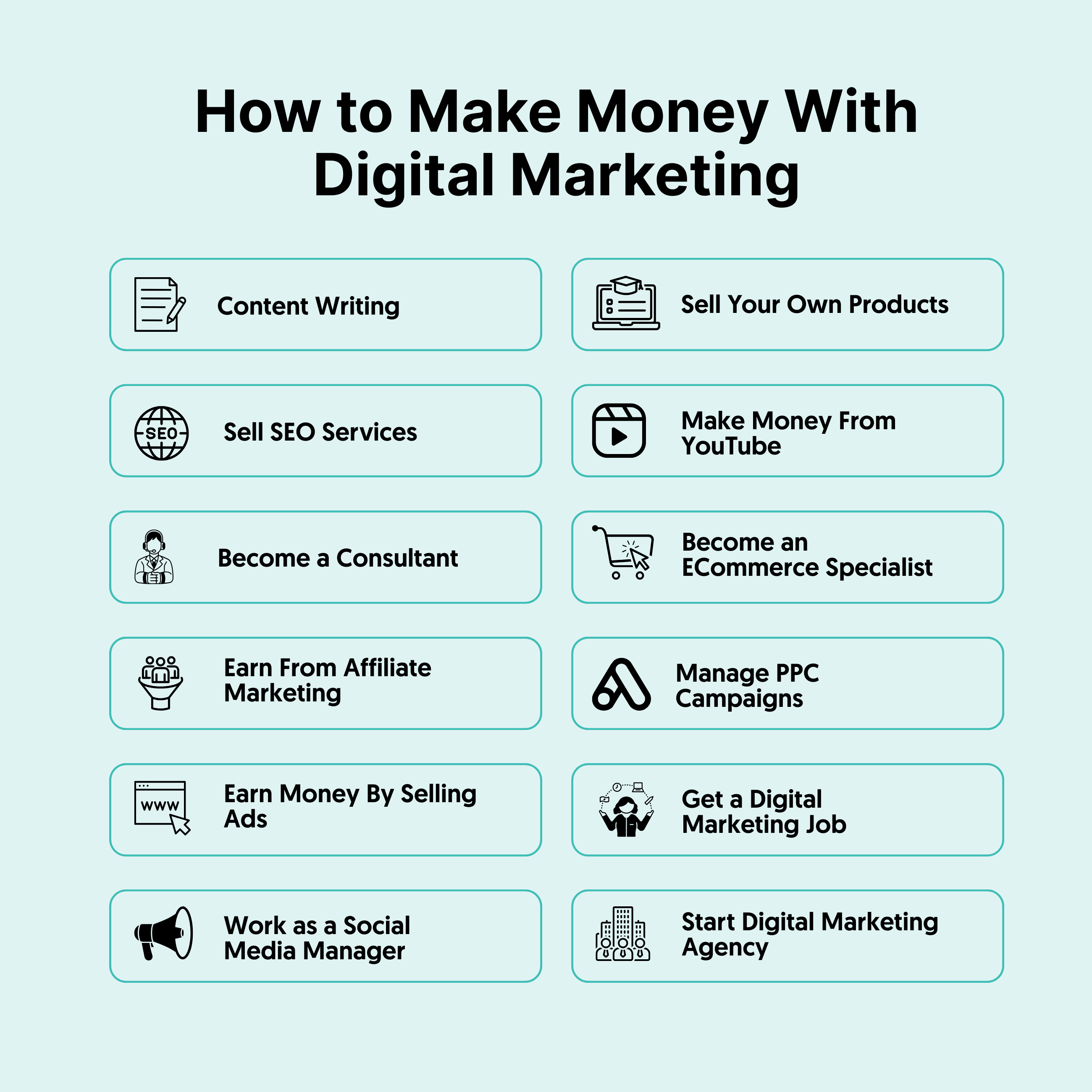
One of the most effective ways to make money is to decouple your income from your time. This is achieved through productization—creating an asset once and selling it repeatedly. The digital landscape has significantly lowered the cost of entry for product-based businesses.
Dropshipping and Print-on-Demand
E-commerce has evolved beyond the need for massive warehouses and complex supply chains. Dropshipping allows entrepreneurs to sell products directly from manufacturers to consumers without ever holding inventory. Similarly, print-on-demand services allow for the sale of custom-designed apparel and home goods, where the item is only produced once a customer makes a purchase. These models minimize financial risk while allowing for rapid testing of different market niches.
Developing Digital Products and SaaS
The highest margins in the business world are often found in digital products. E-books, online courses, software templates, and mobile applications have negligible distribution costs once the initial development is complete. Software as a Service (SaaS) takes this a step further by offering subscription-based access to a tool or platform, creating a predictable, recurring revenue stream. Identifying a specific “pain point” in a professional workflow and building a simple digital solution remains one of the most consistent ways to build a high-value business.
Affiliate Marketing and Lead Generation
For those who prefer the marketing side of business over product development, affiliate marketing offers a way to earn commissions by promoting other companies’ products. By building a trusted platform—such as a review site or a niche blog—you can generate income by directing high-quality traffic to established brands. Lead generation works on a similar principle, where you identify potential customers for high-ticket service providers (like lawyers, contractors, or mortgage brokers) and sell those leads for a premium.
Maximizing the Gig Economy and Asset Sharing
For individuals looking for immediate cash flow or those who wish to monetize underutilized assets, the sharing economy provides a variety of flexible income streams. This “on-demand” economy relies on the efficient use of resources that would otherwise sit idle.
Short-Term Rentals and Space Monetization
If you own property, you have a significant income-generating asset. Platforms like Airbnb and Vrbo have revolutionized the hospitality industry, allowing homeowners to rent out spare rooms or entire properties to travelers. Beyond residential space, there is a growing market for monetizing storage space, parking spots, or even office space for remote workers. This “space-as-a-service” model allows for significant passive income with relatively low active management once the systems are in place.
The Logistics and Transport Sector
The rise of e-commerce has created a massive demand for last-mile delivery services. While ride-sharing remains a popular choice for many, specialized delivery for groceries, medical supplies, or high-end retail offers alternative routes for income. Furthermore, individuals with larger vehicles can participate in peer-to-peer moving services or freight brokerage, which often command higher hourly rates than standard passenger transport.
Peer-to-Peer Lending Platforms
Technology has also enabled individuals to act as the “bank” for others. Peer-to-peer (P2P) lending platforms allow you to lend your capital directly to individuals or small businesses in exchange for interest payments. By spreading your investment across a large number of small loans, you can diversify the risk of default while earning interest rates that often exceed those offered by traditional savings accounts.
Cultivating Long-Term Wealth Through Strategic Financial Planning
Making money is only half of the equation; keeping and growing that money is what leads to long-term financial independence. Professional financial management involves optimizing every dollar for maximum efficiency.
Automated Savings and the Power of Compounding
The most overlooked “source” of money is the optimization of one’s own savings rate. By automating the transfer of funds into high-yield savings accounts or investment portfolios, you remove the psychological barrier of manual saving. The power of compounding is the “eighth wonder of the world” in finance; small, consistent contributions made early in life can grow into substantial sums over decades, far outpacing the returns of even the most successful short-term trades.
Tax Optimization and Financial Tools
High earners often lose a significant portion of their income to taxes. Utilizing tax-advantaged accounts—such as 401(k)s, IRAs, or Health Savings Accounts (HSAs)—can significantly increase your net wealth. Furthermore, utilizing financial tracking tools and budgeting software allows for a granular understanding of cash flow. By identifying “leaks” in your personal economy and redirecting that capital toward income-generating assets, you effectively “make” money through improved efficiency.

Continuous Skill Acquisition as an Asset
In a rapidly changing economy, the most valuable asset you possess is your ability to learn and pivot. The ROI on education and skill acquisition often dwarfs the returns of the stock market. By staying ahead of technological trends and market demands, you ensure that your “human capital” remains high. Whether it is learning a new programming language, mastering a new marketing platform, or understanding emerging financial regulations, the continuous pursuit of knowledge is the ultimate hedge against economic volatility and the surest way to ensure you always have a place where you can make money.
aViewFromTheCave is a participant in the Amazon Services LLC Associates Program, an affiliate advertising program designed to provide a means for sites to earn advertising fees by advertising and linking to Amazon.com. Amazon, the Amazon logo, AmazonSupply, and the AmazonSupply logo are trademarks of Amazon.com, Inc. or its affiliates. As an Amazon Associate we earn affiliate commissions from qualifying purchases.