
The modern economy is no longer defined solely by the traditional 9-to-5 office structure. With the rise of the “gig economy,” remote work, and digital entrepreneurship, the financial landscape has shifted toward a more fragmented, project-based model. For millions of Americans, this shift brings flexibility and autonomy, but it also brings a complex set of financial responsibilities—most notably, the management of 1099 forms.
Whether you are a business owner hiring independent contractors or a freelancer preparing to report your side hustle income, knowing where and how to obtain the correct 1099 forms is essential for maintaining tax compliance and financial health. This guide provides a deep dive into the world of 1099s, exploring the different types, where to source them, and how to manage your business finances to ensure a seamless tax season.
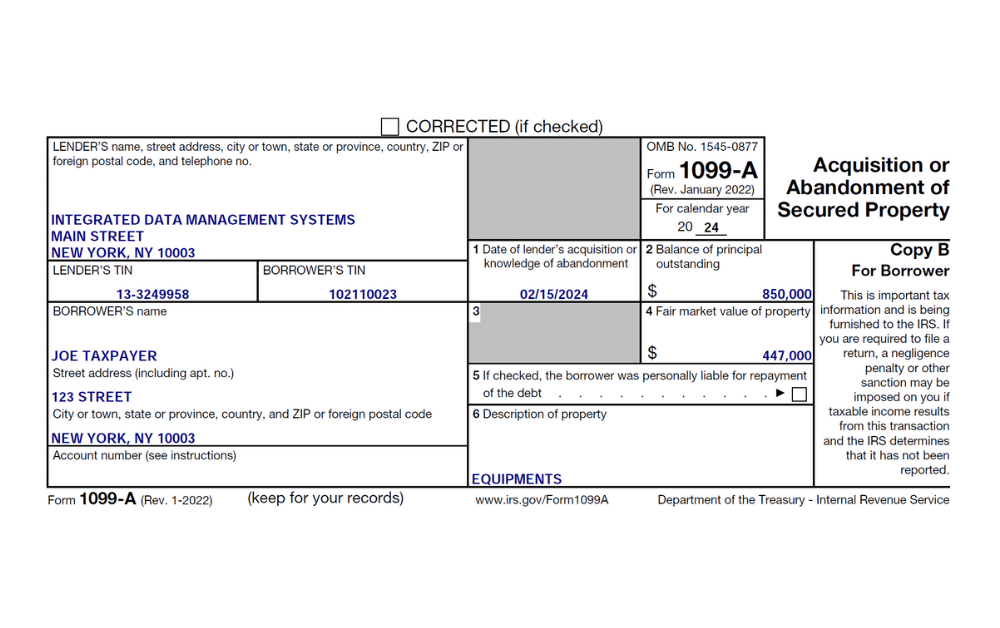
Understanding the Different Types of 1099 Forms
Before you go looking for a form, you must understand which version you need. The “1099” is not a single document but a family of “information returns” used by the Internal Revenue Service (IRS) to track income that isn’t a standard salary or wage. Using the wrong form can lead to processing delays and potential audits.
1099-NEC vs. 1099-MISC
The most significant change in recent years occurred in 2020 when the IRS reintroduced Form 1099-NEC (Non-Employee Compensation). Previously, most payments to independent contractors were reported in Box 7 of the 1099-MISC. Now, if you have paid an individual or a non-incorporated business $600 or more during the year for services, you must use Form 1099-NEC.
Form 1099-MISC (Miscellaneous Information) is still used, but its scope has narrowed. It is now primarily used for reporting rent payments, prizes and awards, medical and health care payments, or payments to an attorney that aren’t for legal services (such as settlement proceeds).
Other Common 1099 Variants (INT, DIV, K)
If you are an investor or an online seller, you may encounter other variations:
- 1099-INT: Issued by banks and financial institutions to report interest income earned on your savings or investments.
- 1099-DIV: Used to report dividends and distributions from stocks or mutual funds.
- 1099-K: This form has gained significant attention recently. It is issued by “Third-Party Settlement Organizations” (like PayPal, Venmo, or Etsy) to report payments received for goods and services. If you run a small business or sell items online, your financial records must align with the 1099-K forms these platforms send to the IRS.
Sources for Obtaining 1099 Forms
Once you have identified the specific form you need, the next step is procurement. It is important to note that you cannot simply print a 1099-NEC Copy A from the internet and mail it to the IRS. The IRS uses high-speed optical character recognition (OCR) equipment, which requires specific red-ink forms.
Downloading and Ordering from the IRS Official Website
The primary source for all tax forms is IRS.gov. However, there is a distinction between forms you can download for your records and forms you can use for official filing.
You can download a “viewable-only” PDF of Form 1099 from the IRS website. This is useful for your internal records or for providing a copy to the recipient (Copy B). However, for Copy A (the version that goes to the IRS), you must order the physical, scannable forms. The IRS provides these free of charge, but they can take up to 10 business days to arrive. If you are approaching the January 31 deadline, ordering through the IRS website may not be the fastest option.
Using Tax Software and Accounting Platforms
In the digital age, the most efficient way to “get” a 1099 form is through financial software. Platforms like QuickBooks, Gusto, FreshBooks, and TurboTax have integrated 1099 filing services.
Instead of dealing with physical red-ink forms, these platforms allow you to input the contractor’s data and payment totals. The software then generates the forms digitally. For a fee, these services will e-file the forms with the IRS and the state, and they will even mail a physical copy or provide a digital download link to your contractors. This is often the preferred method for small business owners because it minimizes manual entry errors and ensures that the forms are updated to the latest tax year standards.
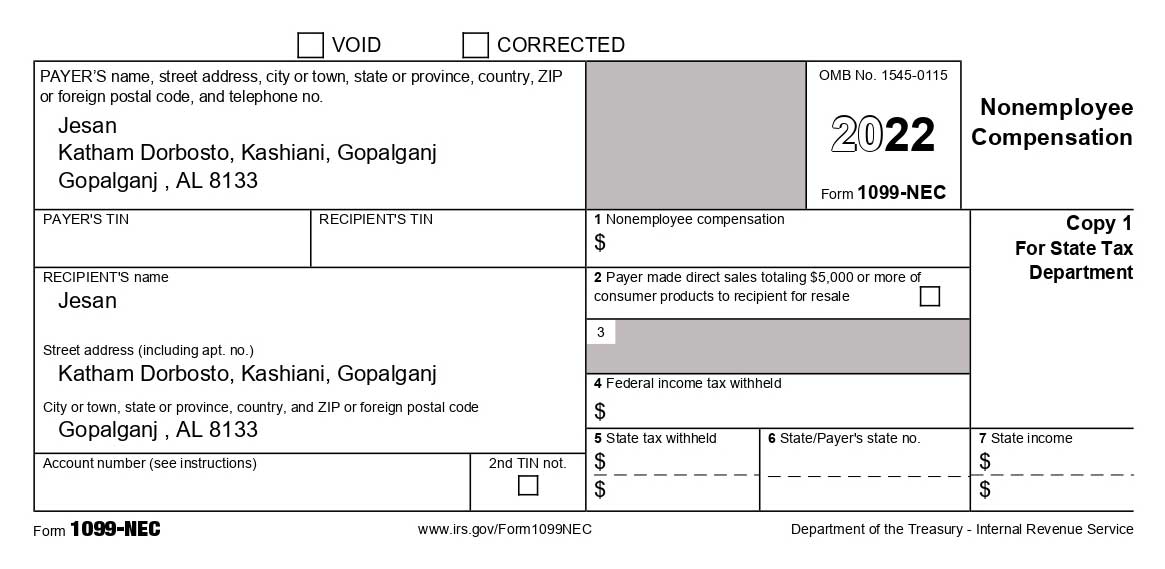
Office Supply Stores and Authorized Retailers
If you prefer the traditional paper-filing route, you can purchase 1099 form packets at major office supply stores like Staples, Office Depot, or Amazon. These retail packets typically include the red-ink Copy A, the recipient copies, and the 1096 transmittal form (which acts as a cover sheet for your 1099s). When purchasing from a retailer, always ensure the forms are for the correct tax year, as the IRS frequently updates the layouts.
Best Practices for Filing and Distribution
Obtaining the form is only half the battle. Successful financial management requires adhering to strict filing protocols and deadlines. Failure to do so can result in substantial penalties that eat into your business’s bottom line.
Important Deadlines to Remember
The most critical date for 1099-NEC forms is January 31. By this date, you must have both filed the form with the IRS and provided a copy to the recipient. If you are filing 1099-MISC, the deadline for providing the copy to the recipient is also January 31, but the filing deadline for the IRS may be later (February 28 if filing by paper, or March 31 if filing electronically). To keep your finances simple, it is a best practice to aim for January 31 for all 1099-related tasks.
Electronic Filing (e-file) vs. Paper Filing
The IRS strongly encourages e-filing. In fact, for the 2023 tax year and beyond, the IRS has lowered the threshold for mandatory e-filing. If you are filing 10 or more information returns (including W-2s and 1099s) in total, you are now required to file electronically.
E-filing is not only more environmentally friendly but also more secure. It provides an immediate confirmation receipt, which is a vital piece of evidence if the IRS ever questions your filing history. To file electronically yourself, you can use the IRS Information Returns Intake System (IRIS), a free portal designed specifically for small businesses to create and file 1099s.
Avoiding Common Penalties
The IRS takes information reporting seriously because it is the primary way they verify that individuals are reporting their full income. Penalties for failing to file a correct 1099 can range from $60 to $310 per form, depending on how late the filing is. If the IRS determines that a business has “intentionally disregarded” the filing requirements, the penalty can be at least $630 per form, with no maximum limit. For a small business with ten contractors, an oversight could result in thousands of dollars in unnecessary costs.
Organizing Your Financial Data for 1099 Season
The best way to handle 1099 forms is to prepare for them throughout the year, rather than scrambling in January. Proper financial organization is the hallmark of a successful enterprise and a responsible freelancer.
Collecting Form W-9 from Contractors
One of the biggest hurdles to issuing 1099s is missing information—specifically, the contractor’s Taxpayer Identification Number (TIN) or Social Security Number (SSN). To avoid this, make it a standard business policy to never issue a payment to a new contractor until they have submitted a completed Form W-9 to you.
The W-9 provides you with the contractor’s legal name, address, and tax ID. Keeping these on file in a secure digital folder ensures that when January arrives, you have all the necessary data to generate your 1099s in minutes.
Tracking Payments Throughout the Year
The “Money” niche is all about tracking cash flow. If you use accounting software, ensure you tag payments to contractors as “1099-eligible.” This allows you to run a report at year-end that instantly calculates exactly how much you paid each person. If you are managing your finances via spreadsheets, maintain a dedicated column for contractor payments. Remember, the $600 threshold applies to the cumulative total paid over the entire calendar year, not per project.
Utilizing Financial Tools for Automation
In today’s financial climate, automation is your greatest ally. Many modern business bank accounts and payment processors now offer built-in 1099 tracking. Tools like Melio, Bill.com, or even specialized banking for freelancers like Found or Relay, automatically track your spending and categorize it for tax purposes. By leveraging these financial tools, you transform the “1099 season” from a stressful administrative burden into a simple, automated review of your annual financial health.

Conclusion
Navigating the world of 1099 forms is a vital skill for anyone operating in the modern business environment. Whether you obtain your forms through the IRS, a retail store, or an automated software solution, the goal remains the same: accurate reporting and timely compliance. By understanding the nuances of the 1099-NEC and 1099-MISC, staying ahead of deadlines, and maintaining rigorous financial records, you protect your business from penalties and gain a clearer picture of your professional financial landscape. Tax compliance isn’t just a legal obligation; it is a fundamental component of sophisticated financial management.
aViewFromTheCave is a participant in the Amazon Services LLC Associates Program, an affiliate advertising program designed to provide a means for sites to earn advertising fees by advertising and linking to Amazon.com. Amazon, the Amazon logo, AmazonSupply, and the AmazonSupply logo are trademarks of Amazon.com, Inc. or its affiliates. As an Amazon Associate we earn affiliate commissions from qualifying purchases.