
Understanding the fundamental components of your financial tools is a cornerstone of effective personal finance management. Among the most common yet often misunderstood is the humble check. While digital transactions increasingly dominate, physical checks still play a vital role in various financial operations, from paying rent to receiving payments. A key piece of information on any check, and one frequently sought after, is your bank account number. Knowing precisely where to locate it, and understanding its significance, is crucial for numerous financial tasks. This guide will demystify the structure of a check, helping you effortlessly pinpoint your account number and appreciate its role in your financial security.

Understanding the Anatomy of Your Check
Before diving into the specifics of finding your account number, it’s beneficial to understand the overall layout of a standard personal check. Think of a check as a carefully designed document, each section serving a distinct purpose in facilitating secure fund transfers. Recognizing these elements will not only help you locate your account number but also deepen your understanding of how your banking system operates.
The Key Players: Your Bank and You
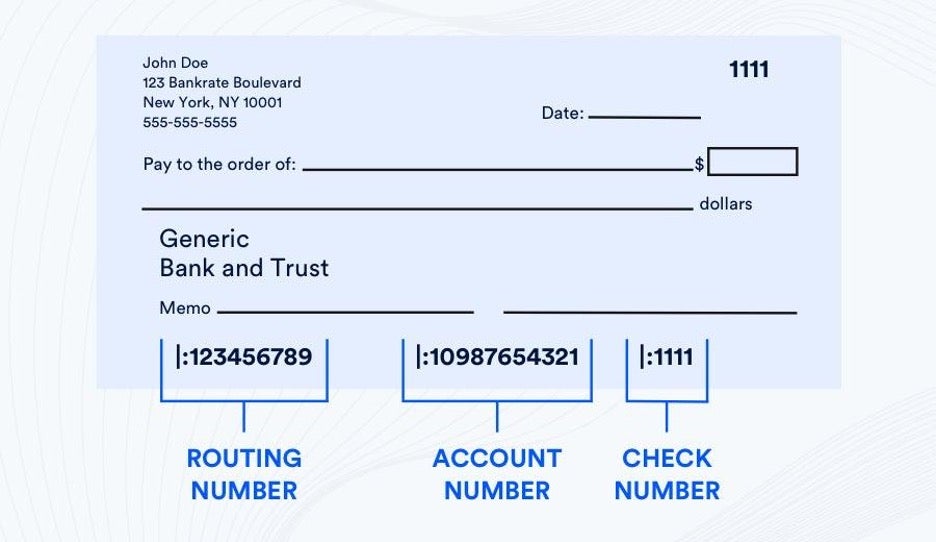
At the top of the check, you’ll typically find the name and address of the account holder (you or your business) on the left, and the name and logo of your financial institution on the right. Below your name, there’s usually a space to write the date. To the right, you’ll see a box where you write the numerical amount of the check, and below that, a line to write out the amount in words. There’s also a “Pay to the Order of” line, a memo line for transaction details, and a signature line. While these parts are essential for writing a check, the information critical for identifying your account lies at the very bottom.
Decoding the Numbers at the Bottom
The real puzzle pieces for identifying your bank and account are found in a series of numbers printed at the bottom of the check. These numbers are printed using a special magnetic ink character recognition (MICR) font, which allows machines to read them quickly and accurately. This strip of numbers is standardized across most financial institutions in the United States, making it universally recognizable for processing. There are typically three distinct sets of numbers, each separated by special symbols, forming a unique identifier for your bank and account.
The Purpose of Each Number Set
Each set of numbers at the bottom of your check serves a specific, vital function in the process of clearing and settling transactions. Understanding their individual roles not only helps you identify your account number but also clarifies the behind-the-scenes mechanics of how money moves from one account to another. Without these distinct identifiers, the financial system would struggle to accurately route and process billions of transactions daily, highlighting their critical importance in maintaining financial order and efficiency.
Pinpointing Your Account Number
Now that we’ve established the general structure, let’s zoom in on the specific sequence you’re looking for. The string of numbers at the bottom of your check is divided into three primary segments. While their exact order can vary slightly between banks, the most common arrangement places the routing number first, followed by your account number, and finally the check number.
The Routing Number: The First Set
The first set of numbers you’ll typically encounter, usually a nine-digit code, is the routing number (also known as an ABA routing number or routing transit number). This number identifies your financial institution (your bank or credit union) and its specific branch where your account is held. Think of it as a zip code for your bank. When you initiate a transaction, the routing number tells the system which bank to send the funds to or pull them from. It’s consistently the same for all checks associated with a particular bank branch. So, if you have multiple accounts at the same branch, they will share the same routing number.
Your Account Number: The All-Important Middle Sequence
Following the routing number, you will find your account number. This is the specific sequence you’re looking for. It is the unique identifier for your individual account within your bank. Account numbers vary in length, often ranging from 8 to 12 digits, sometimes even more. It is this number that distinguishes your checking account from every other account at your bank. If you have multiple accounts (e.g., a checking and a savings account), each will have its own distinct account number, though they might share the same routing number if they are at the same branch. When asked for your bank account number for direct deposit, automatic bill payments, or wire transfers, this is the number you need to provide.
The Check Number: The Final Identifier
The third and final set of numbers at the bottom of your check is the check number. This is a sequential number that uniquely identifies each individual check within your checkbook. You’ll also see this number printed in the top right-hand corner of the check. Its purpose is primarily for your record-keeping and for the bank to track individual transactions. As you use checks from your checkbook, this number will increase sequentially. It’s important for reconciliation, helping you match your check register entries with your bank statement.
Why Your Account Number Matters (And When You’ll Need It)
Your account number is more than just a string of digits; it’s a crucial key to accessing and managing your funds. While it might not be something you memorize like your phone number, knowing where to find it and understanding its applications is fundamental for seamless personal finance. From setting up recurring payments to managing large transfers, your account number plays a pivotal role in a multitude of financial activities. Misplacing or misremembering it can cause delays or even prevent essential transactions from taking place.
Setting Up Direct Deposit and Bill Pay
One of the most common reasons you’ll need your account number is to set up direct deposit. Whether it’s your salary, government benefits, or a tax refund, providing your employer or the issuing agency with your routing and account numbers ensures funds are deposited directly into your bank account, bypassing physical checks. Similarly, setting up automatic bill payments, such as for utilities, mortgages, or credit cards, often requires these same details to authorize regular debits from your account. This automates your finances, ensuring payments are made on time and reducing the risk of late fees.
Initiating Wire Transfers or ACH Payments
For larger or more time-sensitive fund transfers, such as buying a home, making an international payment, or transferring funds to another individual’s account at a different bank, you’ll frequently need your account number in conjunction with the routing number. Wire transfers are typically used for same-day, irrevocable transfers, while Automated Clearing House (ACH) payments are electronic payments processed in batches, commonly used for direct deposits and bill payments within the US. Both methods rely heavily on accurate routing and account numbers to ensure the funds reach the correct destination.
Verifying Your Bank Account Information
There are instances where businesses or service providers might require you to verify your bank account details. This could be for a one-time large purchase, applying for a loan, or setting up a new financial service that links to your bank account. Providing a voided check or simply the routing and account numbers is a standard procedure for this verification, confirming that you are indeed the account holder and that the account is active and legitimate. This acts as a security measure, preventing unauthorized access or transactions.
Ordering New Checks
Paradoxically, when you need to order new checks, you’ll often need to reference an old one. Check printing services, whether through your bank or a third-party vendor, require your routing and account numbers (and sometimes the starting check number) to ensure the new checks are correctly linked to your existing account. This process streamlines the reordering, making sure your new checks are immediately usable and accurately reflect your financial details.
Safeguarding Your Financial Information
While knowing where to find your account number is essential for financial operations, it’s equally important to understand the implications of this information falling into the wrong hands. Your account number, along with your routing number, is a gateway to your finances. Protecting these details is paramount to preventing fraud and maintaining the security of your assets. Vigilance and adherence to best practices can significantly reduce your risk.
The Risks of Sharing Too Freely
Sharing your account and routing numbers with untrusted sources can expose you to various risks, including unauthorized withdrawals, identity theft, and check fraud. While these numbers are printed on every check and are necessary for legitimate transactions, they are not intended for public consumption. A malicious individual could potentially use these details to set up fraudulent direct debits, order fake checks, or even attempt to impersonate you to gain further access to your financial life. Always exercise extreme caution when providing this information, ensuring it’s only to reputable entities for legitimate purposes.
Best Practices for Check Security
To mitigate risks, always handle your checks with care. Avoid leaving your checkbook unattended in public places. When mailing checks, ensure mailboxes are secure and that the check is inside an envelope. Shred old checks or any documents containing your account information before disposing of them. Be wary of unsolicited requests for your bank account information, especially via email or phone, as these could be phishing attempts. Regularly monitor your bank statements for any suspicious or unauthorized transactions, and report discrepancies immediately.
What to Do if Your Checkbook is Compromised
If you suspect your checkbook has been lost, stolen, or compromised, act swiftly. The first step is to contact your bank immediately to report the incident. They can advise you on the necessary steps, which may include placing a stop payment on unused checks, monitoring your account for fraudulent activity, or even closing the compromised account and opening a new one. Time is of the essence in these situations, as quick action can limit potential damage and protect your financial well-being.
Alternatives to Finding Your Account Number on a Physical Check
While a physical check is the most direct source for your account number, there are situations where you might not have one readily available. Perhaps you’ve run out, or you’re simply not at home. Fortunately, banks provide several convenient alternative methods to access this crucial information, ensuring you’re never truly without access to your financial details when you need them. These digital and customer service options are designed for both convenience and security.
Online Banking Portals
In today’s digital age, your online banking portal is often the easiest and quickest way to find your account number. Most banks provide secure access to your account details once you log in. Navigate to your account summary or details section, and you’ll typically find both your routing and account numbers listed there. Some banks even offer a “Print Voided Check” or “Direct Deposit Information” option that displays all necessary details in a clear format. Always ensure you are using a secure connection and a trusted device when accessing your online banking.
Bank Statements and Documents
Your monthly bank statements, whether paper or electronic, are another reliable source of your account information. Both your routing and account numbers are usually printed prominently on these statements. If you receive paper statements, check the top or bottom sections for this information. For electronic statements, you can download a PDF version through your online banking portal and locate the details there. These documents are official records of your account and are generally accepted for verification purposes.

Contacting Your Financial Institution Directly
If all else fails, or if you prefer a personal touch, you can always contact your bank or credit union directly. Call their customer service line, visit a local branch, or use their secure messaging system within your online banking portal. Be prepared to verify your identity through security questions, personal details, or by presenting identification if you’re visiting in person. Bank representatives are trained to assist you in locating your account number securely and can also provide any other banking information you might need.
In conclusion, understanding where to find your account number on a check is a fundamental aspect of managing your personal finances effectively. This small detail on a piece of paper or within your digital banking portal is a powerful key, enabling a vast array of financial transactions. By familiarizing yourself with the structure of a check, recognizing the distinct purpose of each numerical sequence, and employing robust security practices, you empower yourself to navigate the financial landscape with confidence and control. Whether for direct deposit, bill pay, or simply reordering checks, knowing your account number and how to protect it is an invaluable financial skill.
aViewFromTheCave is a participant in the Amazon Services LLC Associates Program, an affiliate advertising program designed to provide a means for sites to earn advertising fees by advertising and linking to Amazon.com. Amazon, the Amazon logo, AmazonSupply, and the AmazonSupply logo are trademarks of Amazon.com, Inc. or its affiliates. As an Amazon Associate we earn affiliate commissions from qualifying purchases.