
Securing admission to a college or university is a momentous achievement, but for most students and their families, the secondary milestone is even more critical: determining how to pay for it. The financial aid award letter—often referred to as a “Financial Aid Package” or “Financial Aid Notification” (FAN)—is the official document that outlines the types and amounts of financial assistance a student is eligible to receive. Understanding how to locate, interpret, and act upon this document is the cornerstone of responsible personal finance in higher education.
Navigating the Digital Portals of Higher Education Finance
In the modern era, the traditional “big envelope” arriving via physical mail has largely been replaced by digital notifications. Finding your financial aid award letter requires knowing exactly where to look within the digital ecosystem of your prospective or current institution.
The Institutional Student Portal
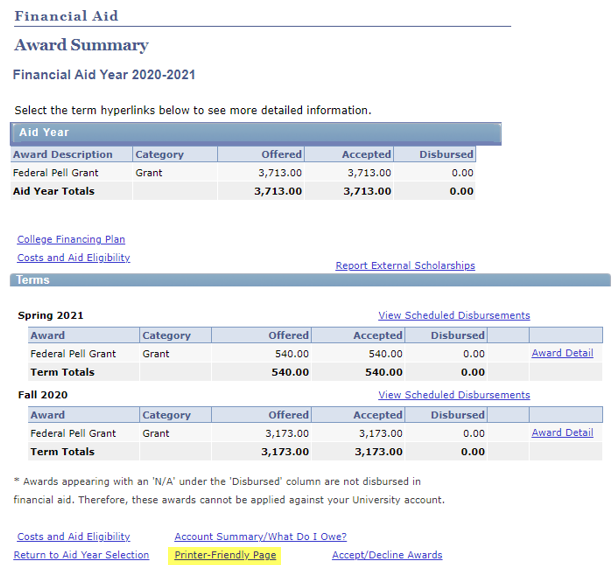
The primary location for your award letter is the college’s internal student portal. Once you have applied or been accepted, the university typically provides login credentials for a system (such as Banner, PeopleSoft, or a proprietary student dashboard). Within this portal, there is usually a dedicated “Financial Aid” or “Finances” tab. Under this section, you will find a sub-category titled “Award Status” or “Award Offer” for the specific academic year. This is the most authoritative source for your financial data.
Official University Email Accounts
Educational institutions communicate almost exclusively through official channels. If you have been granted a university email address (e.g., studentname@university.edu), your notification will be sent there. It is common for students to overlook these emails because they are still checking their personal Gmail or Outlook accounts. If you are a prospective student, the notification might go to the email used on your FAFSA or Common App, but it will frequently contain a link directing you back to the secure portal for privacy reasons.
The Student Aid Report (SAR) via FAFSA
While the FAFSA (Free Application for Federal Student Aid) website does not host your specific institutional award letter, it provides the Student Aid Report (SAR). This document is the precursor to your award letter. It contains your Student Aid Index (SAI)—formerly known as the Expected Family Contribution (EFC)—which colleges use to calculate your aid package. If you cannot find an award letter, check your FAFSA status first to ensure your application was successfully processed and sent to your chosen schools.
Deciphering the Components of Your Award Letter
Once you have located the letter, the next challenge is financial literacy. Award letters are not standardized across the country, which can make them difficult to compare. To manage your finances effectively, you must categorize the offers into three distinct buckets: Gift Aid, Self-Help Aid, and Out-of-Pocket Costs.
Grants and Scholarships: The “Free Money”
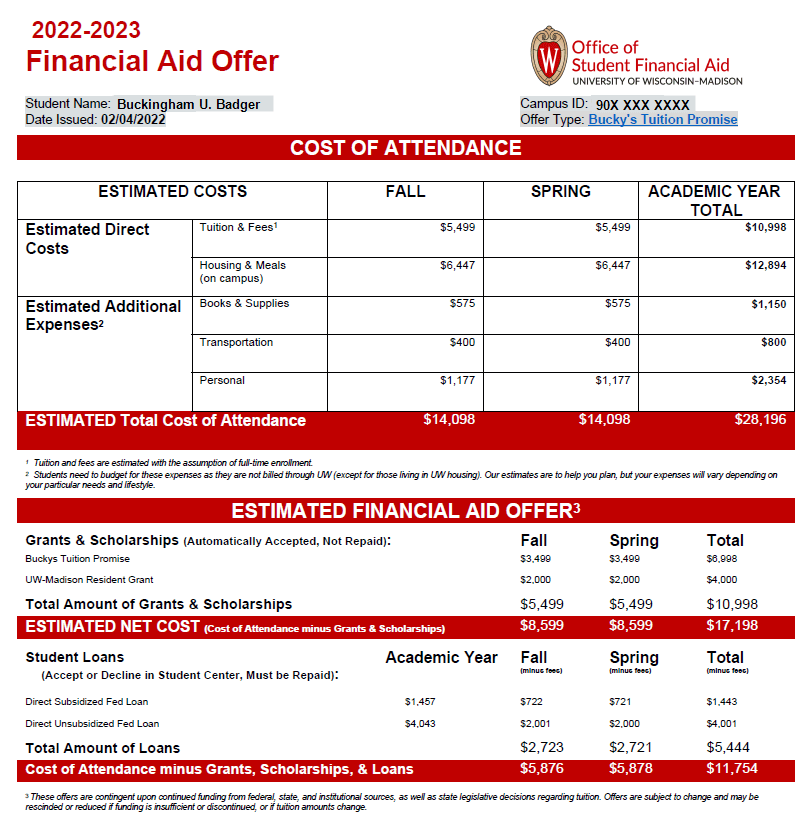
This is the most desirable section of the award letter. Grants (like the Federal Pell Grant) and scholarships (merit-based or need-based from the institution) are forms of “gift aid” that do not require repayment. When reviewing this section, pay close attention to whether the scholarship is “renewable.” Some awards are one-time payments for the freshman year, while others require a specific GPA to maintain throughout your four-year degree.
Federal Work-Study Programs
Work-study is often listed as a dollar amount (e.g., $3,000), but it is important to understand that this is not a lump sum deducted from your tuition bill. Instead, it is the maximum amount you are permitted to earn through an on-campus job. This money is paid directly to the student in the form of a paycheck for hours worked. From a personal finance perspective, work-study is a tool for managing living expenses and books rather than direct tuition costs.
Direct Subsidized and Unsubsidized Loans
Most award letters will include federal student loans.
-
Subsidized Loans: These are preferred because the U.S. Department of Education pays the interest while you are in school at least half-time.
-
Unsubsidized Loans: Interest begins accruing on these loans the moment the funds are disbursed.
Identifying these as debt rather than “aid” is a crucial distinction for your long-term financial health. You are not required to accept the full amount offered; you should only borrow what is strictly necessary after all other options are exhausted.
Timing and Deadlines: When to Expect Your Financial Aid Notification
The arrival of an award letter depends heavily on your admission cycle and the efficiency of federal processing systems. Timing is a critical factor in financial planning, as it dictates when you must commit to a school and how much time you have to secure additional private funding if necessary.
Admission Cycles and Award Release Dates
For students applying under Early Decision (ED) or Early Action (EA), award letters typically arrive in late December or January, shortly after the admission notification. For Regular Decision (RD) applicants, letters generally arrive in March or early April. If you are a returning student, your award letter may not be generated until the late spring or early summer, once the university has processed final grades and verified your continued eligibility.
The Impact of FAFSA Delays
The financial aid timeline is intrinsically linked to the Department of Education’s processing schedule. In years where the FAFSA undergoes significant structural changes, there can be industry-wide delays. It is vital to monitor the “News” or “Alerts” section of the Federal Student Aid website. If the federal government delays sending data to colleges, the colleges, in turn, will delay their award letters. In such cases, institutions often extend their enrollment deposit deadlines from May 1st to later dates.
What to Do If the Letter is Missing
If you have been accepted to a school but have not received an award letter within the expected timeframe, you must be proactive. First, check your “To-Do List” in the student portal. Often, a letter is withheld because the student has been selected for “Verification.” This is a process where the financial aid office requires tax transcripts or other documentation to verify the data on your FAFSA. The award letter will not be generated until these documents are submitted and reviewed.
Strategies for Managing and Comparing Multiple Offers
From a financial management standpoint, receiving multiple award letters is an opportunity to perform a “Net Price” analysis. The school that looks the cheapest on paper (due to lower tuition) may actually be more expensive than a high-tuition school that offers generous institutional grants.
Calculating the “Net Price”
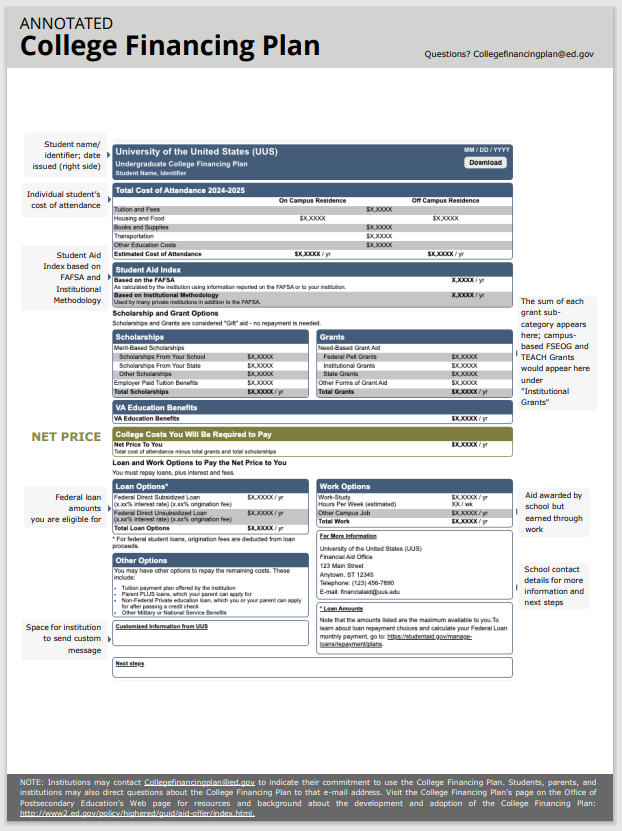
The Net Price is the only number that truly matters for your budget. To find it, take the total Cost of Attendance (COA)—which includes tuition, fees, room, board, books, and travel—and subtract the total amount of “Gift Aid” (grants and scholarships). Do not subtract loans or work-study from this total, as those are either debt or earned income. The resulting number is what you and your family will actually need to pay out of pocket or finance through loans.
Creating a Financial Comparison Spreadsheet
To make an informed decision, organize your offers in a spreadsheet with the following columns:
-
Total Cost of Attendance (COA)
-
Total Grants/Scholarships
-
Net Price (COA minus Grants)
-
Federal Loan Options
-
Remaining Gap
By visualizing the data this way, you can see which institution offers the most sustainable long-term financial path. A school with a $20,000 “gap” per year will result in $80,000 of additional debt or out-of-pocket costs by graduation, which may not be justifiable depending on your expected career earnings.
Taking Action: Accepting, Declining, or Appealing Your Aid
Finding and reading the letter is only the beginning. The final stage involves the formal acceptance of funds and, if necessary, the negotiation of the offer.
The Step-by-Step Acceptance Process
Once you have decided on a college, you must formally “Accept” your aid package. This is usually done through the same student portal where you found the letter. You can choose to accept the grants and scholarships while declining or reducing the loan amounts. This is a critical point for personal finance: you are not obligated to take the full loan amount offered. If your budget allows you to pay $1,000 out of pocket, you should reduce your loan acceptance by that same $1,000 to save on future interest.
Filing a Financial Aid Appeal
Many families are unaware that financial aid offers can be appealed. If your financial situation has changed since you filed your taxes (due to job loss, medical expenses, or other hardships), you can submit a “Professional Judgment” appeal to the college’s financial aid office. You will need to provide documentation of the change in circumstances. Additionally, if a competing school has offered a significantly better package, some private institutions may match or improve their offer to remain competitive.
Maintaining Eligibility for Future Semesters
Your financial aid award letter is an annual document, not a four-year guarantee. To ensure you receive a letter next year, you must maintain Satisfactory Academic Progress (SAP). This typically requires maintaining a minimum GPA and completing a certain percentage of the credits you attempt. Furthermore, you must file a new FAFSA every year. Being diligent about these requirements ensures that your financial roadmap remains intact until you cross the graduation stage.
aViewFromTheCave is a participant in the Amazon Services LLC Associates Program, an affiliate advertising program designed to provide a means for sites to earn advertising fees by advertising and linking to Amazon.com. Amazon, the Amazon logo, AmazonSupply, and the AmazonSupply logo are trademarks of Amazon.com, Inc. or its affiliates. As an Amazon Associate we earn affiliate commissions from qualifying purchases.