
In the intricate world of personal finance, certain pieces of information act as crucial identifiers, enabling the smooth flow of money through various digital and traditional channels. Among these, the bank routing number stands out as a fundamental component. Often overlooked until explicitly needed, this nine-digit code is the backbone for countless financial transactions, from setting up direct deposit to facilitating online bill payments. Understanding what a routing number is, its purpose, and—most importantly—where to locate it, is a foundational step in managing your finances effectively and securely. This comprehensive guide will demystify the bank routing number, equipping you with the knowledge and tools to confidently find and utilize this essential financial identifier whenever required.

Understanding the Foundation: What is a Bank Routing Number?
Before delving into the practicalities of finding your routing number, it’s vital to grasp its fundamental nature and significance. A bank routing number, also known as an ABA (American Bankers Association) routing transit number (RTN), is a nine-digit code used by financial institutions in the United States to identify other financial institutions in the context of specific transactions. Think of it as a unique address for your bank, ensuring that funds are directed to the correct financial entity within the vast banking network.
The Anatomy of a Routing Number: ABA Transit Numbers
The nine digits of a routing number aren’t random; they follow a specific structure designed for accuracy and efficiency. The first four digits identify the Federal Reserve routing symbol, indicating the district of the Federal Reserve Bank that serves the financial institution. The next four digits identify the specific financial institution. Finally, the ninth digit is a “check digit,” used to validate the entire routing number through a mathematical algorithm, helping to catch errors and prevent misrouted transactions. This meticulous design ensures a high level of accuracy in financial transfers. Initially designed for processing paper checks, the ABA routing number system has seamlessly transitioned into the digital age, becoming indispensable for electronic funds transfers.
Why Routing Numbers are Essential for Financial Transactions
The necessity of a routing number stems from its role as a precise institutional identifier. Without it, financial transactions would lack a clear destination, leading to chaos and potential loss of funds. Routing numbers are crucial for:
- ACH (Automated Clearing House) Transfers: This includes direct deposits (paychecks, government benefits), automatic bill payments, and person-to-person transfers.
- Wire Transfers: Though wire transfers often use different routing numbers than ACH, the principle of institutional identification remains paramount.
- Check Processing: Even in today’s digital world, paper checks still rely on routing numbers for clearing and settlement.
- Online Payments and Transfers: Any transaction that moves money from one bank account to another, typically facilitated by third-party payment processors, will almost certainly require your routing number.
Differentiating Routing Numbers from Account Numbers
A common point of confusion for many is distinguishing between a bank routing number and an account number. While both are critical for financial transactions, they serve distinct purposes:
- Routing Number: Identifies your bank or credit union as a whole. It directs funds to the correct financial institution.
- Account Number: Identifies your specific account (e.g., checking, savings) within that financial institution. It directs funds to your particular holding within your bank.
You can imagine the routing number as the street address of a building, and the account number as the specific apartment number within that building. Both are necessary to deliver mail (or money) to the correct recipient. Providing the wrong routing number means the money goes to the wrong bank; providing the wrong account number means it goes to the wrong person within the correct bank. Accuracy for both is paramount.
Common Places to Locate Your Routing Number
Fortunately, finding your bank routing number is generally straightforward, as financial institutions make this vital information accessible through several common channels. Knowing where to look can save you time and ensure you have the correct number when you need it most.
Your Checkbook: The Traditional Method
For those who still use paper checks, your checkbook is arguably the most traditional and easily accessible source for your routing number.
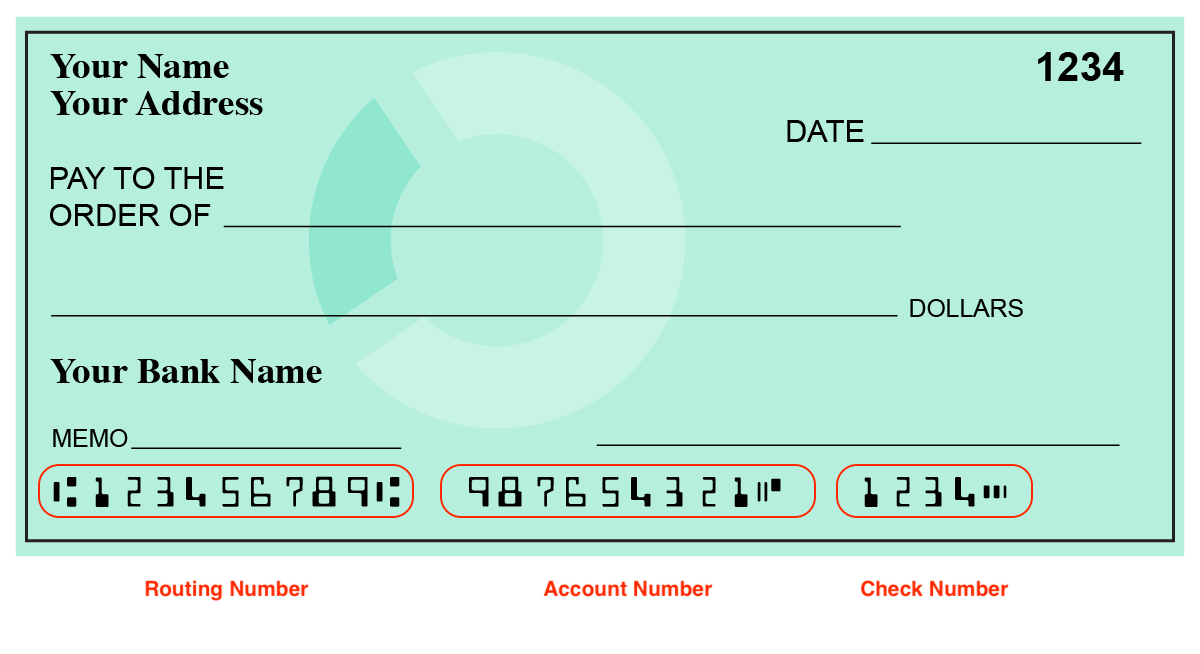
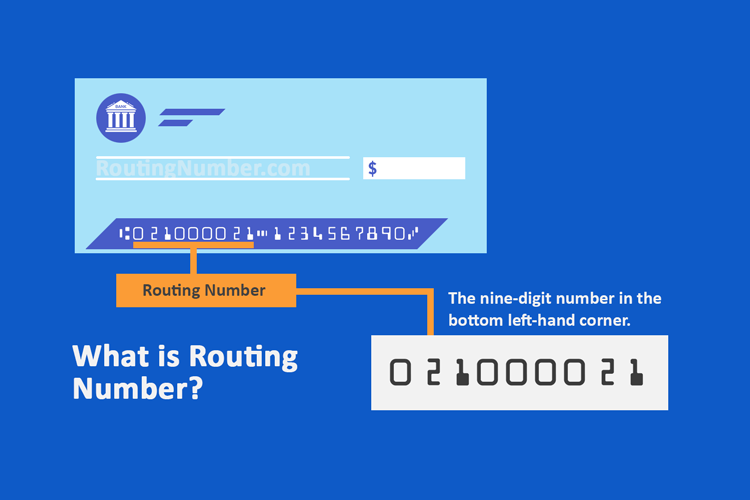
- Location: Look at the bottom left-hand corner of any check. You will typically find three sets of numbers printed in magnetic ink (MICR line).
- Order: From left to right, the first nine-digit number is your bank’s routing number. The middle set of numbers is your account number, and the last set is the check number.
- Note: This routing number is specifically for your checking account and is used for ACH transactions and check processing.
Online Banking Portals: Digital Convenience
In our increasingly digital world, your bank’s online banking platform is an excellent and frequently updated source for your routing number.
- Process: After logging into your bank’s website or mobile app, navigate to your account details. This might be under sections like “Account Summary,” “Account Information,” “Direct Deposit Info,” or “Statements.”
- Accessibility: Most banks prominently display the routing number alongside your account number for easy access. Some might require you to click into a specific account (e.g., checking, savings) to view its details.
- Advantage: This method is particularly useful if you don’t have physical checks or need to verify the most current routing number, as some banks might have different routing numbers for various types of transactions or mergers.
Bank Statements: Physical and Electronic Records
Both physical and electronic bank statements provide a reliable record of your account information, including the routing number.
- Physical Statements: If you receive paper statements in the mail, your routing number is usually printed near your account number at the top or bottom of the statement.
- Electronic Statements: For those who opt for paperless banking, you can typically access your e-statements through your online banking portal. Download a PDF version, and the routing number will be similarly displayed.
- Benefit: Statements offer a historical record and can be useful for cross-referencing if you suspect a discrepancy.
Direct Contact: Calling or Visiting Your Bank
When in doubt or if you’re unable to find the information through other means, directly contacting your bank or credit union is always a reliable option.
- Phone: Call your bank’s customer service line. Be prepared to verify your identity with personal information (e.g., account number, social security number, mother’s maiden name) before they can provide your routing number.
- In-Person: Visit a local branch. A teller or customer service representative can provide you with the correct routing number upon verification of your identity.
- Pros: This method ensures you receive the absolutely correct and current routing number directly from the source.
Using Official Bank Websites and Apps
Beyond your personal online banking portal, many banks also publish general routing numbers on their public-facing websites.
- General Information Pages: Look for sections like “Contact Us,” “Help & Support,” “FAQs,” or “Direct Deposit Information” on your bank’s main website.
- Mobile Apps: Many bank apps have a dedicated section for “Account Info” or “Direct Deposit,” which will display the routing number.
- Caution: While useful, be aware that some larger banks might have multiple routing numbers depending on the state or region where the account was opened, or for different types of transactions (e.g., wire transfers vs. ACH). Always double-check that the routing number you find is specific to your account type and location if multiple options are presented.
Specific Scenarios and Considerations for Routing Numbers
While the basic principles of finding a routing number remain consistent, certain scenarios and types of transactions introduce nuances that are important to understand. Being aware of these distinctions can prevent errors and ensure your money reaches its intended destination.
Routing Numbers for Different Account Types (Checking vs. Savings)
It’s a common misconception that all accounts at the same bank share the same routing number. While often true for checking and savings accounts opened at the same branch, this is not always the case.
- Consistency: For most major banks, the routing number for your checking account is also the routing number for your savings account for standard ACH transactions. This is often the number found on your checks.
- Variations: However, some banks might use a slightly different routing number for savings accounts, particularly for certain types of electronic transfers or if the accounts were opened at different times or in different geographical regions.
- Best Practice: Always verify the specific routing number required for the transaction you’re undertaking, especially if it involves a savings account, by checking your online banking portal or a statement specific to that savings account.
Wire Transfers vs. ACH Transfers: Different Numbers?
This is a critical distinction that can lead to significant delays or even failed transactions if not handled correctly.
- ACH (Automated Clearing House) Transfers: These are common electronic transfers for direct deposit, bill pay, and person-to-person payments. They typically use the standard routing number found on your checks or online banking portal. These transfers are processed in batches and are generally less immediate.
- Wire Transfers: Wire transfers are much faster, often processed in real-time, and are typically used for large, time-sensitive, or international transactions. Banks often use a different routing number for incoming wire transfers compared to their standard ACH routing number. This is sometimes referred to as the “wire transfer routing number.”
- Action: If you are receiving a wire transfer, it is imperative to contact your bank directly and ask for the specific routing number for incoming wire transfers. Do not assume it’s the same as your check routing number.
Finding International Bank Codes (SWIFT/BIC)
The U.S. routing number system is primarily for domestic transactions within the United States. For international transfers, a different set of identifiers is used:
- SWIFT Code (Society for Worldwide Interbank Financial Telecommunication) or BIC (Bank Identifier Code): This is an international standard identifying specific banks and branches in cross-border payments. It typically consists of 8 or 11 characters.
- IBAN (International Bank Account Number): While not universally used, many countries outside the U.S. use IBANs, which include the country code, bank code, and account number in a single string, to standardize international bank account details.
- Application: If you need to send or receive money internationally, you will almost certainly need the recipient’s SWIFT/BIC code, and potentially an IBAN if applicable to their country. Your bank can provide its SWIFT code for incoming international transfers.
- Resource: Your bank’s website (often in the “International Transfers” or “Wire Transfers” section) or customer service will be the best source for this information.
When to Be Cautious: Security and Fraud Prevention
While routing numbers are not as sensitive as your full account number or Social Security Number, they are still a piece of your financial identity.
- Public Display: Routing numbers are generally considered semi-public information, as they are printed on checks and often listed on bank websites. Knowing a routing number alone isn’t enough to compromise your account for withdrawals, as an account number is also needed.
- Phishing Scams: Be wary of unsolicited requests for your routing number, especially if they come with urgent or suspicious undertones. Legitimate entities (like your employer for direct deposit) will typically use secure methods or forms.
- Verification: Always verify the authenticity of any entity requesting your routing number, particularly if it’s for something other than setting up direct deposit or automatic payments with trusted businesses. Never provide it over insecure channels or to unverified sources.
The Practical Applications of Your Routing Number
The routing number is more than just a sequence of digits; it’s a critical tool that facilitates a wide array of financial activities in your daily life. Understanding its practical applications underscores its importance in modern personal finance.
Setting Up Direct Deposit and Bill Pay
Perhaps the most common use of your routing number is for automated transactions that simplify your financial life.
- Direct Deposit: Your employer will require your bank’s routing number and your account number to electronically deposit your paycheck directly into your checking or savings account. This eliminates the need for physical checks and ensures faster access to your funds.
- Automatic Bill Pay: Similarly, utility companies, credit card providers, and other service providers often offer automatic bill payment options. You’ll provide your routing and account numbers to authorize them to debit your account directly on the due date, helping you avoid late fees and manage recurring expenses effortlessly.
Facilitating Online Payments and Transfers
The rise of digital banking and online commerce has amplified the utility of your routing number.
- Online Purchases: While many online stores use credit cards or payment platforms (like PayPal), some services or larger purchases might allow direct debit from your bank account, for which your routing number will be needed.
- Peer-to-Peer (P2P) Services: When linking your bank account to P2P payment apps (e.g., Venmo, Zelle, Cash App) for larger transfers or to cash out funds, you’ll often need your routing number to establish the connection.
- Bank-to-Bank Transfers: If you’re transferring funds between your accounts at different financial institutions, or sending money to a friend’s account at another bank, you’ll typically need both the routing and account numbers for the destination account.
Tax Refunds and Other Government Payments
Government agencies frequently utilize direct deposit for distributing funds efficiently and securely.
- Tax Refunds: The IRS strongly encourages taxpayers to opt for direct deposit for their tax refunds, citing faster processing and greater security compared to paper checks. You’ll provide your routing and account numbers on your tax forms.
- Social Security and Other Benefits: Recipients of Social Security benefits, veterans’ benefits, and other government payments often receive their funds via direct deposit, requiring the relevant banking information.
Managing Loan Payments and Credit Card Bills
For those managing various forms of debt, your routing number is instrumental in setting up convenient payment methods.
- Loan Payments: Whether it’s a mortgage, auto loan, or student loan, you can typically set up automatic payments from your bank account using your routing and account numbers. This ensures payments are made on time, helping you maintain a good credit history.
- Credit Card Payments: While many credit card companies allow you to pay directly from their website using your bank account details, this process fundamentally relies on your routing number to direct the payment to the correct financial institution.
Troubleshooting and Best Practices
Despite its common usage, finding or using a routing number can occasionally present challenges. Knowing how to troubleshoot and adhere to best practices will enhance your financial security and transaction efficiency.
What to Do if You Can’t Find Your Routing Number
If you’ve checked all the usual places (checks, online banking, statements) and are still coming up empty, don’t panic.
- Recheck: Sometimes it’s a matter of looking in the exact right spot. For online banking, delve deeper into “Account Details” or “Direct Deposit Info” sections.
- Bank’s Public Website: Search your bank’s official website directly. Many banks have a “Find My Routing Number” tool or a dedicated FAQ page.
- Call Customer Service: This is the most reliable fallback. Your bank’s customer service line can quickly provide the correct number after verifying your identity.
- Visit a Branch: An in-person visit guarantees direct assistance.
Verifying Your Routing Number’s Accuracy
Using the wrong routing number can lead to significant headaches, including delayed transactions, returned payments, and potential fees.
- Double-Check: Always double-check the routing number before submitting it, especially for critical transactions like direct deposit or large transfers.
- Official Sources: Prioritize information from your bank’s official online portal, statements, or direct communication over third-party websites (unless it’s a reputable aggregator that pulls directly from official sources).
- Context Matters: Remember that wire transfer routing numbers might differ from ACH numbers. Always confirm you’re using the correct type of routing number for the specific transaction.
Protecting Your Financial Information
While a routing number alone isn’t sufficient for large-scale fraud, exercising caution is always wise.
- Secure Channels: Only provide your routing number over secure, encrypted channels (e.g., your employer’s HR portal, your bank’s secure website) and never through unencrypted email or text messages unless explicitly instructed by a verified source and you’re confident in the security.
- Legitimate Requests: Be suspicious of unexpected requests for your banking information. Legitimate organizations typically request this information through formal processes.
- Monitor Accounts: Regularly review your bank statements and online transaction history for any unauthorized activity. Early detection is key to mitigating potential fraud.
In conclusion, the bank routing number is a small but mighty piece of your financial puzzle. It underpins the vast majority of electronic money movement within the United States, making your financial life more convenient and efficient. By understanding its purpose, knowing where to reliably find it, and being mindful of its specific applications and security considerations, you can navigate your personal finances with greater confidence and control. Whether you’re setting up your first direct deposit or managing complex international transfers, a solid grasp of your routing number’s role is an indispensable asset.
aViewFromTheCave is a participant in the Amazon Services LLC Associates Program, an affiliate advertising program designed to provide a means for sites to earn advertising fees by advertising and linking to Amazon.com. Amazon, the Amazon logo, AmazonSupply, and the AmazonSupply logo are trademarks of Amazon.com, Inc. or its affiliates. As an Amazon Associate we earn affiliate commissions from qualifying purchases.