
For the financially conscious individual, travel is often one of the most significant discretionary expenses in a yearly budget. However, viewed through the lens of personal finance and strategic asset management, the cost of airfare is not a fixed liability but a variable that can be optimized through data-driven decision-making and the leverage of financial ecosystems. Finding cheap plane tickets is less about “luck” and more about understanding the mechanics of airline pricing algorithms, utilizing the right financial tools, and executing a disciplined approach to expenditure.

When we approach travel from a wealth-management perspective, every dollar saved on a flight is a dollar that remains in an investment portfolio or a high-yield savings account. To master the art of the “cheap ticket,” one must transition from a passive consumer to an active market participant.
Leveraging the Financial Ecosystem of Credit Rewards
The most effective way to lower the net cost of airfare is to integrate travel spending into a broader credit strategy. In the world of personal finance, “travel hacking” is the practice of using credit card sign-up bonuses and ongoing spending multipliers to accumulate points and miles that can be redeemed for flights at a fraction of their retail value.
The Power of Transferable Points
Fixed-value points (where 100 points equals $1.00) provide a reliable baseline, but the true financial arbitrage exists within transferable point currencies. Programs such as Chase Ultimate Rewards, American Express Membership Rewards, and Capital One Miles allow users to move points to various airline partners. By doing so, a savvy traveler can often find “sweet spots” in award charts where the cent-per-point (CPP) value far exceeds the standard 1-cent benchmark. For example, transferring 60,000 points for a business class seat that retails for $4,000 results in a valuation of over 6.6 cents per point—a massive return on investment that cash-back cards cannot match.
Sign-Up Bonuses and Annual Percentage Yields
From a cash-flow perspective, sign-up bonuses (SUBs) represent the highest “yield” on spending available in the financial market. When an individual needs to make a large purchase—perhaps a home renovation or a new laptop—putting that spend toward a new credit card with a high SUB can yield enough points for a round-trip international flight. This effectively reduces the “cost” of the flight to the opportunity cost of the annual fee, which is often offset by travel credits and lounge access.
Cash Back Portals and Stackable Savings
Beyond points, the use of cash-back portals such as Rakuten or TopCashback can add an extra layer of savings. By clicking through these portals before booking on an airline’s site or a third-party aggregator, you can recoup 1% to 10% of the ticket price. When combined with a credit card that offers 3x to 5x points on travel, the effective discount becomes a significant percentage of the total transaction.
Utilizing Data-Driven Tools for Market Timing
The airline industry uses sophisticated dynamic pricing models that fluctuate based on demand, fuel costs, and competitive positioning. To find the cheapest tickets, you must utilize tools that provide transparency into these fluctuations.
Google Flights: The Gold Standard for Transparency
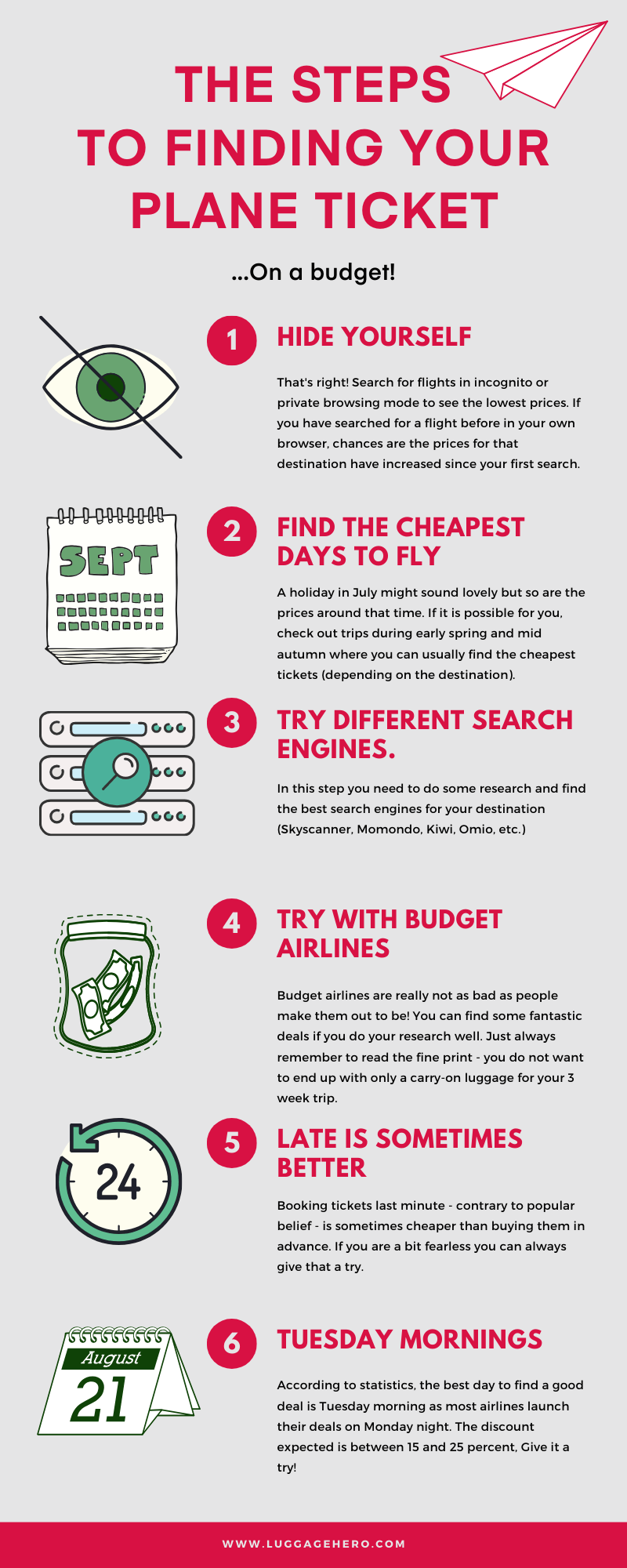
Google Flights is the most powerful tool for initial price discovery. Its “Track Prices” feature allows users to receive email alerts when a specific route drops in price. From a financial planning perspective, this allows you to set a “strike price”—the maximum amount you are willing to pay based on historical averages. By waiting for the algorithm to hit your strike price, you avoid the premium of emotional or last-minute booking.
Hopper and Predictive Analytics
Hopper uses big data to predict whether flight prices will rise or fall with 95% accuracy. In the context of personal finance, this is similar to using technical analysis in stock trading. If the tool suggests “Wait,” you are essentially avoiding a high-entry point in the market. By following these data-backed recommendations, travelers can save an average of $50 to $100 per ticket, which adds up significantly for a family or frequent business traveler.
Skyscanner and “Everywhere” Searches
If your financial goal is to travel as cheaply as possible regardless of the destination, Skyscanner’s “Everywhere” search tool is an essential asset. This tool ranks destinations by price from your home airport, allowing you to choose the destination with the lowest capital requirement. This “destination-agnostic” approach is the ultimate way to keep travel expenses within a strict monthly or yearly budget.

Identifying and Exploiting Pricing Inefficiencies
Markets are rarely perfectly efficient, and the airline industry is no exception. There are specific strategies that, while requiring a higher degree of risk management, can lead to substantial savings.
The Logic of “Hidden City” Ticketing
Hidden city ticketing, popularized by platforms like Skiplagged, involves booking a flight with a layover in your actual intended destination and then skipping the second leg. For instance, a direct flight from New York to Charlotte might cost $400, but a flight from New York to Orlando with a layover in Charlotte might only cost $150. While this strategy is frowned upon by airlines and carries risks (such as not being able to check bags), the financial savings are undeniable. It is a form of geographic arbitrage that exploits the illogical nature of hub-and-spoke pricing.
Mistake Fares: The Ultimate Financial Windfall
Occasionally, due to human error or technical glitches, airlines publish “mistake fares”—such as a $200 round-trip ticket from San Francisco to Tokyo. To capitalize on these, one must be part of alert communities like Scott’s Cheap Flights (Going) or Secret Flying. These opportunities require immediate liquidity and quick decision-making, as they are often corrected within hours. In the world of finance, these are the “black swan” events of the travel market—rare, but incredibly lucrative for those positioned to act.
Positioning Flights and LCC Integration
Low-Cost Carriers (LCCs) like Spirit, Ryanair, or AirAsia offer a “unbundled” product that can be much cheaper than legacy carriers. A sophisticated financial strategy often involves “positioning flights.” This means buying a cheap ticket to a major hub (like London or Singapore) and then booking a separate, extremely low-cost local flight to your final destination. While this requires more logistical planning, the total cost is often hundreds of dollars less than a single through-ticket.
Managing the Hidden Costs: Total Trip Cost Analysis
Finding a cheap plane ticket is only half the battle. A truly optimized financial plan for travel accounts for the “all-in” cost, ensuring that a cheap fare doesn’t lead to expensive secondary costs.
Baggage Fees and Ancillary Revenue
A $40 ticket on a budget airline can quickly become a $120 ticket once carry-on and seat selection fees are added. When comparing tickets, it is vital to calculate the “Total Cost of Ownership” (TCO) for that flight. Use a simple spreadsheet to compare a $200 legacy carrier ticket (which includes a bag and a snack) versus a $150 budget ticket with $70 in added fees. Often, the more “expensive” ticket is actually the better financial move.
Foreign Transaction Fees and Currency Hedging
When booking through international websites or Ota (Online Travel Agencies) based in other countries, be wary of foreign transaction fees. Using a credit card with no foreign transaction fees (typically 3%) is a standard requirement for anyone managing their travel finances seriously. Furthermore, some booking sites allow you to pay in the local currency of the airline. If your home currency is currently strong against that local currency, you can effectively “hedge” the cost of the ticket by paying in the weaker denomination.
The Time-Value of Money in Travel
Finally, a professional approach to travel finance must consider the time-value of money. A flight that is $50 cheaper but includes two 6-hour layovers may not be the “cheapest” option when you calculate the cost of airport food, potential hotel stays, and the value of your own time. If you value your time at $50/hour, a 12-hour delay costs you $600 in productivity or personal utility. The cheapest ticket is the one that offers the best balance of monetary cost and time efficiency.
Integrating Travel Costs into a Wealth-Building Strategy
The ultimate goal of finding cheap plane tickets is to ensure that your lifestyle does not outpace your financial growth. By applying these rigorous standards to how you purchase airfare, you transform travel from a “wealth-drain” into a manageable, optimized expense.
Whether it is through the strategic use of credit rewards, the utilization of predictive software, or the exploitation of market inefficiencies, the tools to find cheap plane tickets are available to anyone willing to treat their travel planning with the same seriousness as their investment portfolio. In the end, the money saved on the runway is money that can be put to work in the market, fueling long-term financial independence.
aViewFromTheCave is a participant in the Amazon Services LLC Associates Program, an affiliate advertising program designed to provide a means for sites to earn advertising fees by advertising and linking to Amazon.com. Amazon, the Amazon logo, AmazonSupply, and the AmazonSupply logo are trademarks of Amazon.com, Inc. or its affiliates. As an Amazon Associate we earn affiliate commissions from qualifying purchases.