
The landscape of personal finance has undergone a radical transformation over the last decade. Gone are the days of manually filling out paper forms, calculating complex math on scratchpads, and mailing thick envelopes to the IRS. Today, the question isn’t just about getting taxes done; it’s about choosing the right digital ecosystem that maximizes your refund, minimizes your liability, and fits your specific financial profile.
Filing taxes online has become the standard for modern taxpayers, offering accuracy, speed, and integrated financial planning. Whether you are a traditional W-2 employee, a freelancer navigating the gig economy, or a high-net-worth investor, the digital tools available today cater to every nuance of the tax code. Selecting the right platform requires an understanding of your own financial complexity and the value proposition offered by various service providers.

Leading Commercial Platforms for Comprehensive Filing
When most people consider where to file taxes online, the major commercial players are the first to come to mind. these platforms have spent decades refining their user interfaces to turn a dense legal requirement into a guided, interview-style process.
TurboTax: The Market Leader in User Experience
TurboTax, owned by Intuit, remains the most prominent name in the industry. Its primary strength lies in its “interview” format, which translates tax law into simple, plain-English questions. This approach is particularly beneficial for individuals who feel overwhelmed by financial jargon. From a money-management perspective, TurboTax offers deep integration with other Intuit products like QuickBooks and Mint (now transitioning into Credit Karma), allowing for seamless data imports.
While it is often the most expensive option, the “Live” features—which allow users to speak with a CPA or Enrolled Agent via one-way video—provide a level of financial security that many find worth the premium. For those with complex investment portfolios, including cryptocurrency or foreign assets, TurboTax’s robust import tools can save hours of manual data entry, which is a significant consideration for time-value-of-money calculations.
H&R Block: The Hybrid Approach
H&R Block offers a unique value proposition by bridging the gap between digital DIY filing and professional in-person service. Their online platform is competitive with TurboTax in terms of ease of use and feature sets. However, their true advantage is the “office backup.” If an online filer hits a wall or receives a complex tax notice later in the year, they have the option to walk into one of thousands of physical locations for assistance.
For taxpayers who are risk-averse or those transitioning from professional preparation to digital tools, H&R Block provides a psychological and financial safety net. Their pricing is generally tiered based on the complexity of the return, with specific packages for homeowners, investors, and small business owners.
TaxSlayer: High Value for Straightforward Returns
TaxSlayer is often the preferred choice for the cost-conscious taxpayer who still wants a guided experience. It lacks some of the hyper-polished UI elements of its larger competitors, but it provides all the necessary forms for a fraction of the cost. For active traders or those with multiple side hustles, TaxSlayer’s “Premium” and “Self-Employed” tiers often come in significantly lower than the “Home & Business” equivalents elsewhere. This makes it an excellent tool for those focused on minimizing their overhead costs in their personal finance journey.
Low-Cost and Free Online Filing Options
For many taxpayers, the goal is to keep as much of their hard-earned money as possible, which means avoiding high filing fees. Several high-quality, low-cost, or even entirely free options exist that do not compromise on the accuracy of the return.
The IRS Free File Program
One of the most underutilized resources in the financial world is the IRS Free File program. This is a public-private partnership between the IRS and several tax software companies. If your Adjusted Gross Income (AGI) falls below a certain threshold—typically $79,000—you are eligible to use brand-name software to file your federal return for free.
It is important to access these tools directly through the IRS.gov website to ensure you are using the official program. Some providers also include free state filing within this program, though requirements vary by state. Utilizing Free File is a savvy financial move that ensures you aren’t paying for a service that the government has mandated should be accessible at no cost to the majority of Americans.
FreeTaxUSA: The Hidden Gem of the Finance World
FreeTaxUSA has gained a cult following among personal finance enthusiasts. The name sounds like a late-night infomercial, but the service is highly professional and remarkably transparent. Federal filing is free for everyone, regardless of income level or the complexity of the return. They charge a small, flat fee for state returns.

Unlike the major players that often “upsell” users to more expensive tiers when they see a 1099-B or a Schedule C, FreeTaxUSA includes almost all forms in their free federal version. This makes it arguably the best financial tool for the “Side Hustle” generation who may have small amounts of self-employment income that would trigger a $100+ software upgrade on other platforms.
Cash App Taxes
Formerly known as Credit Karma Tax, Cash App Taxes offers a completely free filing experience for both federal and state returns. There are no hidden fees or upgrades. The trade-off is that it requires the use of the Cash App ecosystem. For individuals who already manage their money through mobile-first financial apps, this is a seamless addition. It is particularly effective for simple returns, though it has expanded its capabilities to handle many common deductions and credits, including student loan interest and basic self-employment income.
Specialized Tools for Business Owners and Side Hustlers
As the gig economy grows, more taxpayers find themselves needing tools that can handle the nuances of self-employment tax, depreciation, and business expense tracking. Filing online as a business owner requires a higher level of financial scrutiny.
Handling 1099 Income and Schedule C
If you receive 1099-NEC or 1099-K forms, your online filing needs change. You are no longer just reporting income; you are managing a small business. Tools like TurboTax Self-Employed or TaxSlayer Self-Employed are specifically designed to hunt for industry-specific deductions. From a financial strategy perspective, these platforms help identify “hidden” deductions—such as home office percentages or vehicle mileage—that can significantly lower your taxable income.
Online filing for businesses also allows for the integration of accounting software. If you use tools like FreshBooks or Xero, many online tax platforms can import your year-end summaries directly. This integration reduces the margin for error and provides a clearer picture of your net profit, which is essential for making informed decisions about quarterly estimated payments for the following year.
Reporting Investments and Cryptocurrency
The rise of retail investing and digital assets has created a new challenge for tax filing. Online platforms have responded by building robust APIs that connect directly to brokerages like Robinhood, Vanguard, and Fidelity, as well as crypto exchanges like Coinbase.
When choosing where to file, investors should prioritize platforms that support “Tax Loss Harvesting” summaries. This is a vital financial strategy where you offset capital gains with capital losses. Advanced online tools can automatically calculate these offsets, ensuring you don’t pay more in capital gains tax than legally required. If you have hundreds of micro-transactions in crypto, look for a platform that integrates with specialized crypto-tax aggregators to avoid a nightmare of manual entry.
Security and Financial Best Practices for Online Filing
Filing taxes online involves transmitting the most sensitive financial data an individual possesses. Beyond choosing a platform based on cost or features, one must consider the security and long-term financial health implications of their choice.
Protecting Your Financial Identity
The platforms mentioned—TurboTax, H&R Block, and FreeTaxUSA—employ bank-level encryption and multi-factor authentication (MFA). From a personal finance management standpoint, you should never file on a public Wi-Fi network. Furthermore, ensuring that your tax software choice is “IRS Authorized e-file Provider” is the first step in digital financial safety.
Most online filing services now offer “Audit Defense” or “Identity Restoration” packages. While these are additional costs, they act as an insurance policy for your financial life. If the IRS flags your return, having a digital trail and professional representation can prevent costly penalties and the long-term financial stress associated with an audit.
Optimizing Your Refund for Wealth Building
Where you file your taxes often dictates how you receive your money. Most online platforms allow for direct deposit, which is the fastest way to get your refund. However, a professional financial approach suggests looking deeper. Some platforms allow you to direct a portion of your refund into a Simplified Employee Pension (SEP) IRA or a traditional IRA right up until the filing deadline.
By choosing a platform that facilitates these last-minute contributions, you can potentially lower your tax bracket for the year you are currently filing, creating an immediate feedback loop of savings. Some services even offer the option to receive your refund in the form of retail gift cards with a 5-10% bonus, or to deposit them directly into high-yield savings accounts.
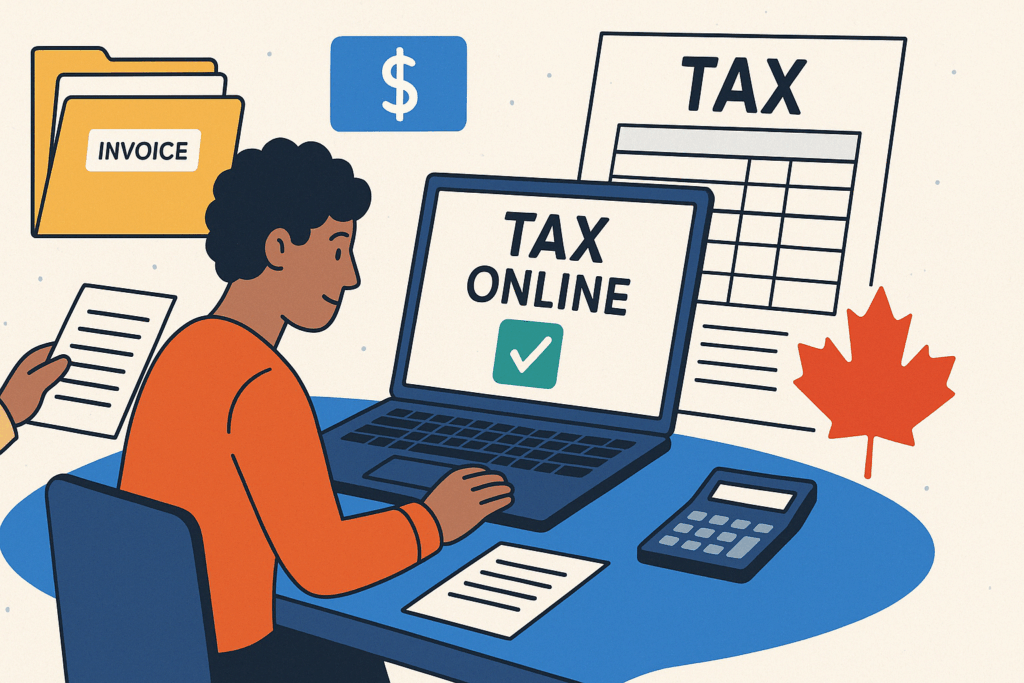
Document Organization and Year-Round Management
The best way to use online tax tools is to treat them as part of a year-round financial strategy. Many of these apps now offer mobile “receipt “scanners that allow you to upload documents as you receive them throughout the year. Instead of a frantic search in April, your digital “tax vault” is already full.
This proactive approach to online filing transforms the experience from a seasonal headache into a streamlined component of your broader financial plan. By selecting a platform that aligns with your income level, investment complexity, and desire for professional support, you turn tax season into an opportunity to audit your own financial progress and set the stage for a more prosperous year ahead.
aViewFromTheCave is a participant in the Amazon Services LLC Associates Program, an affiliate advertising program designed to provide a means for sites to earn advertising fees by advertising and linking to Amazon.com. Amazon, the Amazon logo, AmazonSupply, and the AmazonSupply logo are trademarks of Amazon.com, Inc. or its affiliates. As an Amazon Associate we earn affiliate commissions from qualifying purchases.