
In the evolving landscape of personal finance, mobile payment applications like Cash App have become indispensable tools for managing money, facilitating transactions, and even building wealth. Far beyond just sending and receiving funds from friends, Cash App offers a robust suite of features designed to integrate seamlessly into users’ financial lives. A fundamental aspect of leveraging any financial tool is understanding how to fund it, and for Cash App, this means knowing the various methods available for depositing money. This guide will delve into the comprehensive options for adding funds to your Cash App balance, framing them within the broader context of personal finance management and highlighting their strategic implications for your financial well-being.

Understanding Cash App’s Deposit Ecosystem
Cash App, developed by Block, Inc., has carved a significant niche in the digital finance sector, primarily due to its user-friendly interface and diverse functionalities. At its core, it acts as a digital wallet, allowing users to send money, receive payments, invest in stocks and Bitcoin, and even file taxes. For many, it serves as a primary financial hub, blurring the lines between traditional banking and modern fintech.
The Digital Wallet in Modern Personal Finance
The concept of a digital wallet has revolutionized how individuals interact with their money. Instead of relying solely on physical cash or debit/credit cards, a digital wallet centralizes funds within an app, accessible anytime, anywhere. This shift offers unparalleled convenience, speed, and often, enhanced security features. For Cash App users, depositing money isn’t just about adding funds; it’s about empowering a versatile financial tool that can manage daily expenses, facilitate savings, and support investment goals. Understanding the deposit ecosystem means recognizing Cash App not just as a transaction platform, but as a strategic component of your personal finance strategy. Whether you’re topping up your balance for everyday spending, preparing for a significant purchase, or receiving income, the various deposit methods are designed to cater to a wide array of financial situations.
Core Deposit Functionality Overview
Cash App offers several primary avenues for users to deposit money into their accounts, each designed to meet different needs and preferences. These methods range from traditional direct deposits for regular income to in-store cash deposits for those who prefer physical money. The goal is to provide flexibility and accessibility, ensuring that regardless of your financial habits or access to traditional banking services, you can seamlessly fund your Cash App balance. Each method comes with its own set of advantages, potential limitations, and operational specifics, all of which are crucial for effective financial planning and management. Choosing the right deposit method can impact transaction speed, fees, and overall convenience, directly affecting your financial routine.
Direct Deposit: Streamlining Your Income Flow
For many, receiving regular income is the cornerstone of personal finance. Cash App simplifies this process significantly through its direct deposit feature, allowing users to route paychecks, government benefits, and other recurring payments directly into their Cash App balance. This method is often preferred for its reliability, speed, and automated nature, transforming Cash App into a primary banking alternative for a growing number of individuals.
Setting Up Direct Deposit with Cash App
Configuring direct deposit with Cash App is a straightforward process designed to integrate seamlessly with most employers’ payroll systems and government benefit programs. To enable this feature, Cash App provides users with a unique routing number and account number, which function identically to those issued by traditional banks. You can find these details within the “Banking” or “Money” tab of your Cash App application, usually under “Direct Deposit” settings. Once you have these numbers, you simply provide them to your employer’s HR or payroll department, or to the relevant government agency (e.g., for Social Security benefits, tax refunds, or unemployment). It’s crucial to double-check these numbers to prevent any delays or misroutings of funds. The setup usually involves filling out a form, either digitally or physically, and submitting it to the payer.
Advantages of Direct Deposit
The benefits of utilizing Cash App for direct deposit are numerous and directly impact personal financial management. Firstly, speed and convenience are paramount. Funds are typically available immediately upon receipt, eliminating the need to visit a physical bank or wait for checks to clear. This instant access is invaluable for managing immediate expenses and avoiding late payment fees. Secondly, it fosters better financial planning. By consolidating your income into one accessible platform, you can more easily track spending, budget, and even allocate funds for savings or investments directly within the app. Thirdly, it offers a strong alternative to traditional banking, particularly for the unbanked or underbanked populations, providing access to essential financial services without the need for a conventional bank account. This financial inclusion empowers more individuals to participate fully in the digital economy.
Checking Direct Deposit Status
Once direct deposit is set up, monitoring its status is simple. Cash App sends push notifications when a deposit is received, and the funds instantly appear in your balance. You can also view your transaction history within the app to confirm deposits and track the flow of your income. In cases where a deposit seems delayed, it’s advisable to first check with your employer or the issuing agency to confirm that the payment was sent to the correct account number and routing number. While Cash App processes direct deposits promptly upon receipt, the actual timing depends on when the sender initiates the payment. Understanding the typical processing times for your specific payer can help manage expectations and ensure smooth financial operations.
Cash Deposits: Bridging the Digital and Physical Divide
Despite the growing prevalence of digital transactions, physical cash remains a significant part of many individuals’ financial lives. Recognizing this, Cash App has implemented a convenient feature that allows users to deposit paper money directly into their accounts, effectively bridging the gap between physical currency and the digital wallet. This service is particularly beneficial for those who receive income in cash, prefer to manage a physical cash budget, or simply need to convert cash into digital funds for online transactions or peer-to-peer payments.
In-Store Paper Money Deposits
Cash App facilitates cash deposits through partnerships with major retailers across the United States. This network of participating stores, which often includes popular pharmacies, convenience stores, and big-box retailers, makes it incredibly accessible for users to add physical cash to their Cash App balance. The process leverages existing retail infrastructure, allowing you to walk into a participating store, hand over your cash to a cashier, and see it reflected in your Cash App account within minutes. This widespread availability means you’re rarely far from a location where you can deposit funds, providing a crucial alternative to traditional bank branches, which may have limited hours or locations.
The Process: Barcodes and Teller Assistance
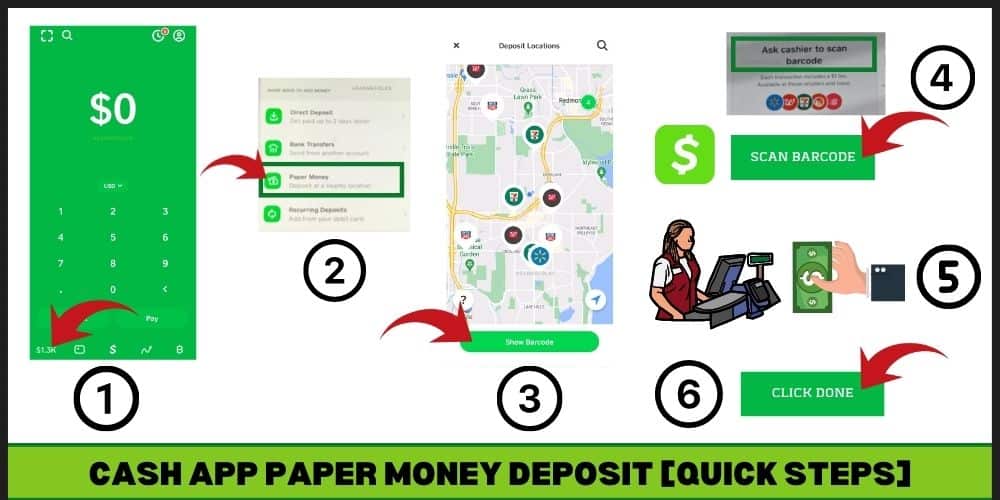
The mechanism for depositing cash into your Cash App account is designed for simplicity. When you’re ready to make a deposit, navigate to the “Banking” or “Money” tab in your Cash App, then select “Paper Money” or “Deposit Cash.” The app will then generate a unique barcode. You simply present this barcode to the cashier at a participating retail location, along with the cash you wish to deposit. The cashier scans the barcode, accepts your cash, and the transaction is typically processed instantly. You’ll receive a digital confirmation within the Cash App, and the funds will be added to your balance, ready for use. This streamlined process eliminates the need for complex forms or bank slips, making it quick and hassle-free.
Fees, Limits, and Availability Considerations
While cash deposits offer significant convenience, it’s important to be aware of the associated terms. Cash App generally charges a small fee for cash deposits, which is typically a percentage of the deposit amount or a flat fee, and this fee is deducted from the deposited sum. It’s advisable to check the current fee structure within the app before making a deposit. There are also usually daily and weekly deposit limits imposed by Cash App, designed for security and regulatory compliance. These limits can vary based on your account verification status. Furthermore, while the network of participating retailers is extensive, it’s always a good idea to use the in-app map feature to locate the nearest store that offers Cash App cash deposits to ensure availability and avoid unnecessary trips. Understanding these parameters is key to effectively using cash deposits as part of your personal financial strategy.
Bank Transfers: Seamlessly Moving Funds
For many users, Cash App serves as a supplementary financial tool alongside their primary bank accounts. In such cases, the ability to seamlessly transfer funds between a traditional bank and Cash App is crucial for comprehensive personal finance management. Cash App facilitates this through direct integration with external bank accounts, offering a convenient way to move money as needed.
Linking Your External Bank Account
Before you can transfer funds from your bank to Cash App, you’ll need to link your external bank account. This process is secure and typically involves using your bank’s online login credentials, which are encrypted and not stored by Cash App. Within the Cash App, navigate to the “Banking” or “Money” tab, then select “Link Bank” or “Add Bank.” You’ll be prompted to search for your bank and then securely log in using your bank’s online banking username and password. This establishes a secure connection, allowing Cash App to initiate transfers to and from your linked account. It’s a one-time setup process that significantly enhances the flexibility of managing your funds across different financial platforms.
Initiating an ACH Transfer from Your Bank to Cash App
Once your bank account is linked, you can initiate a transfer of funds directly from your bank to your Cash App balance. This is typically done through an ACH (Automated Clearing House) transfer. While Cash App itself primarily facilitates sending money from its balance to a linked bank, the most common way to deposit money from a bank into Cash App via this method is to use the “Add Cash” feature within the app. After linking your bank, when you select “Add Cash,” Cash App will pull funds directly from your linked bank account into your Cash App balance. This method leverages the secure connection established during the linking process. The amount you choose to deposit will be debited from your bank account and credited to your Cash App balance.
Instant vs. Standard Transfers and Associated Costs
Cash App typically offers two primary options for moving money between your linked bank and your Cash App balance: standard deposits and instant deposits (when moving from Cash App to bank) or instant funding (when pulling from bank to Cash App). When adding cash from your bank account to Cash App, the process is generally quick. However, the exact timing can depend on your bank’s processing speeds. If you need funds instantly on your Cash App from your bank, there might be options within the app that leverage a debit card for faster transfers, which could incur a small fee. For standard transfers, where you are pulling funds from your bank into Cash App, these are usually free and processed within 1-3 business days. It’s essential to review the specific options presented in the app, as fees and processing times can vary, impacting your immediate financial liquidity and overall costs. Understanding these distinctions allows you to choose the most cost-effective and timely method for your financial needs.
Other Deposit Methods and Considerations
Beyond the core methods of direct deposit, cash deposits, and bank transfers, Cash App also supports several other ways to receive funds, further solidifying its role as a versatile financial tool. Additionally, important security and verification measures underpin all transactions, safeguarding users’ financial integrity.
Receiving Funds from Other Cash App Users
One of Cash App’s most fundamental features is peer-to-peer (P2P) transfers. While not a “deposit” in the traditional sense of adding external funds, receiving money from another Cash App user directly increases your balance. This is an incredibly common method for individuals to send or receive money from friends, family, or even for small business transactions. When someone sends you money via your $Cashtag, email, or phone number associated with your account, the funds are instantly credited to your Cash App balance, making it immediately available for use, spending, or transfer out to your linked bank account. This ease of P2P transfer is a cornerstone of Cash App’s appeal and functionality within personal finance.
Receiving Stimulus Checks or Tax Refunds
Cash App can also serve as a convenient destination for receiving government disbursements, such as economic stimulus checks or tax refunds. Similar to direct deposit for payroll, you can provide your unique Cash App routing and account numbers to the relevant government agency (e.g., the IRS) when prompted during the tax filing process or for benefit enrollment. This method ensures that refunds or benefits are deposited directly and swiftly into your Cash App balance, bypassing traditional checks and potentially speeding up access to your funds. It underscores Cash App’s utility as a comprehensive financial tool capable of handling a variety of income streams beyond just employment wages.
Important Security and Verification Measures
Regardless of the deposit method chosen, Cash App places a strong emphasis on security and user verification. To unlock higher deposit and withdrawal limits, as well as access certain features like investing, users are often required to verify their identity. This typically involves providing personal information such as your full name, date of birth, and the last four digits of your Social Security Number. In some cases, you might be asked to provide a photo ID. These Know Your Customer (KYC) procedures are standard practice in the financial industry, designed to comply with regulatory requirements, prevent fraud, and protect users’ accounts. It’s crucial for users to complete these verification steps to ensure full functionality and maintain the security of their funds. Cash App also employs encryption and other security protocols to safeguard your financial information and transactions, reinforcing its reliability as a personal finance management tool.

Conclusion
Cash App offers a diverse and comprehensive suite of options for depositing money, catering to a wide range of financial needs and preferences. From the automated convenience of direct deposit for regular income to the flexibility of in-store cash deposits and the seamless integration with external bank accounts, users have multiple pathways to fund their digital wallets. The ability to receive peer-to-peer payments and government disbursements further solidifies Cash App’s position as a versatile and indispensable tool in the modern personal finance landscape.
By understanding each deposit method’s mechanics, associated fees, and limits, users can strategically manage their funds, optimize transaction speeds, and make informed choices that align with their financial goals. Cash App’s commitment to security and user verification provides a reliable framework for these transactions, ensuring that your money is not only accessible but also protected. Whether you’re using Cash App for daily spending, saving, investing, or as an alternative to traditional banking, knowing where and how to deposit money is the first step towards leveraging its full potential as a powerful personal finance instrument.
aViewFromTheCave is a participant in the Amazon Services LLC Associates Program, an affiliate advertising program designed to provide a means for sites to earn advertising fees by advertising and linking to Amazon.com. Amazon, the Amazon logo, AmazonSupply, and the AmazonSupply logo are trademarks of Amazon.com, Inc. or its affiliates. As an Amazon Associate we earn affiliate commissions from qualifying purchases.