
For decades, the automotive industry followed a predictable blueprint: legacy manufacturers assembled vehicles in centralized hubs, relying on a fragmented network of third-party suppliers. Tesla, however, disrupted this paradigm by treating the car not as a mechanical assembly, but as a sophisticated software-driven gadget. To understand where Teslas are made is to understand the “Gigafactory” concept—a term coined by Elon Musk to describe a manufacturing facility that is, in itself, a high-tech product.
Tesla’s manufacturing footprint is a testament to its “machine that builds the machine” philosophy. By integrating hardware engineering, software development, and energy storage production into massive, vertically integrated hubs, Tesla has redefined the geography of modern technology.
The Evolution of the Gigafactory: A Tech-First Approach to Manufacturing
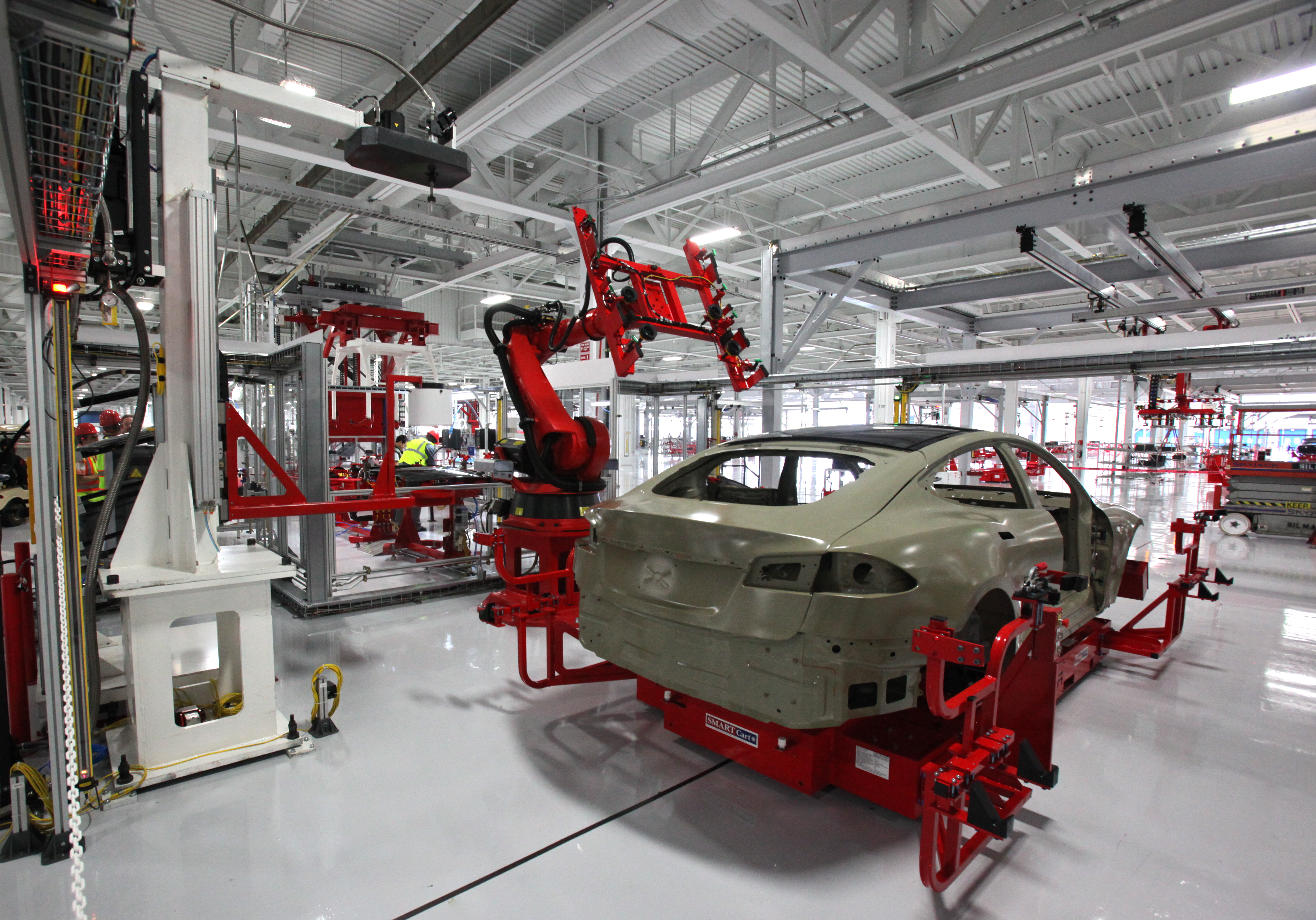
The story of Tesla’s production begins with a shift away from traditional assembly lines toward highly automated, data-driven environments. Unlike traditional OEMs (Original Equipment Manufacturers), Tesla’s facilities are designed to iterate on hardware as quickly as software developers push code updates.
From Fremont to the Future: The Original Hub
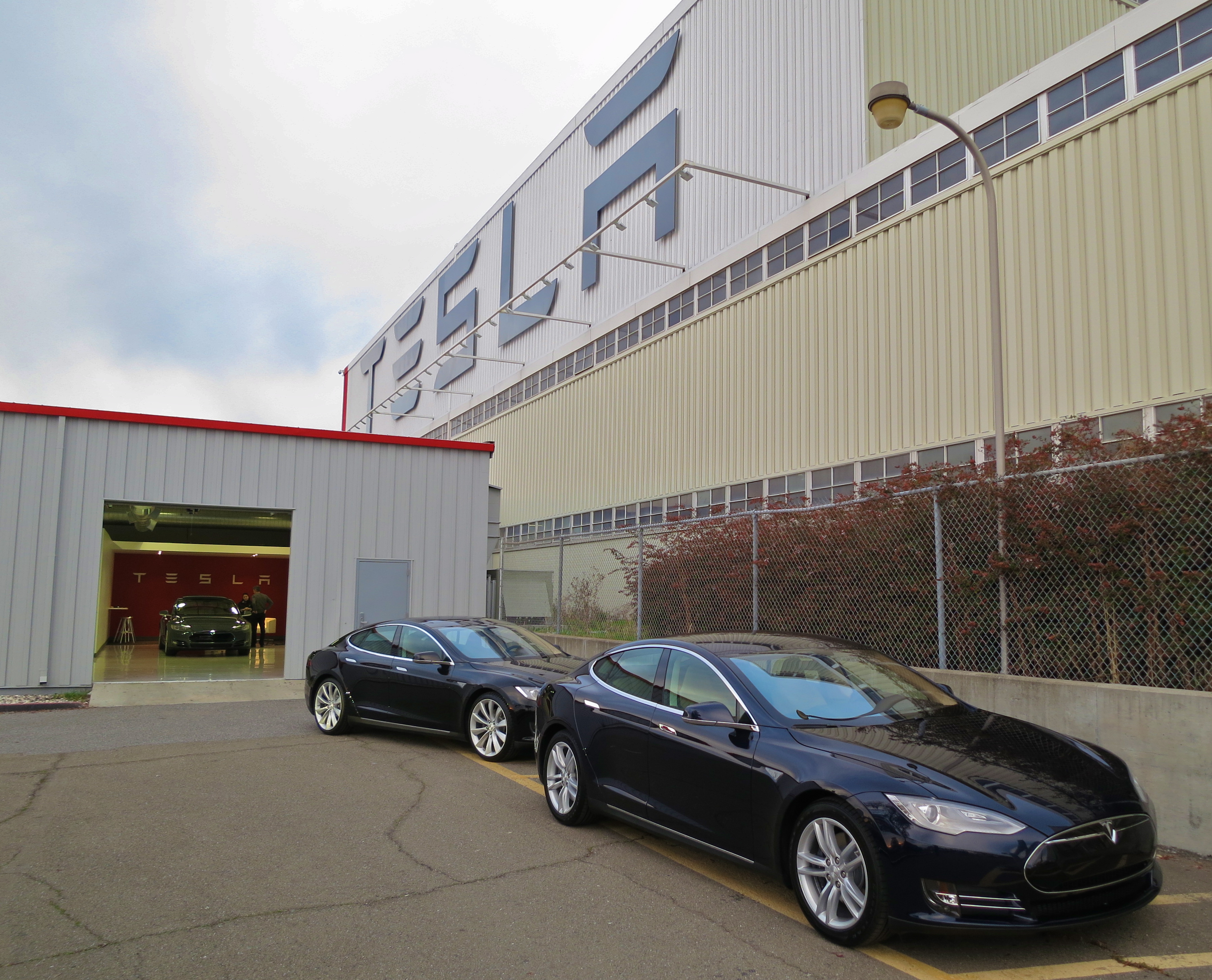
The Tesla Factory in Fremont, California, serves as the ancestral home of the company’s manufacturing prowess. Originally a joint venture between GM and Toyota known as NUMMI, Tesla transformed this site into one of the most advanced automated plants in the world. Today, Fremont remains a critical piece of the puzzle, producing the Model S, Model X, Model 3, and Model Y.
The tech significance of Fremont lies in its adaptation. Because it was not built from the ground up by Tesla, it served as the laboratory for the company’s early automation experiments. It was here that Tesla learned the “production hell” lessons that would eventually lead to the hyper-efficient designs of its subsequent purpose-built Gigafactories.
Gigafactory Nevada: The Battery Backbone
Located in Sparks, Nevada, Gigafactory 1 (now simply Giga Nevada) is the heart of Tesla’s energy tech. While it does not assemble the final vehicles, it produces the lithium-ion battery cells, electric motors, and drive units that power them. Developed in partnership with Panasonic, Giga Nevada represents the pinnacle of high-volume battery chemistry. The facility’s layout is optimized for a continuous flow from raw materials to finished battery packs, a technical feat that allows Tesla to maintain a lower cost-per-kilowatt-hour than its competitors.
Engineering Efficiency: The Vertical Integration Strategy
Where a Tesla is made is arguably less important than how it is made. The company’s technical edge stems from vertical integration—the practice of making almost every component in-house, from the silicon in the microchips to the proprietary aluminum alloys in the chassis.
Software-Defined Manufacturing
Most vehicles are a collection of “black box” components from various suppliers, each running its own proprietary software. Tesla’s manufacturing process integrates all systems into a single central nervous system. This allows the factory to “talk” to the cars during assembly. Every Tesla coming off the line is calibrated via a central server, ensuring that the hardware and software are perfectly synced before the vehicle even moves under its own power.
This tech-centric approach enables “Over-the-Air” (OTA) updates. If a manufacturing tweak is needed to improve battery efficiency or braking performance, Tesla can often implement it via code rather than physical recalls, a capability born directly from the way the factories are networked.
Casting and Robotics: The Giga Press Revolution
Perhaps the most significant technological advancement in Tesla’s manufacturing is the use of the “Giga Press.” In traditional manufacturing, the rear underbody of a car consists of over 70 different metal pieces welded together. At Giga Texas and Giga Berlin, Tesla uses massive casting machines to produce these sections as a single piece of aluminum.
This reduces weight, increases structural integrity, and drastically simplifies the robotics required on the assembly line. By reducing the number of robots needed for welding, Tesla frees up floor space for more complex technical installations, such as those required for Autopilot sensor calibration and high-speed data bus testing.
Global Expansion: Scaling the Tech Ecosystem
To meet global demand, Tesla has exported its Gigafactory blueprint across three continents. Each new location serves as an upgraded version of the previous one, incorporating the latest advancements in industrial AI and sustainable engineering.
Giga Shanghai: The Blueprint for Speed
Gigafactory Shanghai (Giga 3) was a turning point for Tesla’s global logistics. Built in less than a year, this facility is a marvel of industrial engineering. It serves as Tesla’s primary export hub, shipping vehicles to Europe and other parts of Asia. The technology in Shanghai focuses on hyper-efficiency and supply chain localization. By sourcing nearly 100% of components from within China, Tesla minimizes the technical friction of international shipping and customizes its software stacks for the local digital ecosystem.
Giga Berlin-Brandenburg: Engineering Excellence in Europe
Giga Berlin represents Tesla’s foray into the heart of traditional automotive engineering. This facility is home to the world’s most advanced paint shop—a high-tech installation capable of applying unique, multi-layered colors like Midnight Cherry Red. Beyond aesthetics, Giga Berlin utilizes the latest “structural battery pack” technology, where the battery cells themselves act as a structural element of the car’s chassis, further reducing weight and increasing the vehicle’s range.
Giga Texas: The New Global Headquarters
The “Gigafactory Texas” facility in Austin is currently the pinnacle of Tesla’s manufacturing tech. Spanning millions of square feet, it is one of the largest buildings in the world. Texas is the home of the Cybertruck—a vehicle that requires entirely new manufacturing techniques due to its cold-rolled stainless steel exoskeleton. The facility also houses the production of the 4680 battery cells, a larger, more energy-dense cell format that represents the next generation of EV storage technology.
The Future of Production: Next-Gen Platforms and AI
As Tesla looks toward the future, the “where” of its manufacturing will expand to include Giga Mexico and potentially other sites in Southeast Asia or India. However, the technical focus is shifting from simple assembly to autonomous production.
Optimus and the Autonomous Factory
Tesla is currently developing “Optimus,” a humanoid robot designed to perform repetitive or dangerous tasks. The ultimate goal is to integrate these robots into the Gigafactories. This would transition the production line from a series of fixed robotic arms to a dynamic environment where autonomous agents move parts and perform assembly tasks with human-like dexterity. This is the final frontier of Tesla’s tech-heavy manufacturing strategy: a factory that requires minimal human intervention and operates around the clock.
Sustainable Energy Integration
The “where” also dictates the “how” in terms of environmental impact. Tesla’s factories are designed to be covered in solar panels, with the goal of becoming net-zero energy consumers. The technical challenge of powering a multi-gigawatt-hour production facility through renewable energy and on-site Megapacks is a project Tesla uses to refine its commercial energy products. In this sense, the factory is not just a place where cars are made; it is a functioning testbed for the company’s broader mission to accelerate the world’s transition to sustainable energy.
Conclusion
Tesla’s manufacturing footprint—spanning California, Nevada, Texas, New York, China, and Germany—is more than a list of assembly plants. It is a distributed network of high-tech laboratories. By treating each factory as a product that undergoes constant versioning and updates, Tesla has maintained a lead in the EV space that is as much about industrial software and robotic engineering as it is about the cars themselves.
When asking “where are Teslas made,” the answer lies in an interconnected global ecosystem of Gigafactories. These facilities represent the intersection of heavy industry and high technology, proving that in the 21st century, the most important component of a vehicle isn’t its engine, but the sophisticated, automated environment in which it was born. Whether it is the casting presses of Berlin or the battery lines of Nevada, the geography of Tesla is the geography of the future of tech.
aViewFromTheCave is a participant in the Amazon Services LLC Associates Program, an affiliate advertising program designed to provide a means for sites to earn advertising fees by advertising and linking to Amazon.com. Amazon, the Amazon logo, AmazonSupply, and the AmazonSupply logo are trademarks of Amazon.com, Inc. or its affiliates. As an Amazon Associate we earn affiliate commissions from qualifying purchases.