
In the landscape of American retail banking, few institutions have undergone a transformation as significant as PNC Financial Services Group. Once a regional player centered in the industrial heartland of Pennsylvania, PNC has evolved into one of the largest diversified financial services institutions in the United States. For consumers and business owners asking, “Where are PNC banks?” the answer today is vastly different than it was even a decade ago.
As of the current financial cycle, PNC operates approximately 2,300 branches across nearly 30 states and the District of Columbia. However, the physical location of a branch is only one part of the story. In an era where digital banking is the norm, the “where” of banking encompasses physical storefronts, expansive ATM networks, and “Solution Centers” designed for the modern consumer. Understanding the geography of PNC is essential for anyone evaluating their personal finance options or seeking a stable partner for business capital.
Understanding the PNC Physical Footprint: A Regional Powerhouse Goes National
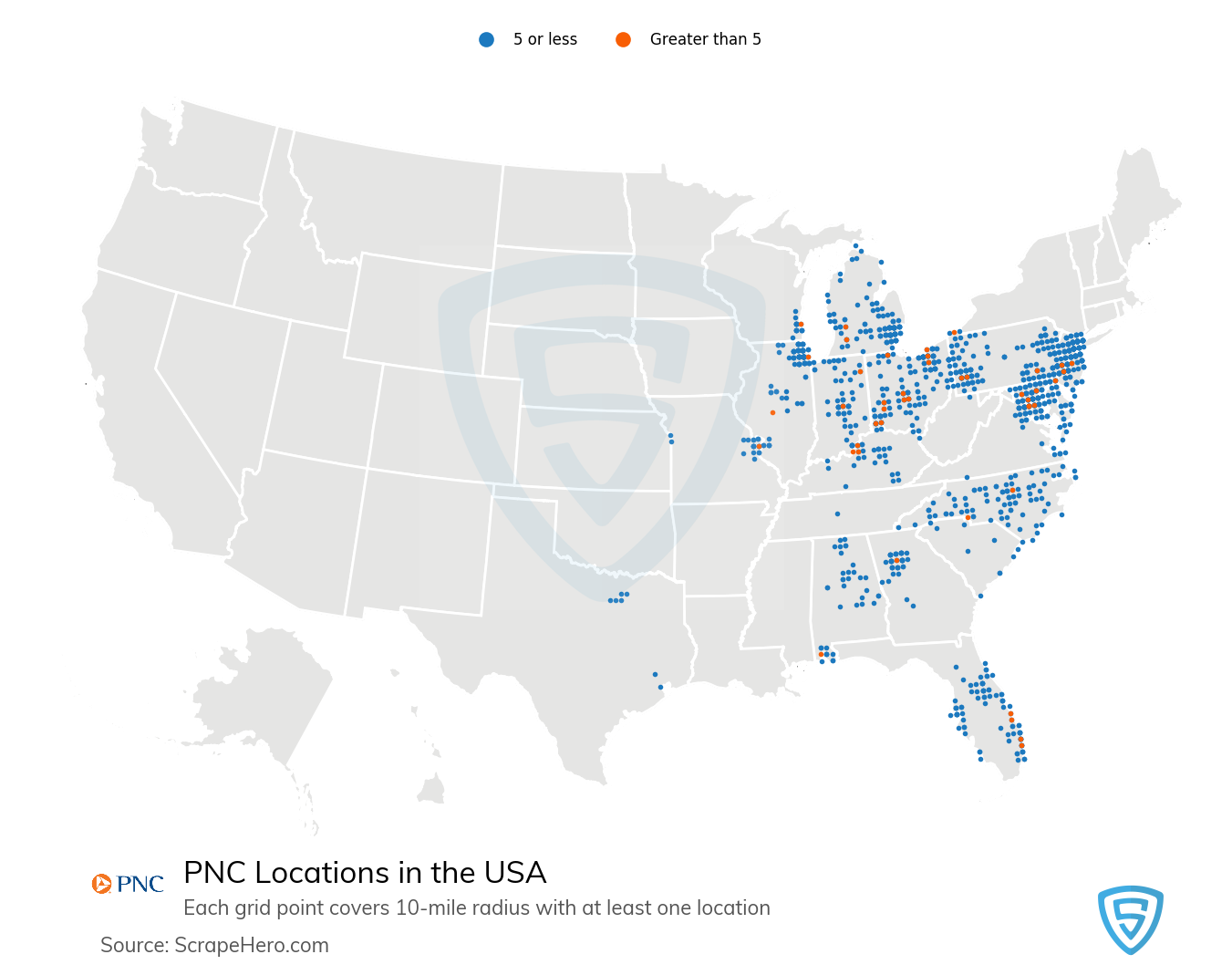
The historical bedrock of PNC Bank lies in the Northeast and the Midwest. Headquartered in Pittsburgh, Pennsylvania, the bank has long maintained a dominant presence in the Mid-Atlantic region. For decades, the “PNC” logo was a staple of the skylines in Philadelphia, Baltimore, and Washington, D.C. This legacy footprint remains the densest part of their network, providing a high level of accessibility for residents in Pennsylvania, New Jersey, Delaware, and Maryland.
The Core Markets: Pennsylvania and the Mid-Atlantic
In its home state of Pennsylvania, PNC remains a ubiquitous presence. From the urban centers of Pittsburgh and Philadelphia to the suburban corridors of the Lehigh Valley, the bank’s density is a strategic advantage. This regional concentration allows for a high level of brand recognition and a deep integration into the local economy, servicing everything from individual savings accounts to the complex payroll needs of regional healthcare systems and universities.
Moving south along the I-95 corridor, the presence remains robust. New Jersey and Delaware serve as critical hubs for the bank’s operations, particularly in the wealth management and corporate banking sectors. The acquisition of various regional banks over the last thirty years has solidified this “traditional” territory, making PNC the go-to institution for millions of households in the Atlantic states.
Expansion into the Sunbelt and the West Coast
The most dramatic shift in “where” PNC is located occurred with the 2021 acquisition of BBVA USA. This $11.6 billion deal was a watershed moment for the institution, instantly catapulting PNC into the ranks of truly national banks. By absorbing BBVA’s operations, PNC gained a massive foothold in the “Sunbelt”—the rapidly growing southern and western regions of the U.S.
Today, you can find PNC branches throughout Texas, Alabama, Arizona, Florida, and California. This expansion was not merely about adding numbers to a ledger; it was a strategic move to follow the migration of wealth and business activity in the United States. Texas, in particular, became a primary market for PNC, with a significant presence in Houston, Dallas, and Austin. For the mobile professional or the snowbird moving between the Northeast and Florida, this expanded footprint ensures that their financial relationship remains uninterrupted by state lines.
The Impact of the BBVA Acquisition
The integration of BBVA USA added more than 600 branches to the PNC network. Beyond the physical buildings, it provided PNC with a sophisticated platform to offer its signature “Virtual Wallet” and commercial lending products to a new demographic. States like Colorado and New Mexico, which previously had no PNC presence, are now part of the core service area. This geographic diversity helps the bank mitigate regional economic downturns, ensuring a more stable financial foundation for the institution as a whole.
Digital-First vs. Branch-Heavy: How PNC is Redefining “Where” They Are
In the modern financial environment, the physical address of a bank is often less important than the accessibility of its digital tools. PNC has recognized that while many customers still value the ability to walk into a branch, the vast majority of daily transactions happen on a glass screen. This has led to a hybrid approach to “location.”
The Rise of Virtual Wallet and Digital Banking
PNC’s “Virtual Wallet” is more than just an app; it is a digital-first philosophy that allows the bank to exist wherever the customer is. This tool integrates checking, short-term savings, and long-term savings into a single interface. Because of this digital capability, PNC can effectively serve customers in states where they have no physical branches at all. For a personal finance enthusiast, the “where” of PNC is effectively in their pocket, available 24/7 for mobile deposits, bill pay, and real-time budget tracking.
ATM Networks and Partner Alliances
For many, the most important physical location is the nearest ATM. PNC has addressed the “where” by building one of the largest ATM networks in the country. In addition to their own proprietary machines located at branches, PNC participates in the Allpoint network. This partnership gives PNC customers surcharge-free access to over 60,000 ATMs worldwide.
These machines are often located in high-traffic retail environments like CVS, Target, and Walgreens. This strategy effectively puts a “PNC location” on nearly every major street corner in America, even in regions like the Pacific Northwest or the deep South where traditional branches might be sparse. From a personal finance perspective, this eliminates the “out-of-network” fees that can quietly erode a savings account over time.

The “Solution Center” Concept
As PNC expands into new markets like Denver or Boston, they are moving away from the traditional, large-format branch model. Instead, they are deploying “Solution Centers.” These are smaller, tech-oriented locations that lack the traditional teller line. Instead of simple cash transactions—which most people now do at ATMs—Solution Centers are staffed by financial consultants who help with complex needs: mortgage applications, retirement planning, and small business lending. This evolution shows that PNC is focusing its physical presence where it adds the most value: in high-touch, advisory-based financial services.
Choosing the Right Banking Relationship: Physical Access in the Digital Age
When deciding if a bank’s location suits your needs, it is important to look at your specific financial behaviors. Despite the digital revolution, there are several reasons why the physical proximity of a PNC branch remains a vital consideration for many.
Why Branch Proximity Still Matters for Small Businesses
For small business owners, the “where” of a bank is often a matter of logistical necessity. Business owners who deal with significant cash volumes need a secure, local place to make deposits. PNC’s presence in major metropolitan business districts provides this security. Furthermore, building a relationship with a local branch manager can be a game-changer when applying for a line of credit or a small business loan. Having a physical location where you can present your business plan and discuss your cash flow needs in person adds a layer of trust that purely online lenders often lack.
Mortgages and Complex Personal Finance Needs
While you can apply for a mortgage online, many first-time homebuyers prefer the reassurance of an in-person consultation. Navigating the complexities of debt-to-income ratios, closing costs, and escrow accounts is often easier when sitting across a desk from an expert. PNC’s strategic placement of branches in growing residential areas ensures that mortgage consultants are available to help families make one of the most significant financial decisions of their lives.
Security and In-Person Verification
In an era of rising digital fraud and identity theft, physical branches serve as a final line of defense. If a customer’s account is compromised, being able to walk into a branch with a physical ID to resolve the issue provides a level of security that phone-based customer service cannot always match. For high-net-worth individuals or those managing complex estates, the ability to perform in-person wire transfers or notary services remains a key component of their financial strategy.
Strategic Distribution: Finding PNC Banks in Major Metropolitan Hubs
If you are looking for a PNC bank today, you are most likely to find them clustered in major economic engines. The bank’s strategy has been to “follow the money,” placing branches in areas with high population growth and robust commercial activity.
The Northeast and Midwest Dominance
In the “Rust Belt” turned “Tech Belt,” PNC is a pillar of the community. In cities like Columbus, Cincinnati, and Indianapolis, the bank has maintained a steady presence that bridges the gap between old-school manufacturing and new-school innovation. In the Northeast, from Boston down to Richmond, the bank serves a highly dense population of commuters and professionals.
Growth in Texas, Florida, and Arizona
Following the BBVA acquisition, PNC’s footprint in the South and West has become a focal point of their growth strategy. Texas is now one of the bank’s largest markets, with dozens of branches in the Dallas-Fort Worth metroplex and the greater Houston area. In Florida, the bank covers both coasts, serving the retirement communities of Naples and Sarasota as well as the international business hubs of Miami and Orlando. In Arizona, the Phoenix and Scottsdale areas have seen a surge in PNC branding, catering to the tech and healthcare workers moving to the desert.
The Future of Banking Locations: What’s Next for PNC?
The answer to “where are PNC banks” will continue to evolve as the bank balances the cost of physical real estate with the demands of a mobile-first population. We are likely to see a continuation of two concurrent trends: consolidation and modernization.
Consolidations and High-Tech Upgrades
In markets where PNC has a high density of older branches, they are often consolidating multiple small locations into a single, high-tech regional hub. These hubs are designed to be “green” buildings with lower carbon footprints and more efficient layouts. While this might mean your closest branch moves a mile down the road, the new facility is likely to offer more specialized services and better ATM technology.

Sustainability and Community-Centric Branches
PNC has been a leader in LEED-certified green building within the financial sector. Their commitment to sustainable architecture means that “where” they are located is often a reflection of their corporate responsibility goals. Many newer branches are designed to be community hubs, featuring meeting spaces for local organizations and interactive displays that provide financial literacy education.
In conclusion, finding a PNC bank is easier today than at any point in the company’s history. Whether through their traditional strongholds in the Mid-Atlantic, their newly acquired territories in the Sunbelt, or their massive 60,000-plus ATM network, PNC has positioned itself to be accessible to the vast majority of the American population. For the modern consumer, the “where” of PNC is a sophisticated mix of brick-and-mortar stability and digital-first flexibility, making it a formidable player in the personal and business finance landscape.
aViewFromTheCave is a participant in the Amazon Services LLC Associates Program, an affiliate advertising program designed to provide a means for sites to earn advertising fees by advertising and linking to Amazon.com. Amazon, the Amazon logo, AmazonSupply, and the AmazonSupply logo are trademarks of Amazon.com, Inc. or its affiliates. As an Amazon Associate we earn affiliate commissions from qualifying purchases.