
The rhythm of the stock market is dictated by its opening and closing bells, rituals that mark the daily battleground for investors, traders, and financial institutions worldwide. While the question “when will the stock market close?” might seem simple on the surface, its answer unveils a complex tapestry of standard operating hours, federal holidays, unforeseen market interruptions, and the intricate dance of global trading. Understanding these dynamics is not merely a matter of scheduling; it is fundamental to effective investment planning, risk management, and capitalizing on market opportunities.
For most investors in the United States, the focus primarily rests on the New York Stock Exchange (NYSE) and the NASDAQ, the two largest stock exchanges globally. These venerable institutions adhere to a specific schedule, but it’s crucial to recognize that the financial landscape extends far beyond these daily operating hours, encompassing pre-market and after-hours trading, as well as the unique timetables of international markets. Delving into these aspects reveals how market closures, whether routine or exceptional, significantly influence liquidity, volatility, and information dissemination, profoundly impacting an investor’s strategy and the broader economic narrative.
The Standard Rhythms: U.S. Stock Market Operating Hours
The bedrock of U.S. stock market operations is a predictable daily schedule that has been largely consistent for decades, providing a framework within which trillions of dollars in assets are traded. This predictability is a cornerstone of market stability, allowing participants to plan their strategies and manage their exposure to risk.
NYSE and NASDAQ: The Core Trading Day
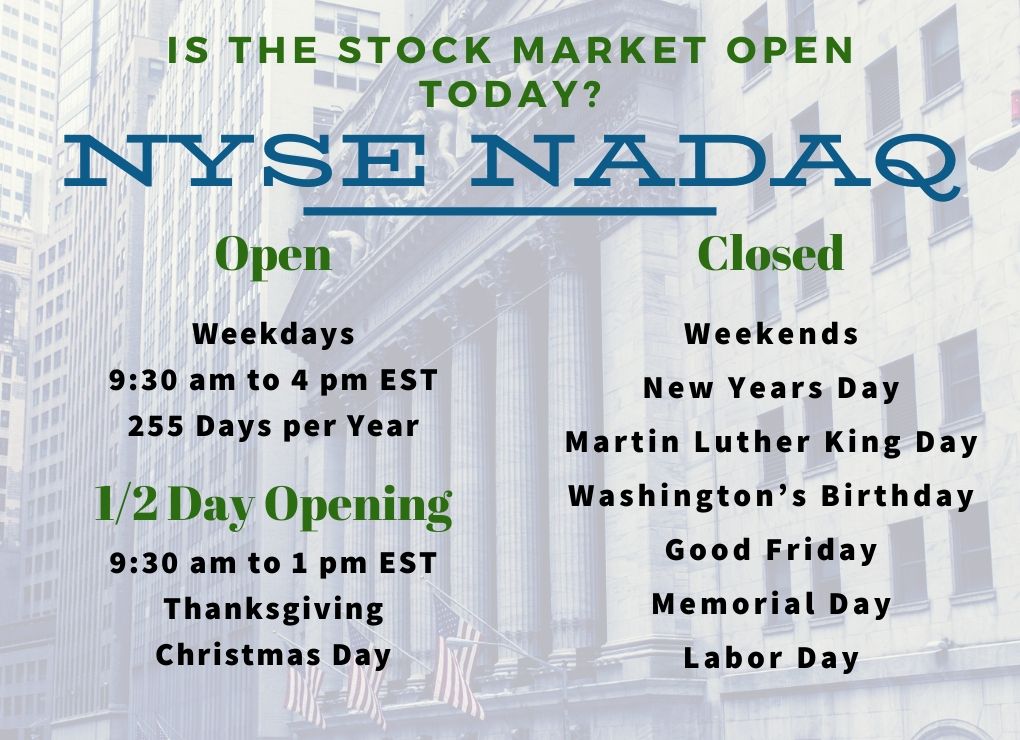
For the vast majority of publicly traded stocks in the United States, the primary trading hours for both the New York Stock Exchange (NYSE) and the NASDAQ Stock Market are:
- Opening Bell: 9:30 AM Eastern Time (ET)
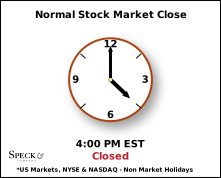
- Closing Bell: 4:00 PM Eastern Time (ET)
This 6.5-hour trading window, Monday through Friday, forms the official “regular trading session.” During these hours, orders are executed with maximum liquidity, and prices reflect the most comprehensive consensus of market participants. It’s the period when major news announcements are absorbed, corporate earnings reports are reacted to, and the bulk of daily trading volume occurs. The concentration of activity during these hours helps to ensure tight bid-ask spreads and efficient price discovery, making it the preferred time for most retail and institutional investors to execute trades. Understanding this core period is essential, as prices and volumes outside these hours can behave quite differently.
Beyond the Bells: Extended-Hours Trading
While the regular session defines the main trading day, the advent of electronic communication networks (ECNs) and advanced trading platforms has extended the stock market’s effective operating hours considerably. These “extended-hours” trading sessions allow investors to react to news released outside of regular hours, though with distinct characteristics.
- Pre-Market Trading: This session typically runs from 4:00 AM ET to 9:30 AM ET, leading up to the market’s official opening. Investors often utilize pre-market trading to react to overnight news, European market movements, or early corporate announcements.
- After-Hours Trading: Following the closing bell, after-hours trading usually takes place from 4:00 PM ET to 8:00 PM ET. This period is often characterized by reactions to late-day corporate news, earnings reports released post-market, or developments in Asian markets.
It is crucial for investors to understand that extended-hours trading differs significantly from regular trading. These sessions generally have lower liquidity, meaning fewer buyers and sellers, which can lead to wider bid-ask spreads and increased price volatility. Prices can be more susceptible to manipulation or large block trades, and institutional participation is often more limited. For retail investors, navigating extended hours requires a keen awareness of these dynamics and often the use of limit orders to mitigate risk.
Market Holidays and Early Closures: Scheduled Pauses
Beyond the daily routine, the stock market observes a number of scheduled closures throughout the year. These holidays and occasional early closures are critical for investors to note, as they represent periods when trading halts entirely or concludes ahead of schedule. Such pauses are not just breaks for market participants; they have strategic implications for how information is processed and how positions are managed.
Federal Holidays and Observances
The U.S. stock market generally observes a similar set of holidays to federal banks, ensuring that key financial institutions are synchronized. These full-day closures provide breaks for market participants and allow for the processing of large volumes of data and settlement of trades without the pressure of live market movements. Key observed holidays include:
- New Year’s Day
- Martin Luther King, Jr. Day
- Washington’s Birthday (Presidents’ Day)
- Good Friday (often though not always a federal holiday)
- Memorial Day
- Juneteenth National Independence Day
- Independence Day
- Labor Day
- Thanksgiving Day
- Christmas Day
It’s important to note that if a holiday falls on a weekend, the market typically observes it on the preceding Friday or the following Monday, aligning with standard federal holiday observance rules. For instance, if Christmas Day falls on a Saturday, the market might close on Friday, December 24th. These adjustments are publicly announced well in advance by the exchanges.
Pre-Holiday and Special Early Closures
In addition to full-day holidays, the stock market occasionally implements early closures, particularly on the day before or after certain major holidays. These abbreviated trading sessions provide a transitional period, allowing market participants to finalize trades and prepare for an upcoming closure or digest past events. A common example is the day after Thanksgiving (Black Friday), where the market closes at 1:00 PM ET. Similarly, Christmas Eve (if it falls on a weekday and the market is open) often sees an early close.
These early closures, while shorter, can sometimes exhibit unique trading patterns. Lower trading volume and reduced institutional participation can amplify price movements, making careful navigation essential. Traders and investors must remain vigilant of the market’s official holiday calendar, which is published annually by the exchanges, to avoid being caught unaware and to plan their portfolio activities accordingly.
Beyond the Schedule: Unforeseen Market Interruptions and Circuit Breakers
While most market closures are predictable, financial history is replete with instances where unforeseen events have led to temporary halts in trading. These extraordinary closures, though rare, underscore the market’s vulnerability to external shocks and its built-in mechanisms for crisis management.
Extreme Volatility and Circuit Breakers

In the event of extreme market volatility, exchanges employ “circuit breakers” – predefined thresholds that trigger automatic trading halts. These mechanisms are designed to prevent panic selling or buying, giving investors time to absorb information, reassess their strategies, and calm the market. For instance, the NYSE has three primary circuit breaker levels tied to the S&P 500’s decline from the previous day’s closing price:
- Level 1 (7% decline): Triggers a 15-minute halt.
- Level 2 (13% decline): Triggers another 15-minute halt.
- Level 3 (20% decline): Triggers a market close for the remainder of the trading day.
These circuit breakers are critical components of market stability, particularly evident during times of heightened crisis, such as the initial phases of the COVID-19 pandemic in early 2020, which saw multiple circuit breaker activations. They aim to inject rationality into potentially irrational market movements, although their effectiveness is a subject of ongoing debate among economists and market strategists.
Technical Glitches, Natural Disasters, and Geopolitical Events
Beyond volatility, various other factors can force the market to close prematurely or prevent it from opening.
- Technical Failures: Software glitches, network outages, or hardware failures within the exchanges’ highly complex systems can necessitate temporary halts or even full-day closures to prevent erroneous trades or ensure market integrity.
- Natural Disasters: Severe weather events, such as hurricanes or blizzards, particularly those impacting the physical infrastructure of Wall Street in lower Manhattan, have historically led to market closures to ensure the safety of personnel and the functioning of critical systems.
- Geopolitical Events and National Emergencies: In rare instances of national crisis, such as major terrorist attacks or periods of extreme national mourning, government or exchange officials may decide to close the market out of respect, for security reasons, or to prevent destabilizing financial activity. The market closure following the September 11, 2001 attacks is a prominent example.
These unscheduled closures highlight the market’s interconnectedness with broader societal and technological infrastructures. While disruptive, they often serve to protect investors and maintain the long-term integrity of the financial system.
The Strategic Implications of Market Closures for Investors
Understanding when the stock market closes, whether routinely or exceptionally, has profound implications for investor strategy, risk management, and the interpretation of market signals. These periods of dormancy or reduced activity are not simply blank spaces; they are integral to the market’s overall functioning and can present both challenges and unique opportunities.
Managing Liquidity and Information Flow
Market closures directly impact liquidity. During regular trading hours, millions of participants contribute to robust liquidity, allowing investors to buy or sell assets quickly without significantly affecting prices. During extended hours, and certainly during full closures, liquidity dries up. This means that executing large trades can be difficult, and even smaller trades can have a disproportionate impact on prices.
Furthermore, market closures create periods of information asymmetry. News released during a holiday or weekend cannot be immediately priced into stocks. This can lead to significant “gap” openings when the market resumes, where prices jump or fall sharply from their previous close to absorb the pent-up information. Investors holding positions over a holiday weekend or through an unscheduled closure face the risk of unexpected price movements upon reopening, making it crucial to adjust their positions or hedge their portfolios in advance.
Risk Management and Portfolio Adjustments
For active traders, knowing closure schedules is paramount for risk management. Holding highly volatile positions overnight or over a long holiday weekend can expose a portfolio to considerable event risk. For example, a company might release negative news, or a geopolitical event could unfold while the market is closed, leading to a substantial loss when trading resumes. Many traders prefer to close out speculative positions or reduce their overall exposure before a long market holiday to mitigate such risks.
Long-term investors, while less focused on daily fluctuations, still need to be aware of closures for rebalancing portfolios, executing dividend reinvestment plans, or responding to major life events that necessitate immediate access to funds. The inability to trade during closures can temporarily restrict access to capital, a factor that needs to be considered in financial planning.
Psychological Impact and Market Psychology
Market closures also have a psychological impact. The anticipation of a long weekend can sometimes lead to “holiday rallies” or “holiday slumps” as investors position themselves. Moreover, the closure periods allow for reflection, often leading to a fresh perspective when the market reopens. This “reset” can contribute to shifts in sentiment, sometimes amplifying trends or creating new ones. Understanding these subtle psychological undercurrents can offer insights into potential market behavior around closure periods.
Navigating Global Market Clocks: An International Perspective
While the focus primarily rests on the U.S. markets, the world of finance operates on a 24/5 cycle, with different major exchanges opening and closing as the Earth rotates. For investors with international exposure or those trading global instruments, understanding these varying time zones and holiday calendars is crucial.
Major Global Exchanges and Their Hours
Each major financial hub has its unique trading schedule. Here’s a brief overview:
- London Stock Exchange (LSE): Generally 8:00 AM to 4:30 PM GMT.
- Tokyo Stock Exchange (TSE): Generally 9:00 AM to 3:00 PM JST (with a lunch break from 11:30 AM to 12:30 PM JST).
- Shanghai Stock Exchange (SSE): Generally 9:30 AM to 3:00 PM CST (with a lunch break from 11:30 AM to 1:00 PM CST).
- Frankfurt Stock Exchange (Xetra): Generally 9:00 AM to 5:30 PM CET.
- Australian Securities Exchange (ASX): Generally 10:00 AM to 4:00 PM AEST.
These timings mean that when one major market is closing, another is typically opening, creating a continuous flow of trading activity around the globe. News and economic data released during the trading hours of one region can significantly influence the opening prices of markets in subsequent time zones.
International Holidays and Their Local Impact
Just as the U.S. observes its federal holidays, every country’s stock exchange closes for its national holidays. These can vary significantly, ranging from religious festivals to national independence days. An investor tracking a European stock, for example, needs to be aware of both U.S. and European holiday calendars.
The interconnectedness of global markets means that while the NYSE might be closed for Thanksgiving, the London and Tokyo exchanges will be open, potentially reacting to global news that could impact U.S. asset values upon reopening. Investors with diversified global portfolios must account for these disparate schedules to effectively manage risk and seize cross-market opportunities.
Conclusion
The question “when will the stock market close?” is more than a simple query about timings; it’s an entry point into understanding the foundational rhythms and crucial nuances of financial markets. From the standard daily trading hours of the NYSE and NASDAQ to the extended pre-market and after-hours sessions, and from planned holiday closures to the unpredictable interruptions caused by volatility or unforeseen events, every closure period carries significant weight.
For the savvy investor, mastering this knowledge is not just about avoiding missed opportunities; it’s about strategic planning, robust risk management, and the ability to interpret market behavior during periods of both activity and dormancy. As the world becomes increasingly interconnected, an awareness of global market hours and local holidays further empowers investors to navigate the complex, 24/5 tapestry of international finance. Ultimately, understanding when the market rests allows investors to better prepare for when it wakes.
aViewFromTheCave is a participant in the Amazon Services LLC Associates Program, an affiliate advertising program designed to provide a means for sites to earn advertising fees by advertising and linking to Amazon.com. Amazon, the Amazon logo, AmazonSupply, and the AmazonSupply logo are trademarks of Amazon.com, Inc. or its affiliates. As an Amazon Associate we earn affiliate commissions from qualifying purchases.