
For investors, traders, and financial professionals alike, knowing the precise operating hours of the stock market is far more than a mere scheduling detail—it’s a critical component of strategic planning, risk management, and effective portfolio execution. The seemingly simple question, “When will the stock market close today?”, unlocks a deeper understanding of market mechanics, liquidity dynamics, and the global interconnectedness of finance. While the answer for the primary U.S. exchanges on a standard weekday is straightforward, the nuances of holidays, early closures, and international markets paint a much richer and more complex picture that savvy participants must master. This guide delves into the intricacies of stock market hours, exploring their origins, their impact on investment decisions, and the evolving landscape of global trading.
The Rhythms of the Trading Day: Standard Market Hours
The regular trading hours for the major U.S. stock exchanges—the New York Stock Exchange (NYSE) and the Nasdaq Stock Market—form the backbone of the domestic financial calendar. These established periods dictate when the vast majority of transactions occur, news is absorbed, and market sentiment is most actively expressed.
Core Operating Hours for Major U.S. Exchanges
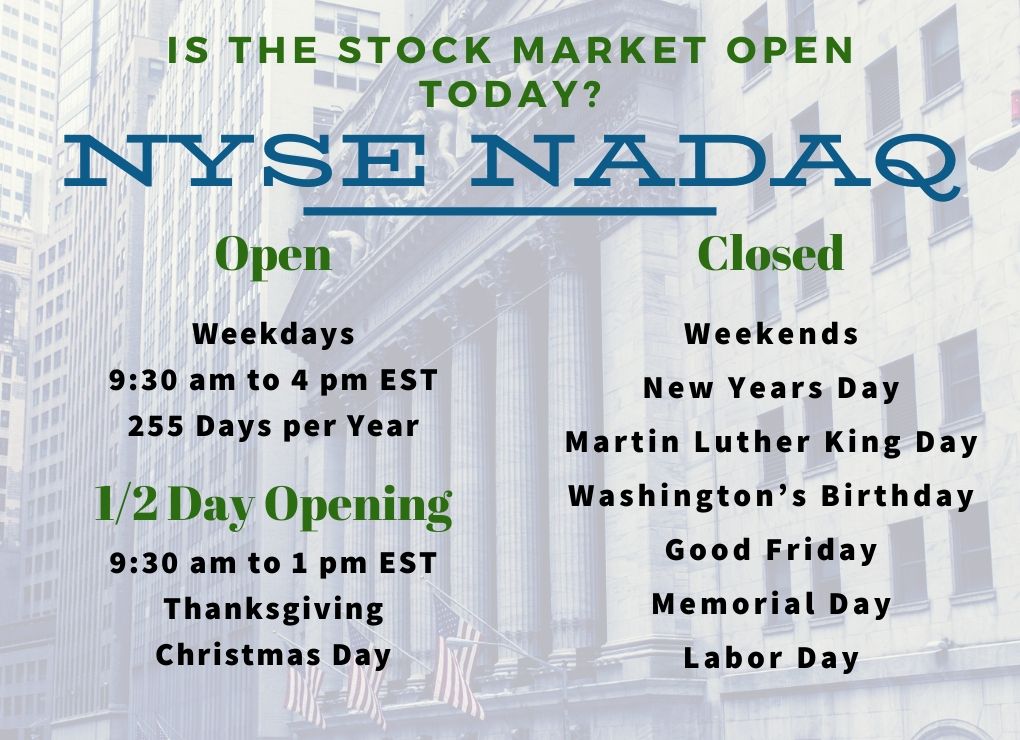
On a typical business day, the U.S. stock market operates from 9:30 AM Eastern Time (ET) to 4:00 PM ET. This six-and-a-half-hour window is often referred to as “regular trading hours” or “core trading hours.” During this period, the market experiences its highest volume and liquidity, making it the primary time for most investors to execute buy and sell orders. The opening bell at 9:30 AM ET often sees a surge in activity as investors react to overnight news, pre-market trading, and economic data released before the market opens. Similarly, the closing bell at 4:00 PM ET can also be a period of heightened activity, with traders closing positions or seeking to execute orders at the day’s final prices.
Understanding these core hours is fundamental. A trade placed outside this window will either be queued for the next market open or executed in specialized pre-market or after-hours sessions, each with its own set of characteristics and risks. For the average investor, these core hours represent the most transparent and efficient period to engage with the market due to the high volume of participants and tighter bid-ask spreads.
Understanding Pre-Market and After-Hours Trading
While 9:30 AM to 4:00 PM ET defines the standard trading day, market activity doesn’t begin and end precisely with these bells. Pre-market and after-hours trading sessions allow investors to trade outside regular hours, typically facilitated by electronic communication networks (ECNs) rather than the traditional exchange floor.
- Pre-Market Trading: This session usually runs from approximately 4:00 AM ET to 9:30 AM ET. It allows investors to react to overnight news, corporate earnings reports released before the market opens, or international market movements.
- After-Hours Trading: This session generally extends from 4:00 PM ET to 8:00 PM ET. It provides an opportunity to respond to news released after the market close, such as earnings announcements, press conferences, or significant economic indicators.
While these extended hours offer flexibility, they come with distinct considerations. Liquidity is generally much lower during pre-market and after-hours sessions, meaning fewer buyers and sellers are active. This reduced liquidity can lead to wider bid-ask spreads, making it more expensive to execute trades, and increased price volatility, as even small orders can significantly move a stock’s price. Consequently, these sessions are often favored by institutional investors or highly active traders who possess sophisticated tools and strategies to navigate their inherent risks. For individual investors, careful consideration and a clear understanding of these dynamics are crucial before engaging in extended-hours trading.
Navigating Market Closures: Weekends, Holidays, and Special Schedules
The stock market is not a perpetual motion machine; it observes specific closures that are vital for investors to be aware of. These non-trading periods are designed to align with national holidays, allow for system maintenance, and provide a pause for reflection and information processing, preventing knee-jerk reactions during times of reduced activity.
A Calendar of Non-Trading Days: Major U.S. Stock Market Holidays
The U.S. stock market adheres to a schedule of closures for major national holidays. Unlike many other businesses, the stock market does not observe all federal holidays, but a specific set that has evolved over time. Key holidays when the NYSE and Nasdaq are closed include:
- New Year’s Day (January 1)
- Martin Luther King, Jr. Day (Third Monday in January)
- Washington’s Birthday (Presidents’ Day, Third Monday in February)
- Good Friday (Varies, usually March or April)
- Memorial Day (Last Monday in May)
- Juneteenth National Independence Day (June 19)
- Independence Day (July 4)
- Labor Day (First Monday in September)
- Thanksgiving Day (Fourth Thursday in November)
- Christmas Day (December 25)
When a holiday falls on a weekend, the market typically observes it on the closest weekday (e.g., if Christmas Day is a Saturday, the market may be closed on Friday, December 24th, or Monday, December 27th, depending on specific rules). These closures are critical because they mean no trading activity, no price movements, and no order executions on those days. Investors must factor these non-trading days into their financial planning, especially when dealing with time-sensitive transactions or awaiting critical economic reports.
The Nuances of Early Closures and Half-Days
Beyond full-day holidays, the stock market also has a tradition of early closures or “half-days” on certain occasions. These abbreviated trading sessions maintain some market function while allowing participants to observe adjacent holidays.
The most common early closure is on the day after Thanksgiving (Black Friday), when the market typically closes at 1:00 PM ET. Similarly, the market often closes early at 1:00 PM ET on Christmas Eve and New Year’s Eve, provided these dates fall on a weekday. These early closures, though partial, can significantly impact trading strategies. The reduced trading window concentrates activity, potentially leading to increased volatility or decreased liquidity in the final hours. Traders must adjust their strategies to account for these shortened sessions, understanding that typical end-of-day price dynamics may be accelerated or altered.
Weathering Unforeseen Circumstances: Market Halts and Emergency Closures
While rare, the stock market can also experience temporary halts or even emergency closures due to extraordinary circumstances. These events are typically triggered by severe technical malfunctions, catastrophic natural disasters, or significant national security threats. For instance, after the September 11th attacks in 2001, the market remained closed for several days. Circuit breakers, designed to curb panic selling, can also temporarily halt trading across the entire market if major indices experience rapid, significant declines. While not part of the regular schedule, awareness of these possibilities underscores the need for investors to remain informed and prepared for unexpected disruptions.
The Global Perspective: Stock Markets Around the World
While understanding U.S. market hours is paramount for domestic investors, a comprehensive view of the financial world requires acknowledging the 24/7 nature of global trading. Different time zones and national holidays mean that somewhere in the world, a stock market is almost always open, creating a continuous cycle of trading activity.
Time Zones and Trading Overlap: Major International Exchanges
Major stock exchanges globally operate on their own local schedules, creating a fascinating overlap of trading sessions throughout the day and night (ET). This continuous flow allows for seamless international capital movement and constant reaction to global news.
- Asian Markets: When U.S. markets are winding down or closed overnight, Asian markets are typically open. The Tokyo Stock Exchange (TSE), Hong Kong Stock Exchange (HKEX), and Shanghai Stock Exchange (SSE) are prominent examples. For instance, the TSE generally operates from 9:00 AM to 3:00 PM JST (Japan Standard Time), which translates to evening/overnight hours in ET.
- European Markets: As Asian markets close, European markets begin their trading day. The London Stock Exchange (LSE), Frankfurt Stock Exchange (Xetra), and Euronext (Paris, Amsterdam, Brussels) are key players. The LSE, for example, runs from 8:00 AM to 4:30 PM GMT, corresponding to early morning into the early afternoon for U.S. ET.
- U.S. Markets: As European markets approach their close, U.S. markets are well into their trading day, providing a significant overlap, particularly in the morning ET.
This staggered schedule means that news originating in one part of the world can significantly influence markets in another. For example, a major economic announcement from China during U.S. overnight hours could cause Asian markets to react, which then influences European markets, and finally U.S. markets upon their opening. This interconnectedness highlights why global economic awareness is crucial for any serious investor.

Regional Differences in Market Holidays and Regulations
Just as the U.S. has its unique set of market holidays, so too do other nations, reflecting their respective national and cultural observances. For example, Lunar New Year significantly impacts Asian market schedules, while various national saints’ days or bank holidays affect European exchanges.
Regulations also vary significantly. While the U.S. Securities and Exchange Commission (SEC) governs its markets, other countries have their own regulatory bodies (e.g., the Financial Conduct Authority in the UK, the Financial Services Agency in Japan). These bodies establish rules regarding market conduct, trading mechanisms, and transparency, which can influence how and when trading occurs. Investors engaging in international investing, whether directly or through ETFs and mutual funds, must be cognizant of these disparate schedules and regulatory environments to effectively manage their global portfolios.
Strategic Implications for Investors: Why Market Hours Matter
For investors, understanding market hours transcends mere curiosity; it forms a foundational element of sound investment strategy. The timing of trades, the interpretation of news, and the overall management of risk are all intrinsically linked to when the market is open and how liquid it is.
Timing Trades: Executing Orders Effectively
The choice of when to place an order can significantly impact its execution price and overall success. During core market hours, high liquidity typically ensures tighter bid-ask spreads, meaning less difference between the highest price a buyer is willing to pay and the lowest price a seller is willing to accept. This generally leads to more efficient execution for both market orders (buy/sell at the best available price) and limit orders (buy/sell at a specified price or better).
However, outside core hours, in pre-market or after-hours sessions, lower liquidity means wider spreads. A market order placed during these times might be executed at a less favorable price than anticipated due to fewer participants. Limit orders become particularly useful here, allowing investors to specify their desired price and ensure they don’t buy too high or sell too low, even if the trade isn’t executed immediately. Understanding these dynamics is crucial for active traders and for anyone looking to optimize their entry and exit points.
Impact on News and Economic Data Releases
Much of the most impactful financial news and economic data is intentionally released outside of regular trading hours. Corporate earnings reports, Federal Reserve announcements, or key government economic statistics (like inflation or unemployment figures) are often disseminated either before the market opens (e.g., 8:30 AM ET) or after it closes (e.g., 4:00 PM ET). This practice aims to give all market participants a chance to digest the information before trading resumes, theoretically promoting a more orderly and less volatile opening or next trading session.
However, the reality is that such releases often fuel significant volatility in pre-market or after-hours trading, and can lead to “gap” openings—where a stock’s opening price is substantially higher or lower than its previous closing price. Savvy investors pay close attention to the economic calendar and company news releases, knowing that these events can dramatically shift prices and present both opportunities and risks, particularly around the market open or close.
Portfolio Management and Risk Mitigation
Knowing market hours is integral to effective portfolio management and risk mitigation. If an investor holds a significant position in a stock and a major, unexpected event occurs overnight, they cannot immediately react until the market opens. This “gap risk” is a critical consideration. Similarly, long holidays mean that positions are held for an extended period without the ability to trade, leaving them exposed to any unforeseen global events that might transpire during the closure.
Sophisticated investors might use options or other hedging strategies to mitigate these risks. For instance, put options can offer downside protection during market closures. Furthermore, rebalancing a portfolio may require trades across different asset classes, some of which (like commodities or foreign exchange) might trade nearly 24/7, while others adhere strictly to stock market hours. A clear understanding of these timings allows for more informed decision-making regarding asset allocation, position sizing, and stop-loss placements.
Understanding Liquidity and Volatility
Liquidity and volatility are two sides of the same coin when discussing market hours. During regular trading hours, the sheer volume of participants typically ensures high liquidity, which means trades can be executed quickly and efficiently without significantly impacting the stock’s price. This robust liquidity helps dampen volatility.
Outside these core hours, especially in pre-market and after-hours sessions, the thin liquidity means that even relatively small orders can cause disproportionately large price swings. This heightened volatility, coupled with wider spreads, increases the risk for traders. Investors should be aware that the price quoted for a stock during extended hours might not be representative of its true value or what it will trade at during regular hours. This understanding informs the decision of whether to engage in extended-hours trading and what order types to use.
The Future of Trading: Towards Extended Hours and 24/7 Markets?
The traditional market hours, a legacy of physical trading floors, are increasingly challenged by technological advancements and the truly global nature of finance. The conversation around extended trading hours, or even a continuous 24/7 market, is gaining traction.
Technological Advancements and Their Role
The advent of electronic trading platforms and sophisticated algorithmic trading systems has already significantly extended the practical trading day. ECNs allow for seamless transactions across different time zones and outside traditional market hours without the need for human brokers on a physical floor. Artificial intelligence and machine learning are further enhancing trading capabilities, enabling automated responses to market events around the clock. These technologies are making the concept of a 24/7 market not just theoretically possible but increasingly practical from an infrastructural standpoint. The global interconnectedness, driven by instant communication and data flow, logically pushes towards a market that never truly sleeps.
Debates and Challenges of Continuous Trading
Despite technological feasibility, the move to continuous 24/7 trading faces significant debates and challenges.
Pros:
- Instant Reaction: Investors could react immediately to global news or company announcements, reducing overnight risk gaps.
- Increased Liquidity: Potentially higher liquidity across all hours as global participants are always active.
- Convenience: Flexibility for investors in different time zones or with non-traditional work schedules.
Cons:
- Investor Fatigue: Constant monitoring could lead to burnout for individual and institutional investors.
- Regulatory Oversight: Ensuring fair and orderly markets and preventing manipulation becomes more complex across 24 hours and multiple jurisdictions.
- Data Overload: The continuous stream of data could overwhelm analytical capabilities.
- Market Efficiency vs. Health: Questions remain about whether non-stop trading truly benefits market health or just creates more opportunities for high-frequency trading.
These challenges involve not only technical infrastructure but also regulatory harmonization, market psychology, and the well-being of market participants.
The Evolving Landscape of Financial Markets
The trajectory of financial markets points towards greater integration and accessibility. While a complete 24/7 stock market for all participants might still be some way off, the trend towards extended hours and globalized trading is undeniable. Cryptocurrency markets already operate 24/7, offering a glimpse into what such a future might look like, complete with its own set of volatilities and opportunities.
For investors, staying informed about these evolving market structures is key. Adaptability to new trading schedules, an understanding of international market dynamics, and a commitment to continuous learning will be essential to navigate the financial markets of tomorrow. The simple question, “When will the stock market close today?”, will likely continue to yield a more complex and globally-influenced answer as markets continue to evolve.
aViewFromTheCave is a participant in the Amazon Services LLC Associates Program, an affiliate advertising program designed to provide a means for sites to earn advertising fees by advertising and linking to Amazon.com. Amazon, the Amazon logo, AmazonSupply, and the AmazonSupply logo are trademarks of Amazon.com, Inc. or its affiliates. As an Amazon Associate we earn affiliate commissions from qualifying purchases.