
The prospect of humanoid robots seamlessly integrating into our daily lives has long been a staple of science fiction, inspiring both awe and apprehension. Tesla, under the visionary leadership of Elon Musk, has thrown its hat into this futuristic ring with the development of “Optimus,” a general-purpose humanoid robot designed to eliminate dangerous, repetitive, and boring tasks from human existence. The tantalizing question on the minds of tech enthusiasts, investors, and the general public alike is not if these robots will arrive, but when they will truly be available for widespread adoption. Understanding the timeline requires a deep dive into the technological hurdles, manufacturing complexities, and strategic rollout plans that define this ambitious endeavor.

The Vision Behind Tesla’s Humanoid Robots
Tesla’s entry into robotics isn’t merely an expansion of its product line; it’s a manifestation of a long-held belief by Elon Musk that general-purpose AI and robotics will fundamentally reshape civilization. The journey began officially at Tesla’s AI Day 2021, where the concept of the “Tesla Bot” (later named Optimus) was first unveiled.
Elon Musk’s Ambitious Goal
Musk’s declared aim for Optimus is profound: to create a humanoid robot capable of performing tasks that are currently done by humans, but which are deemed unpleasant or hazardous. This vision extends beyond mere automation in factories; it encompasses a future where robots could serve as domestic helpers, industrial workers, caregivers, or even companions. The core philosophy is to augment human capabilities and free up human potential for more creative and meaningful pursuits, rather than automating jobs in a purely economic sense. He envisions a future of “abundance,” where labor shortages are a thing of the past, and goods and services are readily available due to robotic productivity.
The Genesis: From AI Day to Optimus
The initial unveiling of a human in a robot suit at AI Day 2021 was met with mixed reactions, but it served its purpose: to signal Tesla’s serious intent and to attract top AI and robotics talent. The subsequent AI Day events provided more concrete progress, moving from conceptual design to functional prototypes. The evolution from the early “Bumblebee” prototype, capable of basic walking, to more advanced iterations showcasing dexterity and complex movements, illustrates Tesla’s iterative development approach. This rapid prototyping and public demonstration strategy is characteristic of Tesla, allowing for swift innovation cycles and transparency, albeit often with ambitious timelines.
Core Technological Pillars
Building a general-purpose humanoid robot is an undertaking of immense complexity, demanding breakthroughs across multiple technological domains. Tesla is uniquely positioned to leverage its existing expertise in several key areas:
- Artificial Intelligence (AI): At the heart of Optimus is Tesla’s formidable AI prowess, honed through years of developing its Full Self-Driving (FSD) system for vehicles. The same neural network architecture, computer vision algorithms, and real-world data collection methodologies are being adapted and extended for robotic perception, navigation, and decision-making in diverse environments.
- Actuators and Mechanics: Human-like dexterity and movement require sophisticated actuators that can mimic the strength, speed, and precision of biological muscles and joints. Tesla is developing custom actuators, drawing on its engineering expertise from electric motors in its vehicles, but adapted for the unique demands of a bipedal robot. The challenge lies in creating powerful yet lightweight and efficient mechanisms that can operate safely alongside humans.
- Battery Technology: Given Tesla’s leadership in electric vehicle batteries, it has a distinct advantage in powering Optimus. The robots will require high-energy density batteries that can provide sufficient operational time without excessive weight, a critical factor for mobility and balance.
- Real-world Perception and Manipulation: Optimus must be able to perceive its surroundings accurately, understand objects, and interact with them in a nuanced way. This involves advanced sensor arrays (cameras, force sensors, haptics) coupled with AI models capable of processing this data in real-time to perform intricate tasks like picking up small objects, operating tools, or navigating crowded spaces.
Current State of Development and Prototypes
Tesla’s progress on Optimus has been incrementally revealed, showcasing significant strides from concept to demonstrable capability. The journey from a static model to a robot capable of dynamic movement and interaction is a testament to focused engineering and AI development.
Early Demonstrations and Iterations
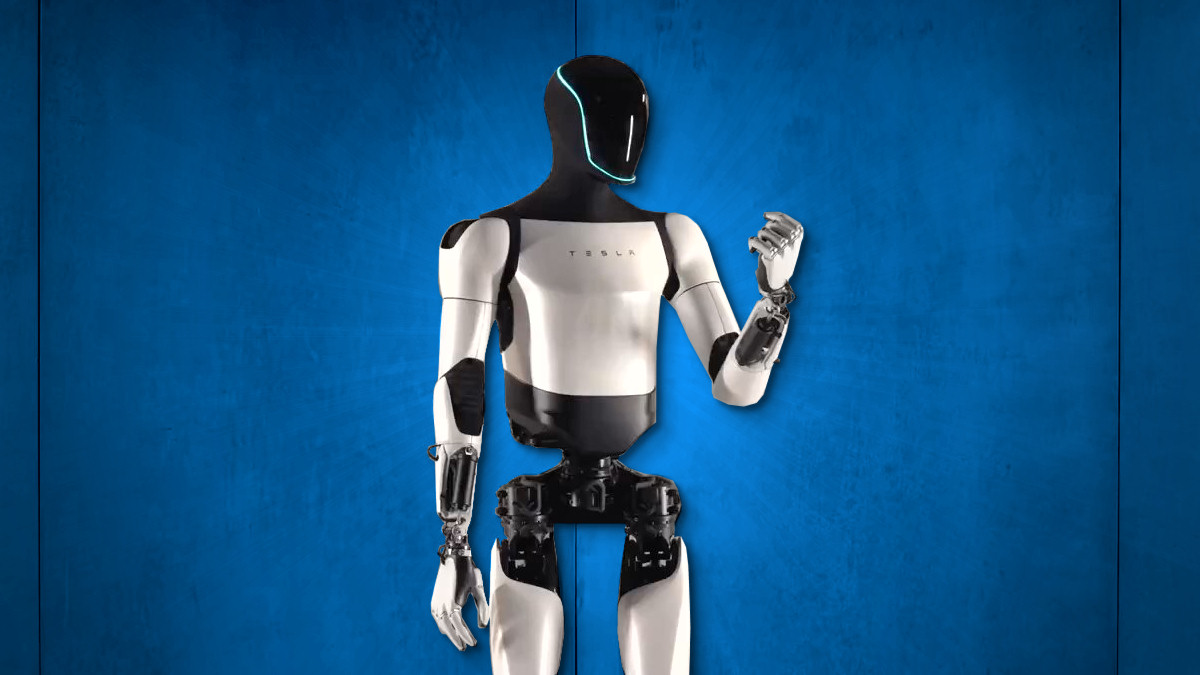
The initial prototype, “Bumblebee,” publicly demonstrated basic walking capabilities in late 2022. This early model was crucial for validating the core mechanical design and control algorithms. Subsequent iterations, often referred to as Gen 1 and Gen 2, have progressively improved upon the initial design. Each iteration has brought enhancements in terms of speed, balance, and dexterity. For instance, Gen 2 Optimus, demonstrated in late 2023, showcased more fluid walking, improved hand articulation, and the ability to handle delicate objects with greater precision.
Key Capabilities Showcased
Recent demonstrations highlight Optimus’s expanding skill set:
- Walking and Balance: The robots can now walk at a respectable pace, maintain balance even when pushed, and recover from minor disturbances, crucial for navigating uneven terrain or dynamic environments.
- Object Manipulation: The new hands of Optimus have improved dexterity, allowing the robot to pick up and manipulate small, irregular objects with greater finesse. This includes tasks like sorting blocks or even handling an egg without crushing it, showcasing force control.
- Environmental Interaction: The robots have been shown performing simple tasks in simulated environments, such as tidying up a workbench, demonstrating object recognition, path planning, and task execution. While these are still controlled demonstrations, they indicate progress towards real-world adaptability.
Engineering Challenges Addressed
The development path has involved overcoming formidable engineering challenges:
- Miniaturization and Integration: Integrating powerful motors, sensors, batteries, and AI processing into a human-sized form factor while keeping weight down and maintaining aesthetic appeal is an ongoing challenge. Tesla’s approach involves custom-designed components to achieve this.
- Dynamic Stability and Control: Bipedal locomotion is inherently unstable. Developing control algorithms that allow Optimus to walk, run, pivot, and interact dynamically with its environment without falling requires sophisticated real-time processing and robust mechanical design.
- Cost Reduction: For mass availability, the cost of each robot must be drastically reduced. Tesla aims for Optimus to eventually cost less than a car. This requires innovations in materials, manufacturing processes, and component design, leveraging economies of scale that Tesla is adept at.
Predicting Availability: Factors Influencing Deployment
Predicting the exact availability date for Tesla robots is complex, influenced by a confluence of technological readiness, manufacturing capacity, and societal factors. While Musk often provides optimistic timelines, the reality of deploying a revolutionary technology of this scale usually involves a longer horizon.
Technological Hurdles Remaining

Despite impressive progress, several significant technological hurdles must be cleared before Optimus can be truly “available”:
- General AI and Robustness: The current AI, while capable, is likely still far from true general intelligence needed for unsupervised, complex real-world tasks. Optimus needs to reliably adapt to unforeseen situations, learn from novel environments, and perform tasks with the robustness and common sense expected of a human.
- Dexterity and Fine Motor Skills: While improved, the human hand is an incredibly complex instrument. Replicating its full range of motion, force sensitivity, and manipulative capabilities for delicate or intricate tasks remains a major challenge.
- Energy Efficiency and Runtime: For practical application, Optimus needs to operate for extended periods on a single charge. Optimizing energy consumption of its many motors and onboard computers is crucial.
Manufacturing Scalability and Cost
Tesla’s history with electric vehicles demonstrates its ability to scale manufacturing rapidly, but robotics presents its own unique challenges:
- Component Sourcing and Production: Producing millions of specialized actuators, sensors, and structural components will require a robust supply chain and advanced automated factories.
- Assembly and Quality Control: The precision required for assembling humanoid robots, ensuring every joint and sensor functions perfectly, will demand innovative assembly lines.
- Achieving Target Price Points: Musk has stated a target price of around $20,000 per robot. Achieving this requires unprecedented cost efficiency in materials, manufacturing, and R&D, potentially leveraging the robots themselves in their own factories to drive down labor costs.
Regulatory and Societal Acceptance
Beyond the technicalities, the widespread deployment of humanoid robots will confront regulatory and societal questions:
- Safety Standards: What safety protocols and certifications will be required for robots operating in human environments, especially in homes or public spaces?
- Ethical Considerations: Questions of job displacement, potential for misuse, and the long-term impact on human interaction will need careful consideration and public discourse.
- Legal Frameworks: New legal frameworks may be necessary to address liability, ownership, and the rights of robotic entities.
Potential Use Cases and Transformative Impact
The applications for a general-purpose humanoid robot like Optimus are vast and potentially transformative, ranging across various sectors. The focus remains on alleviating human burden and enhancing productivity.
Industrial and Logistics Applications
This is likely where Optimus will see its first widespread deployment. In factories, warehouses, and logistics centers, robots can perform repetitive tasks, lift heavy objects, and operate in environments that might be dangerous or uncomfortable for humans. Imagine Optimus assisting on assembly lines, stocking shelves, or loading and unloading trucks. Tesla itself could be the first major customer, utilizing Optimus robots in its Gigafactories to further automate vehicle production.
Domestic and Personal Assistance
Further down the line, Optimus could enter homes, performing household chores like cleaning, cooking, and maintenance. It could also provide assistance to the elderly or those with disabilities, offering companionship and practical help. This is a more challenging environment due to the unstructured nature of homes and the need for greater adaptability and social intelligence.
Exploring Beyond Earth
In the distant future, humanoid robots could be invaluable for space exploration, constructing habitats on other planets, or performing research in hazardous environments that are too risky for humans. Their design allows for greater versatility than specialized wheeled rovers or fixed robotic arms.
The Road Ahead: Phased Rollout and Future Prospects
Given the complexities, the availability of Tesla robots will undoubtedly follow a phased rollout strategy, mirroring Tesla’s approach with its automotive technologies.
Initial Internal Deployment
The most logical first step for Optimus availability will be within Tesla’s own operations. Deploying robots in its factories can provide invaluable real-world data, allowing for rapid iteration and refinement in a controlled environment. This internal “dogfooding” will be crucial for proving their reliability and efficiency before external deployment. This could start within the next 1-3 years in limited capacities.
Commercial Pilot Programs
Following successful internal deployment, Tesla is likely to offer Optimus to select commercial partners for pilot programs. These could be in specific industrial sectors, logistics, or even specialized service industries. This would allow for testing in diverse external environments, gathering feedback, and further perfecting the technology in collaboration with early adopters. This phase could realistically begin within the 3-5 year timeframe.
Mass Market Introduction and Long-Term Vision
The mass market introduction of Optimus, especially for domestic use, will be the longest-term goal. This requires not only technological maturity and cost reduction but also significant societal acceptance and robust regulatory frameworks. While an optimistic prediction might place this in 5-10 years for some form of broader commercial availability, widespread consumer adoption in homes could easily be a decade or more away. Elon Musk has suggested that Optimus could eventually be a bigger business than Tesla’s car division, indicating his long-term ambition for its ubiquitous presence.
In conclusion, while the question of “when” Tesla robots will be available is met with Musk’s characteristic optimism for “next year” or “soon,” a pragmatic assessment suggests a more gradual, phased introduction. We are likely to see Optimus performing tasks in controlled industrial environments within the next few years, followed by broader commercial deployment in the mid-term. The vision of a robot in every home remains a longer-term aspiration, requiring breakthroughs not just in technology, but in manufacturing at scale and societal adaptation. Tesla’s journey with Optimus is a testament to pushing the boundaries of what’s possible, promising a future profoundly reshaped by the availability of truly general-purpose humanoid robots.
aViewFromTheCave is a participant in the Amazon Services LLC Associates Program, an affiliate advertising program designed to provide a means for sites to earn advertising fees by advertising and linking to Amazon.com. Amazon, the Amazon logo, AmazonSupply, and the AmazonSupply logo are trademarks of Amazon.com, Inc. or its affiliates. As an Amazon Associate we earn affiliate commissions from qualifying purchases.