
The prospect of humanoid robots integrating into daily life has long captivated the human imagination, a staple of science fiction for decades. With Tesla, a company renowned for pushing the boundaries of electric vehicles and artificial intelligence, entering the fray with its Optimus (formerly known as the Tesla Bot), the question shifts from “if” to “when.” Tesla’s ambition is not merely to build a functional robot but to mass-produce it, making it accessible and transformative. Unpacking the availability of the Tesla robot requires a deep dive into its technological underpinnings, the formidable challenges of advanced robotics, Tesla’s development trajectory, and the broader implications for industry and society.

The Vision Behind Optimus: Tesla’s Humanoid Ambition
Tesla’s entry into humanoid robotics is a natural extension of its expertise in AI, battery technology, and advanced manufacturing. The Optimus project represents a bold leap towards a future where general-purpose robots can perform tasks traditionally done by humans, promising to revolutionize various sectors.
Introducing the Tesla Bot (Optimus)
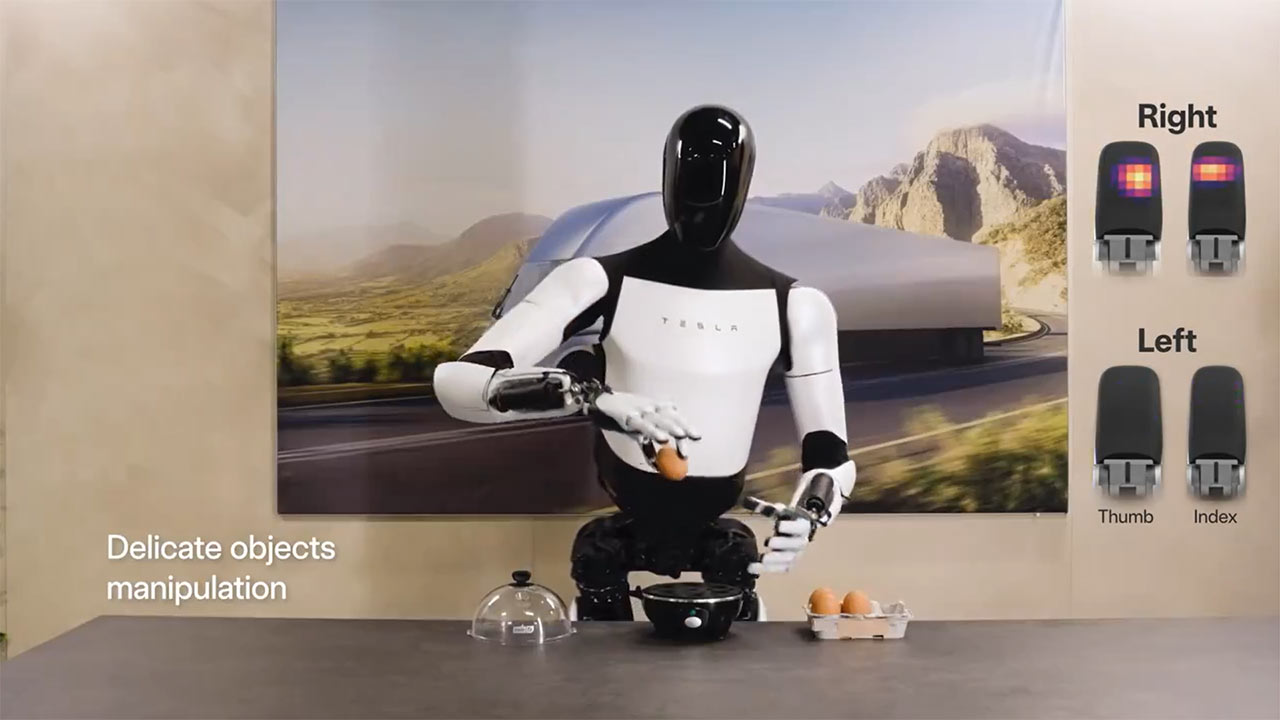
First unveiled in 2021 and subsequently showcased with more refined prototypes, Optimus is designed as a bipedal, human-sized robot. Its primary goal is to be a versatile helper, capable of performing repetitive, dangerous, or mundane tasks that humans might prefer not to do. Unlike specialized industrial robots confined to cages, Optimus is envisioned to operate in unstructured human environments, interacting safely and effectively with its surroundings. It aims for dexterity, balance, and the ability to learn and adapt, leveraging Tesla’s existing AI infrastructure developed for its self-driving vehicles.
The Rationale: Addressing Labor Shortages and Dangerous Tasks
Elon Musk has frequently articulated the rationale behind Optimus: addressing global labor shortages and taking over jobs that are physically demanding, dangerous, or simply monotonous. From factory floors to household chores, the potential applications are vast. By developing a robot that can mimic human actions and comprehend complex instructions, Tesla aims to unlock immense economic potential, free up human capital for more creative pursuits, and improve workplace safety. This vision positions Optimus not as a replacement for humanity, but as an augmentation, a tool to expand our collective productive capacity.
Tesla’s Core Strengths: AI, Robotics, and Manufacturing Synergy
Tesla’s unique advantage in the robotics space stems from its existing technological ecosystem. The company has amassed unparalleled experience in real-world AI through its vast fleet of self-driving cars, which navigate dynamic and unpredictable environments. This foundation in computer vision, neural networks, and decision-making algorithms is directly transferable to humanoid robotics. Furthermore, Tesla’s expertise in electric powertrains, battery design, and large-scale manufacturing provides critical components for building efficient, powerful, and ultimately mass-producible robots. The synergy between these disciplines – advanced AI for intelligence, robust hardware for mobility and manipulation, and efficient manufacturing for scalability – is what gives Tesla a credible path to achieving its ambitious robotics goals.
Navigating the Technological Frontier: Challenges and Progress
Developing a truly general-purpose humanoid robot is an undertaking fraught with immense technological challenges. While Tesla has shown impressive progress, bridging the gap from sophisticated prototype to reliable, mass-market availability requires breakthroughs across multiple domains.
AI Brains: Advancements in Perception, Planning, and Control
At the heart of Optimus is its “brain” – a complex AI system responsible for perception, decision-making, and motor control. For a robot to operate autonomously in human environments, it needs highly sophisticated computer vision to interpret its surroundings, advanced natural language processing to understand commands, and robust planning algorithms to execute tasks efficiently and safely. Tesla’s work on FSD (Full Self-Driving) provides a strong starting point for perception, but extending this to fine motor control, object manipulation, and understanding human social cues is a significant hurdle. Progress in real-time inference, learning from human demonstrations, and generalization across diverse tasks will be critical. The ability for Optimus to not just see, but to understand its environment and reason about its actions, is an ongoing frontier.
Robotic Hardware: Engineering for Dexterity, Balance, and Power Efficiency
Beyond the AI, the physical hardware of a humanoid robot presents its own set of engineering marvels and challenges. Optimus requires highly articulate limbs with sufficient strength, dexterity, and range of motion to perform a variety of tasks. Maintaining dynamic balance while walking, carrying objects, or interacting with unpredictable forces is immensely complex. Furthermore, all of this must be achieved within power consumption limits that allow for practical operating durations. Tesla is developing custom actuators, motors, and battery systems optimized for the robot’s specific needs, aiming for a balance of power, precision, and efficiency. The goal is a lightweight yet robust frame, capable of human-like agility without compromising safety or battery life.
Overcoming Real-World Complexity: Unstructured Environments
One of the most profound challenges for any general-purpose robot is operating in unstructured, unpredictable human environments. Factories can be controlled, but homes, offices, and public spaces are chaotic, filled with unknown objects, varying lighting conditions, and unexpected human interactions. Optimus must be able to navigate stairs, open doors, pick up arbitrarily shaped objects, and perform tasks that require fine motor skills, all while avoiding obstacles and responding to unforeseen events. This requires an unprecedented level of adaptability and robustness in its AI and physical design. Simulating these complexities is one thing; deploying a robot that can reliably handle them in the real world, without constant human oversight, is another entirely. Iterative testing, data collection, and continuous software improvements, similar to Tesla’s approach with FSD, will be key to overcoming this hurdle.
Unpacking the Availability Timeline: From Prototype to Mass Production
Given the ambitious nature of the Optimus project and the inherent complexities of robotics, understanding its availability involves recognizing a multi-stage rollout rather than a single launch date.
Early Demonstrations and Developer Kits

Tesla has already moved beyond static renders, showcasing working prototypes performing basic manipulation tasks. The next logical step, before widespread commercialization, would involve more advanced demonstrations in controlled environments, perhaps even limited internal testing within Tesla’s own factories. Following this, it’s plausible that Tesla might release developer kits or offer early access to select partners. This “alpha” or “beta” phase would allow external developers and researchers to experiment with the robot, helping to identify bugs, refine functionalities, and explore new applications that Tesla’s internal team might not have considered. This approach, common in software and hardware development, provides invaluable feedback and accelerates development. We could potentially see such early deployments or restricted availability within the next 2-4 years, depending on the pace of progress.
Phased Commercial Deployment: Industrial and Enterprise Applications
The most likely initial commercial availability for Optimus will not be directly to consumers but within industrial and enterprise settings. Tesla itself, with its sprawling Gigafactories, presents a perfect internal testbed for deploying these robots for tasks like material handling, assembly assistance, or quality control. After proving their capabilities and reliability in these controlled, high-value environments, Tesla could then offer Optimus to other businesses. Logistics companies, manufacturing plants, and even specialized service industries (like elder care facilities or hospitals for non-critical tasks) could be early adopters. These environments offer a balance of structure and complexity that is more manageable than a completely open consumer market, allowing for a phased rollout where the robots can learn and improve. This enterprise-focused deployment could realistically begin within the next 5-7 years, scaling up as the technology matures and costs decrease.
The Consumer Market: A Longer Road Ahead
While the ultimate vision for Optimus includes household utility, its widespread availability to the general consumer market is likely the furthest horizon. The transition from controlled industrial environments to the unpredictable and diverse landscape of individual homes involves overcoming entirely new sets of challenges, including safety standards, user interface simplicity, and a much lower tolerance for error. The cost factor will also be paramount; for Optimus to be a consumer product, its price point must be within reach for many households, which will necessitate high-volume, cost-effective manufacturing. Furthermore, societal acceptance and regulatory frameworks for domestic robots are still nascent. Therefore, anticipating a mass-market consumer Optimus in homes globally is likely a decade or more away, possibly even longer. This will depend heavily on the success of its industrial deployments, the rapid advancement of AI capabilities, and significant reductions in production costs.
The Transformative Potential: Impact on Industries and Society
Whenever Optimus does become widely available, its impact is poised to be profound, reshaping industries and fundamentally altering human interaction with technology.
Revolutionizing Manufacturing and Logistics
The immediate and most tangible impact of Optimus is expected to be in manufacturing and logistics. Robots like Optimus can work around the clock, perform repetitive tasks with consistent precision, and handle heavy or hazardous materials without fatigue or risk of injury. This could lead to significant boosts in productivity, reduced operational costs, and the ability to onshore manufacturing processes currently located in regions with lower labor costs. Logistics, from warehouse management to package delivery, could see similar transformations, with robots handling sorting, packing, and even last-mile delivery. The efficiency gains could trickle down to consumers in the form of lower prices and faster services.
Extending Human Capabilities in Service and Healthcare
Beyond industrial applications, Optimus holds immense potential in the service and healthcare sectors. In healthcare, robots could assist with patient mobility, deliver supplies, or perform routine sanitary tasks, freeing up medical professionals for more critical patient care. In hospitality, they could manage inventory, prepare food, or clean facilities. The possibility of humanoid robots providing companionship or assistance to the elderly and those with disabilities is particularly compelling, offering a new dimension of support and independence. While these applications require an even higher degree of empathy and nuanced interaction, the underlying technology lays the groundwork.
Broader Societal Shifts: The Automation Economy
The widespread adoption of general-purpose humanoid robots will undoubtedly usher in significant societal shifts. While concerns about job displacement are valid and warrant proactive policy discussions, the economic growth unleashed by enhanced productivity and new industries (robot manufacturing, maintenance, programming, and ethical oversight) could also create new types of jobs and opportunities. The automation of mundane tasks could allow humans to focus on creative, strategic, and interpersonal roles, leading to a redefinition of work itself. Furthermore, a society where basic necessities are produced with less human effort could enable new social structures, leisure activities, and avenues for personal development.
The Road Ahead: Ethical Considerations and Regulatory Frameworks
As with any powerful emerging technology, the development and deployment of humanoid robots like Optimus necessitate careful consideration of ethical implications and the establishment of robust regulatory frameworks.
Safety and Reliability: Paramount Design Principles
For Optimus to be integrated into human-centric environments, safety and reliability must be non-negotiable design principles. The robot must be inherently safe to be around, with mechanisms to detect and avoid collisions, fail-safe protocols, and the ability to understand and respond to human gestures and commands. Rigorous testing and certification processes will be essential to ensure that Optimus can operate without posing undue risk to humans or property. Tesla’s approach to autonomous driving, which prioritizes safety above all else, will likely extend to its robotics division, but the challenges of a physical, moving entity in complex environments are unique.
Addressing Job Displacement Concerns
The prospect of widespread automation by humanoid robots naturally raises concerns about job displacement. While many argue that technology historically creates more jobs than it destroys, the scale and general-purpose nature of Optimus could accelerate this process in unprecedented ways. Proactive measures, such as universal basic income discussions, retraining programs, and policies to support workers transitioning to new roles, will be crucial. Policymakers, industry leaders, and educators must collaborate to prepare the workforce for a future where the nature of human work is significantly redefined. Tesla, as a frontrunner in this field, will bear a responsibility to contribute to these discussions and solutions.
Shaping the Future of Human-Robot Interaction
Finally, the long-term success of Optimus hinges on effectively shaping human-robot interaction. This goes beyond simple safety to encompass comfort, trust, and acceptance. How will humans react to working alongside, or living with, humanoid robots? What are the psychological implications? Design choices regarding appearance, voice, and behavior will play a significant role in fostering positive interactions. Ethical guidelines for robot behavior, data privacy, and accountability will also need to be established to ensure that these powerful tools serve humanity’s best interests. The availability of the Tesla robot is not just a technological question, but a societal one, requiring thoughtful and ongoing dialogue to navigate the future it promises.
In conclusion, while prototypes of the Tesla robot are already demonstrating foundational capabilities, its journey to widespread availability is a multi-year, multi-stage process. Initial commercial deployments in industrial settings could emerge within the next 5-7 years, but a truly ubiquitous consumer presence is likely a decade or more away. The path forward is paved with immense technological challenges, ethical considerations, and the need for societal adaptation, but the vision of a future augmented by intelligent, general-purpose humanoid robots continues to drive innovation at an unprecedented pace.
aViewFromTheCave is a participant in the Amazon Services LLC Associates Program, an affiliate advertising program designed to provide a means for sites to earn advertising fees by advertising and linking to Amazon.com. Amazon, the Amazon logo, AmazonSupply, and the AmazonSupply logo are trademarks of Amazon.com, Inc. or its affiliates. As an Amazon Associate we earn affiliate commissions from qualifying purchases.