
For investors, traders, and anyone with a keen interest in the financial markets, understanding the precise operating hours of stock exchanges is not just a matter of curiosity—it’s a critical component of strategic planning and risk management. The rhythm of the market, dictated by its opening and closing bells, sets the pace for global capital allocation, influencing everything from individual retirement portfolios to the valuations of multinational corporations. While the concept of a “market close” might seem straightforward, the reality is nuanced, encompassing standard hours, early closures, holiday schedules, and even extended trading sessions that operate beyond the traditional workday.
This article delves into the specifics of when the stock market typically closes, focusing on the major U.S. exchanges, and explores the broader implications of these schedules for financial decision-making. Whether you’re a seasoned day trader looking to capitalize on end-of-day movements or a long-term investor seeking to understand the backdrop against which your investments are valued, a clear grasp of market timing is indispensable. We will navigate the intricacies of standard trading hours, decode the impact of holidays, illuminate the significance of the closing bell, and even venture into the less conventional world of after-hours trading, offering insights crucial for navigating the financial landscape effectively.
Understanding Standard Market Operating Hours
The heart of the American financial system beats strongest during its standard trading hours. These defined periods are when the vast majority of transactions occur, liquidity is highest, and market sentiment is most actively expressed. Understanding these core hours is fundamental for anyone participating in or observing the market.
The New York Stock Exchange (NYSE) and Nasdaq
In the United States, the two primary stock exchanges are the New York Stock Exchange (NYSE) and the Nasdaq Stock Market. Both exchanges operate on largely identical schedules for their regular trading sessions.
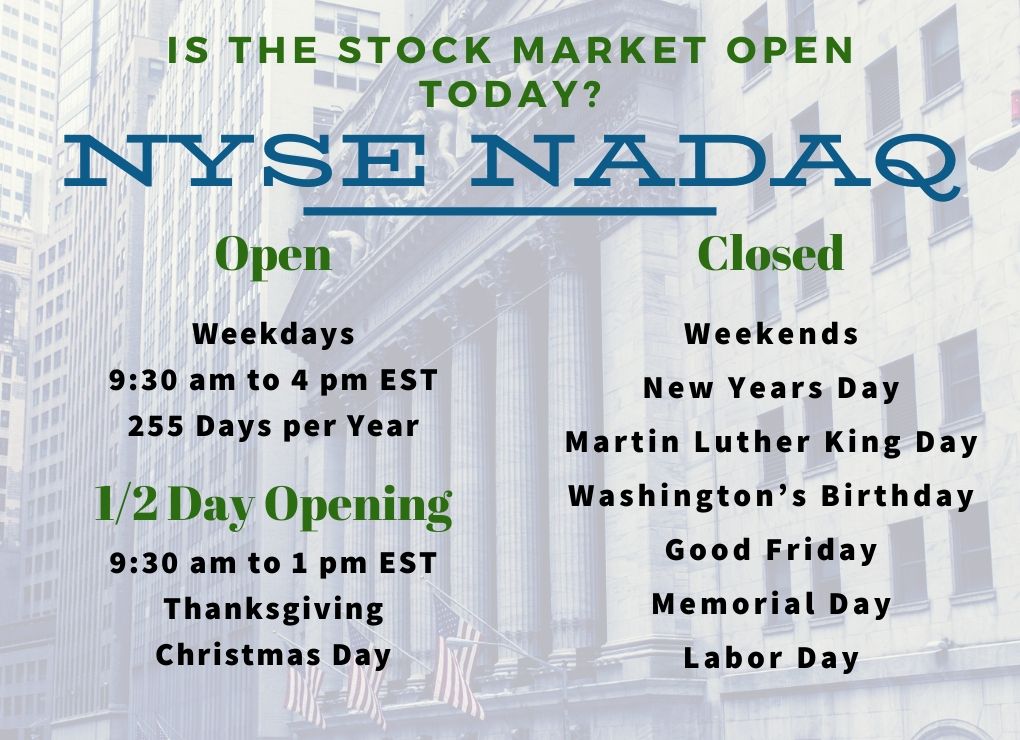
- Regular Trading Hours: For both the NYSE and Nasdaq, the regular trading session runs from 9:30 AM Eastern Time (ET) to 4:00 PM ET on weekdays. This seven-and-a-half-hour window is when the “opening bell” and “closing bell” ceremonies typically take place, marking the official start and end of the trading day. During these hours, orders are executed, prices fluctuate, and market participants actively buy and sell shares of publicly traded companies. This period is characterized by high trading volume and generally tight bid-ask spreads, making it the most efficient time for most investors to execute trades.
Regular Session vs. Extended Hours Trading
It’s crucial to differentiate between the standard regular session and other periods when trading can occur. The 9:30 AM to 4:00 PM ET window is the most recognized and liquid, but it’s not the only time securities can be traded. Extended hours trading, which includes pre-market and after-hours sessions, offers additional opportunities but comes with its own set of characteristics and risks, which we will explore later. For the purpose of “when will the stock market close today,” the 4:00 PM ET mark is the definitive answer for the regular session.
Time Zones and Their Impact
Given the vast geographical spread of investors and the global nature of financial news, understanding the impact of time zones is vital. While U.S. stock markets operate on Eastern Time, an investor in California (Pacific Time) must remember that the market opens at 6:30 AM PT and closes at 1:00 PM PT. Similarly, for someone in London, the market day in New York effectively spans from 2:30 PM to 9:00 PM GMT. This time difference necessitates careful planning, especially for those who need to react to market news or execute trades outside their local business hours. Financial platforms and news outlets typically refer to ET when discussing U.S. market hours, so investors should always be mindful of their own local time zone conversion to avoid missed opportunities or unexpected market movements.
Navigating Market Holidays and Early Closures
The stock market, like many other institutions, observes a number of holidays throughout the year, during which it remains closed. Furthermore, there are specific instances when the market may close early. Being aware of these exceptions is just as important as knowing the standard operating hours.
Federal Holidays Affecting Trading
The U.S. stock market largely follows the federal holiday schedule, with a few key differences. These full-day closures mean absolutely no trading occurs on these dates, allowing market participants to take a break and ensuring a level playing field without partial trading.
Common holidays that lead to a full market closure include:
- New Year’s Day (January 1)
- Martin Luther King, Jr. Day (third Monday in January)
- Washington’s Birthday / Presidents’ Day (third Monday in February)
- Good Friday (Friday before Easter)
- Memorial Day (last Monday in May)
- Juneteenth National Independence Day (June 19)
- Independence Day (July 4)
- Labor Day (first Monday in September)
- Thanksgiving Day (fourth Thursday in November)
- Christmas Day (December 25)
It’s important to note that if a holiday falls on a Saturday or Sunday, the market typically observes the holiday on the preceding Friday or the following Monday, respectively. For example, if Christmas Day falls on a Saturday, the market might close on Friday, December 24th.
Half-Day Sessions and Pre-Holiday Trading
Beyond full-day closures, the stock market also has a tradition of observing half-day sessions, particularly around major holidays. These typically involve an early close at 1:00 PM ET instead of the usual 4:00 PM ET.
Common occasions for half-day sessions include:
- The day after Thanksgiving (Black Friday): This is a long-standing tradition where the market closes early, often leading to reduced trading volume and potentially higher volatility due to thinner liquidity.
- Christmas Eve: If December 24th falls on a weekday, the market often observes an early close.
- New Year’s Eve: Similarly, if December 31st falls on a weekday, an early close can occur.
These half-day sessions are important for investors to be aware of, as they limit the window for executing trades and can affect end-of-day price movements more dramatically.
How to Stay Informed About Market Closures
Given the dynamic nature of holiday schedules and the potential for unforeseen early closures (though rare, they can occur in extraordinary circumstances), staying informed is paramount. Investors can rely on several reliable sources:
- Official Exchange Websites: The NYSE and Nasdaq publish their holiday schedules well in advance on their respective websites.
- Financial News Outlets: Major financial news providers (e.g., Bloomberg, Wall Street Journal, Reuters, CNBC) always report on upcoming market holidays and early closures.
- Brokerage Platforms: Most online brokerage platforms will display alerts or provide calendars detailing market hours, especially around holidays.
- Financial Calendars: Many financial websites and apps offer integrated calendars that highlight market holidays and early closes.
Proactive checking of these resources ensures that investors are never caught off guard by an unexpected market closure or an abbreviated trading day.
The Significance of the Closing Bell for Investors
The ringing of the closing bell at 4:00 PM ET is more than just a ceremonial act; it marks a critical juncture for investors, influencing everything from portfolio valuation to trading strategies. The final moments of the trading day and the closure itself hold significant weight in the financial world.
Impact on Portfolio Valuation
When the market closes, the last traded price for each stock becomes its official closing price for the day. These closing prices are the figures widely reported in financial news and serve as the basis for calculating daily gains or losses in an investor’s portfolio. For mutual funds and exchange-traded funds (ETFs), the Net Asset Value (NAV) is typically calculated using the closing prices of their underlying holdings. This means that an investor’s total portfolio value, especially for those holding diversified assets, solidifies at 4:00 PM ET each day, providing a snapshot of their financial health until the next market open. Fluctuations in these closing prices over time directly correlate to the growth or decline of investment capital.

Order Execution and Settlement
The closing bell also has practical implications for order execution. Any market orders placed after 4:00 PM ET will typically be queued for execution at the next market open. Limit orders or stop orders that were not triggered during the regular session will remain active (if specified as “good-till-cancelled”) but will not be executed until the market resumes trading.
Furthermore, the settlement of trades—the process by which securities are delivered to the buyer and payment is delivered to the seller—is tied to the trading day. In the U.S., most stock trades settle on a T+2 basis (trade date plus two business days). The closing of the market defines the “trade date,” initiating this settlement cycle. This is crucial for managing cash flow and ensuring timely fund availability for subsequent trades.
Strategic Implications for Day Traders and Long-Term Investors
The closing bell carries different weights for various types of investors:
- For Day Traders: The approach to the closing bell is critical. Day traders, who aim to profit from intra-day price movements, typically close out all their positions before 4:00 PM ET to avoid holding securities overnight, thereby eliminating overnight risk from unexpected news or global market shifts. The last hour of trading, often called the “power hour,” can be characterized by increased volatility and volume as traders adjust positions, contributing to significant price movements.
- For Swing Traders: Those who hold positions for a few days or weeks will use the closing price as a key data point for technical analysis, evaluating trend strength, support, and resistance levels. The closing price is a crucial input for many trading indicators and models.
- For Long-Term Investors: While daily closing prices provide a routine update on their portfolio’s performance, long-term investors are generally less concerned with the minute-to-minute fluctuations around the closing bell. Their focus is on broader trends and the fundamental value of their investments over months and years. However, understanding the context of closing prices helps them track progress towards their financial goals and make informed decisions about rebalancing or reallocating assets. The closing bell serves as a regular checkpoint, reinforcing their commitment to their investment strategy.
Beyond the Bell: After-Hours and Pre-Market Trading
While the regular trading session dominates attention, the financial markets don’t completely shut down at 4:00 PM ET. Extended hours trading, encompassing both pre-market and after-hours sessions, offers investors the ability to trade outside the conventional window. This flexibility comes with its own unique set of dynamics and considerations.
What is Extended Hours Trading?
Extended hours trading refers to the periods before the official market open (pre-market) and after the official market close (after-hours).
- Pre-Market Trading: Typically runs from 4:00 AM ET to 9:30 AM ET.
- After-Hours Trading: Typically runs from 4:00 PM ET to 8:00 PM ET.
These hours are facilitated by electronic communication networks (ECNs) rather than the traditional exchange floor or Nasdaq market makers. ECNs match buy and sell orders electronically, enabling trading outside the standard session. The availability and exact duration of extended hours can vary slightly between brokers.
Risks and Opportunities in Non-Standard Hours
Extended hours trading presents both distinct opportunities and significant risks that investors must carefully consider:
Opportunities:
- Reacting to News: Major corporate earnings reports, economic data releases, or geopolitical events often occur outside regular trading hours. Extended hours allow investors to react immediately to this news, potentially getting ahead of the general market sentiment when the regular session opens.
- Convenience: For investors in different time zones or those with busy daytime schedules, extended hours offer greater flexibility to manage their portfolios.
- Price Discovery: Early trading can help set the tone for the regular session, as initial reactions to news begin to shape prices.
Risks:
- Lower Liquidity: The most significant drawback of extended hours is substantially lower liquidity compared to the regular session. Fewer participants mean fewer buyers and sellers, which can lead to wider bid-ask spreads (the difference between the highest price a buyer is willing to pay and the lowest price a seller is willing to accept).
- Increased Volatility: Lower liquidity can exacerbate price swings. A small number of large orders can cause dramatic price movements, making stocks more volatile and unpredictable.
- Price Discrepancy: The price at which a stock trades during extended hours may not be indicative of its opening price during the regular session, or the price during regular hours may be significantly different from the after-hours price.
- Limited Order Types: Many brokers restrict the types of orders that can be placed during extended hours, often limiting them to limit orders to protect investors from unfavorable prices due to low liquidity. Market orders are generally not recommended or even allowed.
- Professional Competition: A higher proportion of institutional investors and professional traders participate in extended hours, putting individual retail investors at a potential disadvantage.
Accessing Extended Hours Trading
Most major online brokerages offer access to extended hours trading. However, investors need to specifically enable this feature on their accounts, and it’s essential to understand the terms and conditions, including any limitations on order types. Before engaging, it’s highly recommended to:
- Use Limit Orders: Always use limit orders during extended hours to specify the maximum or minimum price you are willing to pay or accept.
- Monitor News Closely: Extended hours trading is driven heavily by breaking news, so a robust news feed is crucial.
- Understand Your Broker’s Rules: Each broker may have slightly different cut-off times, order type restrictions, and settlement processes for extended hours trades.
While extended hours trading provides flexibility, it demands a higher level of awareness and caution due to the inherent risks associated with reduced liquidity and increased volatility.
Global Markets: A 24/7 Perspective
While “when will the stock market close today” typically refers to the local U.S. market, it’s important for any savvy investor to recognize that the global financial landscape operates on a near 24/7 cycle. As one major market closes, another is preparing to open, creating an interconnected web of trading that never truly sleeps.
Major International Exchanges and Their Hours
Different countries have their own primary stock exchanges, each with distinct operating hours dictated by their local time zones and national holidays. Here’s a glimpse at some of the world’s major exchanges:
- Asia:
- Tokyo Stock Exchange (TSE): Typically 9:00 AM to 3:00 PM JST (Japan Standard Time), with a lunch break.
- Shanghai Stock Exchange (SSE): Generally 9:30 AM to 3:00 PM CST (China Standard Time), also with a lunch break.
- Hong Kong Stock Exchange (HKEX): Roughly 9:30 AM to 4:00 PM HKT (Hong Kong Time), with a lunch break.
- Europe:
- London Stock Exchange (LSE): 8:00 AM to 4:30 PM GMT/BST (Greenwich Mean Time/British Summer Time).
- Euronext (Paris, Amsterdam, Brussels, Lisbon): Generally 9:00 AM to 5:30 PM CET/CEST (Central European Time/Central European Summer Time).
- Deutsche Börse (Frankfurt): 9:00 AM to 5:30 PM CET/CEST.
- Australia:
- Australian Securities Exchange (ASX): 10:00 AM to 4:00 PM AEST/AEDT (Australian Eastern Standard Time/Daylight Time).
These staggered schedules mean that news breaking in one region can influence markets worldwide, creating a continuous flow of information and trading activity that underscores the global nature of capital markets.
Interconnectedness of Global Markets
The closing of the U.S. market does not mean an end to market-moving events. As the NYSE and Nasdaq close, Asian markets are already well into their trading day, followed by European markets. This interconnectedness means that:
- Overnight News Impact: Economic data, corporate announcements, or political developments from Asia or Europe can significantly impact U.S. stock futures and influence the opening bell prices for the next U.S. trading session.
- Currency and Commodity Markets: Forex (foreign exchange) markets operate 24 hours a day, five days a week, as do many commodity markets. These continuous markets can react to news instantly, with their movements often serving as indicators for the direction of equity markets when they reopen.
- Diversification Strategy: For investors with diversified portfolios that include international equities, understanding global market hours is crucial for monitoring their holdings and understanding the broader economic context affecting their investments.
Implications for Diversification
For U.S. investors, the 24/7 nature of global markets highlights the importance of international diversification. By investing in companies and economies outside the U.S., investors can potentially:
- Reduce Portfolio Volatility: Different global markets may not always move in lockstep, offering a degree of portfolio stability.
- Tap into Growth Opportunities: Economies and industries experiencing rapid growth may be located outside the U.S.
- React to Global Economic Cycles: A truly global perspective allows investors to capitalize on varying economic cycles and policy environments around the world.
While the question “when will the stock market close today” refers to a specific local closing time, the broader financial world remains in constant motion, reminding investors of the dynamic and interconnected nature of global capital. Understanding these rhythms is not just about knowing when to trade, but about comprehending the vast, complex ecosystem in which investments grow and evolve.
aViewFromTheCave is a participant in the Amazon Services LLC Associates Program, an affiliate advertising program designed to provide a means for sites to earn advertising fees by advertising and linking to Amazon.com. Amazon, the Amazon logo, AmazonSupply, and the AmazonSupply logo are trademarks of Amazon.com, Inc. or its affiliates. As an Amazon Associate we earn affiliate commissions from qualifying purchases.