
For the past several years, the phrase “mortgage rates” has dominated headlines, dinner table conversations, and financial planning sessions. After a decade of historically low borrowing costs, the sudden and aggressive ascent of interest rates left many prospective homebuyers and real estate investors in a state of paralysis. The central question—when will mortgage rates drop?—is no longer just a matter of curiosity; it is a pivotal factor in the health of the global economy and the personal wealth of millions.
Understanding the trajectory of mortgage rates requires a deep dive into the mechanics of monetary policy, the behavior of the bond market, and the persistent challenge of inflation. While no one possesses a crystal ball, a close examination of economic indicators and Federal Reserve signals provides a roadmap for what to expect in the coming quarters.
The Macroeconomic Forces Shaping Today’s Interest Rates
Mortgage rates do not move in a vacuum. They are the byproduct of complex interactions between government policy, investor sentiment, and global economic stability. To understand when they will fall, we must first understand why they are currently high.
The Role of the Federal Reserve and the Federal Funds Rate
While the Federal Reserve (the Fed) does not directly set mortgage rates, its influence is unparalleled. The Fed sets the federal funds rate—the interest rate at which commercial banks borrow and lend to each other overnight. When the Fed raises this rate to combat inflation, the cost of borrowing increases across the board, from credit cards to business loans and, eventually, mortgages.
Between 2022 and 2023, the Fed embarked on one of the most aggressive hiking cycles in history to cool an overheating economy. For mortgage rates to drop significantly, the Fed must first feel confident that inflation is under control, allowing them to pause or pivot toward cutting the federal funds rate.
The 10-Year Treasury Yield Connection
If you want to know where mortgage rates are headed tomorrow, look at the 10-year Treasury yield today. Mortgage lenders typically price their loans based on the yield of the 10-year Treasury bond, plus a “spread” to account for risk and profit. Historically, this spread is around 1.7 to 2 percentage points.
When investors are nervous about the economy or expect high inflation, they demand higher yields on government bonds, which pushes mortgage rates up. Conversely, when the economy cools and investors flock to the safety of bonds, yields drop, and mortgage rates follow suit. A narrowing of the current spread, which has been unusually wide due to market volatility, could lead to lower mortgage rates even if Treasury yields stay flat.
Inflation and the Consumer Price Index (CPI)
Inflation is the ultimate enemy of low interest rates. When the purchasing power of the dollar erodes, lenders demand higher interest rates to compensate for the fact that the money they are paid back in the future will be worth less than it is today. The Consumer Price Index (CPI) is the primary gauge the Fed uses to measure inflation. Until the CPI consistently trends toward the Fed’s 2% target, the pressure to keep interest rates “higher for longer” will remain, keeping mortgage costs elevated.
Key Economic Indicators to Monitor for a Downturn
Predicting a drop in rates requires watching specific “canaries in the coal mine.” These indicators suggest that the economy is slowing down enough for the central bank to relax its restrictive stance.
The Cooling Labor Market
The labor market has remained unexpectedly resilient despite high interest rates. However, for mortgage rates to fall, we generally need to see a “softening” in employment. When job openings decrease and wage growth slows, consumer spending typically drops. This decrease in demand helps lower inflation, providing the economic justification for the Fed to lower interest rates. A steady increase in unemployment claims is often a precursor to a more favorable borrowing environment.
Gross Domestic Product (GDP) Growth
Strong GDP growth is usually a sign of a healthy economy, but in an inflationary environment, it can be “too much of a good thing.” If the economy continues to grow at a robust pace, the Fed may worry that inflation will reignite. A slowdown in GDP growth—or even a minor contraction—signals that the economy is cooling, which is a necessary condition for a widespread reduction in interest rates.
The Housing Market’s Internal Dynamics
Ironically, the housing market itself influences rates. When home sales plummet due to high costs, it places downward pressure on the economy. Real estate is a massive secondary driver of economic activity (think construction, furniture, and landscaping). If the housing freeze becomes a significant drag on the overall economy, it may accelerate the timeline for rate cuts as policymakers attempt to stimulate one of the most vital sectors of the American financial system.
The Forecast: When Can We Expect a Meaningful Shift?
Analysts and economists have spent the better part of the year adjusting their timelines. While the consensus suggests that the peak of interest rates is behind us, the descent is expected to be a slow “glide path” rather than a sharp drop.
The Timeline for Potential Rate Cuts
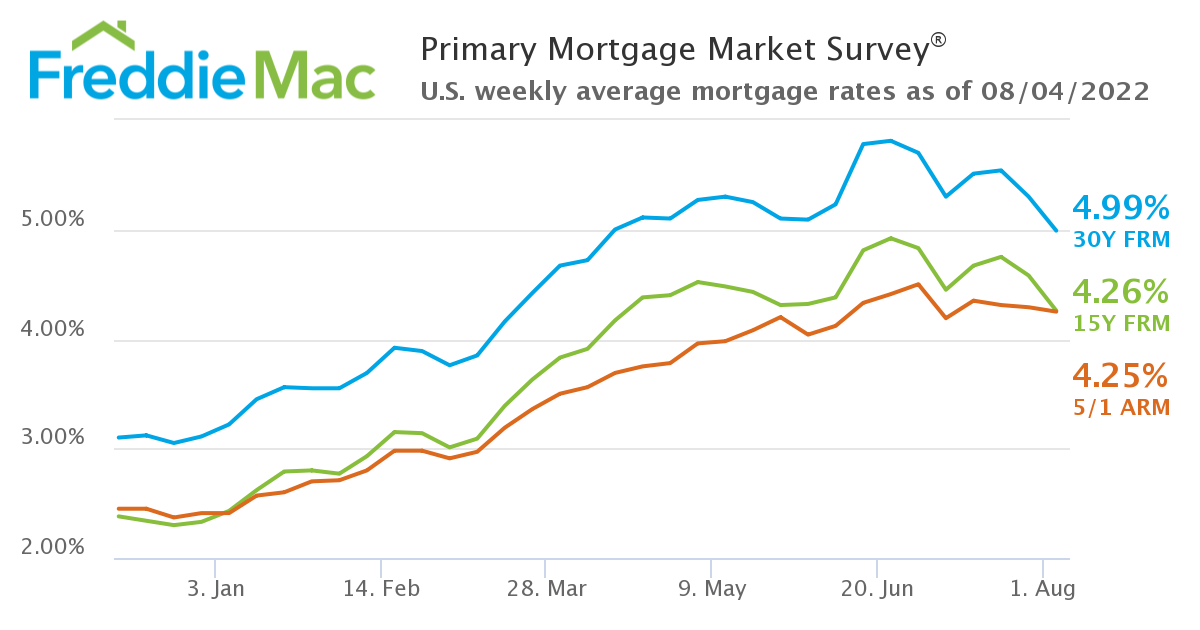
Most major financial institutions and the Fed’s own “dot plot” projections suggest that rate cuts will likely begin in late 2024 or early 2025. However, these cuts will likely be incremental—perhaps 25 basis points at a time. For the average consumer, this means that while the “worst” may be over, the return to 3% or 4% mortgage rates is not on the immediate horizon. A realistic expectation for the near term is a stabilization in the 6% range, with a slow drift toward 5.5% as inflation stabilizes.
Why We Might Not Return to “Ultra-Low” Rates
It is essential to maintain historical perspective. The 2% and 3% rates seen during the pandemic were an anomaly, driven by a global emergency. In the decades prior, a 6% mortgage rate was considered quite reasonable. We are likely entering a “new normal” where rates hover between 5% and 6%. Investors and buyers waiting for a return to the “free money” era may find themselves waiting indefinitely, potentially missing out on equity growth in the meantime.
The Impact of Quantitative Tightening
Beyond interest rates, the Fed has been engaged in “quantitative tightening” (QT)—the process of shrinking its balance sheet by selling off assets, including mortgage-backed securities. As the Fed stops buying these securities, other private investors must step in. This transition can cause volatility in mortgage pricing. Only when the Fed concludes its QT program can we expect the “spread” between Treasury yields and mortgage rates to normalize, potentially shaving another 0.5% off the rates offered to consumers.
Strategic Financial Planning in a High-Rate Environment
Waiting for the perfect moment to enter the market is a strategy fraught with risk. In finance, “time in the market” is often more important than “timing the market.”
The “Buy Now, Refinance Later” Strategy
A common mantra among real estate professionals is: “Marry the house, date the rate.” This strategy suggests that if you find a property that fits your needs and budget, it may be better to purchase it now—even at a 7% rate—than to wait. If rates drop in two years, you can refinance into a lower-cost loan. The risk of waiting is that when rates do eventually drop, a flood of sidelined buyers will return to the market, driving home prices up and potentially offsetting any savings gained from a lower interest rate.
Considering Adjustable-Rate Mortgages (ARMs)
In a high-rate environment, Adjustable-Rate Mortgages (ARMs) often become more attractive. These loans typically offer a lower introductory rate for a fixed period (such as 5 or 7 years) before adjusting to market rates. For buyers who believe that rates will be lower in five years, an ARM can provide immediate relief on monthly payments. However, this requires a high degree of financial literacy and a “plan B” in case rates remain high or increase further.
The Importance of Credit Positioning
Regardless of where the national average sits, the best rates are always reserved for those with the highest credit scores. While waiting for the macro environment to change, individuals should focus on “micro” improvements: paying down high-interest revolving debt, correcting errors on credit reports, and increasing down payment reserves. A 0.5% difference in a mortgage rate based on credit tier can save a homeowner tens of thousands of dollars over the life of a loan, regardless of whether the Fed cuts rates.
Conclusion: A Season of Patience and Preparation
The question of when mortgage rates will drop is inextricably linked to the broader battle against inflation. While the era of rapid rate hikes appears to be ending, the transition to a lower-rate environment will be a marathon, not a sprint.
Investors and homebuyers should look for signs of a cooling labor market and a consistent decline in CPI data as the primary signals for a shift. In the meantime, the most successful financial actors will be those who stop waiting for the “perfect” rate and instead focus on sound financial fundamentals—buying within their means, maintaining strong credit, and viewing real estate as a long-term asset rather than a short-term gamble. The market will eventually settle, but for those prepared to act, the opportunities exist even in a high-rate world.
aViewFromTheCave is a participant in the Amazon Services LLC Associates Program, an affiliate advertising program designed to provide a means for sites to earn advertising fees by advertising and linking to Amazon.com. Amazon, the Amazon logo, AmazonSupply, and the AmazonSupply logo are trademarks of Amazon.com, Inc. or its affiliates. As an Amazon Associate we earn affiliate commissions from qualifying purchases.