
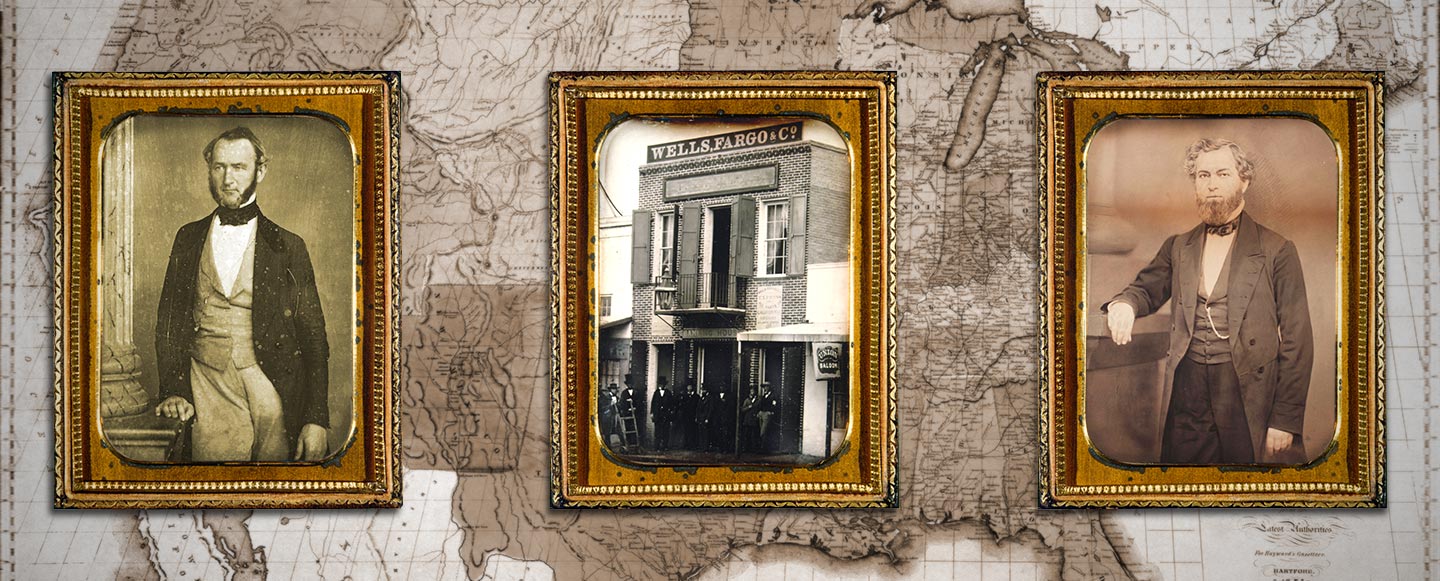
The history of American finance is often written through the lens of institutions that survived the transition from the frontier era to the digital age. Among these, few names carry as much historical weight or brand recognition as Wells Fargo. When asking when Wells Fargo was started, the answer takes us back to a pivotal moment in American economic history: March 18, 1852. Founded during the height of the California Gold Rush, the company began as a bold venture to provide banking and express delivery services to a rapidly expanding western frontier.

To understand the modern financial powerhouse that Wells Fargo has become, one must look at the strategic decisions made by its founders, Henry Wells and William G. Fargo, and how their original vision for business finance and personal wealth management paved the way for the contemporary banking landscape.
The 1852 Foundation: Banking in the Wild West
In the early 1850s, California was a land of immense opportunity and equally immense risk. The discovery of gold at Sutter’s Mill in 1848 had triggered a mass migration, but the infrastructure to manage the resulting wealth was virtually non-existent. Henry Wells and William G. Fargo, who were already established figures in the express business as co-founders of American Express, recognized a distinct gap in the market. While American Express focused on the eastern United States, Wells and Fargo saw the need for a dedicated service that could connect the Atlantic coast with the burgeoning economy of the Pacific.
The Launch of Wells, Fargo & Co.
On March 18, 1852, in New York City, the duo organized Wells, Fargo & Co. to provide “express” (rapid delivery of gold and valuables) and banking services (buying gold and selling paper bank drafts) to California. By July of that year, they had opened their first office in San Francisco. Unlike many of their competitors who focused solely on transport or solely on traditional banking, Wells Fargo combined these services, creating a vertically integrated model that allowed miners and merchants to store their gold, convert it into liquid currency, and send funds back to families in the East.
Resilience Through the Panic of 1855
The financial stability of the firm was tested early. In 1855, a severe financial panic hit San Francisco, causing a “run” on banks across the city. Many major financial institutions collapsed overnight. However, Wells Fargo’s conservative management and significant cash reserves allowed it to remain open. This event was a turning point for the brand; it established the company as a symbol of reliability and trust in an otherwise volatile financial environment—a reputation that would serve as the cornerstone of its corporate identity for over a century.
From Stagecoaches to Global Asset Management
The image of the Concord Stagecoach is synonymous with Wells Fargo, yet the company’s evolution involved moving far beyond physical transport. As the American economy matured, the company navigated the transition from a frontier express service to a centralized commercial bank.
The Separation of Express and Banking
For several decades, the express and banking arms of the company operated in tandem. However, the landscape changed with the advent of the transcontinental railroad and increasing federal regulation. In 1905, Wells Fargo formally separated its banking operations from its express business. The banking division merged with the Nevada National Bank to form the Wells Fargo Nevada National Bank. This move signaled a shift toward modern commercial banking, focusing on capital accumulation, business lending, and large-scale financial services rather than the physical delivery of bullion.
Surviving the Great Depression and War Eras
During the early 20th century, Wells Fargo consolidated its position in the Western United States. While the Great Depression decimated the American banking sector, Wells Fargo’s conservative fiscal policies once again ensured its survival. Following World War II, the bank played a critical role in the economic boom of the West Coast, financing infrastructure projects, supporting the burgeoning aerospace and technology industries in California, and expanding its retail footprint to serve the growing middle class.
The Norwest Merger and the Modern Financial Identity
The most significant transformation in the company’s modern history occurred not in 1852, but in 1998. This was the year Wells Fargo merged with Norwest Corporation, a diversified financial services company based in Minneapolis. Although Norwest was technically the surviving entity in the merger, the leadership chose to retain the Wells Fargo name due to its immense brand equity and historical significance.
Diversification of Financial Tools
The merger with Norwest fundamentally changed the company’s business model. It moved from being a regional powerhouse to a diversified national leader in personal finance and business banking. This era saw a massive expansion into:
-
Mortgage Lending: Wells Fargo became one of the largest originators and servicers of home mortgages in the United States, playing a central role in the American housing market.
-
Wealth Management: Through various acquisitions, the company expanded its brokerage and investment advisory services, targeting high-net-worth individuals and institutional investors.
-
Insurance and Credit: The bank integrated insurance products and credit card services, aiming to become a “one-stop-shop” for all consumer financial needs.
The Strategy of Cross-Selling
Post-merger, Wells Fargo became famous in the financial industry for its “cross-selling” strategy. The goal was to increase the number of products each customer used—such as having a checking account, a mortgage, and a credit card all under one roof. While this strategy eventually faced significant scrutiny and led to a period of restructuring and cultural reform in the 2010s, it remains a case study in the evolution of modern retail banking and the drive for operational efficiency in large-scale financial institutions.
Navigating Economic Shifts: A Century of Financial Strategy
The longevity of Wells Fargo is often attributed to its ability to adapt its financial strategy to the prevailing economic climate. From the gold-standard era of the 19th century to the fiat currency and digital ecosystems of the 21st, the bank has consistently recalibrated its approach to risk and growth.
Commercial Banking and Small Business Finance
One of the core pillars of the Wells Fargo business model has been its focus on small to medium-sized enterprises (SMEs). By providing lines of credit, payroll services, and merchant processing, the bank positioned itself as a partner to the American entrepreneur. This segment of business finance is particularly lucrative because it fosters long-term loyalty; a small business that starts with a basic checking account often grows into a corporate client requiring complex treasury management and capital market services.
Investment Banking and Capital Markets
While often viewed primarily as a retail bank, Wells Fargo has built a robust presence in investment banking. Through the acquisition of Wachovia during the 2008 financial crisis, Wells Fargo dramatically increased its capabilities in capital markets, fixed-income trading, and corporate advisory. This allowed the bank to compete with Wall Street giants, providing a diversified revenue stream that balances the cyclical nature of consumer lending with the fee-based income of institutional finance.
The Contemporary Role of Wells Fargo in Personal and Business Finance
Today, Wells Fargo stands as one of the “Big Four” banks in the United States. Its influence on the global financial system is profound, managing trillions of dollars in assets and serving millions of customers. The company’s focus has shifted toward digital transformation, responding to the rise of fintech and the changing expectations of the modern consumer.
Digital Banking and Financial Tech Integration
The transition from the stagecoach to the smartphone is complete. Wells Fargo has invested heavily in digital tools that allow for mobile deposits, AI-driven financial planning, and real-time fraud monitoring. For the modern personal finance enthusiast, the bank provides a suite of tools designed to automate savings and track spending, reflecting a broader industry trend toward “invisible banking” where financial management is integrated into daily life.
Environmental, Social, and Governance (ESG) Criteria
In the current financial landscape, institutions are increasingly judged by their impact on society and the environment. Wells Fargo has integrated ESG goals into its long-term strategy, focusing on sustainable finance and community reinvestment. This is a far cry from the 1852 mission of transporting gold, but it represents the necessary evolution of a brand that intends to remain relevant for another 170 years.

Lessons from a 170-Year Legacy
The story of Wells Fargo is more than a timeline of dates; it is a narrative of resilience, strategic mergers, and the constant pursuit of market dominance. For investors and financial professionals, the company’s history offers several key insights:
-
Brand as an Asset: The decision to keep the Wells Fargo name in 1998 proves that historical legacy is a tangible financial asset.
-
Adaptability: A company that cannot transition from physical assets (gold and stagecoaches) to digital assets (data and software) will not survive the century.
-
Risk Management: The ability to withstand panics and depressions is rooted in conservative capital management and a diversified portfolio.
When Wells Fargo was started in 1852, its founders could not have envisioned a world of digital currencies and global electronic transfers. Yet, by building a foundation based on trust, reliability, and essential financial services, they created an institution that has become inseparable from the history of American money. Whether through personal checking accounts, commercial loans, or large-scale investment banking, the legacy of that 1852 San Francisco office continues to shape the way we interact with finance today.
aViewFromTheCave is a participant in the Amazon Services LLC Associates Program, an affiliate advertising program designed to provide a means for sites to earn advertising fees by advertising and linking to Amazon.com. Amazon, the Amazon logo, AmazonSupply, and the AmazonSupply logo are trademarks of Amazon.com, Inc. or its affiliates. As an Amazon Associate we earn affiliate commissions from qualifying purchases.