
The question “When was Wells Fargo established?” delves much deeper than a simple date; it uncovers the foundational narrative of one of America’s most enduring financial institutions. For anyone interested in business finance, the history of banking, or the evolution of corporate entities, understanding Wells Fargo’s origins provides invaluable context into the forces that shaped the U.S. financial landscape. Established on March 18, 1852, in New York City, Wells Fargo & Company was not merely another bank; it was an innovative venture conceived to address the unique financial and logistical demands of a rapidly expanding nation, particularly the burgeoning opportunities presented by the California Gold Rush. This initial vision, blending traditional banking services with a robust express delivery network, laid the groundwork for a financial giant whose impact reverberates to this day.

The story of Wells Fargo’s establishment is intrinsically linked to the entrepreneurial spirit of its founders, Henry Wells and William G. Fargo, two prominent figures already well-versed in the express industry. Their foresight in recognizing the dual need for secure financial services and reliable transportation in the untamed American West set a precedent for business model innovation that is still studied in financial circles. This article will explore the specific financial and economic conditions that necessitated its creation, the unique hybrid business model adopted, its transformative growth through various economic eras, and the enduring financial lessons derived from its long and often complex history.
The Dawn of a Financial Giant: Founding and Initial Vision
The mid-19th century America was a land of immense opportunity and equally immense challenges, especially in its rapidly developing western territories. The California Gold Rush, which began in 1848, catalyzed an unprecedented movement of people and capital, creating an urgent demand for financial infrastructure that simply did not exist. It was against this backdrop that Wells Fargo was conceived, not as a conventional bank, but as a multi-faceted enterprise designed to capitalize on these specific economic needs.
Henry Wells and William G. Fargo: Pioneers of Finance
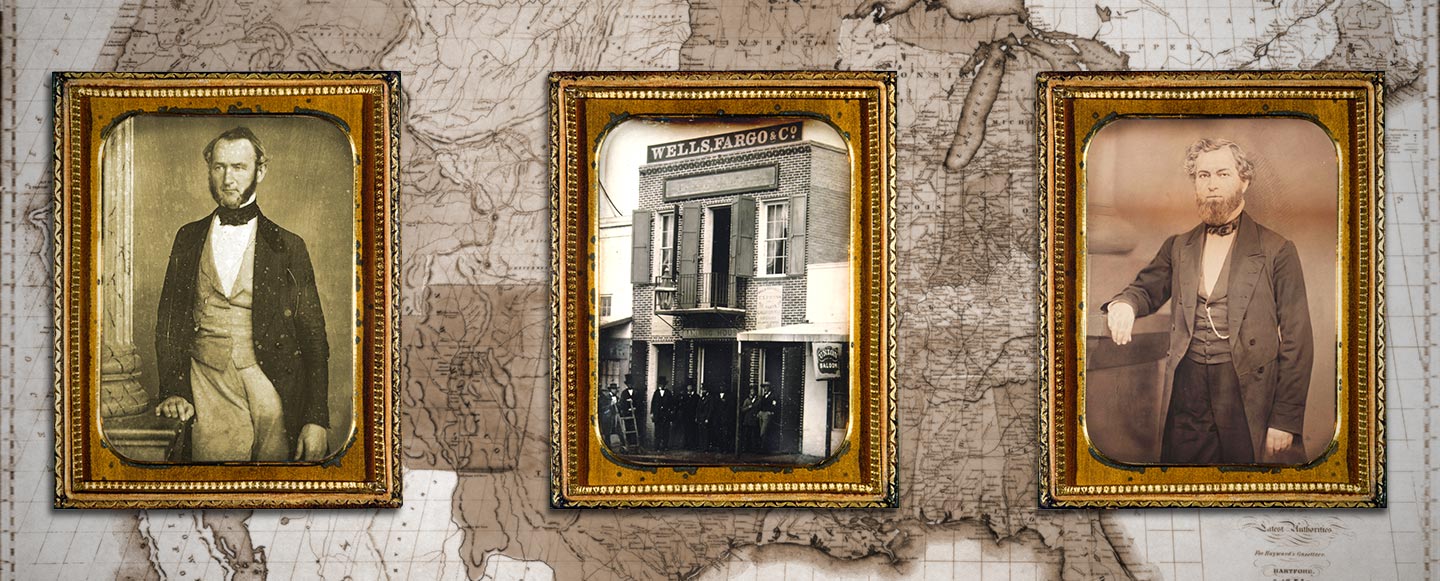
The establishment of Wells Fargo & Company was spearheaded by two shrewd businessmen, Henry Wells and William G. Fargo, who had already made their mark in the express transportation industry. Both were key figures in American Express, a competing firm. However, internal disagreements and a shared vision for an expanded operation led them to break away and form a new entity. Their prior experience in managing complex logistics, ensuring secure transport of valuable goods, and understanding the financial flows of a growing economy provided them with a unique advantage. They recognized that the financial vacuum in the West wasn’t just about needing places to deposit money; it was about securely moving that money, transferring funds across vast distances, and providing credit where traditional institutions feared to tread. Their expertise was crucial in designing a business that could address these interlocking financial and logistical challenges effectively.
Dual Purpose: Banking and Express Services for the Gold Rush
What truly set Wells Fargo apart from its inception was its dual-purpose business model. Unlike typical banks, which primarily focused on deposits, loans, and currency exchange, Wells Fargo integrated these financial services with an extensive express delivery network. In the context of the Gold Rush, this meant prospectors could not only deposit their gold dust and nuggets safely but also send them, along with valuable documents and correspondence, across the country. The company’s agents acted as bankers, mail carriers, and secure couriers, all rolled into one. This hybrid model was revolutionary for its time, creating a vertically integrated financial and logistical solution that maximized efficiency and security in an era rife with uncertainty and banditry. From a financial perspective, this allowed for multiple revenue streams, diversified risk, and built immense trust among its clientele, who often had no other reliable means to manage their finances or communicate over long distances.
The Genesis: March 18, 1852
The official establishment date of March 18, 1852, marks the incorporation of Wells Fargo & Company in New York City. The initial capital investment reflected the ambitions of its founders, demonstrating a significant commitment to building a robust operation. This wasn’t merely a formal date; it was the genesis of a corporate structure designed to rapidly deploy agents and services into the burgeoning mining camps and burgeoning towns of the West. The immediate focus was California, where the demand for financial and express services was most acute. The company wasted no time, opening its first offices in San Francisco and Sacramento within months of its founding, quickly establishing a physical presence where financial transactions and secure transport were most desperately needed. This rapid deployment strategy, backed by adequate capital, was critical to capturing market share and establishing dominance in a competitive, high-growth environment.
Forging an Empire: Wells Fargo’s Growth and Evolution
From its foundational years, Wells Fargo demonstrated an extraordinary capacity for growth and adaptation, evolving from a regional player into a national financial powerhouse. Its journey through the 19th and 20th centuries is a masterclass in business resilience and strategic foresight, constantly re-evaluating its financial services and operational models to meet the changing needs of the American economy.
The Era of Stagecoaches and Western Expansion
The period immediately following its establishment saw Wells Fargo cement its iconic status through its stagecoach operations. More than just a romantic image, the stagecoach was a crucial piece of financial infrastructure. It facilitated the secure transport of gold, currency, and financial documents, acting as the circulatory system for capital and commerce across the vast and often dangerous American West. The company’s network of express routes expanded rapidly, connecting remote settlements with major financial hubs. This expansion was costly and required significant capital investment in horses, coaches, way stations, and security personnel. However, the returns were substantial, as Wells Fargo effectively monopolized vital aspects of financial transfer and communication, becoming indispensable to businesses and individuals alike. This era showcased the strategic importance of logistics in enabling financial transactions and fostering economic development in frontier regions.
Navigating Economic Shifts and Separations
The turn of the 20th century brought significant challenges and transformations. The express business, while iconic, faced increasing competition from the burgeoning railroad system and eventually government-backed postal services. Meanwhile, the banking arm of Wells Fargo continued to grow and diversify. A pivotal moment came in 1905 when the banking and express operations were legally separated. The express business was spun off, while Wells Fargo Bank remained headquartered in San Francisco, focusing exclusively on its financial services. This strategic divestiture allowed each entity to specialize and optimize its operations, reflecting a broader trend in business finance towards greater focus and efficiency. It enabled the bank to concentrate its capital and resources on traditional banking activities, expanding its footprint in retail and commercial banking across California and beyond.
Strategic Mergers and Acquisitions: Building a National Footprint
The 20th century for Wells Fargo was largely defined by a series of strategic mergers and acquisitions, a common pathway for financial institutions seeking to expand market share and geographical reach. Key among these was the 1998 merger with Norwest Corporation, a Minneapolis-based financial services company. This union was particularly significant as Norwest, a highly successful regional bank, effectively acquired Wells Fargo and adopted the more recognizable Wells Fargo name and branding. This merger transformed Wells Fargo from a primarily West Coast institution into a national banking power with a diversified portfolio of financial services, including commercial banking, mortgages, and investment products. This move was a prime example of leveraging a strong brand identity while gaining significant operational scale and customer base, a critical strategy in the consolidating financial industry. Subsequent acquisitions further strengthened its position, illustrating how inorganic growth through M&A can dramatically reshape a company’s financial landscape and market influence.
Wells Fargo’s Enduring Legacy in the Financial Sector
Wells Fargo’s long history offers a profound case study in corporate longevity and adaptation within the dynamic financial sector. Its journey from a gold rush-era express and banking service to a modern global financial institution provides valuable insights into the resilience required to thrive over nearly two centuries.
A Pillar of American Economic History
From financing nascent businesses in the West to providing essential banking services during periods of rapid industrialization and economic growth, Wells Fargo has been an active participant in shaping America’s economic narrative. Its early role in facilitating the flow of capital and commerce during the California Gold Rush and subsequent westward expansion was critical to the development of regional economies. By providing loans, managing deposits, and ensuring secure transfers, it enabled countless individuals and enterprises to capitalize on new opportunities, effectively acting as an economic catalyst. This deep historical embeddedness means that understanding Wells Fargo’s trajectory is akin to tracing the financial pulse of the American nation itself, illustrating how private institutions can become integral to public prosperity.
Adapting to Modern Financial Landscapes
The ability to adapt has been a hallmark of Wells Fargo’s enduring presence. In recent decades, this has meant embracing digital transformation, navigating complex regulatory environments, and responding to evolving customer expectations in a highly competitive market. The financial crisis of 2008 and subsequent regulatory reforms reshaped the banking industry, requiring significant capital adjustments, risk management overhauls, and a renewed focus on consumer protection. More recently, the rise of fintech, mobile banking, and artificial intelligence has compelled Wells Fargo, like other legacy institutions, to invest heavily in technology to remain competitive. Its continued investment in digital platforms, cybersecurity, and data analytics underscores a commitment to innovation, ensuring its financial products and services remain relevant in a rapidly changing technological and economic landscape. This continuous adaptation is crucial for maintaining market share and profitability in the 21st century.
Understanding Longevity in Financial Institutions
Wells Fargo’s nearly 170-year history offers critical lessons for understanding longevity in financial institutions. Key factors include:
- Strategic Vision: The initial foresight of combining banking and express services tapped into unmet market needs.
- Adaptability: The willingness to pivot, spin off non-core assets, and engage in transformative mergers allowed the company to survive and thrive through various economic cycles and technological shifts.
- Strong Brand Identity: Despite numerous mergers and operational changes, the Wells Fargo brand—often associated with stability and its pioneering Western heritage—has maintained significant recognition and trust, a valuable intangible asset.
- Capital Management: Prudent management of capital, from initial investments to managing large-scale acquisitions, has been essential for sustained growth and weathering financial downturns.
- Risk Management (and Learning from Failures): While not without its controversies and missteps (which offer their own lessons in corporate governance and ethical finance), the institution has largely managed to navigate systemic risks and regulatory challenges over the long term.
These elements collectively contribute to a robust business model capable of sustaining growth and relevance across generations.
More Than a Date: The Significance of Wells Fargo’s Founding
Beyond simply marking the beginning of an enterprise, the establishment of Wells Fargo carries profound significance for understanding the development of corporate finance, regional economics, and the evolution of financial services. It offers a window into the innovative spirit required to build enduring institutions.
Lessons from Early Corporate Finance
The formation of Wells Fargo provides a compelling case study in early corporate finance. The pooling of capital by multiple investors, the issuance of stock, and the strategic deployment of funds to build infrastructure (like stagecoach lines and banking offices) were all hallmarks of sophisticated financial engineering for its era. The decision to invest heavily in a secure, reliable network for transporting valuables and conducting financial transactions in a high-risk environment speaks volumes about risk assessment and capital allocation. The initial profit models, which leveraged fees from express services alongside interest from banking operations, demonstrated a diversified approach to revenue generation. These early financial strategies set precedents for how large-scale enterprises could be financed, managed, and expanded, offering valuable historical context for contemporary business finance students and professionals.
The Impact on Regional and National Development
Wells Fargo’s establishment was not merely a private business venture; it profoundly impacted the regional and national development of the United States. By providing a financial backbone to the American West, it facilitated migration, commerce, and settlement. Its express service connected disparate communities, enabling economic activity that would otherwise have been impossible. The secure handling of gold allowed for its efficient transfer to eastern financial markets, fueling national economic growth. In essence, Wells Fargo’s operations helped integrate the frontier economies into the broader national financial system, playing a critical role in the country’s economic unification and expansion. This makes its founding date a pivotal moment in the economic history of the United States, demonstrating how private financial institutions can serve as crucial engines of national development.

Historical Context for Contemporary Financial Services
Understanding when Wells Fargo was established and how it evolved provides vital historical context for appreciating the complexity and scope of contemporary financial services. Many fundamental principles that guided its early operations – secure transactions, reliable fund transfers, and access to capital – remain central to modern banking. However, the methods have dramatically changed, from stagecoaches to digital platforms, from gold dust to cryptocurrencies. Wells Fargo’s journey illustrates the continuous cycle of innovation, adaptation, and consolidation within the financial sector. It highlights how institutions must constantly reinvent themselves to remain relevant, from their core offerings to their operational technologies. Its establishment serves as a reminder that today’s sophisticated financial instruments and digital banking infrastructure have roots in the pioneering efforts of companies like Wells Fargo, which dared to build financial bridges across vast, undeveloped landscapes.
In conclusion, March 18, 1852, is more than just a date for Wells Fargo; it is the genesis of an institution whose very creation was a response to profound economic needs, whose growth mirrored the nation’s expansion, and whose continued evolution reflects the dynamic forces shaping global finance. Its story is a compelling testament to entrepreneurial vision, strategic adaptation, and the enduring power of financial innovation.
aViewFromTheCave is a participant in the Amazon Services LLC Associates Program, an affiliate advertising program designed to provide a means for sites to earn advertising fees by advertising and linking to Amazon.com. Amazon, the Amazon logo, AmazonSupply, and the AmazonSupply logo are trademarks of Amazon.com, Inc. or its affiliates. As an Amazon Associate we earn affiliate commissions from qualifying purchases.