
The history of American finance is inextricably linked with the expansion of the western frontier, the rush for gold, and the evolution of the modern banking system. At the heart of this narrative lies Wells Fargo, a name that evokes images of stagecoaches, rugged landscapes, and the foundational pillars of the U.S. economy. Understanding when Wells Fargo was established is not merely a matter of citing a date; it is an exploration of how one of the world’s largest financial institutions transformed from a regional express delivery service into a global banking giant.

The Foundation of an American Institution: 1852 and the Gold Rush
Wells Fargo & Company was officially established on March 18, 1852. The timing of its inception was no coincidence. Following the discovery of gold at Sutter’s Mill in 1848, California became the epicenter of global economic interest. By the early 1850s, the region was desperate for reliable financial services and transportation networks that could bridge the vast gap between the burgeoning West Coast and the established financial hubs of the East.
The Founding Duo: Henry Wells and William G. Fargo
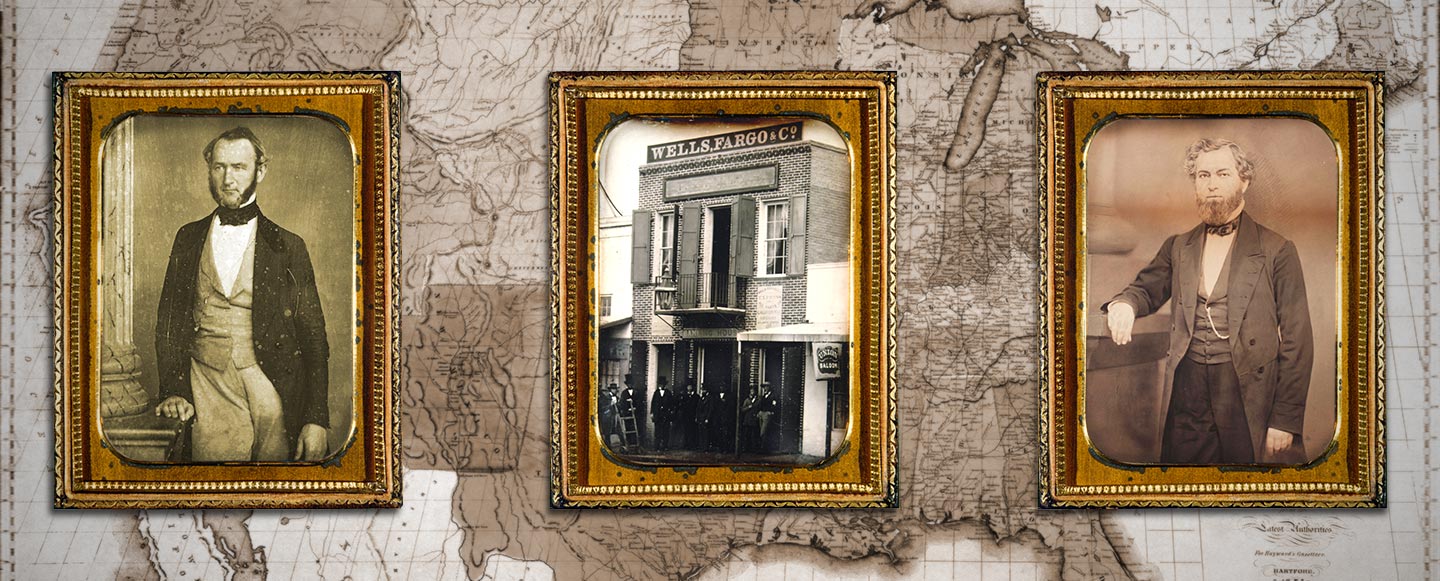
The company was the brainchild of Henry Wells and William G. Fargo, two seasoned businessmen who were already prominent figures in the express delivery industry. Both men were founding members of American Express, but they saw a unique opportunity in California that their colleagues were hesitant to pursue. While American Express chose to focus its operations in the eastern United States, Wells and Fargo realized that the “Wild West” required a specialized blend of banking and express services.
They organized the new joint-stock company in New York City with the specific intent of providing “express” services—moving gold, mail, and freight—alongside “banking” services, which included buying gold dust, selling paper bank drafts, and providing a safe repository for wealth. This dual-purpose model became the bedrock of their success, allowing them to capture the market in a territory where traditional banks were often unstable.
The California Gold Rush Context
In the 1850s, San Francisco was a chaotic boomtown. Miners needed a way to protect their hard-earned gold and send funds back to their families in the East. Wells Fargo filled this vacuum by opening its first offices in San Francisco and Sacramento in July 1852. Unlike many of its competitors, Wells Fargo maintained a reputation for reliability and solvency. During the financial panic of 1855, when many California banks collapsed, Wells Fargo remained open, cementing its status as a trusted financial pillar. This early resilience established a brand equity that would carry the institution through more than a century and a half of economic cycles.
From Stagecoaches to Digital Ledgers: A Century of Growth
While Wells Fargo is historically synonymous with the iconic Concord stagecoach, its growth was driven by a relentless adaptation to new technologies and shifting economic demands. As the American landscape changed from dirt paths to railroad tracks, the company shifted its focus to match the speed of commerce.
The Express Business and the Iconography of the Stagecoach
For the first several decades of its existence, the “express” side of the business was as important as the banking side. Wells Fargo operated the most extensive network of stagecoach lines in the West, carrying passengers, mail, and bullion across treacherous terrain. The stagecoach became more than a vehicle; it became a symbol of security and speed.
However, the completion of the First Transcontinental Railroad in 1869 signaled the beginning of the end for long-distance stagecoach travel. Ever the pragmatists, Wells Fargo transitioned its express business to the rails. By 1888, the company had established the first transcontinental express network, utilizing the burgeoning railroad system to move goods and financial documents across the entire country.
Survival Through Economic Upheavals
The early 20th century presented a series of existential threats to the banking industry, including the Great Depression. Wells Fargo survived these periods through conservative management and strategic consolidation. In 1905, the company formally separated its banking operations from its express business. The banking arm merged with the Nevada National Bank to form the Wells Fargo Nevada National Bank.
During the Great Depression, while thousands of banks across the United States folded, Wells Fargo’s disciplined approach to lending and capital reserves allowed it to remain a stabilizing force in the western economy. This period of history highlights a recurring theme in the bank’s legacy: the ability to navigate macroeconomic volatility by leveraging a deep-rooted historical foundation.
The Modern Financial Landscape: Mergers and Market Dominance

The Wells Fargo we recognize today is the result of significant structural changes and high-stakes mergers that took place in the late 20th century. While the name remains rooted in the 1852 founding, the modern corporate entity was shaped by a pivotal union with Norwest Corporation.
The Norwest Merger of 1998
In 1998, Wells Fargo & Co. merged with Norwest Corporation, a Minneapolis-based financial services company. While Norwest was technically the surviving corporation in the transaction, the leadership recognized the immense brand value and historical weight of the Wells Fargo name. Consequently, the merged entity took the Wells Fargo name and moved its headquarters to San Francisco.
This merger was a transformative moment for the organization. It expanded the bank’s footprint across the Midwest and solidified its position as a diversified financial services provider. The combination of Norwest’s retail banking prowess and Wells Fargo’s established western presence created a powerhouse capable of competing on a national scale.
Becoming a “Big Four” Bank
Following the 1998 merger and the subsequent acquisition of Wachovia during the 2008 financial crisis, Wells Fargo ascended to the ranks of the “Big Four” American banks, alongside JPMorgan Chase, Bank of America, and Citigroup. The acquisition of Wachovia was particularly significant, as it gave Wells Fargo a dominant presence on the East Coast, finally achieving the truly national reach that Henry Wells and William Fargo had envisioned over a century prior. Today, the bank manages trillions of dollars in assets and serves millions of customers across various segments, from individual savers to multinational corporations.
Analyzing Wells Fargo as a Financial Powerhouse Today
In the contemporary financial world, Wells Fargo is defined by its massive scale and its role in the daily lives of American consumers. Its business model is built on three primary pillars: Community Banking, Wholesale Banking, and Wealth and Investment Management.
Personal Finance and Consumer Services
For the average consumer, Wells Fargo is a primary gateway to the financial system. It is one of the largest mortgage originators in the United States and a leading provider of auto loans and credit cards. From a personal finance perspective, the bank’s longevity provides a sense of continuity, though it also faces the challenge of modernizing its legacy systems to compete with digital-first “neobanks.”
The bank’s community banking segment remains its most visible arm, operating thousands of branches. In an era where many financial institutions are moving entirely online, Wells Fargo maintains a physical presence that continues to serve as a hub for small business lending and local financial growth.
Investment and Wealth Management
Beyond retail banking, Wells Fargo has established a significant presence in wealth management through its Wells Fargo Advisors division. This segment focuses on long-term financial planning, retirement accounts, and investment portfolios for high-net-worth individuals. By integrating brokerage services with traditional banking, the institution provides a holistic “one-stop-shop” for financial management. For investors, the bank’s performance is often seen as a bellwether for the broader U.S. economy, particularly regarding the health of the housing market and consumer spending.
The Strategic Future of Wells Fargo in the Digital Age
As we look toward the future, the question is no longer just about when Wells Fargo was established, but how it will evolve to remain relevant in the 21st century. The financial sector is currently undergoing a radical transformation driven by technology, and legacy institutions are under pressure to innovate.
Adapting to Fintech and AI
To maintain its market share, Wells Fargo is investing heavily in digital transformation. This includes the development of sophisticated mobile banking apps, AI-driven customer service, and enhanced digital security protocols. The goal is to blend the security and reliability of a 170-year-old institution with the agility of a tech startup.
The bank’s strategic focus has shifted toward “API banking” and cloud integration, allowing for faster transaction processing and more personalized financial insights for its users. By leveraging big data, Wells Fargo aims to provide proactive financial advice, helping customers manage debt and optimize their savings in real-time.
The Role of Corporate Responsibility and Market Stability
In the modern economy, a bank’s value is measured not just by its balance sheet, but by its impact on society and its commitment to ethical standards. Wells Fargo has navigated significant reputational challenges in the recent past, leading to a renewed focus on corporate governance and transparency.
As a foundational element of the U.S. banking system, the institution’s stability is critical to market confidence. Its ongoing efforts to simplify its business structure and focus on core banking activities are designed to ensure that it remains a resilient pillar of American finance for the next 170 years. For the student of history or the modern investor, Wells Fargo stands as a testament to the enduring power of a strong brand and the necessity of constant adaptation in the ever-changing world of money.
aViewFromTheCave is a participant in the Amazon Services LLC Associates Program, an affiliate advertising program designed to provide a means for sites to earn advertising fees by advertising and linking to Amazon.com. Amazon, the Amazon logo, AmazonSupply, and the AmazonSupply logo are trademarks of Amazon.com, Inc. or its affiliates. As an Amazon Associate we earn affiliate commissions from qualifying purchases.