
Wall Street. The very name conjures images of towering financial institutions, the hustle and bustle of traders, the rise and fall of fortunes, and the intricate dance of global capital. It stands as an iconic symbol of the financial world, a byword for American economic power and, at times, its excesses. Yet, despite its omnipresent status in popular culture and economic discourse, many are unaware of the humble, almost accidental, origins of this legendary thoroughfare. The question “when was Wall Street founded?” doesn’t have a single, simple answer tied to a grand opening ceremony. Instead, it’s a story of gradual evolution, driven by historical necessity, the burgeoning needs of commerce, and the ingenious mechanisms devised for the transfer and growth of money.

To truly understand Wall Street’s founding, we must look beyond a specific date and delve into a layered history that spans centuries, weaving together geopolitical strategy, nascent trade, and the eventual formalization of securities markets. It is a tale that begins not with ticker tapes and stock prices, but with a defensive wooden barricade in a fledgling Dutch colony. This journey will illuminate how a mere street transformed into the epicenter of global finance, profoundly shaping our understanding of investing, business finance, and the broader economic landscape.
The Humble Beginnings: From a Physical Wall to a Financial Hub
The genesis of Wall Street is rooted in the early colonial history of what would become New York City. Long before it housed institutions managing trillions of dollars, the land was part of New Amsterdam, a Dutch settlement struggling for stability in a contested territory. The first “founding” element of Wall Street was not financial, but purely defensive, illustrating how physical security often precedes economic prosperity.
The Dutch Foundation and the Protective Barrier (17th Century)
In the mid-17th century, New Amsterdam, established by the Dutch West India Company, was a vital trading post on the southern tip of Manhattan Island. However, it was also a vulnerable outpost, facing threats from both encroaching English colonists to the north and various Native American tribes. To protect their burgeoning settlement and valuable fur trade operations, Governor Peter Stuyvesant authorized the construction of a robust defensive structure.
In 1653, a palisade — a sturdy wooden wall made of upright logs — was erected across the width of Manhattan Island. This barricade stretched approximately 12 feet high, fortified with earth and wood, from the East River to the Hudson River, roughly along the line of what is today Wall Street. Its primary purpose was to deter potential invaders and safeguard the Dutch residents and their assets. The path that ran alongside this protective barrier naturally became known as “de Waal Straat” in Dutch, which translates directly to “Wall Street” in English. This was the initial, literal “founding” of the street itself, born out of a need for physical security and defining a geographical boundary.
Evolution from a Trading Post to a Meeting Place
Even as the physical wall served its defensive purpose, the area around it, particularly the eastern end near the waterfront, was already a bustling center of commerce. New Amsterdam thrived as a port, attracting merchants, traders, and various vendors. The wall, ironically, helped create a defined space, a contained environment that fostered interaction.
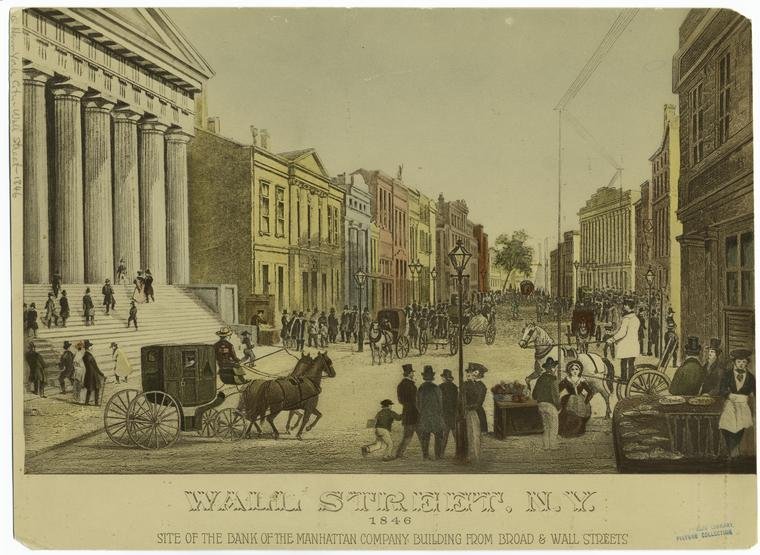
Merchants and residents would gather near the wall, in the shadow of its protective presence, to exchange goods, discuss prices, and conduct business. This informal trading was the precursor to the structured markets that would later define Wall Street. Early transactions involved everything from agricultural products and furs to enslaved people and imported goods. As the colony grew, and particularly after the English took control in 1664, renaming New Amsterdam to New York, the wall eventually lost its defensive utility and was dismantled in 1699. However, the name “Wall Street” endured, permanently cementing the memory of its original purpose and setting the stage for its future as a nexus of economic activity. The street had been “founded” by a physical structure, and its function was slowly evolving from a defensive perimeter to a commercial thoroughfare—a vital prerequisite for the formal financial institutions that would emerge.
The Birth of Formalized Securities Trading
While the street itself had an identifiable origin, the “founding” of Wall Street as a financial center, specifically for securities trading, is a more precise and pivotal moment. This transformation didn’t happen overnight but was sparked by the financial demands of a newly independent nation and formalized by a landmark agreement among a small group of visionary individuals. This phase marks the true beginning of Wall Street’s identity in the realm of money and investing.
The Buttonwood Agreement (1792): The True Financial Founding
The most significant event in the financial founding of Wall Street occurred in 1792. The newly formed United States government, having just emerged from the Revolutionary War, was burdened by a substantial war debt. To manage this debt and raise capital for the burgeoning nation, Treasury Secretary Alexander Hamilton undertook a critical initiative: the issuance of government bonds. These bonds, along with shares in early banks like the Bank of New York and the First Bank of the United States, became the first widely traded securities in the young republic.
Initially, trading in these securities was haphazard and unregulated, often taking place at public auctions or coffee houses. However, a desire for order, transparency, and reliable pricing began to grow among the key players. On May 17, 1792, a pivotal moment in financial history unfolded under a buttonwood tree at 68 Wall Street. Twenty-four prominent stockbrokers and merchants, seeking to bring structure to the nascent market, signed an agreement. This historic document, known as the Buttonwood Agreement, laid the foundation for what would become the New York Stock Exchange (NYSE).
The agreement was remarkably simple yet profoundly impactful. It stipulated two key provisions:
-
“We will not buy or sell from this day for any person whatsoever, any kind of public stock, at a less rate than one quarter percent commission on the specie value, and that we will give a preference to each other in our negotiations.” This established a fixed commission rate and fostered a closed trading community, encouraging members to deal exclusively with one another.
-
“We will not buy or sell from this day for any person whatsoever, any kind of public stock, but that which shall be agreeable to the true interest of our constituents.” This implied a commitment to fair dealing and client interests, a rudimentary form of ethical conduct for the time.
By signing this agreement, these 24 individuals created a formalized system for trading securities, moving away from public auctions and towards a more controlled, professional market. This act is widely considered the true “founding” of Wall Street as a organized financial marketplace, directly influencing the mechanisms of modern investing and capital formation. It centralized trading, introduced a degree of regulation, and established a network of professionals dedicated to the buying and selling of financial assets.
Early Financial Instruments and Capital Formation
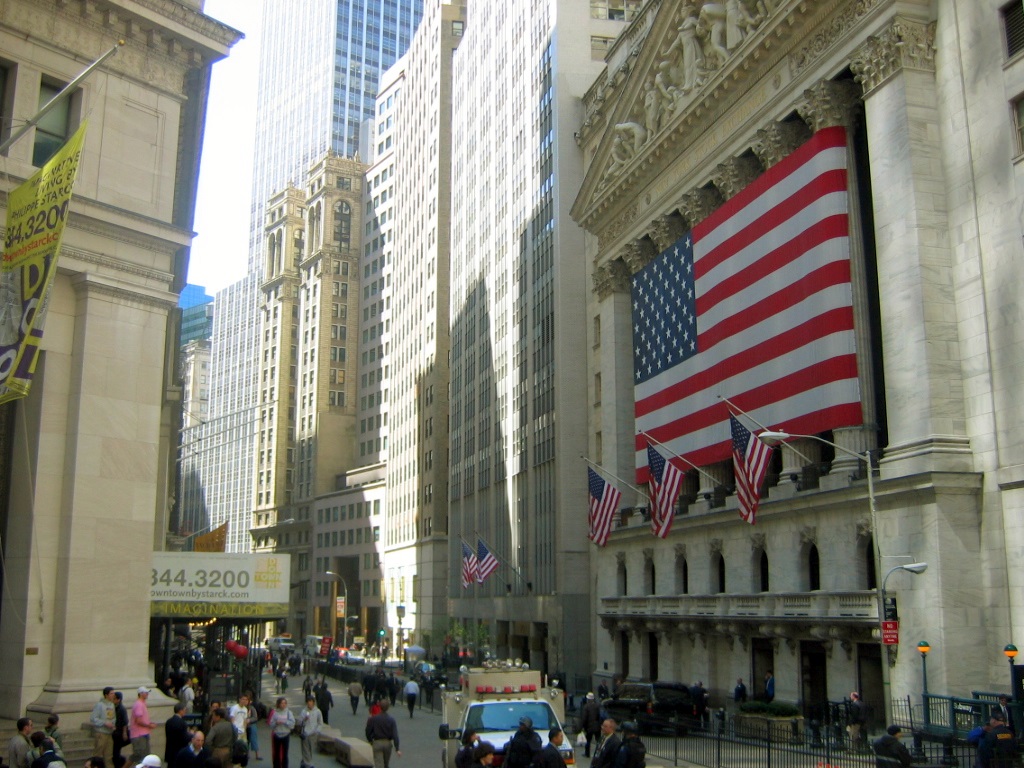
The initial securities traded under the Buttonwood Agreement were primarily government bonds, crucial for financing the nascent federal government, and shares in early banks. These instruments were vital tools for capital formation, allowing the government to raise necessary funds and providing a mechanism for individuals and institutions to invest their money, hoping for returns.
As the nation expanded, so did the variety of financial instruments. Turnpikes, canals, and eventually railroads required immense capital, and their shares became actively traded on Wall Street. This process of aggregating capital from numerous investors to fund large-scale projects was transformative, enabling infrastructure development and fueling the Industrial Revolution. Wall Street’s early brokers and merchants played an essential role as intermediaries, connecting those who had capital (investors) with those who needed it (businesses and government). This function—channeling money from savers to productive investments—remains a core principle of financial markets today, demonstrating the foundational impact of these early developments on modern business finance and investing.
Wall Street’s Ascendancy: From Local Market to Global Powerhouse
With the Buttonwood Agreement firmly in place, Wall Street began its inexorable march toward becoming a financial behemoth. The 19th century witnessed a dramatic expansion, driven by economic growth and technological advancements, which solidified its role as a pivotal force in the world of money.
The 19th Century Expansion: Industrial Revolution and Railroads
The 19th century was a period of unprecedented economic growth and transformation for the United States, marked by westward expansion, technological innovation, and the rise of the Industrial Revolution. This era created an insatiable demand for capital, and Wall Street was perfectly positioned to supply it.
The construction of canals, telegraph lines, and especially railroads required massive investments, far exceeding what individual entrepreneurs or local banks could provide. Companies turned to the public markets to raise the necessary funds by issuing stocks and bonds. Wall Street became the primary conduit for this capital. Investment banks and brokerage houses proliferated, developing sophisticated mechanisms to underwrite securities and distribute them to a growing base of investors, both domestic and international. The New York Stock Exchange, the formal successor to the Buttonwood Agreement, grew in volume and sophistication, becoming the central marketplace for these crucial financial tools. This period firmly cemented Wall Street’s role in financing nation-building and powering industrial development, demonstrating its critical function in the broader economy and the world of business finance.
Crises and Regulations: Learning and Evolving
Wall Street’s growth was not without its tumultuous periods. The rapid expansion of markets and the introduction of new financial instruments were often accompanied by speculative bubbles, panics, and crashes. Throughout the 19th century, events like the Panic of 1837, the Panic of 1857, and subsequent financial downturns highlighted the inherent volatility of unregulated markets and the profound impact these crises had on personal and national wealth.
Each crisis, while devastating at the time, also spurred a process of learning and adaptation. Calls for greater transparency, accountability, and regulation grew louder. Initially, much of the regulation was self-imposed by the NYSE members themselves, seeking to restore confidence and maintain an orderly market. Rules were developed regarding listing requirements, trading practices, and member conduct. These early attempts at self-regulation were the precursors to the more comprehensive governmental oversight that would emerge in the 20th century. This iterative process of growth, crisis, and reform is a recurring theme in Wall Street’s history, demonstrating the market’s dynamic evolution and its continuous effort to balance innovation with stability, a challenge that remains central to financial tools and policy today.
The Modern Era and Wall Street’s Enduring Legacy
As the world transitioned into the 20th and 21st centuries, Wall Street continued its evolution, adapting to new technologies, global interconnectedness, and an ever-expanding array of financial instruments. Its “founding” principles—facilitating capital exchange—remained, but the methods and scale transformed dramatically.
20th and 21st Century Transformations: Technology and Globalization
The 20th century ushered in profound technological advancements that revolutionized how money was managed and traded. From the advent of the ticker tape and telephone to the computerization of trading and the internet, technology has continuously reshaped Wall Street. The physical trading floor, once the exclusive domain of shouting brokers, has increasingly given way to electronic trading platforms, algorithmic trading, and high-frequency trading systems. This shift has dramatically increased market speed, efficiency, and accessibility, connecting global markets in real-time.
Furthermore, Wall Street’s influence extended globally. American corporations became multinational giants, and foreign companies sought capital from U.S. markets. Investment banks grew into global powerhouses, offering a vast array of services from mergers and acquisitions to asset management and derivatives trading. The rise of new financial tools and institutions, such as hedge funds and private equity firms, added further layers of complexity and innovation to the financial landscape. Wall Street became not just a street in Manhattan, but a global network of financial transactions and influence, deeply intertwined with the fortunes of economies worldwide. This continuous technological and global integration highlights Wall Street’s adaptability and its unwavering centrality to the world of investing and business finance.
More Than a Location: A Symbol of Money and Markets
Today, Wall Street is far more than just a physical street in Lower Manhattan. It has become a powerful metaphor for the entire American financial industry and, by extension, a significant portion of the global financial system. It represents the collective institutions, mechanisms, and forces that drive capital markets, economic growth, and wealth creation.
Its influence permeates every aspect of the money world, from personal finance decisions made by individual investors to the corporate strategies of multinational conglomerates and the fiscal policies of governments. The decisions made on Wall Street can impact interest rates, employment figures, the availability of credit, and the trajectory of entire industries. It embodies the aspirations of wealth and innovation, but also serves as a focal point for debates about economic inequality, corporate responsibility, and systemic risk.
The legacy of Wall Street is a complex tapestry woven from its humble beginnings as a defensive wall, through the structured trading of the Buttonwood Agreement, to its present-day role as a technological and global financial hub. Its “founding” was not a singular event but a continuous process of evolution, adaptation, and expansion. It stands as a testament to humanity’s enduring need to organize, exchange, and grow capital—a dynamic and sometimes turbulent journey that continues to shape our financial present and future.
In essence, Wall Street was “founded” not by a single decree, but by a confluence of historical events, human ingenuity, and the relentless pursuit of economic progress. From a physical barrier to a metaphorical beacon of finance, its story is inextricably linked to the history of money, investing, and the development of the modern global economy.
aViewFromTheCave is a participant in the Amazon Services LLC Associates Program, an affiliate advertising program designed to provide a means for sites to earn advertising fees by advertising and linking to Amazon.com. Amazon, the Amazon logo, AmazonSupply, and the AmazonSupply logo are trademarks of Amazon.com, Inc. or its affiliates. As an Amazon Associate we earn affiliate commissions from qualifying purchases.