
The modern stock market, a cornerstone of global finance, seems like an omnipresent force in today’s economy. Yet, its origins are far from recent, stretching back centuries to rudimentary forms of trade and investment. Tracing the exact moment the “stock market” began is akin to defining the first breath of a complex organism; it wasn’t a singular event but a gradual evolution driven by human ingenuity, the need for capital, and the desire for wealth accumulation. Understanding this genesis provides crucial insights into the fundamental principles that still govern financial markets today, from risk and reward to the collective power of pooled capital. This exploration delves into the historical threads that wove together to create the intricate tapestry of modern stock exchanges, revealing how merchants, monarchs, and pioneering financial instruments laid the groundwork for what would become an indispensable global system.

While the phrase “stock market” conjures images of bustling trading floors and digital screens, its initial forms were far simpler, emerging from the practical necessities of financing ambitious ventures and spreading financial risk. It represents a journey from informal gatherings in coffeehouses to the sophisticated electronic networks that process trillions of dollars daily. This journey reflects not only economic advancements but also significant shifts in legal frameworks, corporate structures, and societal approaches to wealth and enterprise.
The Ancient Roots of Financial Exchange
Long before the concept of shares in publicly traded companies, the rudimentary elements of financial exchange and investment existed in ancient civilizations. These early forms set precedents for capital pooling and risk sharing, laying an invisible foundation for future stock markets.
Early Forms of Collective Investment
Ancient Mesopotamia saw merchants pooling resources for trade expeditions, effectively sharing profits and losses. Similarly, in ancient Rome, “societates publicanorum” were groups of private citizens who invested in state contracts, such as tax collection or public works. While these weren’t “stocks” in the modern sense, they represented collective investment vehicles where individuals contributed capital for a shared venture, expecting a return. This mechanism allowed for larger projects to be undertaken than any single individual could manage, distributing both the financial burden and the potential rewards. The principles of shared ownership and proportional returns were nascent but present, indicating an early understanding of diversified risk and collective enterprise.
The Dawn of Tradable Debt
The medieval Italian city-states of Venice, Genoa, and Florence are often credited with significant advancements in finance. They developed sophisticated banking systems and instruments, including tradable government debt. These “monti” (mounts of debt) were early forms of bonds issued by city-states to finance wars or public infrastructure. Critically, these debt instruments could be bought and sold by various investors, creating a secondary market where their value fluctuated based on the issuing state’s creditworthiness and prevailing interest rates. This marked a crucial step: the creation of a liquid market for financial assets that could be exchanged among multiple parties, allowing investors to exit their positions before maturity and new investors to enter. This tradability brought an unprecedented level of flexibility and liquidity to early financial systems, differentiating them from simple loans.
Birthplace of Modern Stock Trading: Amsterdam
The true genesis of what we recognize as a modern stock market can be squarely placed in early 17th-century Amsterdam, a period of unprecedented economic growth and maritime expansion for the Dutch Republic. This era saw the emergence of innovations that directly shaped the financial markets we know today.
The Dutch East India Company (VOC) and Shareholding
The catalyst for the modern stock market was the Vereenigde Oostindische Compagnie (VOC), or Dutch East India Company, established in 1602. It was not merely a trading company but a global powerhouse with quasi-governmental powers, needing immense capital to fund its lengthy, risky, and highly profitable voyages to Asia. To raise this capital, the VOC pioneered the concept of transferable shares. Unlike previous ventures where investors committed funds for a single voyage, VOC shares represented a permanent stake in the company’s future profits and assets. These shares could be bought and sold by anyone, at any time, in a secondary market. This innovation was revolutionary: it allowed investors liquidity (they weren’t locked in until the company dissolved) and offered the company continuous access to capital without constant re-negotiation with investors.
The Amsterdam Bourse: The First Exchange
The demand for trading VOC shares, along with other commodities and financial instruments, led to the formalization of exchange at the Amsterdam Bourse. While exchanges for commodities had existed before, the Amsterdam Bourse became the first official stock exchange dedicated to the continuous trading of shares in a public company. Merchants and investors gathered regularly, establishing agreed-upon prices for shares based on supply and demand, company performance, and market sentiment. This institutionalized trading environment fostered price discovery, increased transparency (relative to private dealings), and significantly boosted liquidity. It was here that many practices still common today, such as short selling, options trading, and even early forms of financial journalism, began to emerge as sophisticated participants sought to profit from market movements. The Amsterdam Bourse demonstrated how a formal exchange could facilitate capital formation and wealth transfer on an unprecedented scale, making Amsterdam the financial capital of the 17th century.
The Global Expansion and Evolution of Markets
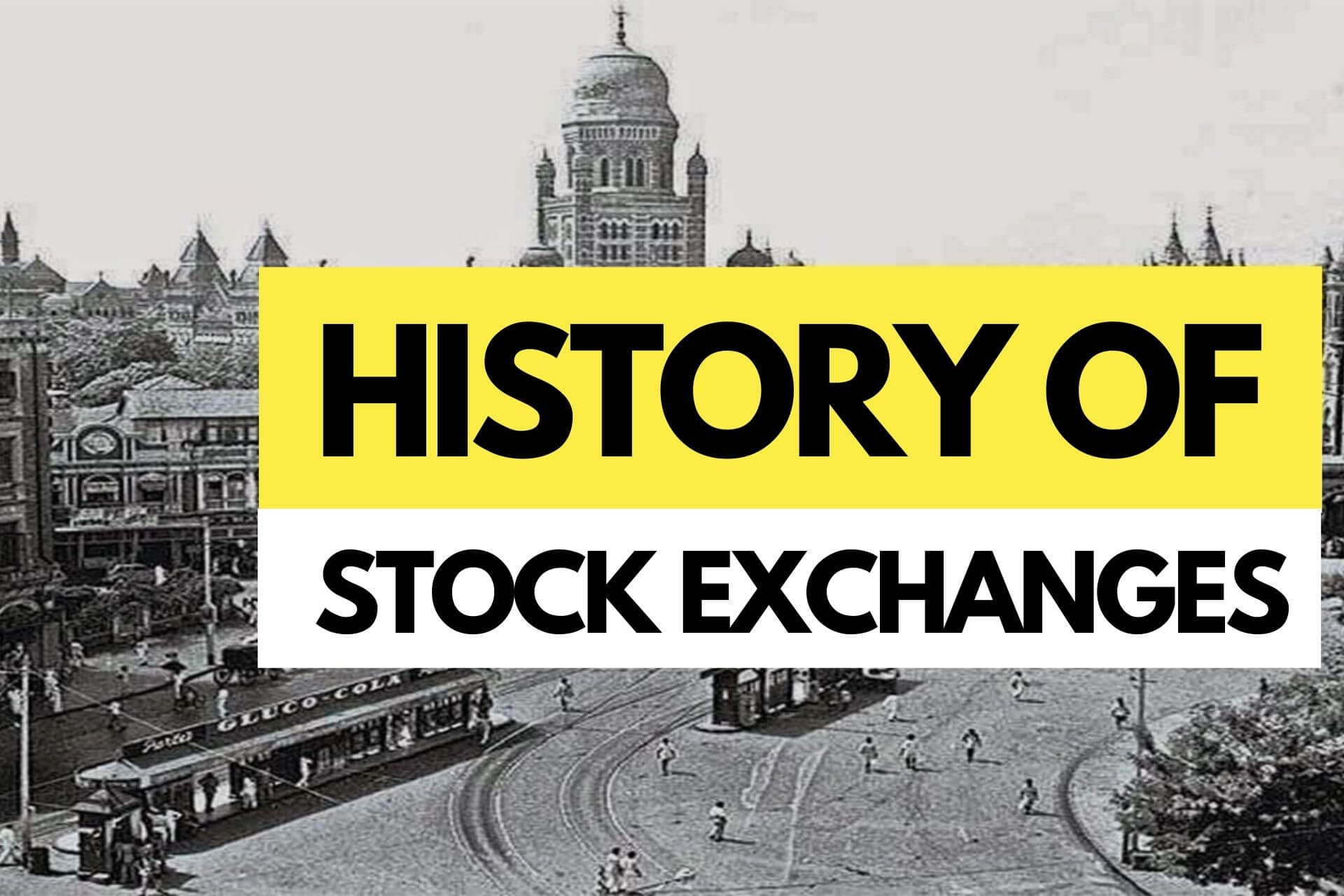
From its Dutch origins, the concept of stock markets and joint-stock companies began to spread across Europe and eventually to the burgeoning colonies, adapting to local economic needs and political structures.
The London Stock Exchange and Early British Innovations
England was quick to follow the Dutch example, though its path was marked by unique challenges and innovations. Early trading in London initially took place in coffeehouses, most notably Jonathan’s and Garraway’s, where merchants and brokers would gather to buy and sell shares in burgeoning companies like the East India Company (its English counterpart) and various canal or mining ventures. The “bubble act” of 1720, enacted after the infamous South Sea Bubble, temporarily stifled the formation of new joint-stock companies without a royal charter, demonstrating early attempts at market regulation and a recognition of systemic risk. Despite this setback, the principles of public share ownership persisted. The formalization of the London Stock Exchange in the early 18th century marked another significant step, providing a centralized and regulated venue for trading, solidifying London’s role as a dominant financial center.
The American Experience: Wall Street’s Genesis
Across the Atlantic, the American stock market began more modestly. In the late 18th century, brokers in New York City would gather under a buttonwood tree on Wall Street to trade shares, primarily in banks like the Bank of New New York and the First Bank of the United States, as well as government bonds issued to finance the Revolutionary War. The signing of the Buttonwood Agreement in 1792 by 24 stockbrokers marked a pivotal moment. This agreement established rules for trading, set commission rates, and created a more organized market. It was the direct precursor to the New York Stock & Exchange Board, later renamed the New York Stock Exchange (NYSE), which was formally constituted in 1817. The growth of the American economy, fueled by industrialization, westward expansion, and infrastructure projects like railroads, rapidly increased the demand for capital, propelling the NYSE to global prominence and establishing Wall Street as a synonym for financial power.
Defining Moments and Early Market Bubbles
The history of stock markets is not merely a tale of steady growth but also one punctuated by periods of irrational exuberance, speculative manias, and devastating crashes—lessons that continue to resonate today.
The South Sea Bubble (1720)
One of the earliest and most infamous financial crises was the South Sea Bubble. The South Sea Company, a British joint-stock company, was granted a monopoly on trade with South America. In exchange, it took on a significant portion of Britain’s national debt, promising high returns. The company’s stock price soared dramatically, fueled by widespread public speculation and baseless rumors, attracting investors from all walks of life. The frenzy led to the proliferation of numerous “bubble companies” with outlandish or even fraudulent proposals, all seeking to capitalize on the speculative fever. When the bubble inevitably burst, it caused widespread financial ruin and public outrage, leading to the aforementioned Bubble Act, a significant piece of legislation aimed at regulating company formation and curbing speculative excesses, although it also inadvertently hampered legitimate business development.
The Tulip Mania (1637)
While not a stock market bubble in the strict sense (as it involved commodities, not corporate shares), the Dutch Tulip Mania in the 1630s serves as an early, vivid illustration of speculative fervor and herd behavior that can grip markets. Tulip bulbs, initially a luxury item, became a speculative commodity, with prices skyrocketing to absurd levels, sometimes exceeding the cost of houses. People mortgaged their homes and invested their life savings, driven by the belief that prices would continue to rise indefinitely. The crash was swift and brutal, leaving countless investors bankrupt. The Tulip Mania provides a stark historical reminder of the psychological forces that can drive assets far beyond their intrinsic value, a phenomenon that has recurred in various forms throughout the history of financial markets.
The Enduring Legacy and Modern Relevance
From its humble beginnings, the stock market has evolved into an indispensable component of the global economy, continuously adapting to technological advancements and regulatory challenges.
The Role of Stock Markets Today
Today, stock markets serve several critical functions. They facilitate capital formation by allowing companies to raise funds for expansion, research, and development through initial public offerings (IPOs) and subsequent share issues. They provide liquidity for investors, enabling them to buy and sell shares, thereby encouraging investment. Stock markets also act as a barometer of economic health, with indices like the S&P 500 or the FTSE 100 reflecting overall market sentiment and corporate profitability. Beyond these functional roles, they offer individuals a pathway to wealth accumulation and retirement planning, democratizing access to corporate ownership that was once the exclusive domain of the elite. The sheer volume and speed of modern electronic trading have transformed markets, but the underlying principles of capital allocation, risk management, and price discovery remain rooted in the early innovations of Amsterdam and London.

A Continuous Evolution
The history of the stock market is a testament to its dynamic nature. From face-to-face trading in coffeehouses and under buttonwood trees, markets have transitioned to sophisticated electronic platforms, capable of executing millions of trades per second across global time zones. Regulatory frameworks have become more complex, aiming to protect investors and maintain market integrity, often in response to past crises. The advent of new financial instruments, derivatives, and algorithmic trading continues to reshape the landscape. Yet, at its core, the stock market continues to be a mechanism for connecting those with capital to those who need it, enabling enterprise, innovation, and economic growth, echoing the very first impulses of the Mesopotamian merchants and the Dutch East India Company. Understanding when and how it started provides essential context for navigating its present complexities and anticipating its future trajectories.
aViewFromTheCave is a participant in the Amazon Services LLC Associates Program, an affiliate advertising program designed to provide a means for sites to earn advertising fees by advertising and linking to Amazon.com. Amazon, the Amazon logo, AmazonSupply, and the AmazonSupply logo are trademarks of Amazon.com, Inc. or its affiliates. As an Amazon Associate we earn affiliate commissions from qualifying purchases.