
The timeline of the electric vehicle (EV) revolution is often divided into two distinct eras: before the Tesla Roadster and after it. While the concept of electric propulsion predates the internal combustion engine, the modern iteration of the high-performance, long-range EV began in the mid-2000s. To answer the question of when the first Tesla car was made, one must look at a pivotal window between 2004 and 2008, a period that redefined the intersection of automotive engineering and Silicon Valley software expertise.
The official production of the first Tesla car, the Roadster, began in March 2008. However, the technological journey started much earlier, fueled by a desire to prove that lithium-ion battery technology could move beyond laptops and cell phones into the demanding world of transport. The Roadster wasn’t just a car; it was a proof-of-concept for a new generation of hardware.

The Birth of a New Battery Paradigm (2004–2008)
Before the first Roadster rolled off the assembly line, the engineering team at Tesla—led by founders Martin Eberhard and Marc Tarpenning, and later heavily influenced by Elon Musk and JB Straubel—had to solve a problem that legacy automakers deemed impossible: energy density.
From AC Propulsion to the Energy Group
The technological DNA of the first Tesla car can be traced back to the tzero, a prototype built by AC Propulsion. This experimental vehicle demonstrated that lead-acid batteries could be replaced with thousands of small commodity lithium-ion cells. In 2004, after a significant Series A investment, Tesla’s engineering team began the grueling process of industrializing this concept. This was the moment the “tech” in Tesla was born. Instead of designing a singular, massive battery, they developed a sophisticated battery pack consisting of 6,831 individual 18650-form-factor cells.
The Lithium-Ion Breakthrough
The decision to use 18650 cells—the same type used in early 2000s laptops—was a radical technological trend at the time. Traditional automotive giants were focused on nickel-metal hydride or large-format prismatic cells. Tesla’s gamble was that the consumer electronics industry had already optimized the 18650 for cost and energy density. By 2006, the first “Engineering Prototype” (EP1) was functional, proving that a high-voltage system could safely manage the immense energy discharge required to propel a vehicle from 0 to 60 mph in under four seconds.
Engineering the Original Roadster: Beyond the Lotus Chassis
A common misconception is that the first Tesla car was simply an electric Lotus Elise. While Tesla utilized a glidder (a chassis without an engine) from Lotus to save on development costs, the technological architecture of the Roadster was almost entirely bespoke. Over 90% of the components in the final production model were unique to Tesla.
The Challenges of Thermal Management
One of the most significant technological hurdles during the development phase (2005–2007) was thermal runaway. Packing thousands of volatile lithium-ion cells together created a high risk of fire. Tesla’s engineers developed a proprietary liquid cooling system, utilizing a mixture of water and glycol circulated through specialized tubing between the cells. This innovation is now a standard in the EV industry, but in 2008, it was a breakthrough in digital and physical safety monitoring. The car utilized hundreds of sensors to monitor the temperature of each battery brick, managed by sophisticated software that could throttle power to prevent damage.
Software-Defined Hardware: A New Approach
The 2008 Roadster introduced the concept of the “software-defined vehicle.” Unlike traditional cars of that era, where the engine was controlled by mechanical linkages and simple ECUs (Electronic Control Units), the Roadster’s performance was governed by complex code. The Power Electronics Module (PEM) acted as the brain of the car, converting DC power from the battery into AC power for the motor while also managing regenerative braking. This digital layer allowed Tesla to “tune” the car’s driving dynamics via software updates—a precursor to the over-the-air (OTA) updates that would eventually become a hallmark of the brand’s technological identity.
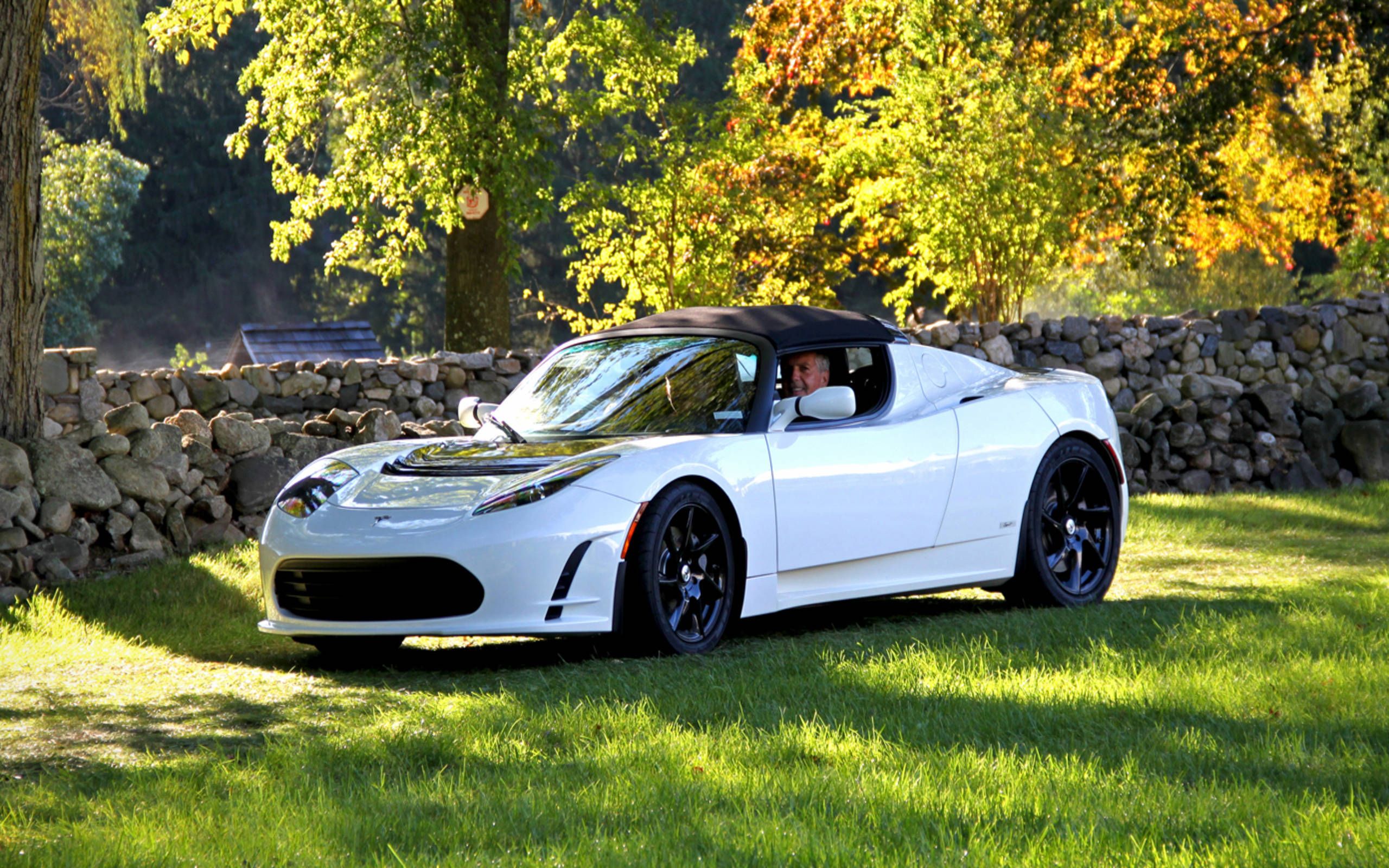
2008: The Year the Electric Vehicle Market Changed Forever
In March 2008, after years of delays and engineering redesigns, the first production Roadster (VIN 1) was delivered to Elon Musk. This marked the official transition from a tech startup to a legitimate vehicle manufacturer.
Production Milestones and Early Adopters
The initial “Founder Series” Roadsters were essentially hand-built gadgets. The assembly process involved shipping chassis from Hethel, UK, to Menlo Park, California, where the battery packs and drivetrains were integrated. By the end of 2008, Tesla had delivered a handful of units, but the impact on the tech industry was immediate. For the first time, a gadget-obsessed audience saw a car that matched the allure of a new iPhone. It featured a basic digital display, customizable driving modes, and a silent, torque-heavy acceleration that felt like a glimpse into the future.
Proving the Concept of Range and Performance
The 2008 Roadster boasted an EPA-rated range of 244 miles per charge. To put this in perspective, most other experimental EVs of that period struggled to reach 60 miles. This feat was achieved through a 53-kWh battery pack—unheard of at the time. The technological achievement wasn’t just in the range, but in the efficiency of the AC induction motor. Capable of spinning at up to 14,000 RPM, the motor was a masterclass in power electronics, providing instant peak torque from a standstill. This proved that electric drivetrains weren’t just for golf carts; they were superior to internal combustion for performance applications.
The Technological Ripple Effect: How the First Tesla Shaped Modern EVs
The launch of the first Tesla car in 2008 acted as a catalyst for the entire modern tech industry. It forced a shift in how engineers viewed energy storage and power management.
Scaling the Silicon Valley Model
The development of the Roadster applied the “Agile” methodology common in software development to automotive hardware. Instead of the seven-year development cycles typical in Detroit, Tesla iterated rapidly. Lessons learned from the 2008 Roadster’s cooling system and power inverter were immediately applied to the development of the Model S. The Roadster was the expensive, low-volume “Version 1.0” that funded the research and development for the mass-market technologies we see today.
From Hand-Built Prototypes to Giga-Factories
The first Tesla car also highlighted the need for a localized supply chain for battery cells. The difficulty in sourcing and testing thousands of 18650 cells for the Roadster led to the realization that for EVs to go mainstream, the industry needed “Gigafactories”—facilities that could manufacture batteries at a scale previously unimaginable. The technological DNA of the 2008 Roadster’s battery pack is still present in the high-density 2170 and 4680 cells used in current Tesla models, representing a direct lineage of engineering evolution.

The Future of the Roadster and the 1.9-Second Benchmark
As we look back at the 2008 Roadster, the technology has come full circle with the announcement of the second-generation Roadster. While the first car was a milestone for simply existing and functioning as a daily driver, the new iteration aims to push the boundaries of physics with specialized “Cold Gas Thrusters” and sub-two-second acceleration.
The original 2008 Roadster remains a seminal piece of technology. It was the first production car to use lithium-ion battery cells and the first to travel more than 200 miles on a single charge. It transformed the automobile from a mechanical machine into a digital platform. When we ask when the first Tesla car was made, the answer is 2008, but its technological relevance continues to grow with every new firmware update and battery breakthrough in the industry. The Roadster didn’t just start a company; it initiated a global shift toward the electrification of everything, proving that with the right software and energy management, the future of transport would be silent, sustainable, and incredibly fast.
aViewFromTheCave is a participant in the Amazon Services LLC Associates Program, an affiliate advertising program designed to provide a means for sites to earn advertising fees by advertising and linking to Amazon.com. Amazon, the Amazon logo, AmazonSupply, and the AmazonSupply logo are trademarks of Amazon.com, Inc. or its affiliates. As an Amazon Associate we earn affiliate commissions from qualifying purchases.