
The simple act of pressing a few buttons to solve complex equations or balance a budget is a modern convenience we often take for granted. Yet, the journey to the ubiquitous electronic calculator is a sprawling epic of human ingenuity, spanning millennia and driven by an inherent need to quantify the world. Pinpointing an exact “birth date” for the calculator is akin to trying to define the single moment language was invented; rather, it’s a story of iterative technological evolution, with each era building upon the breakthroughs of its predecessors. This article delves into the rich history of computational aids, revealing how humanity progressed from manual counting to the sophisticated pocket devices and integrated software we rely on today, all through the lens of technological advancement.
Early Seeds of Calculation: From Abacus to Analog Devices
Long before circuits and microchips, the human mind grappled with numbers, prompting the creation of ingenious physical tools to aid calculation. These early innovations laid the foundational concepts that would eventually blossom into the modern calculator.
The Ancient Roots: Abacus and Counting Boards
The earliest recognizable ancestors of the calculator emerged in ancient civilizations. The abacus, a frame with beads strung on rods, dates back to Mesopotamia around 2700–2300 BC, with refined versions developing in China, Japan, and other cultures. While not a “calculator” in the mechanical sense, the abacus was an incredibly powerful and efficient manual calculating device that allowed users to perform arithmetic operations (addition, subtraction, multiplication, division) with remarkable speed and accuracy. Its elegance lay in its digital representation of numbers and the manipulation of units, tens, hundreds, and beyond, training generations in mental arithmetic and logical sequencing. Similarly, various forms of counting boards and tally sticks existed across diverse cultures, demonstrating a universal human drive to externalize and manage numerical operations beyond the limits of short-term memory. These devices established the fundamental principle of using physical objects to represent and process quantities, a concept that underpins all subsequent computational tools.
Dawn of Mechanical Computation: Pascal’s Calculator and Leibniz’s Stepped Reckoner
The 17th century marked a pivotal shift from manual manipulation to automated mechanical processes. The French polymath Blaise Pascal, at just 19 years old, invented the “Pascaline” in 1642. Designed to assist his tax collector father, this device was arguably the first true mechanical calculator capable of performing addition and subtraction. It utilized a series of interlocked gears, each representing a digit, which would turn and carry over to the next digit when a full rotation was completed – a concept strikingly similar to the odometer in a car. While limited in its practical application due to manufacturing complexities and cost, the Pascaline was a monumental conceptual leap, demonstrating the feasibility of automating arithmetic.
Building upon Pascal’s work, the German mathematician Gottfried Wilhelm Leibniz introduced the “Stepped Reckoner” around 1673. This ambitious machine not only improved upon Pascal’s design by enabling multiplication and division through repeated addition and subtraction but also incorporated a “stepped drum” or “Leibniz wheel,” a crucial innovation that allowed for variable input and simplified the carrying mechanism. Leibniz also championed the binary number system, recognizing its potential for mechanical computation, centuries before its widespread adoption in digital computers. These two inventions were not just academic curiosities; they represented the very first attempts to create machines that could perform calculations without constant human intervention in each step of the process, laying the groundwork for more complex machines.
The Loom of Logic: Babbage’s Visionary Engines
The 19th century saw the most ambitious and visionary mechanical computing concepts with Charles Babbage’s designs. Often hailed as the “Father of the Computer,” Babbage, a British mathematician, envisioned machines far more complex than any before. His “Difference Engine,” designed in the 1820s, was intended to automate the calculation of polynomial functions for navigational tables, eliminating human error. Though only partially built during his lifetime, its intricate design for mechanical addition, subtraction, and especially its method of differences for generating tables, was groundbreaking.
Even more revolutionary was Babbage’s “Analytical Engine,” conceived in the 1830s. This machine was a general-purpose mechanical computer, featuring an “arithmetic logic unit” (the “mill”), conditional branching, loops, and integrated memory (the “store”). It was programmable using punched cards, a concept borrowed from Jacquard looms, and was capable of performing virtually any calculation. Ada Lovelace, daughter of Lord Byron, recognized the profound potential of the Analytical Engine, writing the world’s first computer program for it and foreseeing its capacity to do more than just pure calculation. While Babbage’s engines remained largely theoretical blueprints due to the lack of precision engineering required at the time, their designs articulated almost all the fundamental principles of modern digital computers, making them direct ancestors of what we now consider computational technology.
The Mechanical Age: Precision and Practicality Take Hold
While Babbage’s visions were ahead of their time, the late 19th and early 20th centuries saw the pragmatic development of mechanical calculators that found widespread commercial use, gradually becoming indispensable tools in offices and scientific endeavors.
Commercial Breakthroughs: Arithmometers and Adding Machines
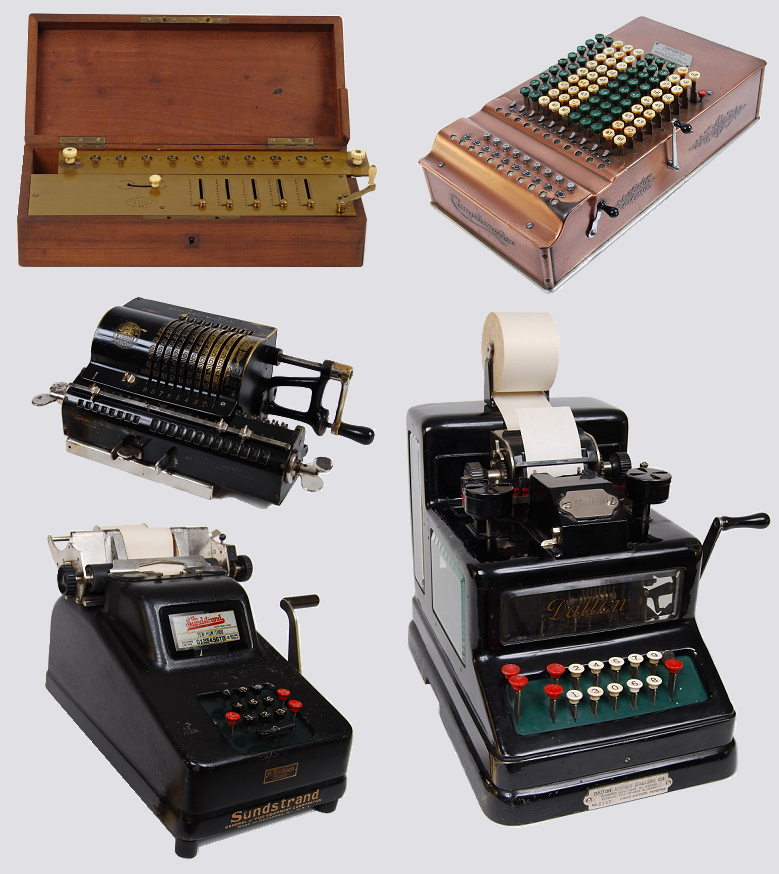
Following the theoretical groundwork laid by Pascal and Leibniz, practical mechanical calculators began to emerge in the late 19th century. The “Arithmometer,” invented by Charles Xavier Thomas de Colmar in 1820, was the first commercially successful mechanical calculator. Based on Leibniz’s stepped drum, it could perform all four basic arithmetic operations reliably and was produced for over 90 years, becoming a staple in European offices. Its success demonstrated the commercial viability and demand for automated calculation.
Towards the end of the century and into the 20th, dedicated “adding machines” became commonplace, particularly in the United States. Key innovations included keyboard input (rather than setting dials) and printing capabilities. Companies like Burroughs, Comptometer, and Monroe dominated this market. These machines, often large, heavy, and loud, were operated by skilled clerks and significantly sped up accounting and data processing tasks in businesses and government agencies. They solidified the concept of a dedicated machine for numerical computation, making calculation an accessible, if still somewhat specialized, part of daily commerce.
The Rise of Electro-Mechanical Devices: Bridging the Gap
The mid-20th century witnessed the integration of electrical components into mechanical calculators, creating electro-mechanical devices. These calculators still relied on gears and levers for the actual computation, but electric motors powered their mechanisms, making them faster, quieter, and easier to operate. Instead of a hand crank or purely manual input, a motor would drive the gears and perform the calculation when a button was pressed. Companies like Friden and Marchant produced highly sophisticated electro-mechanical models that were workhorses in scientific, engineering, and financial sectors.
These machines served as a crucial bridge between purely mechanical designs and the fully electronic calculators that would soon revolutionize the field. They pushed the limits of mechanical precision and automation, but their inherent reliance on moving parts meant they were still slow, bulky, and prone to mechanical wear and tear. The stage was set for a truly electronic revolution that would eliminate the physical motion of computation entirely.
The Electronic Revolution: Silicon Transforms Computation
The advent of electronics in the mid-20th century marked the true dawn of the modern calculator, replacing intricate gears with silent, swift circuits. This was the point where the “calculator” as we recognize it today truly began to take shape.
The Transistor Era: From Room-Sized Computers to Desktop Marvels
The invention of the transistor in 1947 at Bell Labs was arguably the single most important technological breakthrough for modern computation. Transistors replaced bulky, unreliable vacuum tubes, enabling the creation of smaller, more powerful, and energy-efficient electronic devices. Early electronic computers were still massive, room-sized machines, but the principles of electronic arithmetic were quickly applied to dedicated calculators.

The first all-electronic desktop calculators began to appear in the early 1960s. Machines like the ANITA MK VII from Sumlock Comptometer (1961) and the Wang LOCI-2 (1964) were pioneers. These early electronic calculators were still expensive and somewhat large, often resembling typewriters, but they offered unprecedented speed, silent operation, and reliability compared to their electro-mechanical predecessors. They used discrete transistors and ferrite core memory, making them a significant leap forward in terms of technology, albeit not yet portable. This period saw the transition from calculation being a physical act of turning gears to an invisible process of electrical impulses, transforming the user experience and opening new possibilities.
The Birth of the Pocket Calculator: Texas Instruments and Canon
The true “birth” of the personal, portable calculator, as most people conceive of it, can be traced to the late 1960s and early 1970s. This was made possible by the development of integrated circuits (ICs) and microprocessors, which allowed thousands of transistors to be etched onto a single silicon chip.
In 1967, Texas Instruments (TI) developed the “Cal-Tech,” a prototype handheld electronic calculator. Though never commercially released in that form, it was a pivotal development, demonstrating the feasibility of a battery-powered device capable of performing basic arithmetic. The first commercially available handheld electronic calculator was the Busicom LE-120A “Handy” from Japan, released in 1971, utilizing a large-scale integrated (LSI) chip from Mostek. However, it was the introduction of the Bowmar Brain (1971) and the HP-35 (1972) that truly kickstarted the personal calculator revolution. The Bowmar Brain was one of the first widely available, affordable handheld calculators, while the Hewlett-Packard HP-35 was the first scientific calculator, capable of handling trigonometric, logarithmic, and exponential functions, transforming engineering and science education.
Texas Instruments soon followed with its own popular models, like the TI-2500 Datamath (1972). These early models were expensive, often costing hundreds of dollars, but prices rapidly plummeted throughout the 1970s due to mass production and fierce competition. The introduction of LED (Light-Emitting Diode) and later LCD (Liquid Crystal Display) screens further enhanced usability and battery life, making the pocket calculator a truly everyday item.
Key Innovations: Integrated Circuits and LED Displays
The rapid evolution of the calculator was intrinsically linked to advancements in microelectronics. The development of the integrated circuit (IC) by Jack Kilby at Texas Instruments and Robert Noyce at Fairchild Semiconductor in the late 1950s was the fundamental enabler. ICs allowed for the miniaturization of electronic components, packaging entire circuits onto a single, tiny silicon chip. This dramatically reduced the size, cost, and power consumption of electronic devices.
Further breakthroughs in Large-Scale Integration (LSI) and Very Large-Scale Integration (VLSI) in the 1970s meant that a single chip could contain all the processing power, memory, and display drivers needed for a fully functional calculator. Simultaneously, the refinement of display technologies, moving from power-hungry Nixie tubes to brighter, more compact LEDs, and eventually to the energy-efficient Liquid Crystal Displays (LCDs), was crucial for making calculators truly portable and user-friendly. These technological leaps coalesced to transform the calculator from a desktop behemoth into the sleek, pocket-sized device familiar to millions.
Modern Calculators: Specialization and Ubiquity
From basic arithmetic to complex graphing functions, the calculator continued its evolution, adapting to specialized needs and eventually becoming an invisible part of our digital ecosystem.
Scientific and Graphing Calculators: Empowering Education and Engineering
As microprocessors grew more powerful, calculators transcended basic arithmetic. The introduction of the scientific calculator, epitomized by the HP-35 in 1972 and later by popular Texas Instruments and Casio models, revolutionized STEM education and professional fields. These calculators could handle trigonometry, logarithms, exponential functions, and statistical calculations with ease, becoming indispensable tools for students, engineers, and scientists.
The next major leap was the graphing calculator, pioneered by Casio with the fx-7000G in 1985, and popularized by Texas Instruments’ TI-81 in 1990. These devices introduced visual computation, allowing users to plot equations, analyze data graphically, and perform advanced calculus operations. Graphing calculators fundamentally changed how mathematics was taught and learned, providing immediate visual feedback and fostering deeper conceptual understanding. They continue to be standard equipment in high school and university classrooms worldwide.
Programmable Calculators: Expanding Functionality
The concept of programming a calculator to perform a sequence of operations was another significant advancement. Early programmable calculators, such as the HP-65 (1974), allowed users to store and execute custom programs. This capability turned a calculator into a mini-computer for specific tasks, enabling complex, repetitive calculations to be automated. Engineers could program routines for circuit analysis, financial analysts for complex modeling, and scientists for data processing, significantly enhancing productivity. These programmable features laid the groundwork for the more advanced scripting and app-like functionalities seen in modern graphing calculators and even smartphones.
Software Calculators and Everyday Integration: From Smartphones to Cloud Services
The final frontier of the calculator’s evolution is its pervasive integration into nearly every digital device and software platform. With the rise of personal computers, dedicated calculator applications became standard. The advent of smartphones brought a calculator into everyone’s pocket as a pre-installed app, rendering standalone basic calculators largely obsolete for general consumers. Operating systems like Windows, macOS, Android, and iOS all include powerful, feature-rich calculator applications that can switch between basic, scientific, and even programmer modes.
Beyond dedicated apps, calculation functionality is now embedded everywhere: in spreadsheets (Excel, Google Sheets), web browsers, programming languages, and even smart assistants like Siri or Google Assistant. Cloud-based calculation tools and sophisticated statistical software further extend the reach and power of computational aids. The physical device has, in many cases, dissolved into the digital fabric of our lives, making computation an omnipresent and seamless experience.
The Enduring Legacy and Future of Computational Aids
The journey from the abacus to the integrated circuit calculator is a testament to humanity’s relentless pursuit of efficiency and accuracy in handling numbers. Each stage of development, driven by technological innovation, has profoundly impacted society.
More Than Just Numbers: The Calculator’s Impact on Society and Technology
The calculator is far more than a tool for arithmetic; it is a foundational technology that has shaped education, science, engineering, business, and daily life. It democratized complex calculations, enabling wider access to fields once restricted to those with specialized mathematical skills or access to large computing machines. It freed minds from tedious manual computation, allowing them to focus on higher-level problem-solving and conceptual understanding. The rapid advancement of the calculator also directly spurred developments in microelectronics, display technology, and battery life, which in turn fueled the personal computer revolution and the mobile device era. Its existence has underscored the importance of abstraction, logical processing, and the power of automation.

Evolving Needs: AI, Quantum, and the Next Frontier of Calculation
Looking ahead, the calculator continues to evolve. While the form factor of the handheld device might be stable for specialized needs, the underlying computational power and methodologies are rapidly changing. Artificial intelligence (AI) is transforming how we interact with data and solve problems, potentially moving beyond direct numerical input to more intuitive, language-based queries. Quantum computing, though still in its nascent stages, promises to perform calculations at speeds and complexities currently unimaginable, tackling problems intractable for even the most powerful supercomputers.
The core need to quantify, analyze, and predict remains constant. Whether it’s through a holographic interface, an AI-driven personal assistant, or a quantum processor, the spirit of the calculator – a tool to extend human cognitive abilities in the realm of numbers – will undoubtedly continue to drive innovation. The question “when was the calculator made?” doesn’t have a single answer, but its story is an ongoing narrative of human ingenuity and technological progress, forever shaping how we interact with the numerical world.
aViewFromTheCave is a participant in the Amazon Services LLC Associates Program, an affiliate advertising program designed to provide a means for sites to earn advertising fees by advertising and linking to Amazon.com. Amazon, the Amazon logo, AmazonSupply, and the AmazonSupply logo are trademarks of Amazon.com, Inc. or its affiliates. As an Amazon Associate we earn affiliate commissions from qualifying purchases.