
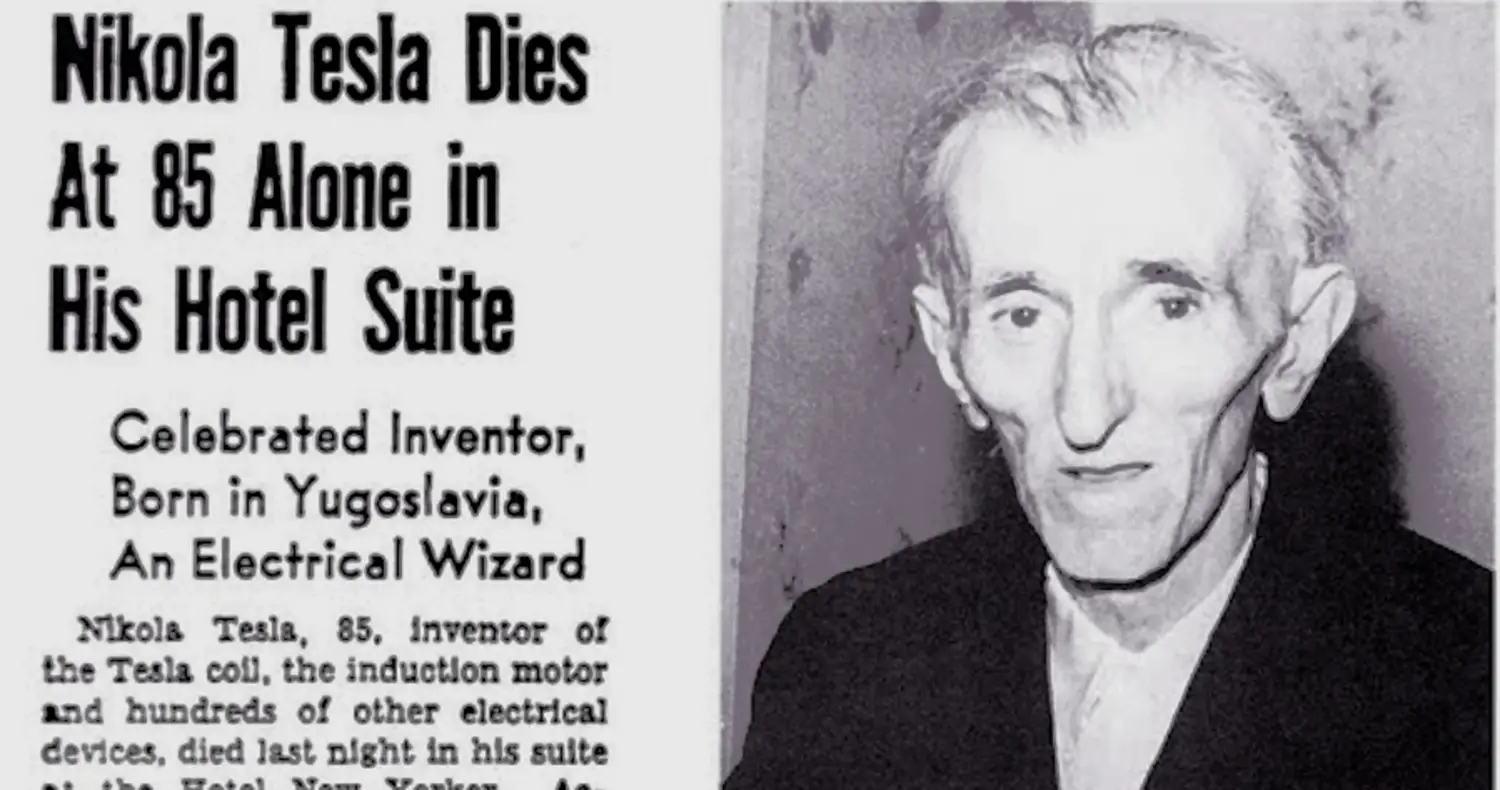
The question of whether Nikola Tesla was assassinated is one that frequently surfaces in digital forums, historical deep-dives, and fringe technology circles. To provide the factual answer immediately: Nikola Tesla was not assassinated. He passed away on January 7, 1943, at the age of 86, in his suite at the New Yorker Hotel. The official cause of death was coronary thrombosis—a blood clot in the heart—which is common for a man of his age.
However, the reason this question persists—and why it remains relevant to the technology sector today—is not found in the manner of his death, but in the extraordinary nature of his life’s work. Tesla was a man who lived decades, if not centuries, ahead of his time. His concepts for wireless energy, global communications, and advanced robotics were so radical that they sparked suspicion, corporate rivalry, and eventually, a cloud of mystery involving government agencies and missing blueprints. To understand the “assassination” myth, one must understand the high-stakes world of early 20th-century technology and the intellectual property wars that shaped our modern digital landscape.
The Reality of Nikola Tesla’s Final Days: Fact vs. Digital Fiction
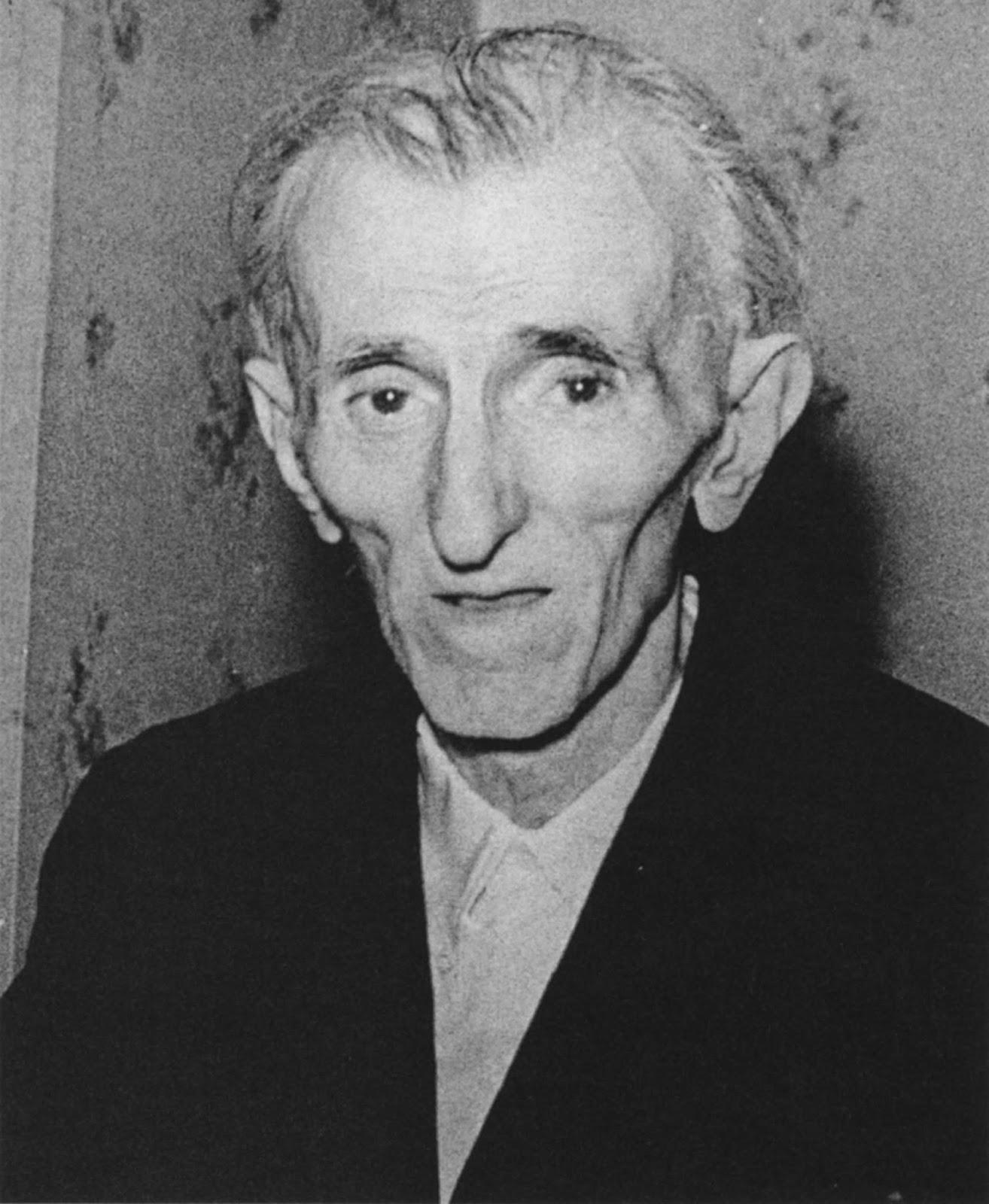
When Tesla died in Room 3327 of the New Yorker Hotel, he was living in relative poverty, supported by a modest pension from the Westinghouse Electric & Manufacturing Company. Despite his brilliance, his later years were marked by eccentricity and a focus on theoretical projects that the mainstream scientific community of the 1940s viewed as impossible.
The Mystery of the Missing Papers
The “assassination” or “conspiracy” narrative gained traction largely due to what happened immediately following his death. Amidst the height of World War II, the Office of Alien Property (OAP) seized Tesla’s belongings, despite the fact that he was a naturalized U.S. citizen. The FBI requested the OAP to take his papers, fearing that Tesla’s “Death Ray” or “Teleforce” weapon could fall into enemy hands.
Dr. John G. Trump, an MIT professor and a technical aide to the National Defense Research Committee (and uncle to the 45th U.S. President), was tasked with evaluating Tesla’s notes. His conclusion was that Tesla’s recent work was “primarily of a speculative, philosophical, and somewhat promotional character.” While this officially debunked the existence of a functional superweapon, the government’s secrecy fueled decades of speculation that Tesla had been silenced because his technology threatened the existing energy monopolies or offered too much power to the public.
The Persistence of Tech Myths
In the age of social media and rapid information sharing, the “assassination” query is a byproduct of the “Great Inventor” mythos. Modern tech enthusiasts often view Tesla as a tragic hero who was suppressed by corporate interests. While he wasn’t physically murdered, many argue that his vision was assassinated by a lack of funding and the aggressive patent strategies of his competitors. This distinction is crucial for understanding how technology is brought to market and why certain breakthroughs are delayed by decades.
The War of Currents: A Technical Rivalry That Shaped the Modern World
To understand the environment in which Tesla operated, one must look at the “War of Currents” in the late 1880s and early 1890s. This was not just a business dispute; it was the first major technical “format war,” akin to the battles between Beta and VHS, or modern debates over charging standards.
AC vs. DC: The Engineering Battle
The primary conflict was between Thomas Edison’s Direct Current (DC) and Tesla’s Alternating Current (AC), the latter of which was backed by George Westinghouse. From a technical standpoint, DC was limited; it could not be easily stepped up to high voltages, meaning it could not be transmitted over long distances without massive power loss. This would have required a power plant every few miles in a city.
Tesla’s innovation was the polyphase induction motor and the use of transformers. AC could be stepped up to high voltages for efficient long-distance transmission and then stepped down for safe home use. This was the foundational technology of the modern electrical grid. The “war” involved Edison using gruesome public demonstrations to suggest AC was dangerous, but the technical superiority of Tesla’s system eventually won out.
The Niagara Falls Power Project
The culmination of this tech battle was the 1893 World’s Columbian Exposition in Chicago and the subsequent harnessing of Niagara Falls. Tesla’s AC system was used to power the fair, proving its reliability on a massive scale. When the Niagara Falls power plant went online in 1896, it signaled the end of the DC era and established the technical blueprint for every electrical grid currently operating on the planet. This victory established Tesla as a titan of engineering, but it also made him a permanent target for those whose business models relied on older, more centralized technologies.
From Radio to Remote Control: Tesla’s Visionary Contributions to Wireless Technology
While the world knows Tesla for the AC motor, his most forward-thinking work involved the manipulation of high-frequency currents and wireless transmission. These inventions laid the groundwork for the modern “wireless” world we inhabit today.
The Birth of Teleautomatics and Robotics
In 1898, at Madison Square Garden, Tesla demonstrated a remote-controlled boat. He called this science “teleautomatics.” At the time, onlookers thought it was magic or that a small, trained monkey was inside the boat. In reality, Tesla had invented the world’s first radio-controlled device.
This was the technical precursor to:
-
Robotics: The concept of a machine acting on external commands without a physical tether.
-
Drones: Modern UAVs utilize the same fundamental principles of radio-frequency control that Tesla demonstrated in the 19th century.
-
The Internet of Things (IoT): Tesla envisioned a world where machines could communicate wirelessly to perform tasks, a reality we are only now fully realizing.
The Wardenclyffe Tower and Global Connectivity
Tesla’s most ambitious project was the Wardenclyffe Tower on Long Island. His goal was not just to transmit telegrams across the Atlantic, but to provide “free” wireless energy and information to the entire world. He envisioned a “World Wireless System” that would allow for the transmission of images, music, and text—essentially a prophecy of the modern internet and smartphone.
The project failed due to a withdrawal of funding by J.P. Morgan, who realized that wireless energy could not be easily metered or billed. This failure is often cited as the “assassination” of Tesla’s career. From a tech development perspective, it serves as a cautionary tale of how the “minimum viable product” (MVP) approach of competitors (like Marconi, who focused only on simple radio signals) often beats the visionary’s “total system” approach in a capitalistic market.
The Modern Resurrection: How Tesla’s Tech Drives Today’s AI and Energy Trends
Today, the name “Tesla” is synonymous with innovation, largely due to the revival of his concepts in the green energy and automation sectors. The transition from internal combustion engines to electric vehicles (EVs) is a direct legacy of Tesla’s 1888 patent for the induction motor.
Wireless Charging and Resonant Inductive Coupling
The “Tesla Coil” is often seen as a visual prop for science fiction, but the principle behind it—resonant inductive coupling—is the technology used in modern wireless charging pads for smartphones and EVs. Engineers are currently working on “dynamic wireless charging,” where roads are embedded with coils to charge electric trucks as they drive. This is a direct realization of Tesla’s dream of a world powered without wires, proving that his technical hypotheses were correct, even if the infrastructure of his time couldn’t support them.
Sustainable Energy Grids and AI Integration
As we move toward decentralized energy grids—where homes with solar panels feed energy back into the system—we are using a modernized version of Tesla’s AC distribution model, enhanced by AI. Smart grids use machine learning algorithms to predict load demands and distribute power efficiently, a level of precision Tesla could only dream of. Furthermore, the high-performance computing required for AI training relies on massive cooling systems and electrical architectures that trace their lineage directly back to Tesla’s work in thermodynamics and electrical engineering.
Protecting the Vision: The Intersection of Intellectual Property and Tech Innovation
Tesla’s career provides a masterclass in the importance of patent strategy and digital security. He held approximately 300 patents, yet he died poor because he frequently sold or gave away his rights to maintain his research.
The Patent Battles That Drained a Genius
One of the most significant legal battles was over the invention of radio. For years, Guglielmo Marconi was credited with the invention, but in 1943—just months after Tesla’s death—the U.S. Supreme Court overturned Marconi’s patents, recognizing Tesla’s prior work. This highlights a recurring theme in technology: the “first to file” vs. “first to invent” struggle.
Modern tech entrepreneurs can learn from Tesla’s lack of a “brand strategy.” While he was a brilliant engineer, he lacked the corporate infrastructure to protect his intellectual property from being absorbed by larger entities. In today’s world of software patents and AI licensing, Tesla’s story is a reminder that technical genius must be paired with strategic legal and financial planning to survive.

Lessons for the Future
The myth of Tesla’s assassination persists because we want to believe that the world’s problems—energy scarcity, slow communication, lack of automation—could have been solved decades ago if not for “foul play.” In reality, Tesla’s life shows us that technology does not exist in a vacuum. It requires a synergy of engineering, public policy, and sustainable business models.
As we look toward the future of quantum computing, fusion energy, and autonomous AI, we are still walking the path Nikola Tesla cleared for us. He wasn’t assassinated; he was simply a man from the future who arrived a century too early. His true “assassination” would be for the world to forget that the wireless, electrified world we live in started in the mind of a man who dreamed of connecting every human being on Earth through the power of invisible waves. Our task today is to continue that technical journey, ensuring that the next generation of “Tesla-level” innovations are not only invented but successfully integrated into a global society.
aViewFromTheCave is a participant in the Amazon Services LLC Associates Program, an affiliate advertising program designed to provide a means for sites to earn advertising fees by advertising and linking to Amazon.com. Amazon, the Amazon logo, AmazonSupply, and the AmazonSupply logo are trademarks of Amazon.com, Inc. or its affiliates. As an Amazon Associate we earn affiliate commissions from qualifying purchases.