
Understanding the origins of Major League Soccer (MLS) requires looking beyond the first whistle of the inaugural match. While the league officially kicked off in 1996, its establishment was a multi-year financial and strategic undertaking that redefined the business of professional sports in North America. For investors, sports entrepreneurs, and business analysts, the story of MLS is not merely a sports narrative; it is a masterclass in risk management, capital structuring, and long-term asset appreciation.
The establishment of MLS was a direct outcome of the United States’ bid to host the 1994 FIFA World Cup. As part of the requirements set by FIFA, the governing body of world soccer, the U.S. was mandated to create a viable, professional top-tier outdoor league. Consequently, Major League Soccer was officially incorporated in 1993, but the financial architecture that would allow it to survive where previous leagues had failed took several more years to solidify.

The 1993 Founding: A Financial Response to World Cup Requirements
In December 1993, Major League Soccer was formally established as a corporate entity. This followed the United States Soccer Federation’s promise to FIFA that a professional league would be the primary legacy of the 1994 World Cup. Unlike previous attempts at professional soccer in the U.S., which often relied on localized, fragmented ownership with little central oversight, MLS was conceived as a highly centralized business.
The Initial Capitalization and Search for Investors
The primary challenge in 1993 and 1994 was securing the necessary capital to launch a national league. The collapse of the North American Soccer League (NASL) in the 1980s served as a cautionary tale of financial overextension and hyper-inflated player salaries. To avoid this, the founders of MLS, including Alan Rothenberg and Lamar Hunt, sought a diversified group of investors willing to commit to a slow-growth, high-stability model.
The initial investment groups were a mix of traditional sports moguls and corporate entities. Figures like Lamar Hunt (owner of the NFL’s Kansas City Chiefs) and Philip Anschutz (a billionaire businessman) were instrumental in providing the financial bedrock. By 1995, the league had secured enough backing to announce its first ten teams, setting the stage for the 1996 inaugural season.
Bridging the Gap Between Incorporation and Kickoff
The three-year gap between the 1993 incorporation and the 1996 debut was a critical period for business finance. During this time, the league negotiated its first television contracts with ESPN and ABC. Crucially, the league did not receive rights fees initially; instead, it entered into “time-buy” arrangements where the league handled the production costs and kept the advertising revenue. This was a strategic move to ensure national exposure, even if it meant an immediate financial hit to the league’s balance sheet.
The Single-Entity Model: A Unique Structure in Business Finance
One of the most significant financial innovations in the history of North American sports was the “single-entity” structure adopted by MLS at its inception. This structure was designed to protect the league from the boom-and-bust cycles that had destroyed its predecessors. In a single-entity model, the league owns all player contracts and team intellectual property. Investors do not own individual “teams”; instead, they own “operator-investor” shares in the league itself.
Managing Financial Risk Through Centralization
The single-entity model was a direct response to the financial instability of the open-market systems found in European soccer. By centralizing player salaries, MLS was able to prevent teams from outbidding each other and driving up labor costs—a practice that had bankrupted the NASL. For the original investors in 1993-1996, this model offered a level of predictable expenditure that was rare in the world of professional sports.
From a business finance perspective, this structure allowed the league to move players to specific markets to ensure competitive balance and market viability. If a team in a major market like New York or Los Angeles was struggling, the league could strategically allocate resources or talent to protect the collective investment of all shareholders.
Legal Challenges and Economic Justification
The single-entity model was not without its detractors. In the late 1990s, a group of players filed a high-profile antitrust lawsuit (Fraser v. MLS), arguing that the structure suppressed wages by eliminating competition between teams for player services. The league’s defense was built on its financial reality: as a startup in a high-risk market, the single-entity structure was a necessary mechanism for economic survival. The court eventually ruled in favor of MLS, solidifying the league’s right to operate as a single business entity, which further stabilized its valuation in the eyes of future investors.
Financial Crisis and the Soccer-Specific Stadium Investment
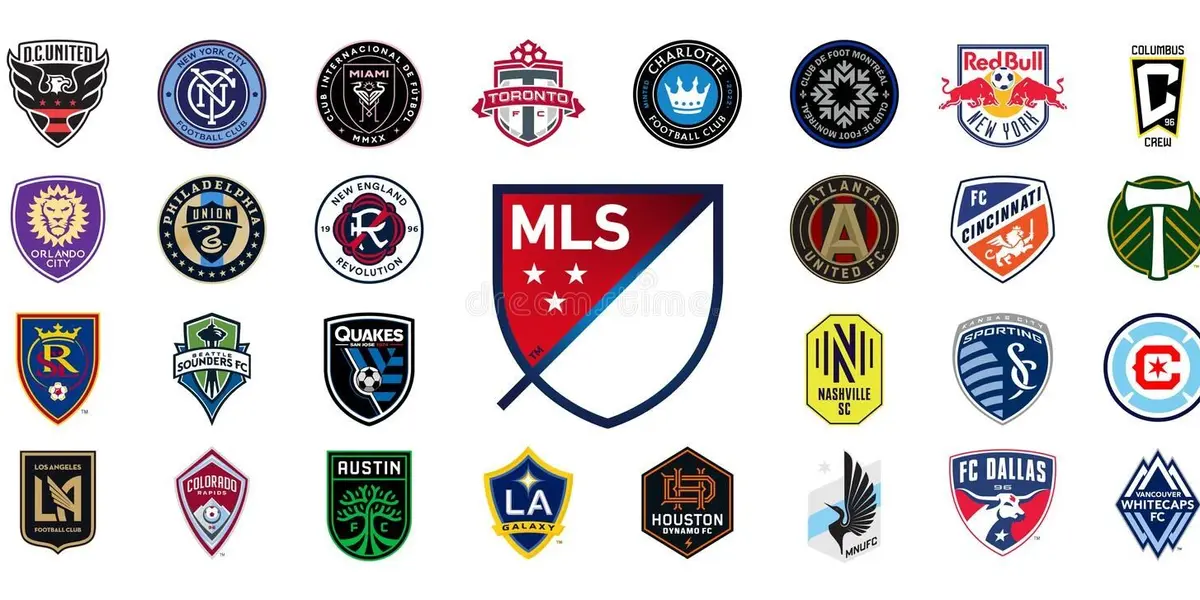
The early 2000s marked a period of severe financial reckoning for the league. Despite the successful establishment and the 1996 launch, MLS was losing millions of dollars annually. By 2002, the league was forced to contract two teams (the Tampa Bay Mutiny and the Miami Fusion) and consolidate its operations. This period was the “valley of death” for the league’s business model.
The Pivot to Real Estate and Infrastructure
The savior of the league’s finances was a strategic pivot toward infrastructure investment. Realizing that paying rent to NFL stadiums was draining their capital, the league’s leadership, led by Commissioner Don Garber, mandated a shift toward “soccer-specific stadiums” (SSS).
The opening of Mapfre Stadium in Columbus, Ohio, in 1999 served as the proof of concept. These stadiums allowed teams to control all revenue streams, including parking, concessions, naming rights, and non-soccer events. This transition transformed MLS teams from mere tenants into real estate owners, fundamentally changing their valuations. For an investor, the value of the franchise was no longer tied solely to ticket sales; it was anchored in tangible real estate assets.
The Anschutz Influence and Financial Stabilization
During the lean years of 2001 and 2002, Philip Anschutz’s AEG (Anschutz Entertainment Group) owned as many as six teams simultaneously to keep the league afloat. This was a massive consolidation of financial risk. As the stadium-revenue model began to show results, Anschutz was able to sell off these teams to new, diversified investors at significantly higher valuations, proving that the MLS “brand” and business model had long-term merit.
Expansion as a Growth Strategy: Valuation and Investment Returns
Since the mid-2000s, the primary driver of MLS’s financial growth has been its expansion strategy. The cost of entry into the league—the expansion fee—has skyrocketed, reflecting a massive increase in the perceived value of the league’s business model.
From $10 Million to $500 Million
In 2005, Real Salt Lake paid an expansion fee of approximately $10 million to enter the league. By the time Toronto FC joined in 2007, the price had risen. A decade later, the fee surpassed $100 million. Most recently, the fee for the San Diego expansion team, set to begin play in 2025, reached a staggering $500 million.
This exponential growth in expansion fees serves two financial purposes. First, it provides immediate liquidity to the existing investor-operators, effectively acting as a dividend for their early-stage risk. Second, it sets a “market floor” for the valuation of all existing teams. If a new team is worth $500 million, every current team in a major market sees a corresponding lift in its paper valuation.
Attracting High-Net-Worth Capital
The rising valuations have changed the profile of MLS investors. Today, ownership groups include tech billionaires, hedge fund managers, and celebrity entrepreneurs. This influx of sophisticated capital has led to better data analytics, modernized marketing strategies, and more robust corporate partnerships. The league has successfully transitioned from a speculative startup to a blue-chip sports investment.
The Modern Financial Landscape: Media Rights and Global Market Positioning
As we look at the current state of MLS, the establishment of the league is now paying dividends through massive media rights deals and a unique positioning in the global transfer market. The financial foundations laid in 1993 have evolved into a complex ecosystem of revenue generation.
The Apple TV Partnership
In 2022, MLS signed a landmark 10-year, $2.5 billion global media rights deal with Apple. This was a departure from traditional regional sports network (RSN) models. By moving all games to a single streaming platform, MLS bypassed the declining cable television market and positioned itself as a tech-forward league. This deal provides a guaranteed revenue floor for the league while offering an upside through subscription sharing—a fintech-inspired revenue model that is being closely watched by other sports leagues.
The Business of Player Development
Originally, MLS was a “retirement league” for aging European stars. Today, it has shifted its financial focus to become a “selling league.” By investing heavily in youth academies, MLS teams are now developing homegrown talent and selling them to European clubs for significant transfer fees. For example, the sale of Alphonso Davies from Vancouver Whitecaps to Bayern Munich for a then-record fee of over $20 million demonstrated that MLS could generate high-margin revenue through player development.

Conclusion: A Legacy of Financial Resilience
When was MLS established? While the date was 1993, the league has effectively “re-established” itself through several financial eras. From the risk-heavy days of the single-entity launch to the real-estate-focused stadium era and the modern digital-media era, MLS has proven to be a remarkably resilient business entity. For the financial world, MLS represents the successful application of corporate discipline to the often-chaotic world of professional sports. It is no longer just a soccer league; it is a multi-billion dollar diversified sports and media conglomerate.
aViewFromTheCave is a participant in the Amazon Services LLC Associates Program, an affiliate advertising program designed to provide a means for sites to earn advertising fees by advertising and linking to Amazon.com. Amazon, the Amazon logo, AmazonSupply, and the AmazonSupply logo are trademarks of Amazon.com, Inc. or its affiliates. As an Amazon Associate we earn affiliate commissions from qualifying purchases.