
The name “Chase Bank” is synonymous with modern finance, a ubiquitous presence in the American banking landscape and a global leader in financial services. Yet, asking “when was Chase Bank founded?” reveals a rich, complex history that doesn’t point to a single date or a solitary founder. Instead, it uncovers a fascinating tapestry woven from multiple institutions, strategic mergers, and pivotal moments spanning over two centuries. Understanding this intricate lineage is not merely an exercise in historical trivia; it provides invaluable insights into the evolution of American banking, the dynamics of corporate growth, and the enduring resilience required to navigate economic upheavals and technological shifts.
For anyone interested in business finance, the trajectory of institutions like Chase offers a masterclass in strategic expansion, risk management, and market dominance. It’s a story of adaptability, foresight, and the relentless pursuit of opportunity that shaped not just a bank, but the very infrastructure of the nation’s economy.
The Complex Tapestry of Chase’s Early Foundations
The journey to the contemporary JPMorgan Chase & Co. began not with a single entity called “Chase,” but with two distinct, influential institutions that would eventually merge and acquire numerous others to form today’s financial titan. Pinpointing the “founding” of Chase requires looking at these foundational elements.
Aaron Burr and The Manhattan Company (1799): The Earliest Seed
The earliest thread in the Chase lineage dates back to 1799 with the founding of The Manhattan Company. This institution, remarkably, did not initially set out to be a bank. In the bustling New York City of the late 18th century, a critical public health crisis loomed: a dire lack of clean drinking water. Aaron Burr, the ambitious political rival of Alexander Hamilton, seized this opportunity. He shrewdly leveraged a legislative charter to incorporate “The President and Directors of The Manhattan Company” with the ostensible goal of supplying potable water to the city.
However, Burr and his associates cleverly inserted a clause into the charter allowing the company to use any “surplus capital” for “any other moneyed transactions or operations.” This seemingly innocuous phrase was a Trojan horse for banking. New York at the time had only two established banks, both controlled by Burr’s political opponents, Federalists Alexander Hamilton and Rufus King. The Republican-controlled legislature, eager to challenge the Federalist financial monopoly, approved the charter.
Within a year, The Manhattan Company established its banking office at 40 Wall Street, quickly overshadowing its water supply operations. While it did build a reservoir and some pipelines, the banking arm soon became its primary focus, evolving into a significant financial player in the burgeoning American economy. This origin story highlights the opportunistic nature of early American finance and how essential services could be intertwined with the nascent banking sector. It also underscores the importance of legislative foresight, or perhaps lack thereof, in shaping future financial landscapes.
John Thompson and Chase National Bank (1877): The “Chase” Name Emerges
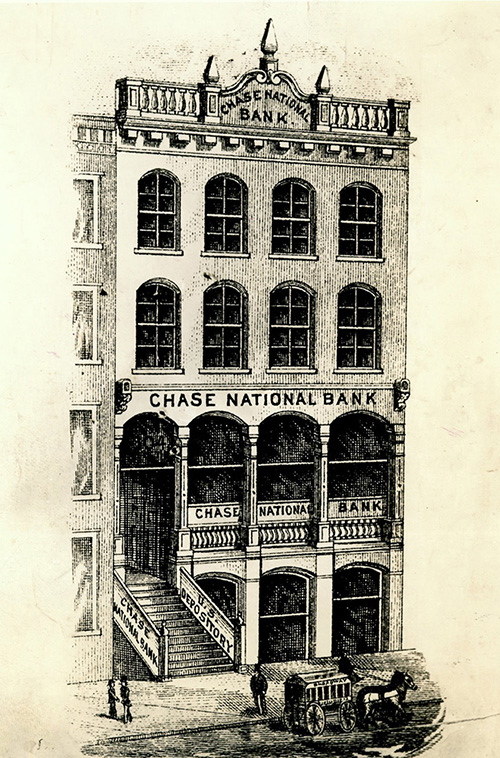
The second, and more directly named, foundational institution was Chase National Bank, founded by John Thompson in 1877. Interestingly, the bank was not named after Thompson himself, but in honor of Salmon P. Chase, a prominent American statesman. Salmon P. Chase had a distinguished career, serving as Governor of Ohio, U.S. Senator, U.S. Secretary of the Treasury under President Abraham Lincoln during the Civil War, and ultimately as Chief Justice of the United States Supreme Court. His tenure as Treasury Secretary was particularly notable for his role in establishing the national banking system, issuing greenbacks, and designing the nation’s modern currency.
John Thompson, a successful New York banker known for his innovative approach to financial services, admired Salmon P. Chase’s contributions to American finance and national stability. Thompson founded Chase National Bank with a focus on correspondent banking, serving other banks across the country, and catering to large corporations. It quickly grew into a leading institution for commercial banking and eventually became a significant player in investment banking. Its foundation in the post-Civil War era positioned it to capitalize on the rapid industrialization and economic expansion occurring across the United States. The “Chase” name, therefore, carries a legacy of fiscal responsibility and national economic development from its very inception.
A Century of Mergers and Strategic Growth
The story of Chase is largely one of strategic consolidation and expansion through landmark mergers that profoundly reshaped the financial industry. These unions were driven by the desire to increase market share, diversify services, and gain a competitive edge in an increasingly complex global economy.
Consolidating Power: The Manhattan Company and Chase National Bank Unite (1955)
The first monumental merger that brought the two earliest threads together occurred in 1955. The Manhattan Company (the banking arm of the original 1799 water company) and Chase National Bank officially merged to form The Chase Manhattan Bank. This was a pivotal moment, combining the extensive retail branch network and commercial banking strength of The Manhattan Company with the significant corporate and international banking prowess of Chase National Bank.
At the time, this was one of the largest bank mergers in U.S. history, creating a financial powerhouse with unparalleled resources and reach. The synergy was clear: Chase National brought prestige, large corporate accounts, and international connections, while The Manhattan Company offered a deep-rooted presence in New York’s local economy and a robust retail banking operation. The combined entity was better equipped to serve both individual consumers and multinational corporations, setting the stage for future expansion and cementing its status as a top-tier global bank.
Expanding Horizons: Chemical Bank and JP Morgan & Co. Acquisitions
The decades following the 1955 merger saw Chase Manhattan Bank continue its growth through both organic means and further strategic acquisitions. However, two subsequent mergers stand out as transformative in shaping the modern institution:
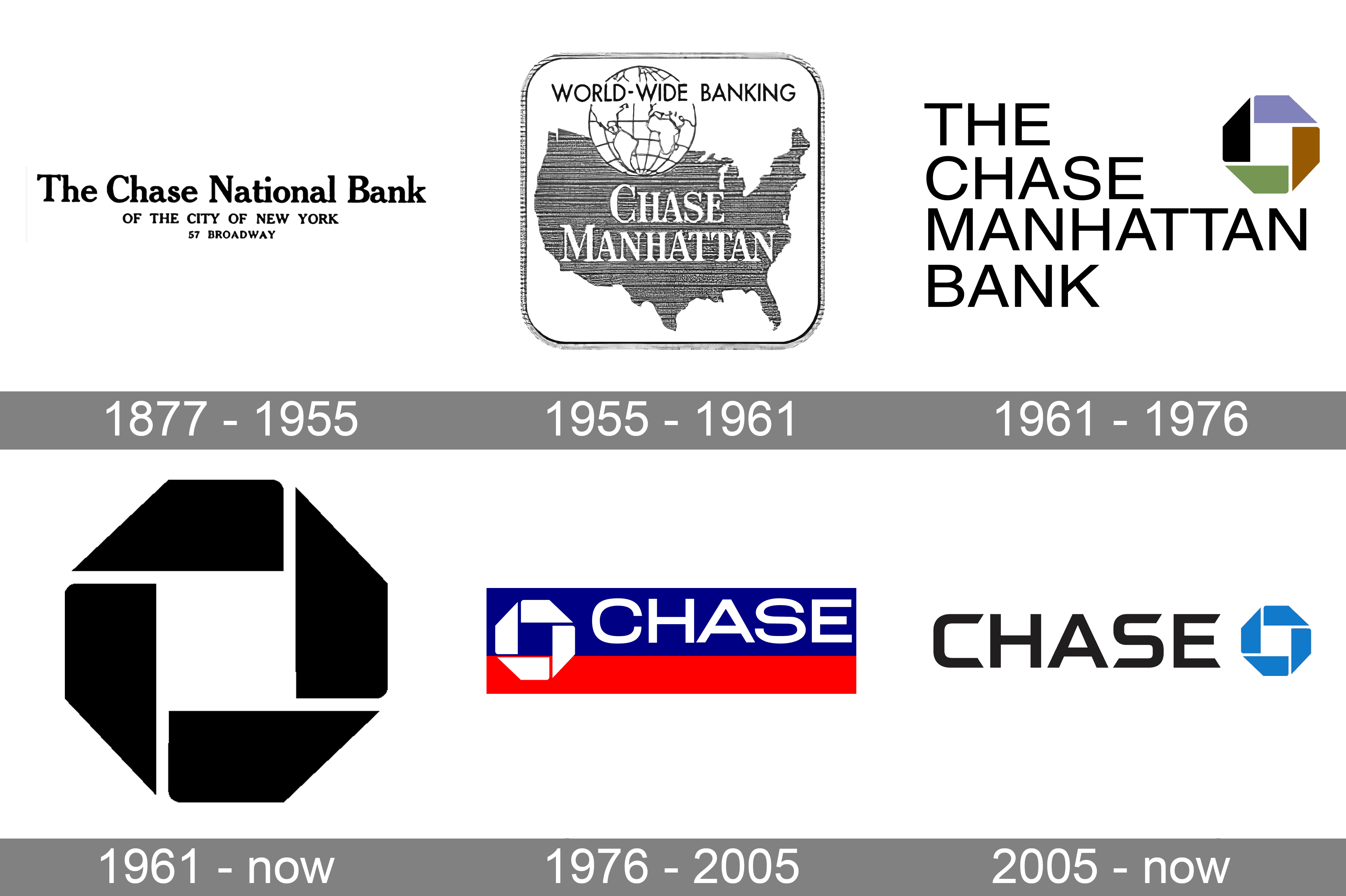
Firstly, in 1996, Chemical Bank acquired Chase Manhattan Corporation. While technically an acquisition by Chemical Bank, the combined entity chose to retain the more globally recognized and prestigious “Chase” name, becoming Chase Manhattan Bank. Chemical Bank brought to the table its own rich history, significant commercial banking operations, and a strong technological infrastructure, further solidifying the merged bank’s position in retail and corporate banking. This merger was driven by the desire for scale and efficiency in a rapidly consolidating banking sector.
Secondly, and most famously, came the monumental merger in 2000 between Chase Manhattan Corporation and J.P. Morgan & Co. This union created JPMorgan Chase & Co., the entity we recognize today. J.P. Morgan & Co., with its own storied history dating back to 1871 (and roots even earlier in the enterprises of J. Pierpont Morgan), was renowned as an elite investment bank, a trusted advisor to corporations and governments, and a leader in private banking and asset management. Its name evoked prestige, stability, and unparalleled expertise in complex financial transactions.
This merger was a masterstroke, combining Chase’s robust retail and commercial banking network with J.P. Morgan’s leading investment banking, private banking, and asset management capabilities. It created a diversified financial services behemoth, capable of serving everything from individual checking account holders to the largest multinational corporations and institutional investors. The integration brought together complementary strengths, creating a truly universal bank with a dominant presence across virtually every segment of the financial industry.
JPMorgan Chase & Co.: A Modern Financial Powerhouse
Today, JPMorgan Chase & Co. stands as one of the world’s largest and most influential financial institutions, a testament to its long history of strategic vision and adaptability. Its structure and operations are a direct result of the mergers and acquisitions that define its past.
Diverse Financial Offerings and Global Reach
JPMorgan Chase & Co. operates through four main business segments, demonstrating its vast and diversified financial offerings:
- Consumer & Community Banking (Chase): This segment is what most individuals recognize as “Chase Bank.” It provides financial services to consumers and small businesses, including checking and savings accounts, credit cards, mortgages, auto loans, and investment services through its extensive branch network, ATMs, and digital channels.
- Corporate & Investment Bank (CIB): This segment serves corporations, institutional investors, and governments worldwide. It offers a comprehensive range of services, including investment banking (advisory, equity, and debt underwriting), market-making in various asset classes, prime brokerage, and treasury services.
- Asset & Wealth Management: This segment provides investment and wealth management services to institutions, high-net-worth individuals, and retail clients. It includes private banking, investment management for various asset classes, and brokerage services.
- Commercial Banking: This segment focuses on middle-market companies, large corporations, and real estate investors, offering services such as lending, treasury services, investment banking, and capital markets solutions.
This diversified structure allows JPMorgan Chase to weather economic cycles more effectively and maintain a global presence, influencing financial markets and economies across continents. Its sheer scale means its decisions and performance have significant implications for the broader financial system.
Adapting to Economic Shifts and Regulatory Landscapes
The journey of Chase, from its humble 1799 origins to its current status, is also a story of continuous adaptation. The institution has navigated countless economic cycles, from panics and depressions to booms and busts. It has endured world wars, technological revolutions, and profound shifts in regulatory environments.
Following the 2008 financial crisis, for instance, JPMorgan Chase, like other major banks, faced increased scrutiny and stringent new regulations, such as the Dodd-Frank Act. The institution adapted by strengthening its capital reserves, overhauling risk management practices, and investing heavily in compliance and technology. This ability to absorb shocks, comply with evolving rules, and pivot strategically is a hallmark of enduring financial institutions and a critical lesson in business finance. Furthermore, the bank has been a significant player in the digital transformation of banking, investing billions in fintech, cybersecurity, and mobile banking solutions to meet the demands of a modern, interconnected world.
The Enduring Legacy: Why History Matters in Finance
Understanding the question “When was Chase Bank founded?” is more than a historical exercise; it provides profound context for appreciating the role and impact of such an institution in the modern financial world.
Understanding Stability and Resilience
An institution with a multi-century history like Chase embodies a unique form of stability and resilience. Its longevity instills trust among customers, investors, and governments alike. This trust is built on a track record of enduring crises, adapting to change, and consistently providing essential financial services. For individuals and businesses, partnering with an institution that has weathered countless storms offers a sense of security that newer, less established entities cannot replicate. The lessons learned from centuries of financial evolution are embedded in its corporate culture, risk management strategies, and operational backbone.
Influence on the Broader Financial Sector
The long and complex history of Chase has undeniably shaped the broader financial sector. From the innovative chartering of The Manhattan Company in the early republic to the creation of a universal banking model through the JPMorgan Chase merger, the institution has often been at the forefront of financial innovation and corporate strategy. Its mergers have set precedents, its products have influenced market standards, and its global operations have contributed to the interconnectedness of international finance. As a bellwether for the industry, its strategic directions often signal trends for other financial institutions, making its history a crucial case study for anyone in business finance or interested in the evolution of money.
In conclusion, “when was Chase Bank founded” does not yield a simple answer, but rather a compelling narrative beginning in 1799 with The Manhattan Company and continuing through the establishment of Chase National Bank in 1877, culminating in the formation of JPMorgan Chase & Co. in 2000. This layered history is a testament to the power of strategic vision, adaptability, and the relentless pursuit of growth that has forged one of the world’s most enduring and influential financial institutions. Its journey offers invaluable insights into the dynamic nature of finance and the foundational importance of history in understanding today’s global economy.
aViewFromTheCave is a participant in the Amazon Services LLC Associates Program, an affiliate advertising program designed to provide a means for sites to earn advertising fees by advertising and linking to Amazon.com. Amazon, the Amazon logo, AmazonSupply, and the AmazonSupply logo are trademarks of Amazon.com, Inc. or its affiliates. As an Amazon Associate we earn affiliate commissions from qualifying purchases.