
The story of Amazon is often cited as the ultimate blueprint for modern business success. For investors, entrepreneurs, and financial analysts, understanding the origins of this trillion-dollar entity is not merely a history lesson; it is a study in financial foresight, risk management, and aggressive scaling. To answer the fundamental question—when was Amazon founded?—we must look back to July 5, 1994. However, the date itself is only the starting point of a financial journey that redefined the global marketplace and the way we perceive long-term investment.

The Foundation and Early Financial Vision (1994)
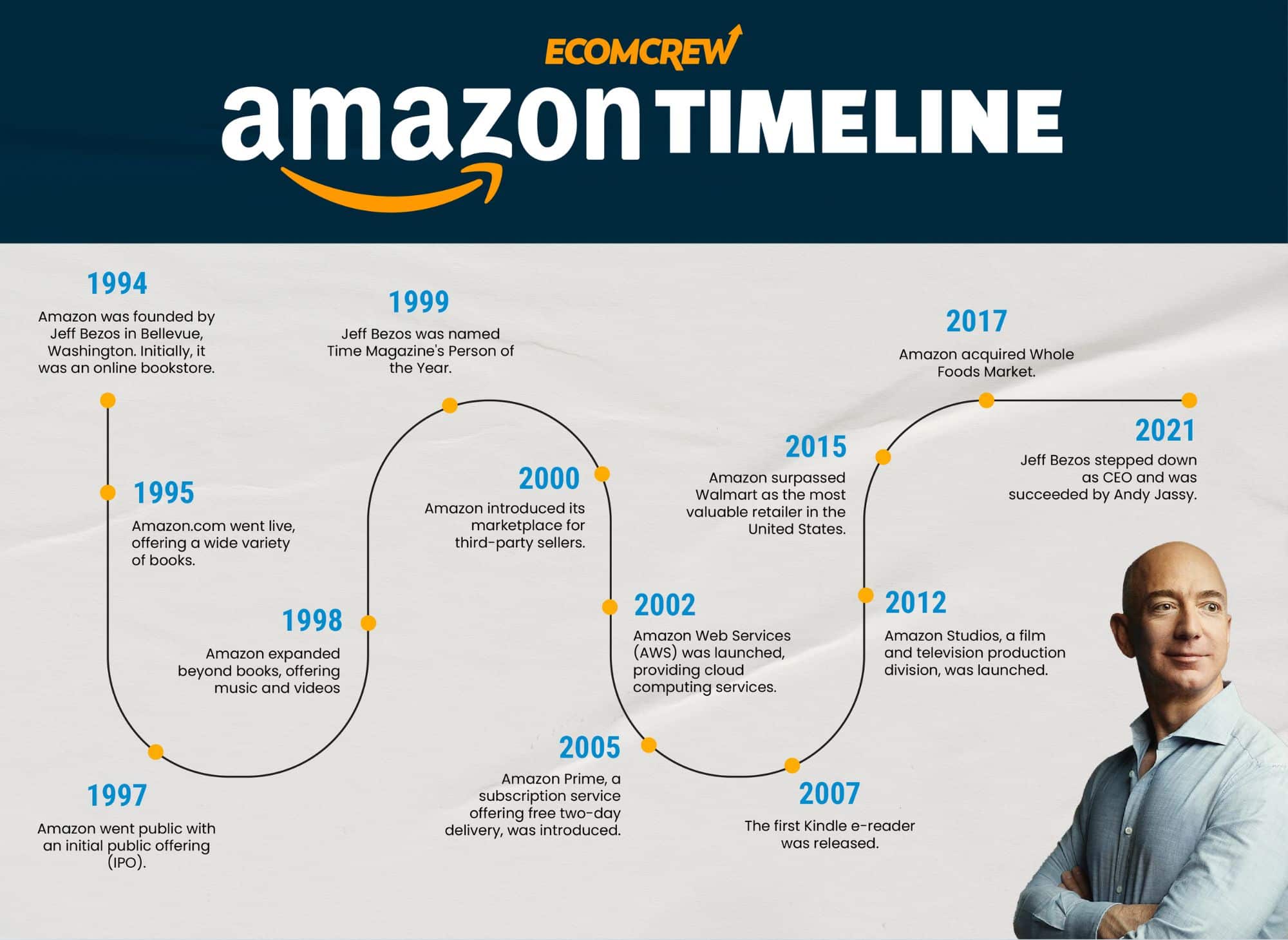
Amazon was founded in a garage in Bellevue, Washington, by Jeff Bezos, a former Wall Street hedge fund executive. Bezos’s background in finance was instrumental in the company’s inception. Unlike many early tech founders who were driven solely by the thrill of programming, Bezos was driven by “The Regret Minimization Framework”—a logical, financial decision-making process designed to ensure he wouldn’t miss out on the burgeoning growth of the internet.
The Garage Startup Phase and Initial Seed Capital
In 1994, the internet was still a novelty for most consumers. However, Bezos noticed a statistic that the World Wide Web was growing at a rate of 2,300% per year. From a business perspective, this growth was an anomaly that couldn’t be ignored. He quit his lucrative job at D.E. Shaw & Co. and moved across the country to start what was initially called “Cadabra.”
The initial funding for Amazon did not come from massive venture capital firms but from personal savings and a significant investment from Bezos’s parents. They invested roughly $250,000 in their son’s venture—a move that is now legendary in the world of private equity. At the time, Bezos warned them that there was a 70% chance they would lose their entire investment. This transparency regarding financial risk is a hallmark of the company’s early fiscal transparency with its stakeholders.
Capitalizing on the Early Internet Economy
Bezos chose books as his first product not because of a passion for literature, but because of a cold, hard financial analysis. Books were easy to ship, difficult to break, and there were millions of titles in print, far more than any physical bookstore could ever stock. This was the “Long Tail” theory in action. By minimizing the need for expensive physical storefronts and utilizing a “just-in-time” inventory model, Amazon began its journey with a lean financial structure that prioritized low overhead and high scalability.
The 1997 IPO and the Surge of Market Capitalization
While many startups stay private for a decade or more in the current era, Amazon moved toward the public markets relatively quickly. On May 15, 1997, just three years after its founding, Amazon held its Initial Public Offering (IPO). This transition was a pivotal moment in business finance, marking the shift from a private venture to a public entity scrutinized by Wall Street.
Going Public: The Financial Turning Point
Amazon’s IPO was priced at $18.00 per share. If you adjust for the various stock splits that have occurred over the following decades, the initial investment price was incredibly low. The company raised $54 million during the IPO, giving it a market valuation of $438 million. For the financial community, the 1997 IPO was a signal that e-commerce was no longer a speculative niche but a legitimate sector for institutional investment.
The capital raised from the IPO was immediately funneled back into the business. This established a financial pattern that Amazon would follow for the next two decades: prioritizing growth and market share over quarterly dividends or short-term profits.
Long-term Thinking vs. Short-term Profits
One of the most famous aspects of Amazon’s financial history is its ability to operate at a loss for years while its stock price continued to rise. Bezos famously wrote in his 1997 letter to shareholders, “It’s All About the Long Term.” He argued that the company would make decisions based on long-term market leadership considerations rather than short-term profitability or Wall Street reactions.
This philosophy was put to the ultimate test during the dot-com crash of 2000. While many of its peers went bankrupt, Amazon survived because it had secured a massive loan just before the credit markets froze. Its ability to manage cash flow and maintain investor confidence during one of the worst financial downturns in history remains a masterclass in corporate survival and financial resilience.
From Books to the “Everything Store”: The Evolution of Business Finance

As the company matured, its financial strategy shifted from mere survival to aggressive diversification. The transition from a bookseller to the “Everything Store” required a massive injection of capital into logistics, technology, and acquisitions.
Diversification and Reinvestment Strategy
By the early 2000s, Amazon had expanded into electronics, toys, and home goods. Each new category required its own supply chain logic and financial risk assessment. The company utilized a “Flywheel” model: lower prices led to more customers, which attracted more third-party sellers, which led to a larger selection, which eventually allowed for further price reductions.
Financially, this was fueled by “Free Cash Flow.” Amazon’s business model allowed it to collect payment from customers immediately while paying its suppliers on a 30, 60, or 90-day cycle. This “negative cash conversion cycle” meant that Amazon effectively had a constant interest-free loan from its own operations, providing it with the liquidity needed to expand without constantly returning to the debt markets.
The Strategic Role of Mergers and Acquisitions
Amazon’s growth wasn’t just organic; it was also fueled by strategic acquisitions funded by its increasing market valuation. Notable acquisitions like Zappos ($1.2 billion in 2009) and Whole Foods ($13.7 billion in 2017) showed that Amazon was willing to spend billions to dominate new sectors. These acquisitions were not just about buying revenue; they were about buying infrastructure and consumer data, two of the most valuable assets in the modern economy.
Amazon’s Diversified Revenue Streams: Beyond Retail
To understand Amazon’s current financial standing, one must look beyond the brown boxes delivered to doorsteps. The company has evolved into a multi-faceted conglomerate with revenue streams that are far more profitable than its original retail business.
Amazon Web Services (AWS) as a Profit Engine
In 2006, Amazon launched AWS, a cloud computing platform. Initially, investors were skeptical. Why was a bookstore selling server space? However, from a financial perspective, AWS was a stroke of genius. It took the massive infrastructure Amazon had built for its own retail operations and turned it into a high-margin service for other companies.
Today, AWS is the primary driver of Amazon’s operating income. While the retail division often operates on razor-thin margins, AWS provides the massive profits that fund the company’s experiments in satellite internet (Project Kuiper), healthcare, and autonomous vehicles. For investors, AWS transformed Amazon from a “retail stock” into a “tech powerhouse,” commanding a much higher price-to-earnings (P/E) ratio.
The Power of Amazon Prime and Recurring Revenue
Another financial milestone was the launch of Amazon Prime in 2005. By charging an annual fee for “free” shipping, Amazon created a recurring revenue stream that increased customer loyalty and lifetime value. Financially, Prime members spend significantly more than non-members. This subscription model provides a predictable cash flow that allows the company to plan long-term capital expenditures with greater precision.
Lessons for Modern Investors and Entrepreneurs
Looking back at when Amazon was founded and its subsequent growth, there are several key financial takeaways for anyone interested in the world of money and business.
Compound Growth and Strategic Patience
Amazon is perhaps the best example of the power of compounding. By reinvesting every dollar of profit back into the business for decades, Amazon built a moat that is virtually impenetrable. For the individual investor, Amazon’s story emphasizes the importance of patience. Those who held their shares through the volatility of the early 2000s saw returns that outperformed almost every other asset class in history.
The Future Outlook of Amazon’s Financial Dominance
As we look toward the future, Amazon continues to explore new financial frontiers. From its expansion into advertising—which has quickly become a multi-billion dollar business—to its foray into physical retail and logistics services for third parties, the company remains in a state of constant financial evolution.
The founding of Amazon in 1994 wasn’t just the birth of a company; it was the birth of a new economic philosophy. It proved that in the digital age, scale, data, and long-term financial vision are the ultimate drivers of wealth creation. Whether you are a small business owner looking to scale or an investor looking for the next “Amazon,” the lessons of 1994 remain as relevant today as they were in that Bellevue garage.
aViewFromTheCave is a participant in the Amazon Services LLC Associates Program, an affiliate advertising program designed to provide a means for sites to earn advertising fees by advertising and linking to Amazon.com. Amazon, the Amazon logo, AmazonSupply, and the AmazonSupply logo are trademarks of Amazon.com, Inc. or its affiliates. As an Amazon Associate we earn affiliate commissions from qualifying purchases.