
Deciding when to sell an investment, particularly one as volatile and dynamic as Bitcoin, is often more complex than the initial decision to buy. It’s a pivotal moment that can dictate the success or failure of your investment thesis, heavily influenced by individual financial goals, market conditions, and a strong understanding of one’s own risk tolerance. This article delves into the critical considerations and strategies that can help investors navigate the nuanced landscape of Bitcoin selling, ensuring decisions are data-driven, goal-oriented, and emotionally intelligent.
The allure of Bitcoin lies in its potential for significant gains, yet its characteristic price swings can induce both euphoria and panic. A well-articulated exit strategy is not merely a recommendation; it is an absolute necessity for any serious cryptocurrency investor. Without a predefined plan, investors risk succumbing to impulsive decisions driven by fear of missing out (FOMO) during rallies or fear, uncertainty, and doubt (FUD) during corrections. This strategic framework allows investors to detach emotion from their financial moves, focusing instead on predefined metrics and objectives that align with their broader financial well-being.

Establishing Your Exit Strategy: Goals and Triggers
A successful Bitcoin exit strategy begins long before you even consider hitting the “sell” button. It is deeply rooted in your initial investment thesis and personal financial objectives.
Defining Your Financial Objectives
Before investing in Bitcoin, you likely had an underlying reason—whether it was long-term wealth accumulation, saving for a specific purchase, or simply speculating on price appreciation. Revisiting these core objectives is the first step in formulating your selling strategy.
- Profit Targets: Have you reached a specific profit percentage that you initially aimed for? For example, did you plan to sell once your Bitcoin investment doubled, or once it reached a certain fiat value? Setting clear, realistic profit targets helps to solidify your selling decision, preventing endless waiting for an elusive “peak.”
- Risk Mitigation: Alternatively, are you looking to de-risk your portfolio? Perhaps Bitcoin now constitutes too large a percentage of your overall assets due to its growth, and you need to rebalance to maintain a comfortable risk level. Selling a portion can lock in gains and reduce exposure.
- Life Events: Sometimes, external financial needs dictate when to sell. A down payment on a house, funding education, or an unexpected emergency could necessitate liquidating assets, including Bitcoin. These personal financial milestones often serve as undeniable selling triggers.
Setting Price Targets and Stop-Loss Orders
While financial objectives provide the ‘why,’ price targets and stop-loss orders provide the ‘when’ in a quantifiable manner.
- Price Targets (Take-Profit Points): These are predetermined prices at which you decide to sell a portion or all of your Bitcoin holdings to realize profits. They should be based on your research, market analysis, and personal risk-reward profile, not merely arbitrary numbers. For instance, if you believe Bitcoin’s fair value is X and it reaches that point, it might be time to take profits.
- Stop-Loss Orders: Crucial for managing downside risk, a stop-loss order automatically sells your Bitcoin if it drops to a predefined price. While not always feasible in highly volatile markets due to potential “wicking” or slippage, having a mental (or even automated) stop-loss point can protect your capital from significant drawdowns, especially if your investment thesis proves incorrect or market conditions drastically change. It defines your maximum acceptable loss.
Diversification and Rebalancing Your Portfolio
As Bitcoin’s price fluctuates, its allocation within your overall investment portfolio will change.
- Portfolio Skew: Significant gains in Bitcoin can lead to it becoming an overweight asset in your portfolio, potentially exposing you to undue risk if its value were to suddenly decline.
- Rebalancing: Periodically rebalancing your portfolio involves selling off assets that have grown disproportionately large and reallocating funds to those that have underperformed or to more stable assets. This strategy helps maintain your desired asset allocation and risk profile, locking in Bitcoin gains and diversifying into other opportunities. It’s a proactive way to manage risk and protect profits.
Understanding Market Dynamics and Indicators
Beyond personal financial goals, external market forces play a significant role in dictating opportune selling windows. Astute investors pay close attention to macro trends and specific cryptocurrency indicators.
Recognizing Bull and Bear Market Cycles
Bitcoin, like many assets, moves in cycles, characterized by periods of aggressive growth (bull markets) and significant contraction (bear markets).
- Exiting a Bull Market: Identifying the late stages of a bull market can be challenging but crucial. Signs might include parabolic price increases, widespread speculative enthusiasm, excessive leverage in the market, and increasing regulatory scrutiny. Selling into strength, particularly as euphoria peaks, often allows investors to capture substantial gains before the inevitable correction.
- Navigating a Bear Market: While ideally, you wouldn’t be selling substantial portions during a bear market (as you’d be selling at a loss from the peak), sometimes it’s necessary to cut losses or reduce exposure if your initial investment thesis has been invalidated. Recognizing the transition into a bear market early can help prevent further capital erosion.
Key Fundamental Factors to Monitor
Fundamental analysis involves evaluating the intrinsic value and future potential of an asset. For Bitcoin, this includes:
- Regulatory Environment: Positive regulatory clarity can boost prices, while restrictive measures or outright bans can trigger sell-offs. Staying informed about government stances on cryptocurrency is vital.
- Technological Developments: While Bitcoin’s core protocol is stable, broader advancements in the crypto space (e.g., scaling solutions, layer-2 networks) or new competitive technologies could influence its long-term viability and dominance.
- Macroeconomic Trends: Inflation, interest rates, global economic stability, and the strength of traditional markets can all impact Bitcoin’s appeal as a store of value or a speculative asset. For instance, periods of high inflation might historically make Bitcoin more attractive, but rising interest rates could reduce speculative appetite.
- Institutional Adoption and News Flow: Major institutional investments, corporate balance sheet allocations, and widespread adoption by payment processors or financial institutions are strong bullish signals. Conversely, negative news or security breaches can lead to price drops.
The Role of Technical Analysis (Broad Strokes)
While not a crystal ball, technical analysis can offer insights into market sentiment and potential price movements by studying historical price charts and trading volumes.
- Support and Resistance Levels: Identifying key price levels where buying (support) or selling (resistance) pressure has historically been strong can inform selling decisions. Breaking below a significant support level might signal further downside, while failing to break resistance could indicate a local top.
- Moving Averages: Crossovers of different moving averages (e.g., a short-term moving average crossing below a long-term one) can be interpreted as sell signals by some traders, suggesting a shift in momentum.
- Volume Analysis: High trading volume accompanying a price decline, or declining volume during a price rally, can sometimes suggest a weakening trend, indicating a potential selling opportunity. While individual investors may not perform deep technical analysis, understanding these broad concepts can help contextualize market commentary.
Navigating Psychological Biases and Emotional Traps
Perhaps the most challenging aspect of investing, particularly in volatile assets like Bitcoin, is managing one’s own psychology. Emotions can cloud judgment and lead to suboptimal decisions.
Overcoming FOMO and FUD
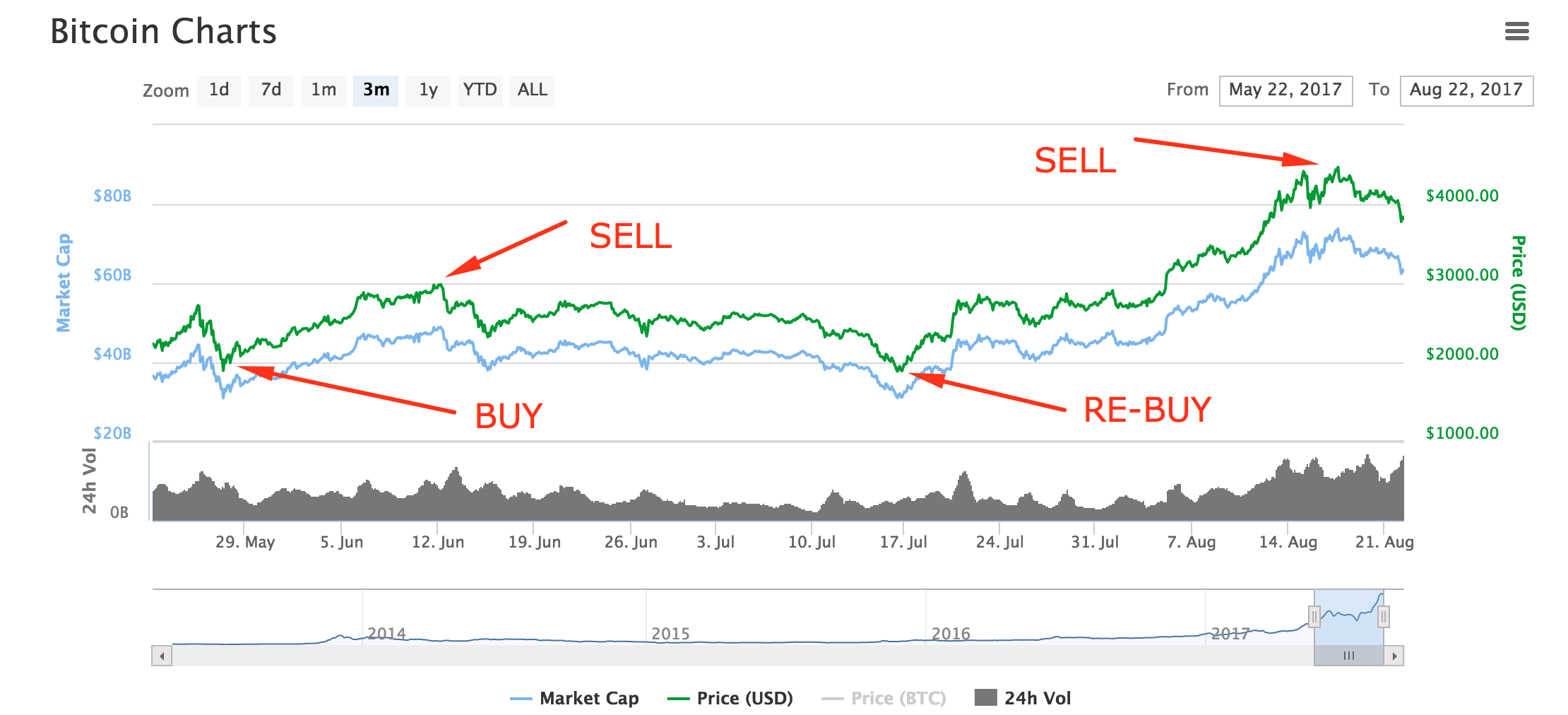
- Fear of Missing Out (FOMO): During parabolic rallies, the temptation to hold onto Bitcoin indefinitely, hoping for ever-increasing gains, can be overwhelming. This often leads to holding past opportune selling points, only to see profits evaporate during a correction. A disciplined exit strategy combats FOMO by predefining when you will take profits.
- Fear, Uncertainty, and Doubt (FUD): Conversely, during sharp pullbacks, FUD can trigger panic selling, leading investors to liquidate their holdings at a loss, often at the worst possible time (the bottom of a crash). Having a stop-loss or a clear understanding of your risk tolerance helps mitigate FUD-driven decisions.
The Dangers of Panic Selling
Panic selling is almost universally detrimental to long-term investment success. It’s an emotional response to sudden market downturns, driven by the desire to avoid further losses.
- Locking in Losses: Selling during a panic guarantees a loss, effectively turning a temporary market dip into a permanent financial setback.
- Missing Rebounds: Markets often rebound unpredictably. Those who panic sell frequently miss the subsequent recovery, only to buy back in later at higher prices, exacerbating their losses. Adherence to your pre-defined strategy—whether it’s holding, dollar-cost averaging, or utilizing stop-losses—is your best defense against panic.
Sticking to Your Plan
The most robust strategy is only as effective as your commitment to it. Once you’ve established your financial objectives, set your price targets, and defined your risk parameters, the crucial step is to stick to the plan.
- Discipline: Emotional discipline is the bedrock of successful investing. Resist the urge to deviate from your strategy based on sensational news, social media chatter, or short-term price movements.
- Review and Adapt: While sticking to the plan is vital, it doesn’t mean the plan is immutable. Periodically review your investment thesis and strategy in light of significant market shifts or changes in your personal financial situation. Adaptation, however, should be a conscious, rational process, not a knee-jerk reaction.
Practical Selling Strategies and Tax Considerations
Executing a sale requires not only strategic timing but also an understanding of practical methods and crucial tax implications.
Dollar-Cost Averaging Out
Just as dollar-cost averaging (DCA) is a popular strategy for accumulating assets, it can also be effectively applied when selling.
- Phased Selling: Instead of selling all your Bitcoin at once, you can decide to sell fixed amounts at regular intervals (e.g., every month) or as the price reaches certain predetermined levels. This strategy mitigates the risk of trying to “time the top” and ensures you realize profits consistently over time.
- Reduced Volatility Impact: By averaging out your selling price, you smooth out the impact of Bitcoin’s volatility, potentially capturing a better average selling price than a single, all-or-nothing transaction.
Partial Sales vs. Full Liquidation
Deciding how much to sell is as important as when.
- Taking Profits: Many investors opt for partial sales, especially after significant price appreciation. This allows them to de-risk by securing initial capital or a portion of their profits, while still retaining some exposure to Bitcoin’s future upside. For example, selling enough to cover your initial investment essentially makes the remaining holdings a “risk-free” position.
- Full Liquidation: Full liquidation might be appropriate if your investment thesis has completely changed, if you need the capital for a critical life event, or if you believe Bitcoin’s long-term prospects are severely diminished. This is a more drastic step and should be taken after careful consideration.
Understanding Capital Gains Tax
A frequently overlooked, yet extremely important, aspect of selling Bitcoin is the tax liability.
- Taxable Event: In many jurisdictions, selling Bitcoin for a profit (converting it to fiat currency or trading it for another cryptocurrency) is considered a taxable event, subject to capital gains tax.
- Short-Term vs. Long-Term: The tax rate often depends on how long you held the asset. Short-term capital gains (assets held for less than a year) are typically taxed at higher ordinary income rates, while long-term capital gains (assets held for over a year) often receive preferential lower rates.
- Record Keeping: Meticulous record-keeping of all your Bitcoin transactions (purchase price, sale price, dates, fees) is crucial for accurate tax reporting. Consulting with a tax professional specializing in cryptocurrency is highly recommended to understand your specific obligations and optimize your tax strategy.
The Long-Term Perspective and Re-evaluation
Investing is an ongoing journey, not a series of isolated events. The decision to sell Bitcoin today doesn’t preclude future involvement in the market.
Adapting to Evolving Market Conditions
The cryptocurrency landscape is characterized by rapid innovation and constant change. What was true for Bitcoin a year ago might not hold entirely true today.
- Technological Shifts: New technologies, protocols, or competitive assets could emerge that challenge Bitcoin’s dominance or offer superior solutions.
- Regulatory Evolution: The global regulatory framework for cryptocurrencies is still maturing and can shift significantly, impacting market sentiment and investment flows.
- Macroeconomic Environment: Changes in global interest rates, inflation outlooks, or geopolitical stability can alter Bitcoin’s appeal as a “digital gold” or a speculative asset. Remaining adaptable and willing to re-evaluate your thesis is a hallmark of a sophisticated investor.
Reviewing Your Investment Thesis
Periodically, perhaps annually or after significant market events, take the time to review the fundamental reasons you invested in Bitcoin in the first place.
- Has anything changed? Has Bitcoin’s role in the global financial system evolved? Are its network effects strengthening or weakening? Is its security model still robust?
- Is it still aligned with your goals? Has your personal financial situation changed? Do your long-term goals still align with holding Bitcoin? This critical self-assessment ensures your portfolio remains aligned with your overarching financial strategy.
The Importance of Continuous Learning
The world of finance, and especially cryptocurrency, is dynamic. Continuous learning is not just an advantage; it’s a necessity.
- Stay Informed: Keep up-to-date with industry news, technological advancements, macroeconomic trends, and regulatory developments. Read reputable analyses and diverse perspectives.
- Refine Your Strategy: As you gain more experience and knowledge, you can refine your selling strategies, making them more sophisticated and effective.
- Embrace Humility: No one can perfectly time the market. Acknowledge the inherent uncertainties and approach selling decisions with a blend of confidence in your strategy and humility regarding market unpredictability.
In conclusion, deciding when to sell Bitcoin is a multi-faceted decision that demands a clear strategy, disciplined execution, and a continuous learning mindset. By defining your financial objectives, understanding market signals, managing emotional biases, and navigating tax implications, you can approach the selling process with greater confidence and increase the likelihood of achieving your investment goals. Remember, the goal isn’t just to make money, but to keep it and grow it responsibly.
aViewFromTheCave is a participant in the Amazon Services LLC Associates Program, an affiliate advertising program designed to provide a means for sites to earn advertising fees by advertising and linking to Amazon.com. Amazon, the Amazon logo, AmazonSupply, and the AmazonSupply logo are trademarks of Amazon.com, Inc. or its affiliates. As an Amazon Associate we earn affiliate commissions from qualifying purchases.