
Retirement – for many, it’s a shimmering mirage on the distant horizon, a promise of freedom from the daily grind, a time to pursue passions, travel, or simply enjoy the fruits of a lifetime of labor. But moving from the aspiration of retirement to its tangible reality requires meticulous planning, a clear financial roadmap, and most importantly, an understanding of when you can truly afford to make that leap. This is where a “When to Retire Calculator” transforms from a simple digital tool into your indispensable co-pilot on the journey to financial independence.

It’s not merely about picking an arbitrary age like 65. Your ideal retirement age is a deeply personal metric, influenced by a unique constellation of factors ranging from your current savings and investment strategies to your desired lifestyle and health outlook in your later years. Ignoring these variables, or worse, delaying their consideration, can significantly impede your ability to achieve the comfortable, stress-free retirement you envision. By demystifying the complex interplay of these financial elements, a retirement calculator empowers you to take control, providing clarity and confidence in charting your personalized path to financial freedom.
The Imperative of Knowing Your Retirement Number
The concept of “retirement” itself has evolved dramatically. It’s no longer a one-size-fits-all phenomenon dictated by a specific age. Instead, it’s a highly individualized financial threshold, and understanding the precise moment you can cross it is paramount for successful long-term planning.
Beyond a Magic Age: Understanding the Variables
For decades, the age of 65 served as a default retirement benchmark, largely influenced by the establishment of Social Security and traditional pension plans. However, modern life, improved healthcare, and diverse career paths have rendered this arbitrary number largely obsolete as a universal target. Your actual retirement age will be a function of several critical variables:
- Desired Retirement Lifestyle: Do you dream of extensive international travel, expensive hobbies, or simply a quiet life at home? Your aspirations directly dictate your required income and, consequently, your “retirement number.”
- Current Savings and Investment Portfolio: The bedrock of your retirement plan. How much have you accumulated, and how aggressively is it invested?
- Annual Contributions: The consistency and amount you’re saving and investing each year play a pivotal role in accelerating your timeline.
- Expected Investment Returns: Realistic projections of how your investments will grow over time.
- Inflation Rate: The silent wealth killer. Ignoring inflation means underestimating future costs.
- Expected Retirement Expenses: This includes housing, utilities, food, transportation, healthcare (often a significant and underestimated cost), and discretionary spending.
- Other Income Sources: Social Security benefits, private pensions, rental income, or even part-time work in retirement.
Each of these factors dynamically interacts, meaning a change in one can profoundly impact another, and ultimately, your target retirement age.
The Cost of Delaying Your Retirement Planning
Procrastination is perhaps the most insidious enemy of retirement planning. The true cost of delaying isn’t just lost time; it’s the forfeiture of compounding interest, the eighth wonder of the world.
Imagine two individuals, both aiming for the same retirement goal. Person A starts saving $500 a month at age 25. Person B starts saving $500 a month at age 35. Assuming a modest 7% annual return, Person A will have accumulated significantly more by age 65, even though they contributed the same monthly amount. The extra decade of compounding for Person A means their money had more time to grow exponentially, often resulting in hundreds of thousands of dollars more without any additional effort.
Delaying also means:
- Missed Market Growth: Every year you’re not invested is a year your money isn’t participating in the market’s potential upside.
- Forfeited Tax Advantages: Missing out on years of tax-deferred or tax-free growth offered by retirement accounts like 401(k)s and IRAs.
- Increased Pressure Later: If you start late, you’ll need to save substantially more each month to catch up, putting a significant strain on your current budget and potentially compromising your present quality of life.
The “When to Retire Calculator” highlights these realities, serving as a powerful motivator to begin or intensify your savings efforts now.
Deconstructing the “When to Retire” Calculator
At its core, a retirement calculator is a sophisticated financial modeling tool. While different calculators may have varying levels of complexity and input fields, they all operate on fundamental principles to project your financial future.
Key Inputs: What Information Do You Need?
To leverage the calculator effectively, you must provide accurate and realistic data. Garbage in, garbage out, as the saying goes. Here are the essential pieces of information typically required:
- Your Current Age and Desired Retirement Age (Initial Guess): This sets the timeline for your savings journey.
- Current Retirement Savings: The total amount you’ve saved across all retirement accounts (401k, IRA, Roth IRA, taxable brokerage accounts earmarked for retirement).
- Annual Contributions: How much you (and your employer, if applicable) are contributing to your retirement accounts each year.
- Annual Retirement Expenses: An honest assessment of how much you anticipate spending annually in retirement. This can be a percentage of your current income (e.g., 70-80%) or a detailed budget.
- Inflation Rate: A realistic long-term average, often around 2-3%.
- Expected Rate of Return: Your anticipated annual growth rate on investments, often split into pre-retirement (while actively investing) and post-retirement (while withdrawing). Be conservative here.
- Social Security & Pension Estimates: Any guaranteed income sources. Social Security estimates can be obtained from the Social Security Administration.
Accuracy in these inputs is crucial. Overestimating returns or underestimating expenses can lead to a misleadingly optimistic retirement projection.
Core Calculations: How Does It Work Its Magic?
Behind the user-friendly interface, the calculator performs a series of complex financial calculations:
- Future Value of Savings: It projects the growth of your current savings and future contributions, factoring in your expected rate of return over your accumulation phase (up to your desired retirement age).
- Inflation Adjustment: It inflates your current desired retirement expenses to their future value, accounting for the erosion of purchasing power over time. A $50,000 annual expense today will require significantly more purchasing power 20-30 years from now.
- Income in Retirement: It adds in estimated Social Security, pension, or other guaranteed income sources.
- Withdrawal Strategy: It then simulates how long your accumulated savings (minus other income) will last, based on your inflated annual expenses and a safe withdrawal rate (often around 4% annually to preserve capital).
By running these projections, the calculator determines if your current trajectory will provide enough capital to sustain your desired lifestyle for your estimated retirement duration.
Interpreting the Outputs: What Do the Numbers Mean?
The calculator’s output is more than just a single age; it’s a dynamic picture of your financial future:
- Projected Retirement Age: This is the headline number – when, based on your inputs, you can afford to retire.
- Required Savings Goal: The total nest egg needed to support your projected expenses.
- Shortfall/Surplus: Many calculators will show if you’re on track to have too little (shortfall) or more than enough (surplus) to meet your goals.
- Impact of Variable Changes: The best calculators allow you to see how tweaking an input (e.g., saving an extra $100/month, retiring a year later) immediately affects your projected retirement age or savings goal.
It’s vital to remember that these are projections, not guarantees. Market volatility, unexpected life events, and changes in economic conditions can all influence actual outcomes. However, these projections provide invaluable guidance and a strong foundation for your financial planning.
Maximizing Your Calculator’s Potential: Strategies and Scenarios
A “When to Retire Calculator” is not a static tool; it’s a dynamic planning engine. Its true power lies in its ability to model various scenarios and adapt to your evolving financial landscape.
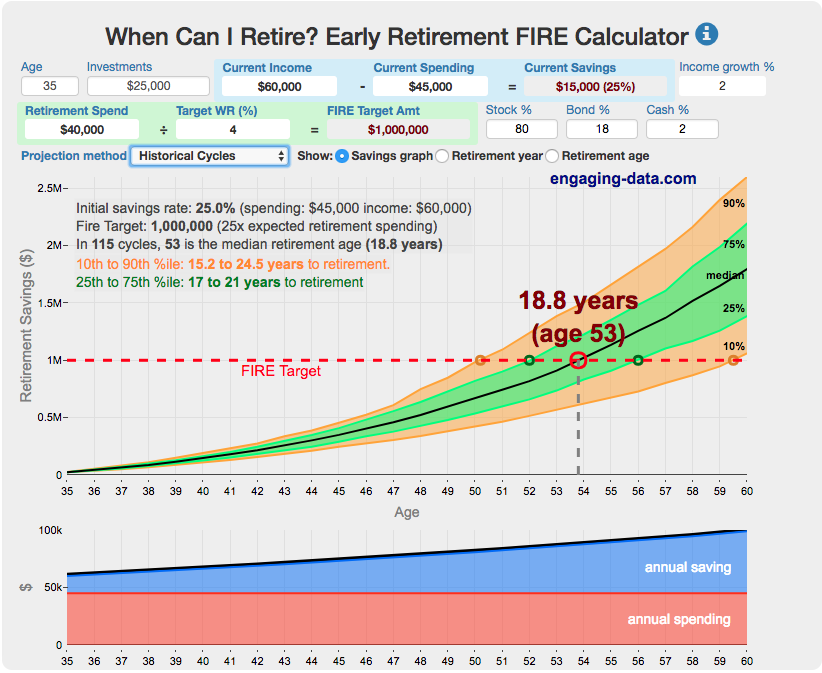
Stress-Testing Your Plan: What-If Scenarios
Don’t just plug in your numbers once and consider your plan complete. Engage with the calculator by running “what-if” scenarios:
- “What if I save an extra $100 per month?” See how a small, consistent increase in savings can shave years off your retirement timeline.
- “What if my investment returns are lower than expected?” This helps you understand the impact of market downturns and build a more conservative, resilient plan.
- “What if I decide to retire a few years earlier or later?” Evaluate the financial implications of adjusting your target retirement age.
- “What if I reduce my estimated retirement expenses by 10%?” Understanding how lifestyle adjustments can affect your financial needs.
- “What if I have to stop working for a period?” Simulating a temporary income loss can highlight the need for an emergency fund.
By stress-testing your plan, you gain a deeper understanding of its vulnerabilities and discover actionable strategies to strengthen it.
Integrating Other Financial Tools and Advice
While powerful, a retirement calculator is just one piece of your financial puzzle. For a holistic view, integrate it with other essential tools:
- Budgeting Apps: To track current spending and identify areas for increased savings contributions.
- Investment Trackers: To monitor your portfolio’s performance against your projected returns.
- Estate Planning Resources: To ensure your assets are distributed according to your wishes.
Crucially, recognize when professional guidance is needed. A qualified financial advisor can provide personalized insights, help you navigate complex tax strategies, evaluate different investment vehicles, and build a comprehensive financial plan that goes beyond the calculator’s scope, especially in cases of significant wealth, business ownership, or unique family situations. They can also help you interpret the calculator’s outputs in the context of your overall financial picture.
The Power of Regular Review and Adjustment
Life is unpredictable, and your retirement plan should be agile enough to adapt. Financial circumstances change, market conditions fluctuate, and your personal goals may evolve.
- Life Events: Marriage, children, job loss, career changes, inheritances, or unexpected health issues all necessitate a review of your retirement plan.
- Market Performance: Significant bull or bear markets will impact your portfolio’s value, requiring adjustments to contributions or projected retirement dates.
- Evolving Goals: Perhaps your dream retirement lifestyle changes, or you discover a new passion that requires different funding.
Make it a habit to revisit your retirement calculator at least annually, or whenever a major life event occurs. This ensures your plan remains relevant, realistic, and on track.
Common Pitfalls and How to Avoid Them
Even with the best tools, certain common oversights can derail your retirement plans. Awareness is the first step to avoidance.
Overlooking Inflation and Healthcare Costs
These are arguably the two biggest elephants in the retirement planning room:
- Inflation: The insidious erosion of purchasing power. A basket of goods costing $100 today might cost $200 in 20-25 years. Failing to account for inflation means your projected retirement income will feel much smaller in real terms. Always use an inflation-adjusted figure for your future retirement expenses in the calculator.
- Healthcare Costs: Medicare covers a significant portion of healthcare for those 65+, but it doesn’t cover everything (e.g., dental, vision, hearing aids, long-term care). Out-of-pocket expenses, supplemental insurance, and long-term care insurance can be substantial. Many retirees underestimate these costs, leading to unexpected financial strain. Factor in a dedicated budget for healthcare or consider specific savings vehicles like Health Savings Accounts (HSAs) if eligible.
Underestimating Longevity
Thanks to medical advancements and healthier lifestyles, people are living longer than ever before. Planning for a 20-year retirement might be insufficient if you live into your late 90s or even 100s. The fear of outliving your money is real. When using the calculator, consider pushing your “end of funds” age to 95 or even 100 to build in a comfortable buffer. This might mean adjusting your target retirement age or increasing your savings, but it provides greater peace of mind.
The Dangers of “Set It and Forget It”
While automation is excellent for consistent savings, “setting and forgetting” your entire retirement plan can be detrimental. Financial markets are volatile, personal circumstances change, and tax laws evolve.
- Market Volatility: Your investment portfolio will experience ups and downs. Ignoring it means you might miss opportunities to rebalance or de-risk as you approach retirement.
- Changing Needs: What you envisioned for retirement at 30 might be entirely different at 50.
- Tax Law Changes: Tax advantages for certain retirement accounts can change, affecting your overall strategy.
Regular engagement with your financial plan, using the retirement calculator as a central component, is key to staying proactive and responsive.
Beyond the Numbers: Crafting Your Ideal Retirement Life
Ultimately, a “When to Retire Calculator” is a means to an end. The numbers it provides are tools to help you sculpt the retirement you truly desire, not just a financial outcome.
Defining Your Retirement Vision
Before you even touch a calculator, spend time envisioning your ideal retirement. What does it look like, feel like, and how do you spend your days?
- Will you travel extensively, volunteer, pursue neglected hobbies, or start a passion project?
- Do you plan to downsize, relocate, or stay in your current home?
- How often will you visit family or friends?
Your vision directly informs your financial requirements. A calculator can tell you when you can retire, but your vision tells you what you’re retiring to. This qualitative aspect is just as crucial as the quantitative data.
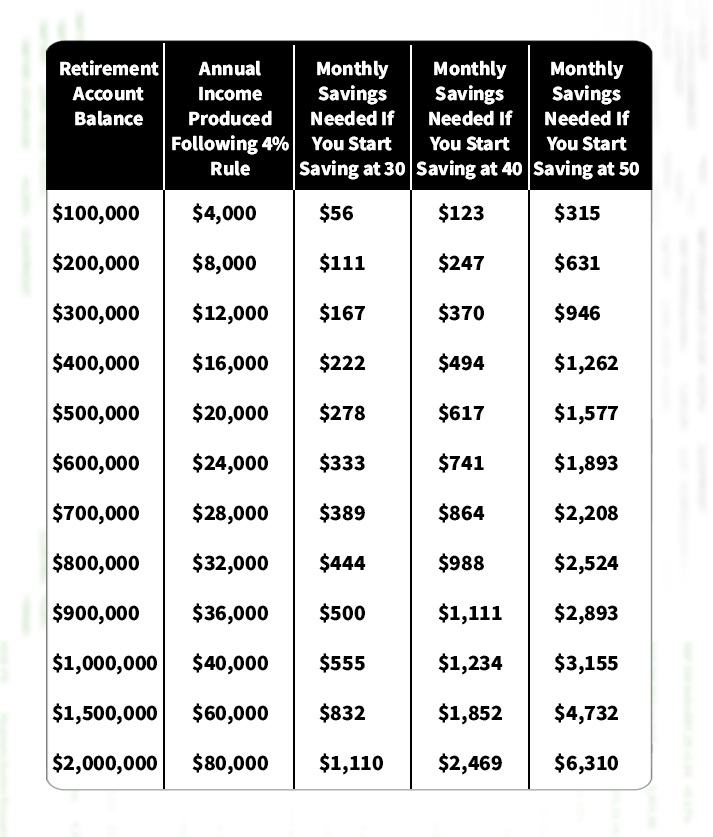
The Continuous Journey of Financial Preparedness
Retirement planning is not a one-time event; it’s a continuous journey. From your first paycheck to your last day on the job and throughout retirement itself, you’ll be managing your financial resources. The “When to Retire Calculator” is your ever-present companion, helping you reassess, refine, and remain confident in your financial trajectory. It empowers you to make informed decisions, adjust your sails when the winds change, and ultimately, navigate your way to a secure and fulfilling retirement. Take control of your financial future today – your future self will thank you.
aViewFromTheCave is a participant in the Amazon Services LLC Associates Program, an affiliate advertising program designed to provide a means for sites to earn advertising fees by advertising and linking to Amazon.com. Amazon, the Amazon logo, AmazonSupply, and the AmazonSupply logo are trademarks of Amazon.com, Inc. or its affiliates. As an Amazon Associate we earn affiliate commissions from qualifying purchases.