
The prospect of receiving a tax refund is often a welcome financial boost, offering an opportunity to pay down debt, save for a goal, or make a significant purchase. As we look ahead to the 2025 tax season, which pertains to income earned in the 2024 calendar year, understanding the timeline for when you can expect your refund is crucial for effective personal financial planning. While specific dates can shift slightly each year, the general framework and factors influencing refund delivery remain consistent.
Understanding the Tax Filing Season for 2024 Returns
The 2025 tax filing season officially begins when the Internal Revenue Service (IRS) starts accepting and processing tax returns for the previous tax year (2024). Historically, this opening date falls in late January. For instance, the 2024 tax season (for 2023 returns) opened on January 29, 2024. It is highly probable that the 2025 season will commence around the same time, typically the last week of January.

Key Dates and Deadlines
While the refund timeline is a primary concern, it’s essential to keep the broader filing deadlines in mind. The primary tax deadline for most individual taxpayers to file their 2024 federal income tax returns and pay any taxes due will likely be April 15, 2025. If this date falls on a weekend or holiday, the deadline is typically pushed to the next business day. Some states also have their own income tax deadlines, which often align with the federal date but can sometimes differ.
For those who need more time, an extension can be filed, pushing the filing deadline to October 15, 2025. However, filing an extension only grants more time to file your return, not to pay any taxes owed. Interest and penalties may still apply to unpaid taxes after the April deadline. It’s important to remember that filing an extension does not impact when you might receive a refund; you must still file your return to trigger the refund process.
The IRS Processing Timeline
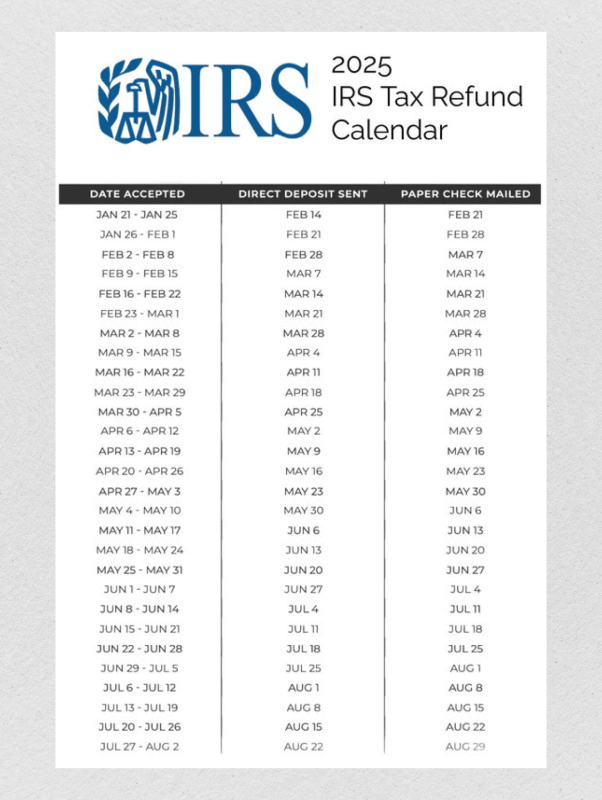
The IRS aims to process most electronically filed returns and issue refunds within 21 calendar days. This 21-day timeframe is a common benchmark the IRS provides and is generally accurate for the vast majority of taxpayers who file electronically and opt for direct deposit. However, this is an estimate, not a guarantee, and several variables can affect the actual wait time.
Paper returns take significantly longer to process. While e-filed returns are processed digitally from the start, paper returns require manual input and review, which can extend the processing time to six weeks or even longer, especially during peak filing periods or if there are errors that require correspondence.
Factors Influencing Your Refund Timeline
While the 21-day benchmark serves as a general guideline, various factors can either expedite or delay the arrival of your tax refund. Understanding these can help you set realistic expectations for the 2025 tax season.
E-Filing vs. Paper Filing
This is perhaps the most significant factor in refund speed.
- E-filing: Electronically submitting your tax return is by far the fastest method. It reduces the chance of manual errors, allows for quicker data validation by the IRS, and integrates seamlessly with their processing systems. The 21-day expectation primarily applies to e-filed returns.
- Paper filing: Submitting a physical tax return through mail drastically slows down the process. The IRS needs to physically receive, open, and manually input the data from these returns. This can add several weeks to the processing time, easily pushing refund expectations beyond six weeks, particularly during the high-volume weeks of February and March.
Direct Deposit vs. Mailed Check
Once your refund is processed, the method by which you receive it also impacts the timing.
- Direct Deposit: This is the quickest and most secure way to receive your refund. Funds are electronically transferred directly into your bank account. Once the IRS issues the refund, it typically arrives in your account within a few business days. This is highly recommended for speed and security.
- Mailed Check: Opting for a paper check can add an additional week or more to your refund timeline, as it depends on postal service delivery. There’s also a higher risk of the check being lost, stolen, or damaged in transit, leading to further delays if you need to request a replacement.
Return Complexity and Review Triggers
Simple returns with straightforward income and deductions are processed much faster. However, certain aspects can flag a return for manual review, thereby extending the processing time.
- Errors or Inconsistencies: Any discrepancies between the information on your return and what the IRS has on file (e.g., W-2s, 1099s) can trigger a review. Even minor mathematical errors can cause delays.
- Identity Verification: If the IRS suspects identity theft or needs to verify your identity, they may send a letter requesting additional information, which will halt processing until verified.
- Claiming Specific Credits: Returns claiming the Earned Income Tax Credit (EITC) or the Additional Child Tax Credit (ACTC) are subject to specific processing rules under the Protecting Americans from Tax Hikes (PATH) Act. By law, the IRS cannot issue refunds for returns claiming these credits before mid-February. This is designed to give the IRS more time to detect and prevent fraud, even for e-filed returns. This means if you claim EITC or ACTC, the earliest you might see your refund is typically the first week of March, regardless of when you filed in January.
- Amended Returns: Filing an amended return (Form 1040-X) to correct a previously filed return significantly extends the processing time, often taking 16 weeks or longer.
Tax Debt or Other Obligations
If you owe money to the IRS, or if you have certain other federal or state debts (such as defaulted student loans, child support, or state income tax debt), your refund may be offset. This means part or all of your refund will be used to pay off these debts before any remaining balance is issued to you. The offset process can also add a slight delay to the refund timeline, and you will receive a notice explaining the offset.
How to Track Your Refund Status
Once you’ve filed your return, you don’t have to wait passively. The IRS provides tools to help you monitor the status of your federal refund.
Using the “Where’s My Refund?” Tool
The primary tool for tracking your federal refund is the IRS’s “Where’s My Refund?” online tool.
- Availability: You can typically check your refund status within 24 hours after e-filing (or 3-4 days after e-filing if you filed through a tax preparer) or four weeks after mailing a paper return.
- Information Needed: To use the tool, you will need your Social Security Number or ITIN, your filing status (Single, Married Filing Jointly, etc.), and the exact whole dollar amount of your expected refund.
- Status Updates: The tool provides three stages:
- Return Received: The IRS has received your return.
- Refund Approved: The IRS has processed your return and approved your refund amount.
- Refund Sent: The refund has been sent to your bank via direct deposit or as a paper check.
The “Where’s My Refund?” tool is updated once every 24 hours, usually overnight, so there’s no need to check multiple times a day. If you don’t receive your refund within 21 days (for e-filers) or 6 weeks (for paper filers) and the tool doesn’t provide a clear explanation, you might consider contacting the IRS directly, though phone lines can be very busy during tax season.
State Tax Refunds
If you live in a state with income tax, you’ll likely have a separate refund to track. Most state tax agencies offer similar “Where’s My Refund?” tools on their official websites. You’ll need similar information (SSN, refund amount, filing status) to check your state refund status. State refund processing times can vary widely, but they generally follow a similar pattern to federal refunds, with e-filing and direct deposit being the fastest methods.
Proactive Steps for a Smooth 2025 Tax Season
Taking a few preparatory steps can significantly contribute to a faster refund and a less stressful tax season overall.
Gather Documentation Early
Start collecting all necessary tax documents as soon as they become available. This includes:
- W-2s from employers
- 1099 forms (1099-MISC, 1099-NEC, 1099-INT, 1099-DIV, etc.) for contract work, interest, and dividends
- 1098 forms for mortgage interest or student loan interest
- Forms related to health insurance (e.g., Form 1095-A for marketplace coverage)
- Records of deductible expenses (e.g., charitable contributions, medical expenses)
- Any other income statements or relevant financial records.
Having everything organized before you begin will help prevent errors and allow for a quicker filing process.
Verify Personal Information
Before filing, double-check all personal information, including your Social Security Number (SSN), your dependent’s SSNs, and your bank account details for direct deposit. Even a single incorrect digit can lead to delays or the refund being sent to the wrong account, necessitating a lengthy correction process. Ensure your current address is on file with the IRS.
Choose a Reliable Tax Preparer or Software
Whether you use tax preparation software or a professional tax preparer, select a reputable option. High-quality software guides you through the process, minimizing errors, and ensures electronic filing is done correctly. A professional preparer can offer expert advice, ensure accuracy, and handle the e-filing process on your behalf, significantly speeding up the initial submission.

Adjust Withholding for Next Year
If you consistently receive a large refund, it means you’re overpaying taxes throughout the year, essentially giving the government an interest-free loan. While a refund feels good, it might indicate poor cash flow management. Conversely, if you consistently owe taxes, you might be under-withholding. Consider adjusting your W-4 with your employer or making estimated tax payments to better match your tax liability, aiming for a smaller refund or a minimal balance due. The IRS Tax Withholding Estimator tool can help you determine the appropriate withholding.
By being informed and proactive, taxpayers can navigate the 2025 tax season with confidence, ensuring they understand when to expect their tax return and taking steps to secure it promptly.
aViewFromTheCave is a participant in the Amazon Services LLC Associates Program, an affiliate advertising program designed to provide a means for sites to earn advertising fees by advertising and linking to Amazon.com. Amazon, the Amazon logo, AmazonSupply, and the AmazonSupply logo are trademarks of Amazon.com, Inc. or its affiliates. As an Amazon Associate we earn affiliate commissions from qualifying purchases.