
The year 2003 is often remembered for the launch of iTunes or the rise of social networking precursors, but in a small office in San Carlos, California, a different kind of technological disruption was taking shape. When Tesla Motors was founded on July 1, 2003, it wasn’t just the birth of a new car company; it was the inception of the “software-defined vehicle.” Founded by engineers Martin Eberhard and Marc Tarpenning, Tesla was built on a premise that the automotive industry had ignored for a century: that electricity, combined with sophisticated computing, could outperform the internal combustion engine.
The Silicon Valley Roots: A Tech-First Approach to Automotive Engineering
Unlike the legacy automakers of Detroit or Stuttgart, Tesla’s founders did not come from a background of pistons and transmissions. Their expertise lay in digital storage and mobile computing. This fundamental difference in DNA is why the founding of Tesla is a tech story rather than a traditional manufacturing story.
Eberhard, Tarpenning, and the Search for Efficiency
Eberhard and Tarpenning were interested in the energy efficiency of battery technology following their success with the NuvoMedia Rocket eBook. They realized that the energy density of lithium-ion batteries—the same tech powering laptops and early smartphones—was improving at a rate that would soon make long-range electric vehicles (EVs) viable. By founding Tesla, they aimed to prove that an electric powertrain was not a compromise but a technological upgrade.
Breaking the Internal Combustion Engine (ICE) Paradigm
At its founding, the tech world viewed cars as “dumb” hardware. Tesla’s vision was to treat the car as a high-performance computer. While traditional cars used hundreds of independent Electronic Control Units (ECUs) from various third-party suppliers, Tesla’s founders envisioned a centralized architecture. This allowed for a level of integration between the battery, the motor, and the user interface that had never been seen before, effectively turning the vehicle into a sophisticated node within the Internet of Things (IoT).
The Technological Breakthroughs of the Roadster Era
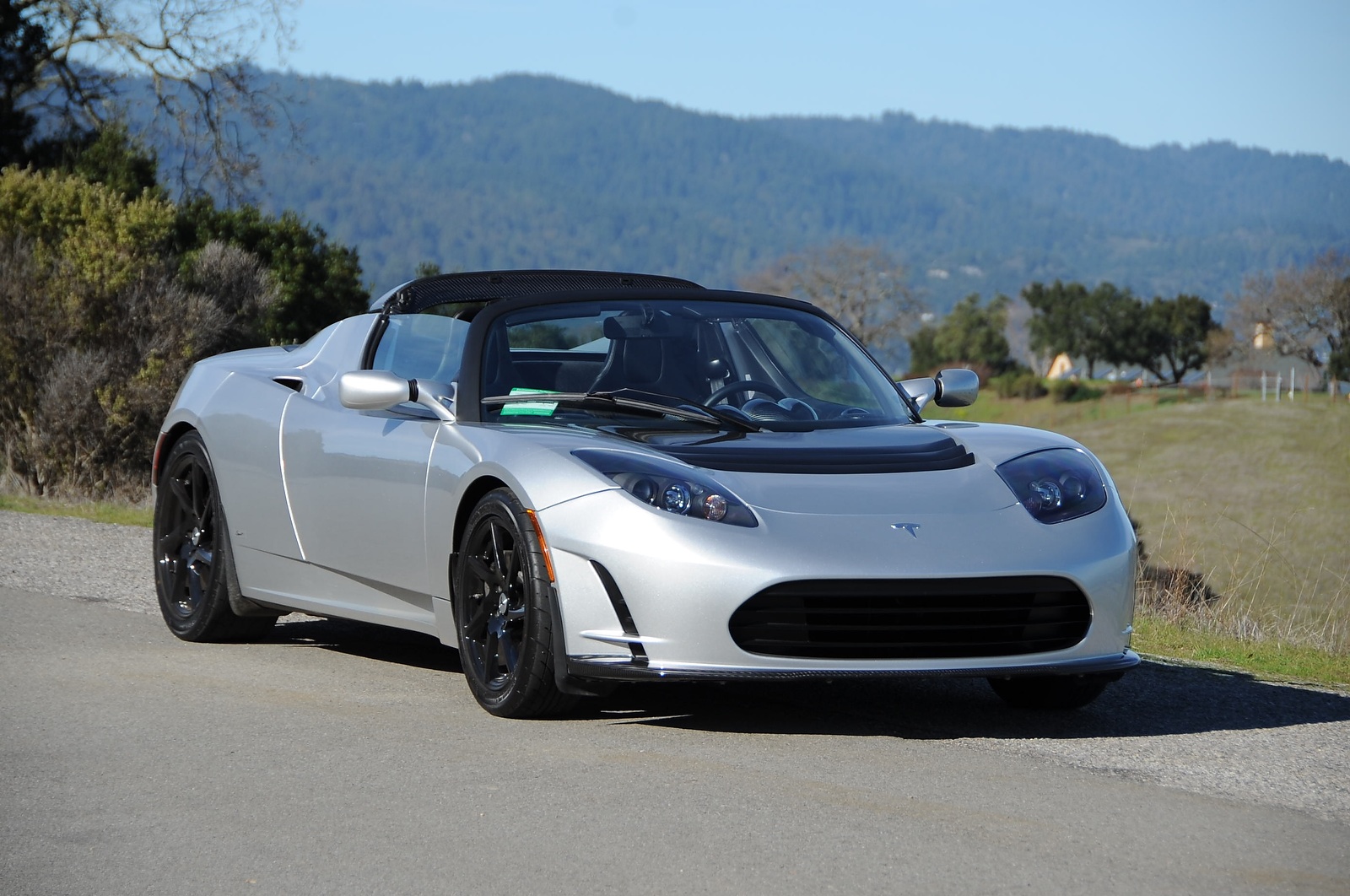
When the first prototype of the Tesla Roadster was unveiled, it was a proof of concept for several high-tech innovations that are now industry standards. The engineering challenges faced between 2003 and 2008 required Tesla to reinvent the fundamental components of a vehicle.
Lithium-Ion Battery Integration: A Risky Gamble
Before Tesla, the idea of using thousands of small, cylindrical lithium-ion cells (the 18650 format) to power a car was considered absurdly dangerous and complex. Tesla’s engineering team had to develop advanced thermal management systems and power electronics to prevent “thermal runaway.” This liquid-cooling tech became the foundational patent for Tesla’s future success, allowing for high power output without melting the battery pack.
AC Propulsion Roots and the Tzero Influence
The tech that allowed Tesla to move from a concept to a functioning car was heavily influenced by AC Propulsion’s Tzero. However, Tesla’s engineers digitized the entire control system. They replaced analog power delivery with digital signal processing, allowing the car to modulate torque at the millisecond level. This provided traction control and performance metrics that surpassed the mechanical limitations of traditional gasoline engines.
Software-Defined Vehicles: The True Innovation
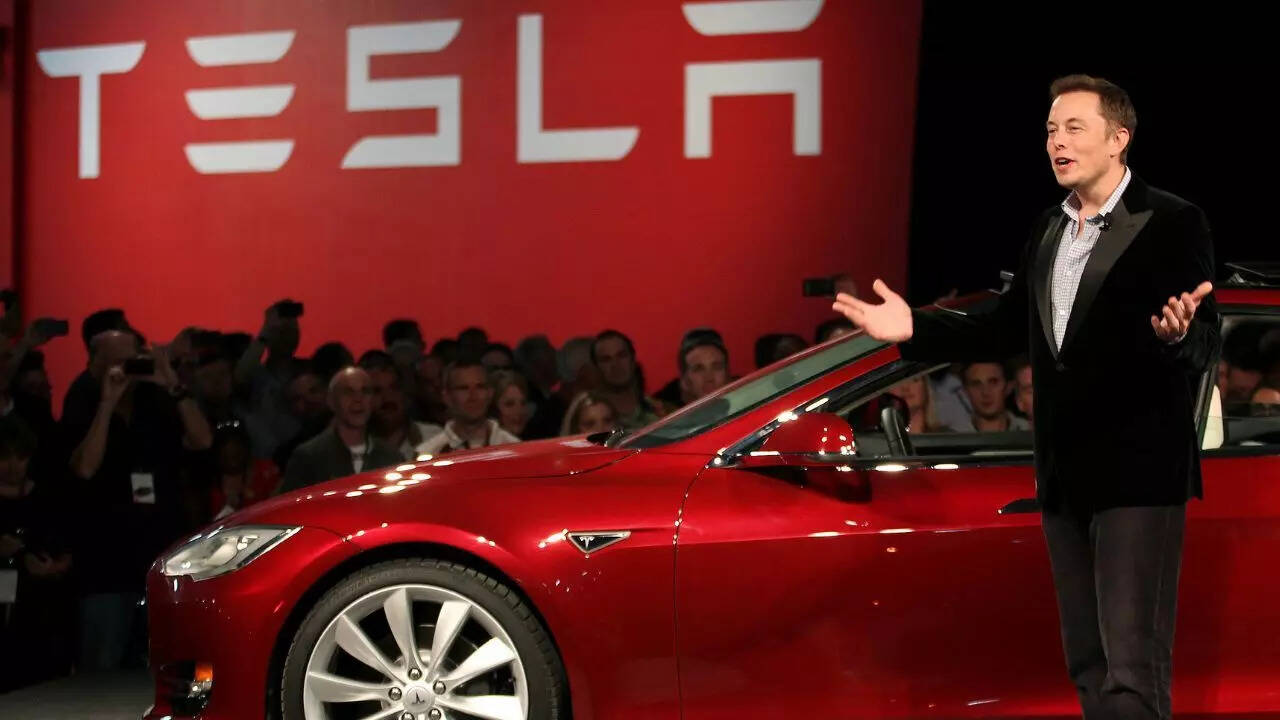
If you look at when Tesla was founded, the most significant shift it brought to the tech landscape was the concept of the “Software-Defined Vehicle” (SDV). This moved the value of the car from the mechanical hardware to the lines of code running it.
Over-the-Air (OTA) Updates and the “App on Wheels” Concept
Perhaps Tesla’s greatest contribution to modern tech trends is the Over-the-Air (OTA) update. Just as a smartphone receives updates to improve performance or add features, Tesla designed its cars to be upgraded remotely. This was a radical departure from the “model year” hardware cycle. By treating the vehicle’s firmware as a living software stack, Tesla could fix braking distances, increase range, or add infotainment features via a Wi-Fi connection, fundamentally changing the lifecycle of a gadget-on-wheels.
The Centralized Compute Architecture
Tesla’s tech stack is built on a “single pane of glass” philosophy. Instead of the fragmented computer modules found in traditional cars, Tesla developed its own integrated operating system. This centralized compute architecture allows the different parts of the car to communicate instantaneously. For example, if the sensors detect a skid, the software can adjust the motor’s torque and the braking system simultaneously through a unified logic board, rather than waiting for disparate systems to sync.
Scaling the Future through AI and Automation
As Tesla evolved from a startup to a tech giant, its focus shifted from simple electrification to the cutting edge of Artificial Intelligence (AI) and robotics. The foundation laid in 2003 paved the way for the company to become one of the world’s largest AI firms.
From Autopilot to Full Self-Driving (FSD)
Tesla’s approach to autonomous driving is a masterclass in AI training. By utilizing millions of vehicles as data collectors, Tesla creates a “shadow mode” feedback loop. The cars’ onboard computers (developed in-house, such as the FSD Chip) process visual data using neural networks. This vision-based AI system attempts to mimic human neural processing, relying on cameras rather than the LiDAR sensors used by competitors. This focus on “Vision-Only” tech represents one of the most ambitious real-world applications of computer vision in history.
The “Machine that Builds the Machine”: Giga-factories and Robotics
The founding of Tesla eventually led to the realization that manufacturing itself is a software problem. The “Gigafactory” concept treats a factory as a giant integrated circuit. Tesla’s use of high-pressure die casting (Giga-press) and massive-scale industrial robotics reduces the “part count” of a car, much like how an integrated circuit reduces the need for individual wires on a motherboard. This move toward extreme automation is an extension of the Silicon Valley ethos: optimize the hardware through better software logic.
The Lasting Legacy of the 2003 Inception
Reflecting on when Tesla was founded reveals how a single company can force an entire global industry to undergo a digital transformation. Tesla did not just change how we drive; it changed how we think about energy and connectivity.
Establishing the Supercharger Network as a Tech Standard
One cannot discuss Tesla’s tech without mentioning the Supercharger network. By developing a proprietary communication protocol between the charger and the car, Tesla solved the “handshake” problem of early EVs. The Supercharger network is a distributed cloud system for energy, utilizing real-time data to manage load balancing and peak shaving. In a historic move for the tech industry, Tesla’s North American Charging Standard (NACS) has recently become the de facto hardware standard for the entire continent.

The Open-Source Patent Pledge and Industry Disruption
In 2014, Tesla took a page out of the open-source software handbook by announcing that it would not initiate patent lawsuits against anyone who, in good faith, wanted to use its technology. This was an unprecedented move in the automotive world but common in the tech world. By open-sourcing its patents, Tesla aimed to accelerate the global transition to sustainable energy, effectively acting as a platform provider (similar to Android or Linux) for the EV revolution.
The founding of Tesla in 2003 marked the moment the automotive industry was forced to reconcile with the digital age. By prioritizing battery chemistry, software integration, and AI, Tesla transitioned the car from a mechanical tool to a sophisticated piece of hardware that lives and breathes in the digital ecosystem. Today, every “smart” feature in a modern vehicle—from touchscreen interfaces to autonomous assistance—can trace its lineage back to that pivotal moment in Silicon Valley when two engineers decided that the future of transport was electric.
aViewFromTheCave is a participant in the Amazon Services LLC Associates Program, an affiliate advertising program designed to provide a means for sites to earn advertising fees by advertising and linking to Amazon.com. Amazon, the Amazon logo, AmazonSupply, and the AmazonSupply logo are trademarks of Amazon.com, Inc. or its affiliates. As an Amazon Associate we earn affiliate commissions from qualifying purchases.