
For the modern investor, the stock market can often feel like a living, breathing entity that never sleeps. In an age of digital transformation and global connectivity, the ability to check a portfolio or execute a trade is often just a smartphone tap away. However, despite the seamless nature of digital finance, the world’s major stock exchanges operate within a strictly defined temporal framework. Understanding when the stock market is closed—and more importantly, why those closures exist and how they affect your capital—is a fundamental pillar of professional financial management.
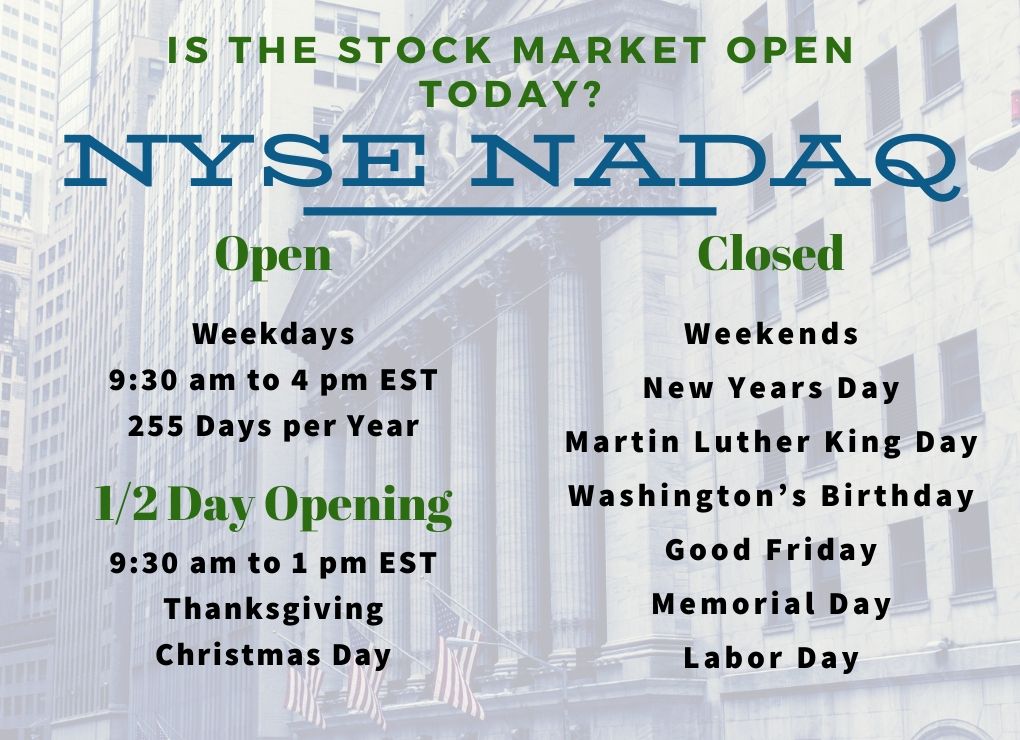
The schedule of the stock market is not merely a bureaucratic formality; it is a mechanism designed to ensure liquidity, maintain stability, and provide a level playing field for both institutional and retail participants. This guide delves into the intricacies of market hours, holiday schedules, and the strategic implications of the “closed” sign on the door of the New York Stock Exchange (NYSE) and the NASDAQ.
Understanding Standard Trading Hours and the Regulatory Framework
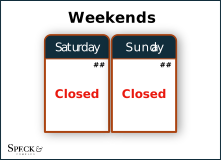
To navigate the financial world effectively, one must first master the standard operating hours of the major U.S. exchanges. For the NYSE and the NASDAQ, the “Core Trading Session” runs from 9:30 AM to 4:00 PM Eastern Time (ET), Monday through Friday. While these hours seem straightforward, they represent a carefully balanced window that maximizes participant interaction.
The New York Stock Exchange (NYSE) and NASDAQ Schedule
The 9:30 AM opening bell is more than just a tradition; it signals the start of the “opening auction,” a process where buy and sell orders that accumulated overnight are matched to find a fair starting price. Similarly, the 4:00 PM closing bell triggers the “closing auction,” which is often the period of highest volume in the entire trading day. For retail investors, executing trades within these hours ensures the tightest “bid-ask spreads,” meaning you are likely to get a price very close to the market average.
Why the Market Closes: Price Discovery and Overnight Stability
In a world of 24/7 crypto trading, beginners often ask: Why does the stock market close at all? The primary reason is “price discovery.” By having defined periods of rest, the market allows for the digestion of news and corporate earnings. If the market were open 24/7, extreme volatility would be constant, as prices would react instantly to every minor news headline at 3:00 AM. Closures provide a cooling-off period, allowing investors to analyze data and make rational decisions rather than emotional ones.
Time Zones and Global Synchronization
While the U.S. markets operate on Eastern Time, their influence is global. For a trader in Los Angeles, the market opens at 6:30 AM; for a professional in London, it opens at 2:30 PM. This synchronization means that the “close” in New York often dictates the opening sentiment for Asian markets the following morning. Understanding this ripple effect is crucial for anyone managing a diversified international portfolio.
Market Holidays: Planning Your Financial Calendar
Just as banks and government offices observe specific breaks, the stock market follows a rigorous holiday schedule. When the market is closed for a holiday, all trading activity on the major exchanges ceases, and settlement cycles (the time it takes for cash to move after a sale) are extended.
Federal Holidays vs. Exchange Holidays
The U.S. stock market generally follows the federal holiday calendar, but with notable exceptions. The exchanges are closed for:
- New Year’s Day
- Martin Luther King, Jr. Day
- Presidents’ Day
- Good Friday (Notably, this is not a federal holiday, but the markets are closed)
- Memorial Day
- Juneteenth National Independence Day
- Independence Day (July 4th)
- Labor Day
- Thanksgiving Day
- Christmas Day
Early Closures and the “Half-Day” Phenomenon
In addition to full-day closures, the market occasionally operates on an abbreviated schedule. Traditionally, the day after Thanksgiving (Black Friday) and Christmas Eve (if it falls on a weekday) see the market close early at 1:00 PM ET. These half-days are characterized by “thin” trading volume. While the market is technically open, many institutional traders are away, which can lead to erratic price movements if a major news event occurs.
How Holidays Impact Market Volatility
The days leading up to and immediately following a market closure often exhibit unique patterns. The “holiday effect” suggests that markets frequently see a slight bullish push before a long weekend as investors square their positions. Conversely, the first day back from a long closure can be highly volatile as the market “prices in” all the news that occurred while the exchanges were dark.
Beyond the Bell: Pre-Market and After-Hours Trading
While the core hours are 9:30 AM to 4:00 PM, the market isn’t truly “closed” in the absolute sense for many participants. Extended-hours trading allows for the buying and selling of securities outside the standard window.
The Mechanics of Extended Hours Trading (EHT)
Pre-market trading typically occurs from 4:00 AM to 9:30 AM ET, while after-hours trading runs from 4:00 PM to 8:00 PM ET. These sessions are conducted through Electronic Communication Networks (ECNs), which automatically match buy and sell orders. Most major brokerage platforms now allow retail investors to participate in these sessions, though they often require the acknowledgment of specific risk disclosures.
Risks and Rewards of Trading When the Floor is Closed
The primary draw of after-hours trading is the ability to react immediately to corporate earnings reports, which are almost always released after 4:00 PM. However, the risks are significant:
- Lower Liquidity: Fewer people are trading, making it harder to enter or exit a position without moving the price.
- Wider Spreads: The difference between the buy and sell price can be massive, leading to “slippage” where you pay much more than intended.
- Increased Volatility: Small trades can cause large percentage swings in a stock’s price.
The Role of Electronic Communication Networks (ECNs)
ECNs have revolutionized the concept of market closures. In the past, the “close” meant the end of all possibility for trade. Today, ECNs ensure that the market is functionally active for nearly 16 hours a day. For the disciplined investor, these hours are best used for observation rather than aggressive action, as the “true” price of a stock is usually not confirmed until the standard market opens the next day.
Global Market Sessions: A 24-Hour Cycle
Even when the U.S. stock market is closed for the night, the global financial engine continues to churn. For a sophisticated investor, the “close” of the NYSE is simply the hand-off to another region.
The Impact of European and Asian Market Hours
The financial day effectively begins in Tokyo and Hong Kong, moves to London and Frankfurt, and then crosses the Atlantic to New York. If the Nikkei 225 in Japan drops significantly while you are sleeping in New York, U.S. stock futures will likely be trading lower before the 9:30 AM open. Monitoring the London Stock Exchange (LSE) is particularly useful, as it overlaps with the U.S. pre-market, often providing a preview of how the American session will behave.
Navigating Futures and Forex Markets
If you find the standard market closures too restrictive, the Futures and Forex (Foreign Exchange) markets offer a different rhythm. U.S. Stock Futures (like the S&P 500 E-minis) trade nearly 24 hours a day during the work week, closing only briefly in the evening. This allows investors to hedge their positions or speculate on news that breaks at 2:00 AM. However, these instruments require a higher level of expertise and margin management.
How International Overlap Affects US Stocks
The “Golden Hour” of trading is generally considered to be the period between 9:30 AM and 11:30 AM ET, when both the U.S. and European markets are open simultaneously. This is when liquidity is at its peak. Once the European markets close (typically around 11:30 AM ET), the U.S. market often enters a “midday doldrum” where volume drops and price action slows until the final hour of the U.S. session.
Strategic Considerations for Different Types of Investors
Knowing when the market is closed is one thing; knowing how to use that time effectively is what separates the amateur from the professional.
Long-Term Investors vs. Day Traders: Does the Clock Matter?
For a long-term “buy and hold” investor, the daily closing bell is largely irrelevant. In fact, checking the market during open hours can often lead to emotional over-reactions to temporary fluctuations. For these investors, the market being closed is a healthy boundary that prevents impulsive trading. For day traders and swing traders, however, the close is a hard deadline. Failing to exit a leveraged position before the 4:00 PM bell can result in “overnight risk,” where a stock gaps down significantly before the next morning’s open.
Setting Limit Orders During Market Downtime
The period when the market is closed is the best time for calm, rational research. Most brokerage platforms allow you to place “Limit Orders” while the market is closed. A limit order tells the system: “When the market opens, buy this stock only if the price is X or lower.” This is a superior strategy to “Market Orders,” which execute at whatever the price happens to be at 9:30 AM, often catching the most volatile and unfavorable price of the day.
Managing Psychological Stress and Avoiding “Over-Trading”
The “always-on” nature of financial news can lead to a state of constant anxiety. Recognizing the market close as a period for mental recovery is vital for long-term success. Successful investing requires a clear mind. Use the weekends and evenings—when the stock market is closed—to step back from the ticker tape, review your overarching financial goals, and ensure your strategy is aligned with your risk tolerance, rather than the noise of the daily session.
In conclusion, while the physical and digital doors of the stock exchange may close at 4:00 PM, the work of a successful investor is continuous. By understanding the regulatory hours, the holiday calendar, and the mechanics of extended trading, you can turn the “market closed” sign from a limitation into a strategic advantage. Time is the most valuable asset in finance; knowing how to respect the market’s clock is the first step in mastering it.
aViewFromTheCave is a participant in the Amazon Services LLC Associates Program, an affiliate advertising program designed to provide a means for sites to earn advertising fees by advertising and linking to Amazon.com. Amazon, the Amazon logo, AmazonSupply, and the AmazonSupply logo are trademarks of Amazon.com, Inc. or its affiliates. As an Amazon Associate we earn affiliate commissions from qualifying purchases.