
International travel represents one of the most significant discretionary expenses for the modern consumer. Unlike domestic hops that might cost a few hundred dollars, a transcontinental flight can command a price tag in the thousands, making the timing of the purchase a critical exercise in personal finance management. To the undisciplined buyer, airfare seems like a chaotic marketplace governed by random fluctuations. However, to the financially savvy traveler, the aviation industry operates on sophisticated predictive models, historical data cycles, and supply-and-demand economics. Understanding when to pull the trigger on an international ticket is not about luck; it is about strategic capital allocation and risk management.
The Economics of Global Airfare: Understanding Market Volatility
To master the timing of an international ticket purchase, one must first understand the underlying economic forces that dictate pricing. Airline revenue management is one of the most complex examples of dynamic pricing in the global economy. Carriers employ “yield management” systems—high-powered algorithms designed to maximize the revenue generated from every single seat on an aircraft.
Dynamic Pricing and Yield Management
Airlines do not set a static price for a seat. Instead, they divide the cabin into “fare buckets.” As lower-priced buckets are filled, the system automatically moves to the next, more expensive tier. This is why you might see a price jump while you are in the middle of refreshing a browser. From a financial perspective, your goal is to enter the market when the supply of lower-tier buckets is highest relative to the projected demand. This requires monitoring the “load factor”—the percentage of seats filled on a flight—which generally correlates with higher prices as the departure date nears.
External Economic Drivers
Beyond the internal algorithms of the airline, global economic factors play a massive role in ticket pricing. Fuel costs, which can account for up to 25% of an airline’s operating expenses, are a primary driver. When crude oil prices spike, ticket prices inevitably follow. Furthermore, currency fluctuations can create arbitrage opportunities. For example, if the US Dollar is particularly strong against the Euro, booking a flight through a European carrier’s regional site might yield a lower effective price than booking through the domestic portal.
The Strategic Booking Window: Timing Your Investment
The most common question regarding international travel is how far in advance one should book. While domestic flights often see a “sweet spot” at 21 to 45 days, international travel requires a much longer lead time due to the higher stakes and lower frequency of long-haul routes.
The 120-Day Rule for International Routes
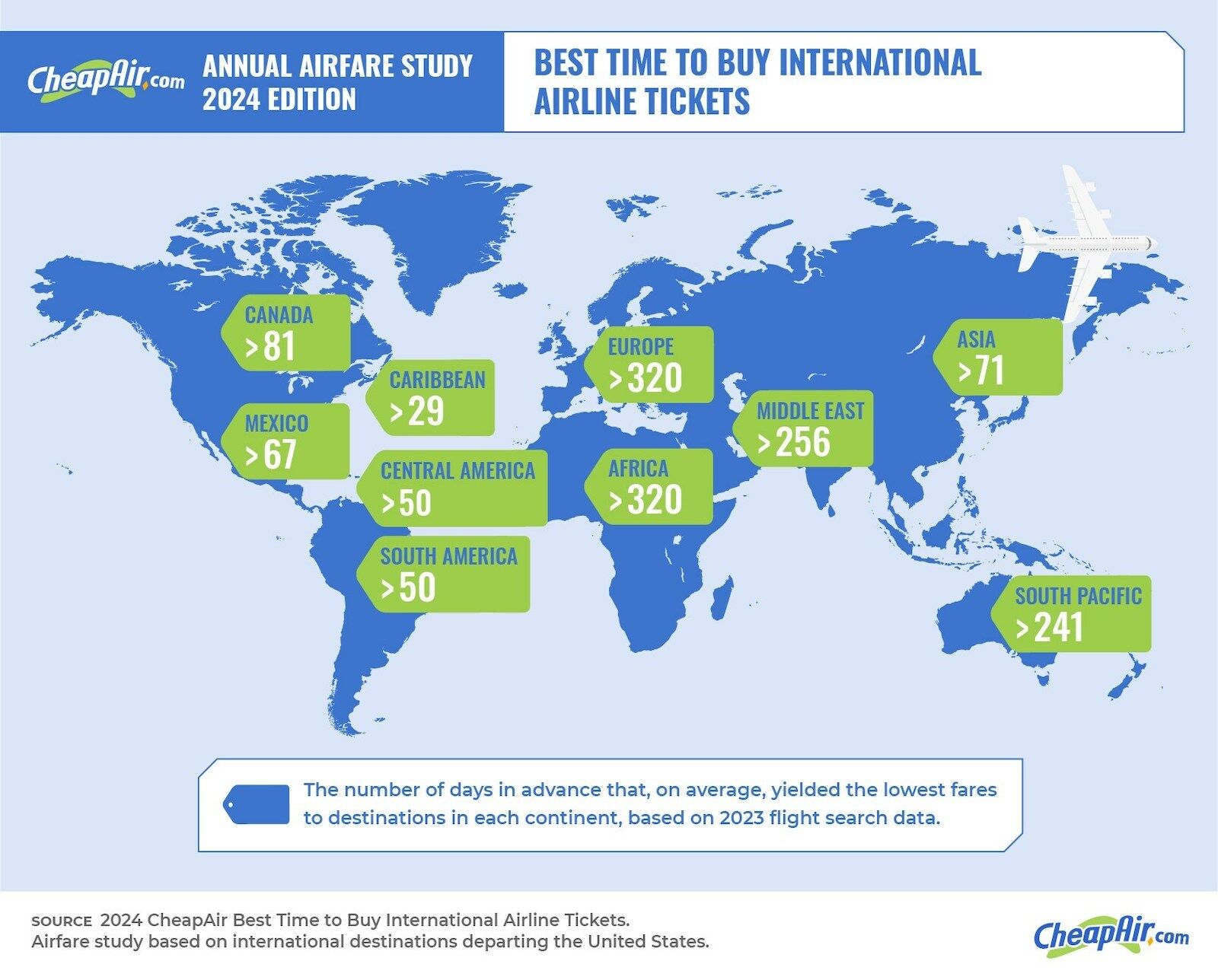
Historical data across the travel industry suggests that for international flights, the optimal booking window generally opens about four to six months before departure. In financial terms, this is when the airline has established its baseline schedule but has not yet seen the surge of demand that comes with the 90-day mark. Booking too early (more than 10 months out) can be a mistake, as airlines often set initial prices high and only lower them once they can gauge actual interest. Conversely, waiting until the 60-day mark often leads to paying a “convenience premium” as business travelers and last-minute vacationers begin to saturate the remaining inventory.
Seasonal Arbitrage and the “Shoulder Season”
From a personal finance perspective, the greatest ROI on travel spending is found in the “shoulder season”—the period between the peak season (summer and major holidays) and the off-season (dead of winter or monsoon periods). For example, visiting Europe in late September or October offers significantly lower airfare than July, while the weather and amenities remain comparable. By shifting your travel window by just two weeks, you can often see a 30% to 50% reduction in airfare, which can translate to thousands of dollars in savings for a family of four.
The Myth of the “Tuesday Rule”
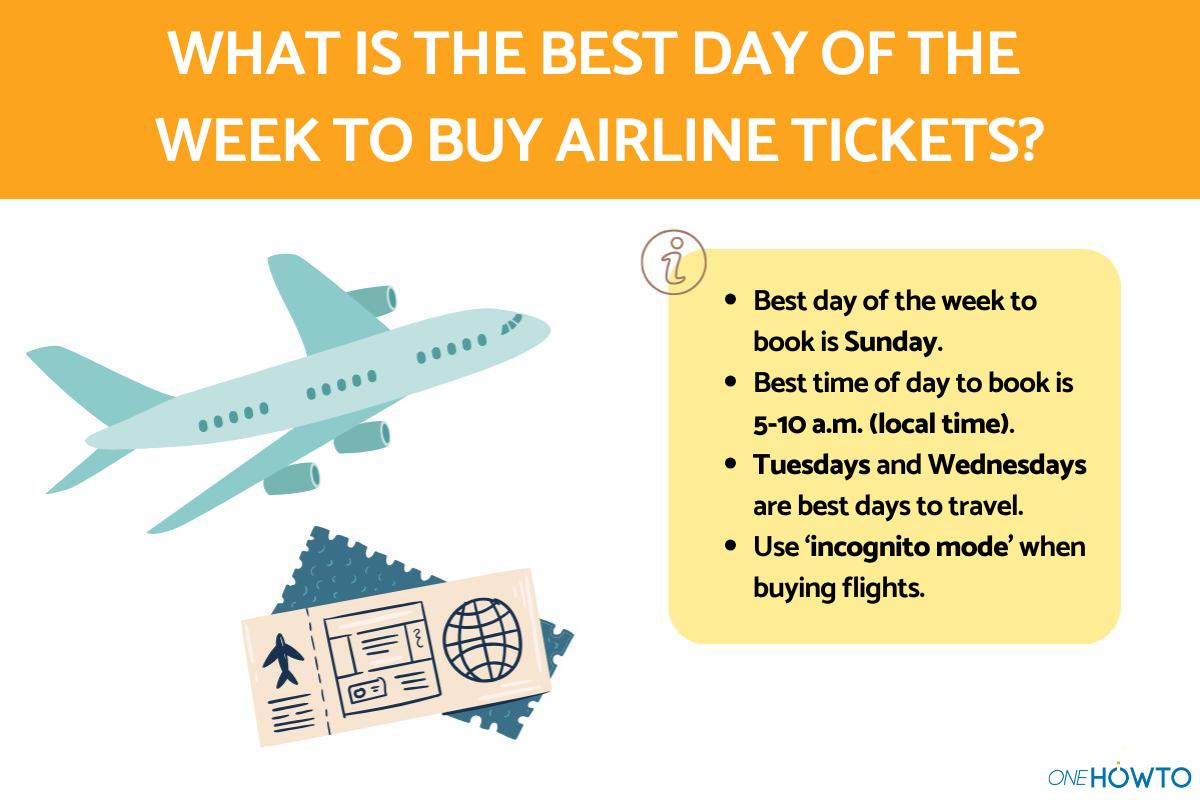
For years, a popular financial myth suggested that booking on a Tuesday at midnight would yield the lowest prices. While this may have been true in the era of manual fare updates, modern algorithmic pricing has largely rendered this obsolete. Today, the day you fly is far more important than the day you buy. Mid-week departures (Tuesdays and Wednesdays) are consistently cheaper than Friday or Sunday flights. If your schedule allows for flexibility, opting for a mid-week departure is one of the simplest ways to optimize your travel budget.
Leveraging Financial Tools and Reward Systems

In the world of personal finance, how you pay for a ticket is often just as important as when you buy it. Savvy investors in the travel space use a combination of credit instruments and digital tools to ensure they are getting the maximum value for their capital.
Maximizing Credit Card Rewards and Points
For those who treat their finances like a business, airline miles and credit card points are a form of alternative currency. The most effective way to lower the cost of international travel is to leverage “sign-up bonuses” and “category spending.” Many high-tier travel cards offer bonuses equivalent to a round-trip international flight after a certain spending threshold is met. By timing these applications to coincide with large necessary purchases (like home repairs or tuition), a traveler can effectively “subsidize” their international ticket, reducing the out-of-pocket cash requirement to nearly zero.
Utilizing AI-Driven Fare Trackers
Manual searching is an inefficient use of time—a resource that also has financial value. Utilizing tools that leverage machine learning to predict fare trends is essential. Services like Google Flights or specialized apps can analyze millions of data points to advise whether a current price is “low,” “typical,” or “high” for a specific route. These tools allow you to set “price alerts,” which essentially automate the monitoring process. This allows you to wait for a price drop without the opportunity cost of checking fares daily.
The Hidden Value of Multi-City and Hidden-City Ticketing
For more advanced financial maneuvering, travelers sometimes look at “multi-city” bookings or “hidden-city” ticketing. While hidden-city ticketing (booking a flight with a layover and exiting at the layover city) carries certain risks, such as violating airline terms of service, multi-city routing is a legitimate way to see more for less. Often, flying into one city and out of another (e.g., into London and out of Paris) can be cheaper than a standard round-trip when you factor in the time and cost of regional transit.
Mitigating Risks and Managing the Travel Budget
Buying an international ticket is a contract, and like any financial contract, it comes with risks. Understanding the fine print can prevent significant losses in the event of a change in plans.
The Cost-Benefit Analysis of Refundable Fares
Basic economy fares are the cheapest option, but they are also the most restrictive. From a risk management perspective, the “Basic Economy” trap can be expensive. If you are forced to cancel a $1,200 non-refundable ticket, you lose 100% of your investment. However, paying a $150 premium for a “Main Cabin” fare that allows for changes or flight credits can be seen as an insurance policy. For high-value international trips, the premium is often worth the flexibility it provides.
Dealing with Currency and Foreign Transaction Fees
When booking on foreign-based airlines, your bank may charge a foreign transaction fee (typically 3%). For a $2,000 family booking, that is an extra $60 for no added value. Utilizing a credit card with no foreign transaction fees is a basic but essential step in international travel finance. Additionally, when given the option to pay in your home currency or the local currency of the airline, always choose the local currency. Airlines use inflated exchange rates to convert prices, and your credit card’s conversion rate will almost always be more favorable.
Integrating Travel into Your Personal Finance Strategy
Finally, the best time to buy an international ticket is when your personal balance sheet allows for it without compromising your long-term financial goals. International travel should be treated as a “sinking fund” expense rather than a sudden impulse buy.
The Sinking Fund Method
A sinking fund is a strategic way to save for a specific large expense by setting aside small amounts of money over time. If you know you want to take a $3,000 trip to Japan in 12 months, you should be allocating $250 a month into a high-yield savings account. This ensures that when the “Goldilocks” booking window opens 120 days before your trip, you have the liquidity ready to execute the purchase immediately. You aren’t waiting for a paycheck while the price fluctuates; you are acting with the precision of an investor.
Calculating the ROI of Travel
While travel is an expense, it is also an investment in human capital—offering perspective, rest, and cultural education. However, from a purely financial standpoint, calculating the “cost per hour” of your vacation can help you decide if a ticket is worth it. A $1,500 ticket for a 14-day trip is roughly $107 per day in transit costs. For a 4-day trip, that jumps to $375 per day. By extending the duration of the trip, you lower the “per day” cost of the international airfare, maximizing the utility of the initial investment.
In conclusion, finding the best time to buy international airline tickets is a multifaceted financial strategy. It requires a blend of macroeconomic understanding, the use of sophisticated digital tools, and the disciplined management of personal capital. By targeting the four-to-six-month window, leveraging mid-week departures, and using reward systems to offset costs, travelers can turn a major expense into a manageable and highly optimized part of their financial life. Success in the airfare market, much like success in the stock market, favors the informed, the patient, and the prepared.
aViewFromTheCave is a participant in the Amazon Services LLC Associates Program, an affiliate advertising program designed to provide a means for sites to earn advertising fees by advertising and linking to Amazon.com. Amazon, the Amazon logo, AmazonSupply, and the AmazonSupply logo are trademarks of Amazon.com, Inc. or its affiliates. As an Amazon Associate we earn affiliate commissions from qualifying purchases.