
For the modern investor, few events on the financial calendar carry as much weight, volatility, and speculation as a Tesla (TSLA) earnings report. As a bellwether for the electric vehicle (EV) industry, a heavyweight in the S&P 500, and a lightning rod for retail and institutional sentiment, Tesla’s quarterly disclosures are more than just a summary of profits and losses—they are a cultural and economic phenomenon. Determining when Tesla is reporting earnings is the first step in a high-stakes game of financial positioning.
The Rhythm of the Report: Predicting the Date and Time
Tesla operates on a standard fiscal year that aligns with the calendar year, meaning its quarters end on March 31, June 30, September 30, and December 31. Unlike some legacy automakers that may delay their full financial disclosures, Tesla has historically maintained a relatively predictable cadence for its earnings releases.
The Typical Schedule
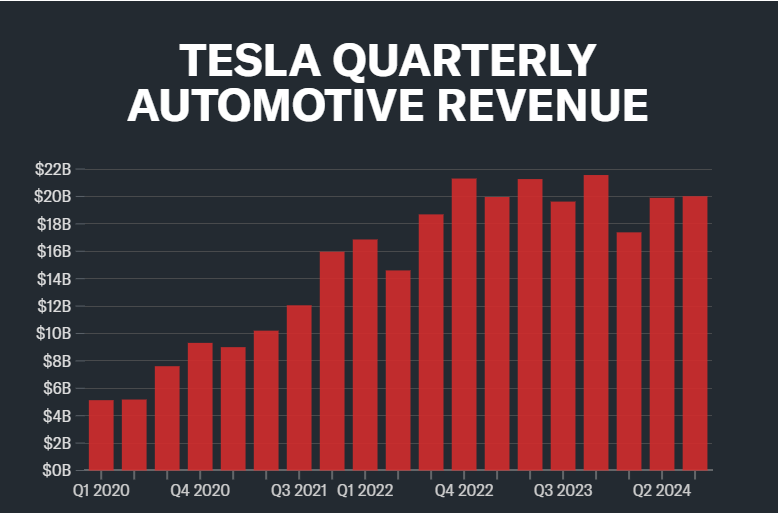
Typically, Tesla announces its quarterly deliveries—the number of vehicles actually handed over to customers—within the first few days after a quarter ends. This “Delivery and Production” report serves as a precursor to the formal earnings announcement. The actual earnings report generally follows approximately 20 to 25 days after the quarter closes. For example, a Q3 report usually lands in late October, while Q4 results are typically revealed in late January.
Tesla almost exclusively reports its earnings on Wednesdays after the market closes. This timing is strategic, allowing the company to present its results, host its high-profile earnings call, and let the information digest overnight before the next trading session begins. Investors should look for an official press release from Tesla’s Investor Relations department about two weeks prior to the expected date, which confirms the specific day and provides the link for the live webcast.
The Earnings Call and the “Elon Musk Factor”
The earnings call itself is often as important as the numbers on the page. Unlike many dry, scripted corporate calls, Tesla’s sessions frequently feature CEO Elon Musk and often include questions crowdsourced from retail shareholders via platforms like Say Technologies. This democratic approach to the Q&A session can lead to significant swings in after-hours trading as Musk discusses everything from the production ramps of the Cybertruck to the long-term potential of humanoid robots and artificial intelligence.
Critical Financial Indicators to Monitor
When the “When” is established, the focus immediately shifts to the “What.” Tesla’s earnings reports are dense, but sophisticated investors focus on a specific set of metrics that reveal the underlying health of the business beyond the headlines.
Automotive Gross Margins
For years, the gold standard for Tesla’s valuation has been its industry-leading gross margins. However, as the EV market has become more competitive and Tesla has utilized price cuts to maintain volume, these margins have come under pressure. Strategic investors look specifically at “Automotive Gross Margin excluding Regulatory Credits.” This figure tells you how much profit Tesla is making on the actual manufacturing and sale of its vehicles. If this number stabilizes or improves, it signals that Tesla’s manufacturing efficiencies are offsetting its price reductions.
Regulatory Credits
Tesla earns regulatory credits because it produces zero-emission vehicles, which it then sells to other automakers who cannot meet government emissions standards. While this is “pure profit,” it is also viewed as a non-core revenue stream. A sudden spike in earnings driven primarily by credit sales can sometimes be viewed skeptically by analysts who want to see growth in the core automotive and energy segments.
Energy Generation and Storage
One of the most rapidly growing parts of Tesla’s balance sheet is its Energy segment, which includes Powerwall, Megapack, and solar products. In recent quarters, Megapack deployments have seen triple-digit year-over-year growth. As the automotive side of the business matures, the Energy segment is becoming a critical pillar of the company’s “Money” story, providing high-margin recurring revenue and a hedge against the cyclical nature of car sales.
Operating Cash Flow and Capex
Tesla’s ability to self-fund its massive expansion—from new Gigafactories in Texas and Berlin to the massive “Dojo” supercomputer—is a testament to its cash flow management. Investors scrutinize Capital Expenditures (Capex) to understand how much the company is reinvesting in its future. A high Capex paired with strong Operating Cash Flow suggests a company that is aggressively scaling without needing to dilute shareholders through frequent secondary offerings.
The “Tesla Effect” on the Broader Market

The question of when Tesla reports earnings is not only relevant to TSLA shareholders. Due to its massive market capitalization, Tesla’s performance has a ripple effect across the entire financial ecosystem.
Index Influence
Tesla is a top-ten holding in the S&P 500 and the Nasdaq-100. Consequently, a major beat or miss by Tesla can move the entire index. For investors in broad-market ETFs like SPY or QQQ, Tesla’s earnings day is a period of heightened systemic risk. If Tesla reports disappointing numbers, it can drag down the consumer discretionary sector and the tech sector simultaneously.
The EV Sentiment Barometer
Tesla acts as a proxy for the entire electric vehicle and renewable energy sector. When Tesla reports strong demand, stocks of charging network providers, lithium miners, and rival EV startups often rally in sympathy. Conversely, if Tesla warns of a slowdown in consumer spending or logistical hurdles, the entire “green energy” basket of stocks often feels the pain. This makes the Tesla earnings date a crucial “macro” event for anyone invested in the future of transport.
Volatility and the Options Market
The days surrounding a Tesla earnings report are famous for their “Implied Volatility” (IV). Options traders often see IV crush—where the price of options drops significantly after the uncertainty of the earnings event is resolved—regardless of the stock’s direction. Understanding the timing of the report allows traders to structure “straddles” or “strangles” to bet on volatility, or to write covered calls to take advantage of the inflated premiums that precede the announcement.
Investment Strategies for the Earnings Announcement
Approaching a Tesla earnings report requires a clear financial strategy, as the stock is notorious for “gapping” up or down by 10% or more in a single session.
The Long-Term Accumulation Strategy
For investors who believe in the long-term transition to sustainable energy, earnings reports are often noise. These investors may use the volatility of the report to “Dollar Cost Average.” If the stock drops on a temporary margin squeeze despite strong delivery growth, it may be viewed as a buying opportunity. In this niche, the focus is on the multi-year trajectory rather than the three-month snapshot.
Position Sizing and Risk Management
Because of the inherent unpredictability of the “Elon Musk Factor,” many professional money managers reduce their position sizes ahead of the report. The goal is to avoid “ruin risk”—the possibility that a single bad earnings report could wipe out a significant portion of a portfolio’s gains. Diversification within the tech and automotive space is often a prerequisite for weathering the Tesla earnings storm.
Reading the “Whisper Number”
In the days leading up to the report, Wall Street analysts publish their estimates for Earnings Per Share (EPS) and Revenue. However, seasoned investors also look for the “whisper number”—the unofficial expectation held by the most active traders. If Tesla beats the official consensus but misses the whisper number, the stock can still fall. Monitoring social sentiment and institutional flow in the week prior can provide clues as to what the market is truly expecting.
Future Growth Drivers: Looking Beyond the Current Quarter
While the earnings report looks backward at the last 90 days, the market is a forward-looking mechanism. The most important part of the earnings release is often the “Outlook” or “Guidance” section.
FSD and the AI Pivot
Tesla is increasingly positioning itself as an AI and robotics company rather than just a car manufacturer. Revenue from Full Self-Driving (FSD) software is a high-margin, recurring stream that could fundamentally change Tesla’s valuation model from a “hardware” multiple to a “software-as-a-service” (SaaS) multiple. Investors look for updates on FSD take-rates and the potential for licensing the software to other OEMs.
Next-Generation Platforms
The mention of a “25,000-dollar car” or the progress of the “Unboxed” manufacturing process is a frequent catalyst for stock movement. Investors are hungry for news on how Tesla will address the mass-market segment, which is essential for reaching its goal of 20 million vehicles per year by 2030. Any commentary regarding the production timeline for these new models can overshadow the current quarter’s financial performance.

Robotaxis and the Service Economy
The eventual launch of a Tesla dedicated Robotaxi network represents the “holy grail” for many TSLA bulls. During earnings calls, analysts often probe for details on regulatory hurdles and technological milestones. If the company provides even a slight hint of a timeline for a pilot program, it can trigger a significant re-rating of the stock’s price-to-earnings (P/E) ratio.
By understanding when Tesla is reporting earnings and what specific levers to look for within the report, investors can move from reactive speculation to proactive financial planning. Whether you are a retail trader looking for a short-term swing or a long-term investor building a retirement nest egg, the Tesla earnings report remains the most critical event in the intersection of technology and finance. Keep a close eye on the calendar, ignore the superficial headlines, and focus on the core financial metrics that define this generational company.
aViewFromTheCave is a participant in the Amazon Services LLC Associates Program, an affiliate advertising program designed to provide a means for sites to earn advertising fees by advertising and linking to Amazon.com. Amazon, the Amazon logo, AmazonSupply, and the AmazonSupply logo are trademarks of Amazon.com, Inc. or its affiliates. As an Amazon Associate we earn affiliate commissions from qualifying purchases.