
For the modern investor, the concept of time is as valuable as the capital being deployed. In the fast-paced world of global finance, understanding the specific operating hours of the stock market is not merely a matter of logistics; it is a fundamental component of a sophisticated trading strategy. Whether you are a retail investor managing a long-term portfolio or a day trader looking for the peak of daily volatility, knowing precisely when the stock market closes—and what happens in the moments following that final bell—can significantly influence your financial outcomes.
In the United States, the heartbeat of the financial world resides within the New York Stock Exchange (NYSE) and the Nasdaq. While technology has enabled a 24/7 digital economy, the traditional equity markets still adhere to a structured schedule that dictates liquidity, price discovery, and the flow of global capital.
The Core Trading Session: Understanding the 9:30 to 4:00 Window
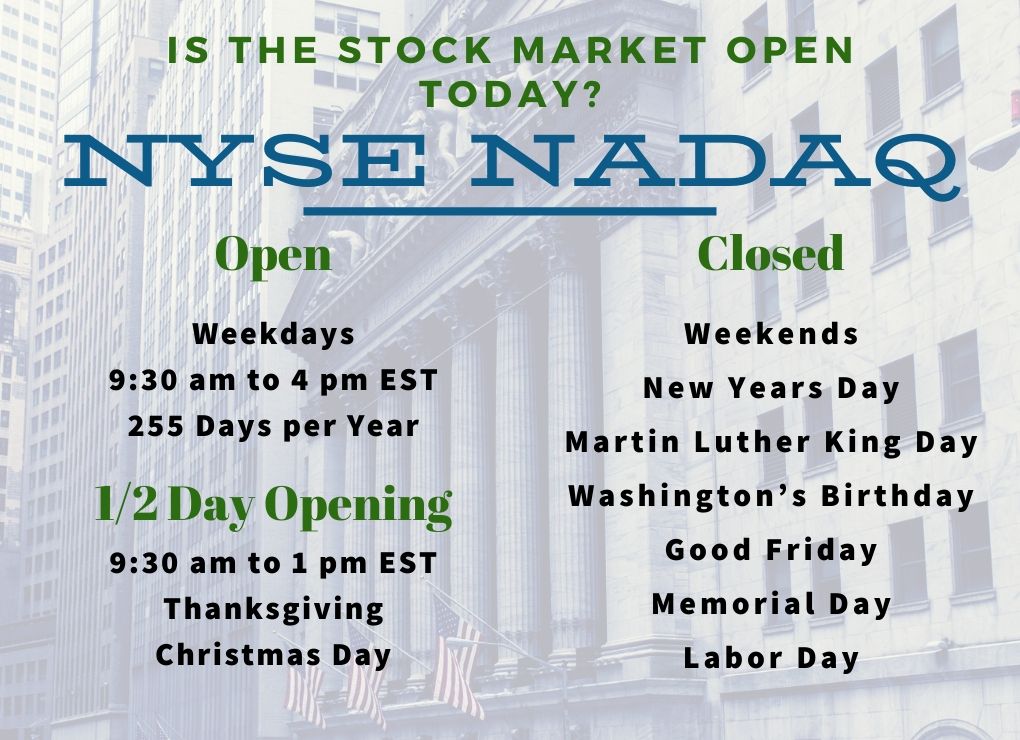
The primary trading session for the U.S. stock market begins at 9:30 AM Eastern Time (ET) and concludes at 4:00 PM ET. This six-and-a-half-hour window represents the period of highest liquidity and tightest spreads, where the vast majority of retail and institutional volume is executed.
The Significance of the Closing Bell
The 4:00 PM ET close is more than just a stopping point for manual trading; it is a critical data point for the entire financial ecosystem. The “closing price” of a stock is used to calculate the Net Asset Value (NAV) of mutual funds, determine the value of derivatives and options contracts, and serve as the benchmark for historical performance tracking.
During the final minutes of the core session, often referred to as the “Power Hour,” trading activity tends to surge. Institutional investors, such as pension funds and ETFs, often wait until the end of the day to execute large block trades or rebalance their holdings to match the closing price as closely as possible. This influx of volume can lead to heightened volatility, providing both risks and opportunities for those watching the clock.
The Closing Auction Process
It is a common misconception that trading simply stops at 4:00 PM. In reality, the major exchanges conduct what is known as a “closing auction.” In the minutes leading up to the close, the exchange’s computers aggregate all “market-on-close” (MOC) and “limit-on-close” (LOC) orders. The auction matches buyers and sellers at a single price that maximizes the number of shares traded. This process ensures that the official closing price is a fair representation of the stock’s value based on all available interest at the end of the day.
Extended Hours: Trading Beyond the Traditional Close
While the core market closes at 4:00 PM ET, the digital nature of modern finance allows for activity to continue long after the floor brokers have gone home. This is known as the “After-Hours” session.
Post-Market Sessions and ECNs
After-hours trading typically occurs from 4:00 PM ET to 8:00 PM ET. These trades are executed through Electronic Communication Networks (ECNs), which automatically match buy and sell orders without the need for a traditional exchange floor. For investors, this session is critical because it is when the majority of public companies release their quarterly earnings reports.
When a company announces its financial results at 4:15 PM, the stock price can move violently. Investors who understand how to navigate the after-hours market can react to this news immediately rather than waiting for the following morning’s open. However, this convenience comes with significant caveats.
Risks and Rewards of After-Hours Liquidity
The primary risk of trading after the market closes is decreased liquidity. With fewer participants in the market, the “bid-ask spread”—the difference between what a buyer is willing to pay and what a seller is willing to accept—widens significantly. This means you may end up paying a higher price to buy or receiving a lower price to sell than you would during normal hours.
Furthermore, price movements in the after-hours session can be deceptive. Because volume is low, a small number of trades can move a stock’s price by several percentage points. It is not uncommon for a stock to jump 5% after a 5:00 PM earnings call, only to open the next morning at a 2% loss once the broader market participants have had time to digest the full report.
Holiday Calendars and Modified Schedules

The stock market does not follow the standard 365-day calendar. To manage a portfolio effectively, investors must stay cognizant of the holiday schedule and the nuances of early closures.
Federal Holidays and Exchange Closures
The NYSE and Nasdaq observe nine major holidays per year, during which the markets are closed entirely. These include:
-
New Year’s Day
-
Martin Luther King, Jr. Day
-
Presidents’ Day
-
Good Friday
-
Memorial Day
-
Juneteenth National Independence Day
-
Independence Day
-
Labor Day
-
Thanksgiving Day
-
Christmas Day
When these holidays fall on a weekend, the market typically closes on the preceding Friday or the following Monday. For instance, if Christmas falls on a Sunday, the market is closed on Monday, December 26th.
Early Closures and the Bond Market Disconnect
There are specific days when the stock market closes early, usually at 1:00 PM ET. These typically occur on the day after Thanksgiving (Black Friday) and sometimes on Christmas Eve, depending on where it falls in the week.
It is also vital for investors to distinguish between the stock market and the bond market. The bond market, overseen by the Securities Industry and Financial Markets Association (SIFMA), often follows a different schedule. There are several days—such as Columbus Day and Veterans Day—when the bond market is closed, but the stock market remains open. This “disconnect” can lead to lower volume in the equity markets, as many institutional players who trade across asset classes may be sidelined.
Global Interconnectivity: When International Markets Power Down
In a globalized economy, the “closing time” of the stock market is a rolling concept. While an American investor might be focused on the 4:00 PM ET close in New York, the European and Asian markets operate on entirely different cycles that influence U.S. price action.
The European and Asian Market Overlap
The London Stock Exchange (LSE) usually closes around 11:30 AM ET. This creates a critical overlap period between 9:30 AM and 11:30 AM ET when both the U.S. and European markets are open simultaneously. This two-hour window often sees the highest global trading volume and can set the tone for the rest of the American trading day.
Similarly, the Tokyo Stock Exchange and the Hong Kong Stock Exchange operate while the U.S. is asleep. News coming out of these regions during their “closing” hours can cause “gap ups” or “gap downs” in U.S. stock prices before the NYSE even opens at 9:30 AM.
Managing a 24-Hour Global Portfolio
For those involved in international investing or currency trading (Forex), the market truly never closes from Sunday evening to Friday evening. Understanding the closing times of the DAX in Germany or the Nikkei in Japan is essential for managing risk. If you hold a significant position in a multinational corporation, a major geopolitical event during the Tokyo close can impact your capital long before you have the chance to trade on the domestic exchange.
Mastering the “Power Hour”: Strategies for the Market Close
The final 60 minutes of the trading day, from 3:00 PM to 4:00 PM ET, is arguably the most important hour for any serious market participant. This is when the “smart money”—institutional investors and hedge funds—often makes its moves.
Volatility and Volume Spikes
As the clock ticks toward 4:00 PM, day traders look to square their positions to avoid the risks of holding overnight, while long-term institutions execute large orders. This creates a “tug-of-war” that can result in rapid price swings. For the disciplined investor, this volatility is not something to fear, but rather a source of liquidity. If you are looking to enter a large position, the high volume of the Power Hour often allows you to do so without moving the price against yourself as much as you might at 1:00 PM.
Institutional Rebalancing and MOC Orders
One of the most powerful forces at the market close is the rebalancing of index funds. Passive funds that track the S&P 500 must ensure their holdings match the index’s composition. On days when an index is rebalanced, billions of dollars of stock must be bought or sold precisely at the closing price.
Investors can track “MOC Imbalances,” which are published by the exchanges starting around 3:50 PM. These imbalances tell the market whether there is a significant excess of buy orders or sell orders heading into the close. A large “buy imbalance” can provide a final bullish push to the market, while a “sell imbalance” might lead to a late-day slump.

Conclusion: Time as a Financial Tool
Knowing when the stock market closes is about more than just checking a clock; it is about understanding the flow of liquidity and the behavior of other market participants. The 4:00 PM ET bell represents the culmination of the day’s sentiment, but the extended hours and global cycles ensure that the world of money is always in motion. By aligning your trading activities with these key timestamps—and respecting the risks of the after-hours environment—you can better position your portfolio for success in an increasingly interconnected financial landscape. Whether you are navigating a holiday shortened week or reacting to a late-day earnings report, mastery over the market’s schedule is an essential skill for every modern investor.
aViewFromTheCave is a participant in the Amazon Services LLC Associates Program, an affiliate advertising program designed to provide a means for sites to earn advertising fees by advertising and linking to Amazon.com. Amazon, the Amazon logo, AmazonSupply, and the AmazonSupply logo are trademarks of Amazon.com, Inc. or its affiliates. As an Amazon Associate we earn affiliate commissions from qualifying purchases.