
In the modern financial landscape, few events carry as much weight as the quarterly earnings announcement from NVIDIA Corporation. Once a niche player in the graphics processing unit (GPU) market, NVIDIA has evolved into a trillion-dollar titan and a primary bellwether for the global economy’s shift toward artificial intelligence. For investors, the question of “when is NVIDIA’s next earnings” is not merely about a date on a calendar; it is a critical milestone that determines market sentiment, influences index movements, and reshapes investment strategies across the technology and semiconductor sectors.
Understanding the timing and the financial implications of these reports requires a deep dive into NVIDIA’s unique fiscal structure, its historical performance patterns, and the specific metrics that institutional and retail investors use to value the company in an era of unprecedented demand for compute power.
The Fiscal Timeline: Understanding NVIDIA’s Reporting Cycle
To accurately predict when NVIDIA will report its next set of financial results, one must first understand its unconventional fiscal year. Unlike many corporations that align their fiscal years with the standard calendar year ending on December 31, NVIDIA operates on a fiscal year that typically ends on the last Sunday of January.
For example, NVIDIA’s “Fiscal Year 2025” actually covers the majority of the 2024 calendar year and concludes in early 2025. This offset means their quarterly reporting periods generally fall as follows:
-
First Quarter (Q1): Ends in late April, reported in late May.
-
Second Quarter (Q2): Ends in late July, reported in late August.
-
Third Quarter (Q3): Ends in late October, reported in late November.
-
Fourth Quarter (Q4) and Full Year: Ends in late January, reported in late February.
For investors tracking the next release, the earnings announcement typically occurs approximately three to four weeks after the quarter’s close. These calls are traditionally held on Wednesdays after the market closes, followed by a highly anticipated conference call where CEO Jensen Huang and CFO Colette Kress provide commentary on the company’s trajectory.
Why Timing Matters for Market Liquidity
The weeks leading up to NVIDIA’s earnings are often characterized by heightened volatility and “options pinning.” Because NVIDIA holds such a massive weight in the S&P 500 and the Nasdaq-100, the anticipation of the earnings date creates a gravity well for capital. Traders often look for the official confirmation of the date—usually provided by NVIDIA’s investor relations department two weeks in advance—to hedge their positions or place speculative bets on the “implied move,” which represents how much the stock price is expected to swing based on options pricing.
Key Financial Metrics: What the Smart Money Is Tracking
While the headline “beat or miss” on revenue and earnings per share (EPS) often drives the initial after-hours price action, seasoned investors look much deeper into the balance sheet. To understand NVIDIA’s true financial health during an earnings cycle, several key performance indicators (KPIs) must be scrutinized.
Data Center Revenue Growth
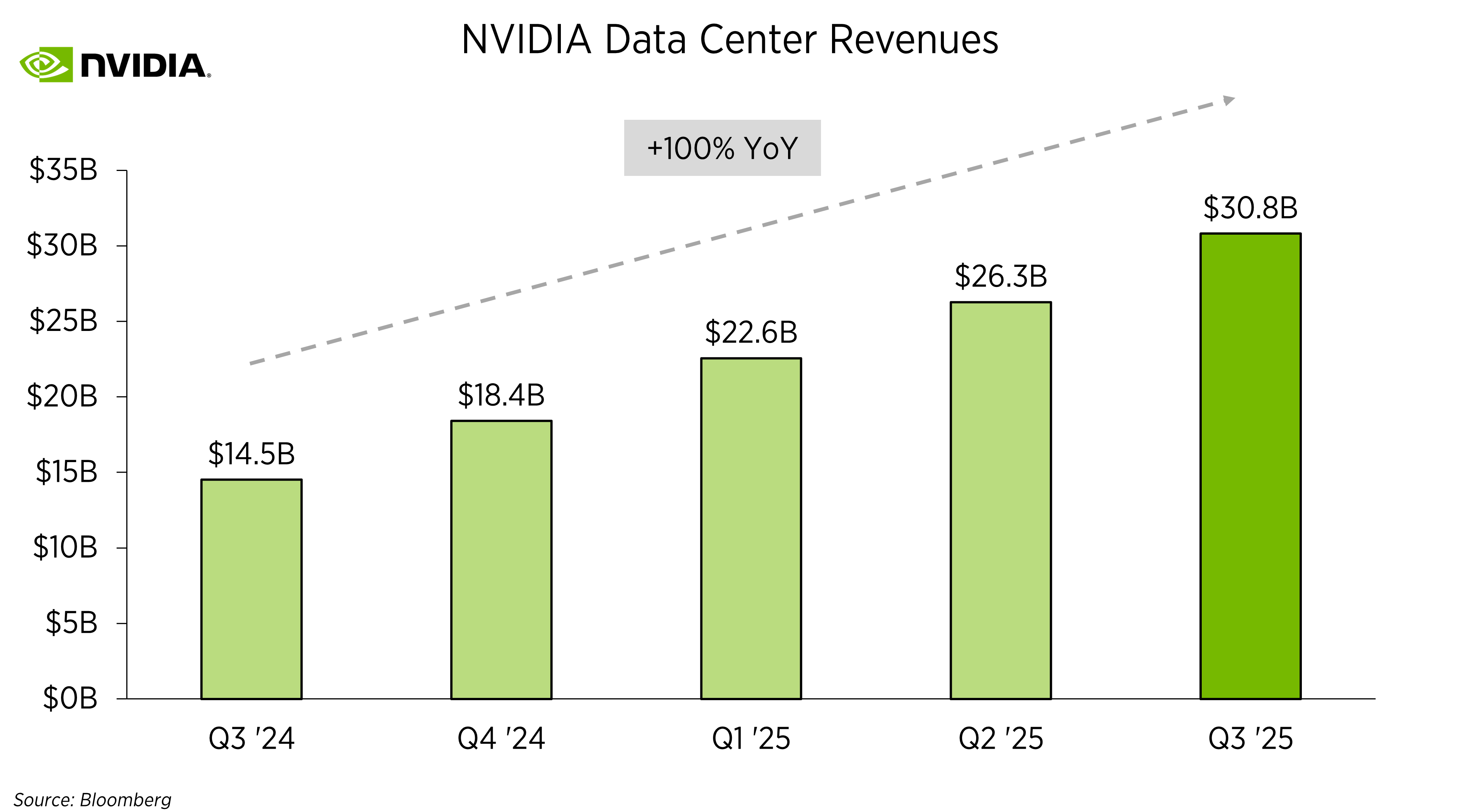
This is the engine of NVIDIA’s current valuation. As cloud service providers (CSPs) like Microsoft, Amazon, and Google race to build out AI infrastructure, the Data Center segment has seen triple-digit year-over-year growth. Investors are not just looking for a high number; they are looking for the sustainability of that growth. Any deceleration here, even if the number is objectively large, can lead to a “sell the news” reaction.
Gross Margins
NVIDIA has maintained remarkably high non-GAAP gross margins, often exceeding 70%. In the world of hardware, these are software-like margins. They indicate immense pricing power and a lack of immediate competition in the high-end AI chip market. If gross margins begin to compress, it may signal rising supply chain costs or the emergence of competitive pressure from rivals like AMD or custom silicon developed in-house by Big Tech firms.
Inventory and Supply Chain Commitments
Given the supply-constrained nature of NVIDIA’s H100 and Blackbridge architectures, the “Purchase Commitments” and “Inventory” sections of the report are vital. They provide a roadmap for future revenue. If NVIDIA is significantly increasing its purchase commitments to its foundry partner, TSMC, it suggests that the demand visibility remains strong for the quarters ahead.
Forward Guidance
In the current market environment, NVIDIA’s guidance for the upcoming quarter is arguably more important than its performance in the past quarter. Because the stock trades at a premium multiple, the market requires a “beat and raise” scenario to justify its price. If management provides guidance that is merely in line with analyst estimates rather than above them, the stock may face downward pressure despite a record-breaking past quarter.
The Ripple Effect: Why NVIDIA’s Earnings Dictate Market Sentiment

NVIDIA has become more than just a stock; it is a macroeconomic indicator. Because its chips are the foundational layer for the generative AI revolution, its earnings report serves as a proxy for the health of the entire tech ecosystem.
The Semiconductor Sector Synergy
When NVIDIA reports, the entire semiconductor sector moves in tandem. Companies involved in the supply chain—from equipment manufacturers like ASML and Applied Materials to packaging firms and memory suppliers like SK Hynix and Micron—see their valuations adjusted based on NVIDIA’s outlook. If NVIDIA indicates a surge in demand, it validates the entire “AI trade.” Conversely, a cautious tone can trigger a sector-wide sell-off.
Impact on Broad Market Indices
Due to its massive market capitalization, NVIDIA is a major driver of the S&P 500’s total returns. On earnings days, it is not uncommon for NVIDIA’s price movement to account for a significant percentage of the entire index’s fluctuation. This creates a scenario where even investors who do not own NVIDIA directly are impacted through their 4001(k)s and passive index funds. This systemic importance is why “NVIDIA earnings day” is often referred to by financial media as the “Super Bowl of the stock market.”
Investment Strategies: Navigating Earnings Season Volatility
For the individual investor, the period surrounding the earnings announcement presents both significant risk and opportunity. Navigating this volatility requires a disciplined approach to capital allocation.
The Dangers of “Earnings Gambling”
Many retail investors attempt to “play the earnings” by buying call options or shares a few days before the report. This is a high-risk strategy because of “IV Crush” (Implied Volatility Crush). In the days leading up to the report, the price of options increases because the uncertainty is high. Once the news is released, that uncertainty vanishes, and the value of the options can plummet even if the stock moves in the predicted direction.
The Long-Term Accumulation Strategy
For those with a multi-year horizon, the “when” of earnings is less about short-term trading and more about assessing the long-term thesis. A common strategy used by institutional investors is to wait for the post-earnings “digestion” period. Often, after a massive run-up and a subsequent earnings beat, the stock may experience a temporary dip as traders take profits. This “pullback within an uptrend” can provide a more favorable entry point for long-term positions.
Utilizing Dollar-Cost Averaging (DCA)
Given the potential for massive swings—sometimes 10% or more in a single session—investors often find success by avoiding “all-in” positions before the announcement. By spreading purchases across several weeks (before and after the earnings date), an investor can average their cost basis and reduce the psychological impact of a post-earnings decline.
The Valuation Debate: Is the Growth Already Priced In?
As the next earnings date approaches, the perennial debate regarding NVIDIA’s valuation intensifies. Skeptics point to its high price-to-earnings (P/E) ratio as a sign of a bubble, while bulls argue that the PEG ratio (P/E divided by growth) actually makes the stock look reasonable compared to historical tech giants.
Comparing Forward P/E Ratios
When analyzing NVIDIA, the forward P/E ratio is the metric of choice. Because the company’s earnings are growing so rapidly, looking at “trailing” twelve-month earnings is often misleading. Investors must ask: “What will NVIDIA earn two years from now?” If the company continues to beat expectations, the “expensive” stock of today may actually be the “cheap” stock of tomorrow.
The “Capex” Narrative
The most important factor for the upcoming earnings cycle is the capital expenditure (Capex) of NVIDIA’s largest customers. As long as companies like Meta, Microsoft, and Alphabet continue to tell their shareholders that they are increasing their spend on AI infrastructure, NVIDIA remains the primary beneficiary of that flow of capital. The next earnings call will be scanned meticulously for any signs that these tech giants are slowing their spending or shifting toward internal silicon alternatives.

Conclusion: Preparing for the Reveal
The question of “when is NVIDIA’s next earnings” is the starting point for a comprehensive financial check-up on the state of the digital economy. For the disciplined investor, the date represents an opportunity to see under the hood of the world’s most influential hardware company.
While the volatility surrounding the event can be jarring, the underlying data provided in the report—revenue growth, margin health, and forward guidance—offers the most reliable roadmap for valuing the company. Whether you are a short-term trader looking for momentum or a long-term investor building a portfolio around the future of computing, NVIDIA’s earnings remain the most consequential event on the financial calendar. As the date nears, the wise move is to focus less on the noise of the price action and more on the structural integrity of the company’s financial growth.
aViewFromTheCave is a participant in the Amazon Services LLC Associates Program, an affiliate advertising program designed to provide a means for sites to earn advertising fees by advertising and linking to Amazon.com. Amazon, the Amazon logo, AmazonSupply, and the AmazonSupply logo are trademarks of Amazon.com, Inc. or its affiliates. As an Amazon Associate we earn affiliate commissions from qualifying purchases.