
In the modern financial landscape, few events carry as much weight as the quarterly earnings report from NVIDIA Corporation (NVDA). Once known primarily by gamers for its high-end graphics cards, NVIDIA has transformed into the central nervous system of the global artificial intelligence revolution. For investors, traders, and financial analysts, the question of “when is NVDA reporting earnings” is not merely a matter of checking a calendar—it is the focal point of market sentiment, a barometer for the tech sector, and a potential catalyst for massive shifts in portfolio value.

Understanding the timing, the expectations, and the subsequent market reaction to NVIDIA’s financial disclosures is essential for anyone looking to navigate the complexities of today’s stock market. This guide provides a deep dive into NVIDIA’s reporting cycle, the metrics that define its success, and how investors can strategically approach these high-stakes announcements.
Understanding NVIDIA’s Fiscal Calendar and Earnings Cycle
Unlike many corporations that align their fiscal years with the standard Gregorian calendar, NVIDIA operates on a unique fiscal schedule. This distinction is the first hurdle for many retail investors trying to track when the company will release its next set of results.
The Disconnect Between Calendar and Fiscal Years
NVIDIA’s fiscal year ends on the last Sunday of January. This means that when the company reports its “Q4 results,” it is typically doing so in February. Consequently, its Q1, Q2, and Q3 reports usually fall in May, August, and November, respectively. This off-cycle reporting often gives NVIDIA the “last word” among the “Magnificent Seven” tech giants, as companies like Microsoft, Alphabet, and Meta usually report several weeks earlier. Because NVIDIA reports later, its earnings often serve as a confirmation or a contradiction of the trends established by the other major tech players, making the NVDA announcement a definitive statement on the health of the broader technology sector.
Where to Find Official Confirmation
While historical patterns provide a reliable estimate of when NVDA will report, the company typically confirms the exact date and time approximately two to three weeks before the event. This announcement is made via a press release on the NVIDIA Investor Relations website. Typically, the report is released after the market closes (around 4:20 PM ET), followed by a highly anticipated conference call with CEO Jensen Huang and CFO Colette Kress. For serious investors, monitoring these official channels is the only way to ensure they are prepared for the immediate volatility that follows the “news wire” drop.
Why NVDA Earnings Are the Most Anticipated Event on Wall Street
In the current economic climate, NVIDIA’s earnings have transcended the boundaries of a typical corporate update. They have become a proxy for the global demand for AI infrastructure. When NVIDIA reports, the entire market listens because the company sits at the top of the supply chain for the most valuable commodity in the digital age: compute power.
The AI Growth Barometer
NVIDIA’s H100 and Blackwell chips are the foundational blocks for generative AI. Therefore, NVIDIA’s earnings offer the most transparent look at how much capital big tech firms—Amazon, Google, Meta, and Microsoft—are actually spending on AI hardware. If NVIDIA beats expectations and raises guidance, it signals that the AI boom has more room to run. Conversely, any sign of a slowdown in NVIDIA’s data center revenue could signal a cooling of the AI hype, potentially leading to a broader market correction.
Data Center Revenue: The Engine of Growth
While NVIDIA still maintains its gaming and professional visualization segments, the “Data Center” line item is now the undisputed star of the show. Investors look at this specific metric to gauge the scale of enterprise and sovereign AI adoption. Growth in this area suggests that not just tech companies, but also governments and traditional industries, are investing heavily in accelerated computing. Understanding the composition of this revenue—whether it’s coming from cloud service providers or specialized AI start-ups—is critical for assessing the long-term sustainability of NVIDIA’s high valuation.
Key Metrics to Watch Beyond the Top Line
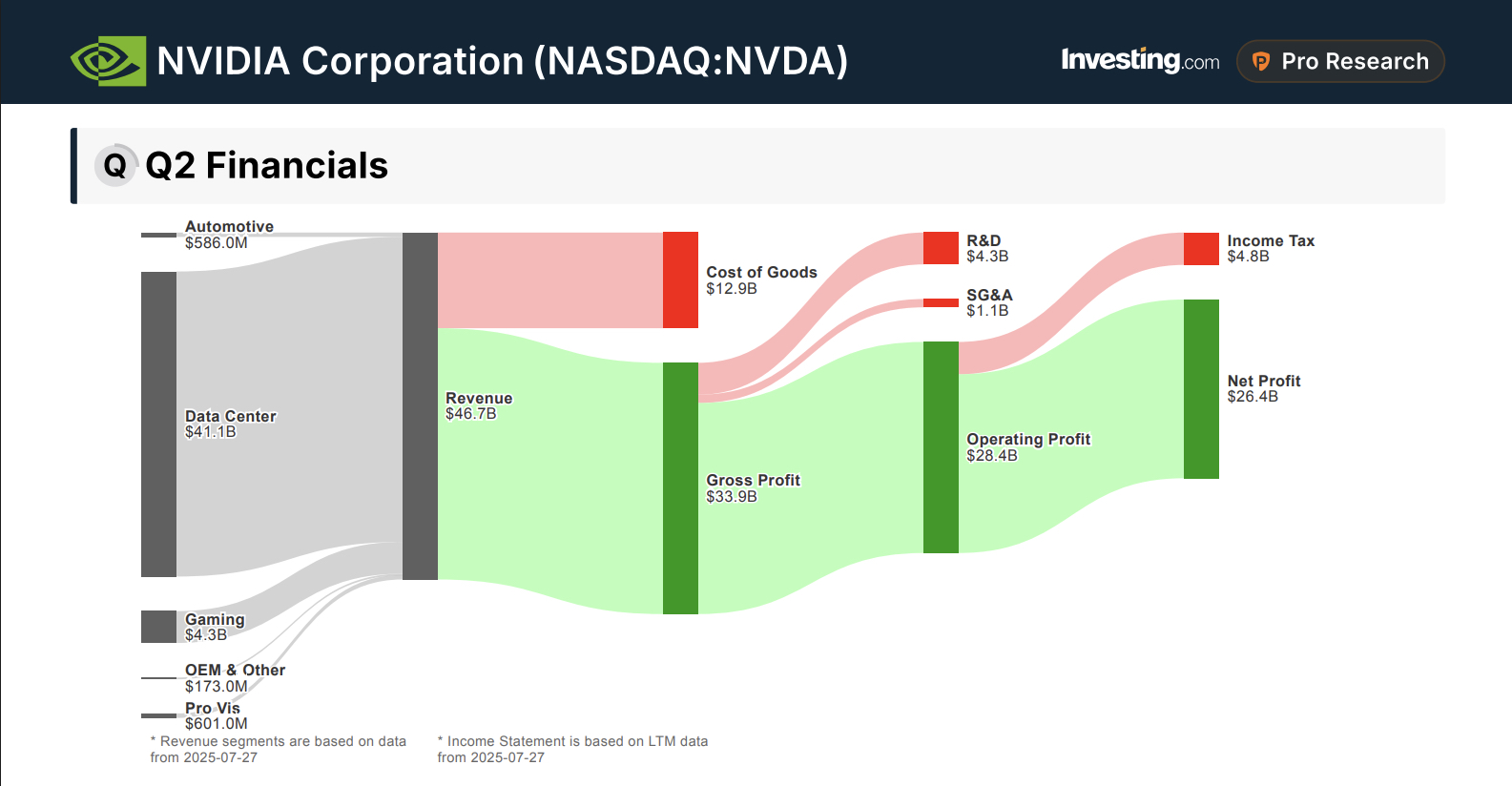
While the “beat and raise” (beating analyst expectations and raising future guidance) is the primary goal, sophisticated investors look deeper into the financial statements to understand the quality of NVIDIA’s earnings.
Gross Margin Sustainability
One of NVIDIA’s most impressive feats during its recent ascent has been its ability to maintain incredibly high gross margins, often exceeding 70%. This is a testament to the company’s massive pricing power and the lack of viable competition in the high-end GPU market. However, as competitors like AMD attempt to gain market share and as cloud providers develop their own custom silicon (like Google’s TPUs), investors watch gross margins closely for any signs of erosion. A dip in margins could suggest that NVIDIA is having to lower prices or that production costs for next-generation chips are rising faster than expected.
Forward Guidance and Inventory Levels
In the world of investing, the past is already priced in; the future is what moves the needle. NVIDIA’s guidance for the upcoming quarter and the full fiscal year is often more impactful than the results of the quarter just finished. Additionally, inventory levels and “purchase commitments” provide a window into the supply chain. Given the intense demand for NVIDIA’s products, any mention of supply constraints or improvements in manufacturing capacity (through partners like TSMC) can significantly influence the stock’s direction. Investors want to see that NVIDIA can not only design the best chips but also get them into the hands of customers quickly enough to meet demand.
Market Implications: The NVDA Gravity Well
NVIDIA has become so large and so influential that it possesses a sort of “financial gravity.” Its performance often dictates the movement of major indices like the S&P 500 and the Nasdaq-100, where it holds a significant weighting.
Impact on Semiconductor Peers
When NVIDIA reports, it doesn’t just affect NVDA shareholders. The entire semiconductor ecosystem reacts in sympathy. This includes equipment manufacturers like ASML and Applied Materials, as well as direct competitors like AMD and Intel. A positive report from NVIDIA generally lifts the entire PHLX Semiconductor Sector (SOX) index, as it validates the thesis that the industry is in a secular growth phase. On the flip side, a disappointment can lead to a sector-wide sell-off as investors reassess the valuation of every company linked to the AI trade.
Influence on Broad Market Indices
Due to its massive market capitalization, NVIDIA is a major driver of the passive investment vehicles that most people hold in their retirement accounts. If you own an S&P 500 index fund, you are a significant owner of NVIDIA. This means that NVDA earnings day is a high-risk event for the average person’s 401(k) or IRA. The stock has shown the ability to move the entire index by 1% or 2% in a single session based on its earnings performance, making “When is NVDA reporting” a relevant question for even the most hands-off investors.
Investment Strategies for Earnings Season
Navigating the period around an earnings announcement requires a clear strategy and an understanding of one’s own risk tolerance. The volatility associated with NVDA earnings is not for the faint of heart.
Navigating Post-Earnings Volatility
It is common for NVIDIA to see “implied moves” of 8% to 10% in the options market leading up to earnings. This means the market expects the stock to jump or drop significantly the day after the report. For short-term traders, this presents an opportunity for high-stakes profit, but for personal finance-minded investors, this volatility can be a source of stress. Some choose to “trim” their positions before earnings to lock in gains, while others use options strategies like protective puts to hedge against a potential downside surprise.

Long-Term Position vs. Short-Term Speculation
The most successful NVIDIA investors over the last decade have generally been those who ignored the quarterly noise and focused on the long-term thesis of accelerated computing. If your investment horizon is five to ten years, a single earnings miss—while painful in the short term—might be an opportunity to add to a position at a lower price. However, it is vital to distinguish between a temporary setback and a structural change in the business. If an earnings report reveals a fundamental shift, such as a permanent loss of market share or a collapse in AI demand, even long-term investors must be prepared to re-evaluate their thesis.
In conclusion, “When is NVDA reporting earnings” is a question that serves as the starting point for a deep analytical journey. By understanding the fiscal calendar, the key metrics, and the broader market implications, investors can transform a moment of market anxiety into an opportunity for strategic portfolio management. Whether you are looking for a quick trade or building a multi-generational wealth strategy, NVIDIA’s earnings remain the most critical data point in the modern financial world.
aViewFromTheCave is a participant in the Amazon Services LLC Associates Program, an affiliate advertising program designed to provide a means for sites to earn advertising fees by advertising and linking to Amazon.com. Amazon, the Amazon logo, AmazonSupply, and the AmazonSupply logo are trademarks of Amazon.com, Inc. or its affiliates. As an Amazon Associate we earn affiliate commissions from qualifying purchases.