
For investors keen on MicroStrategy (MSTR), a company that has uniquely positioned itself at the intersection of enterprise software and substantial Bitcoin holdings, anticipating its earnings reports is more than just a routine financial calendar check. It’s a critical moment that can significantly influence market sentiment and stock performance. Understanding when MSTR earnings are, what to look for, and how to interpret them is fundamental for anyone looking to navigate this distinctive investment.
MicroStrategy, under the leadership of its co-founder and former CEO, Michael Saylor, has famously adopted a corporate strategy of acquiring and holding significant amounts of Bitcoin. This strategy has transformed MSTR from a traditional enterprise software company into a proxy for Bitcoin exposure on the Nasdaq, making its financial disclosures doubly impactful. Investors must not only assess the performance of its core software business but also critically evaluate its digital asset strategy and the accounting implications of its Bitcoin treasury.
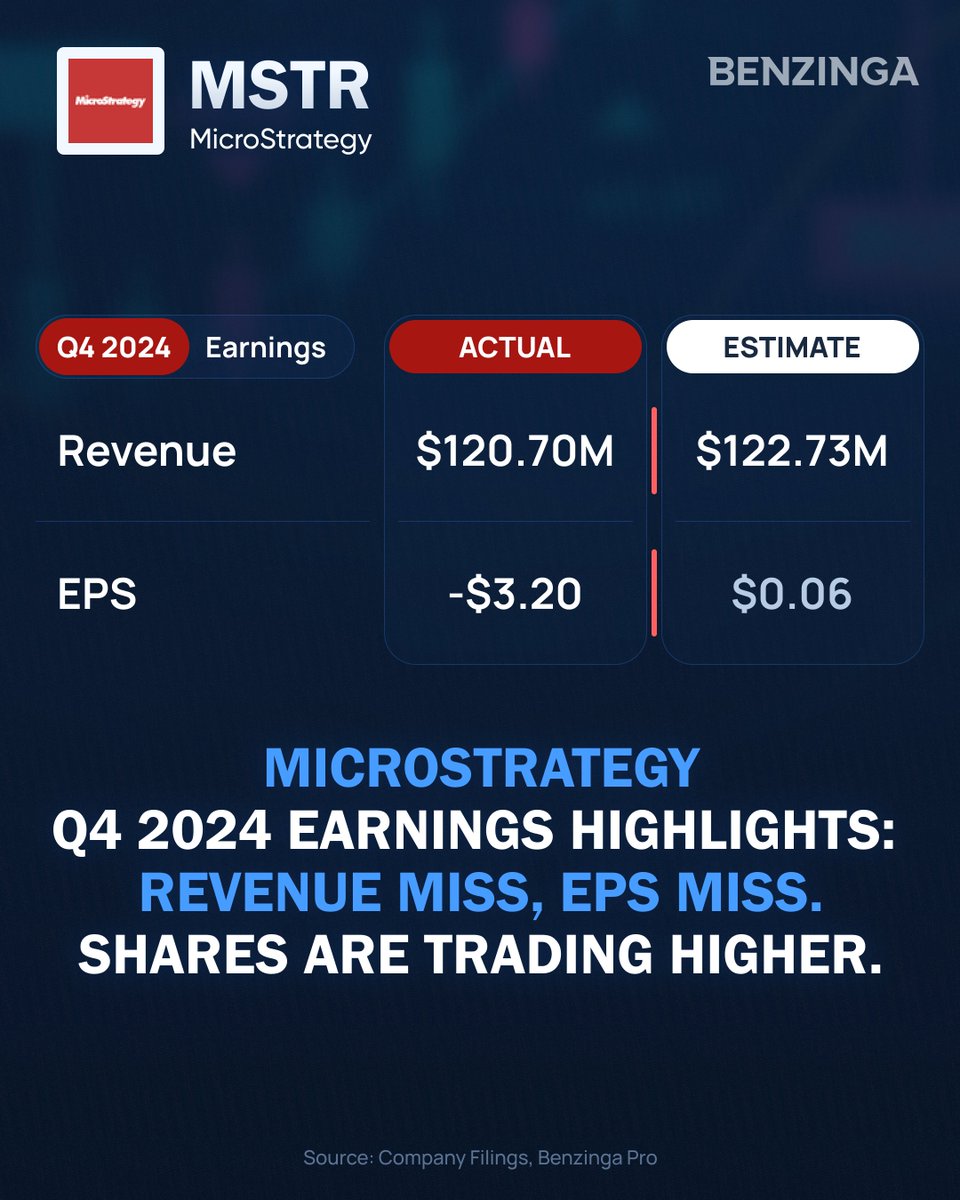
Earnings reports are quarterly financial statements released by publicly traded companies, offering a comprehensive look into their financial health and operational performance over the preceding three months. For MSTR, these reports usually come a few weeks after the close of each fiscal quarter. While the exact dates vary, they are consistently announced beforehand, typically on the company’s investor relations website and through official press releases. Staying informed requires active monitoring of these official channels, as well as reputable financial news outlets and data providers. Delving into MSTR’s earnings process provides crucial insights for both short-term traders reacting to immediate news and long-term investors assessing the company’s strategic trajectory.
Understanding MicroStrategy’s Earnings Reports
Earnings reports are a cornerstone of financial markets, providing a transparent window into a company’s performance. For a company like MicroStrategy, with its dual identity, these reports offer a particularly multifaceted view.
What Are Earnings Reports and Why Do They Matter?
An earnings report is a formal document, usually accompanied by an earnings call, where a public company discloses its financial results for a specific quarter or fiscal year. These reports typically include an income statement, balance sheet, and cash flow statement. The income statement highlights revenue, expenses, and net income, culminating in earnings per share (EPS). The balance sheet provides a snapshot of assets, liabilities, and shareholders’ equity at a specific point in time, while the cash flow statement details how cash is generated and used by the company.
For investors, earnings reports are paramount because they:
-
Assess Performance: They allow shareholders and analysts to evaluate how well the company is performing against its own historical results, against competitor benchmarks, and against analyst expectations.
-
Inform Investment Decisions: Positive or negative surprises in revenue, EPS, or forward guidance can trigger significant stock price movements, influencing buy, sell, or hold decisions.
-
Provide Transparency: They serve as a vital mechanism for corporate accountability, offering investors the necessary data to understand the underlying business.
-
Signal Future Outlook: Management’s commentary and forward guidance are often more impactful than past results, as they provide insights into the company’s future prospects, strategic initiatives, and anticipated challenges.
In MSTR’s context, these reports matter even more due to the interplay between its software business and its substantial Bitcoin treasury. Investors aren’t just looking at software license sales; they’re scrutinizing the state of its digital assets, how they’re accounted for, and management’s evolving strategy in the crypto space.
Key Components of an MSTR Earnings Report
While MicroStrategy’s earnings reports contain the standard financial statements, certain elements demand particular attention given its unique strategy.
Traditional Software Business Metrics:
-
Revenue: Investors look for growth in its core software licensing, subscription services, and support revenue. Consistent growth here signals health in its foundational business.
-
Operating Income/Margins: These metrics indicate the profitability of its software operations before considering non-operating items.
-
Earnings Per Share (EPS): Both GAAP (Generally Accepted Accounting Principles) and non-GAAP EPS are crucial. Non-GAAP often excludes one-time items or non-cash charges that might distort the true operational profitability.
Bitcoin-Specific Metrics and Accounting:
-
Bitcoin Holdings: This is perhaps the most scrutinized figure. The report will detail the total amount of Bitcoin held, the average acquisition cost, and any new purchases or sales during the quarter.
-
Impairment Charges: Under current accounting rules (GAAP), Bitcoin is treated as an indefinite-lived intangible asset. If the fair value of Bitcoin drops below its carrying value (cost basis) at any point during the quarter, MSTR must recognize an impairment charge. This is a non-cash expense that reduces net income, even if the Bitcoin price subsequently recovers. Investors must understand that these are accounting adjustments, not necessarily realized losses, but they can significantly impact reported profitability.
-
Fair Value Disclosure: While impairment uses the lowest market price during the quarter, MSTR often provides supplementary information on the current fair market value of its Bitcoin holdings, giving a clearer picture of their present worth.
-
Debt Related to Bitcoin Strategy: MicroStrategy has funded some of its Bitcoin purchases through convertible notes and other debt instruments. The terms, interest rates, and maturity dates of this debt are critical for assessing financial risk and leverage.
Understanding these intertwined components is vital for a holistic assessment of MSTR’s financial performance and its investment thesis. The stock often reacts not just to the software business’s health but equally, if not more, to the performance and strategic handling of its digital assets.
How to Find MicroStrategy’s Earnings Dates
Knowing when MicroStrategy reports its earnings is the first step in preparing for these market-moving events. Fortunately, several reliable sources make this information readily accessible.
Official Company Resources: Investor Relations
The most authoritative and accurate source for MSTR’s earnings dates, reports, and related materials is the company’s official Investor Relations (IR) website.
-
Direct Access: Navigate to ir.microstrategy.com. Here, you’ll typically find a dedicated section for “Events & Presentations,” “Press Releases,” or “SEC Filings.”
-
Press Releases: MicroStrategy will issue a press release well in advance of the earnings report, announcing the date and time of the release and the subsequent conference call. These releases are archived on the IR site.
-
SEC Filings: For the most detailed financial information, MSTR’s filings with the U.S. Securities and Exchange Commission (SEC) are indispensable. Quarterly reports (Form 10-Q) and annual reports (Form 10-K) are filed shortly after the earnings release. While these filings don’t pre-announce dates, they contain the full, audited financial statements. The SEC’s EDGAR database is publicly accessible for these documents.
-
Webcasts and Transcripts: The IR site also provides access to live webcasts of earnings calls and often publishes transcripts afterward. These are crucial for understanding management commentary beyond the raw numbers.
Always prioritize the company’s official statements to ensure you have the most precise and timely information.
Financial News Outlets and Data Providers
For a broader perspective and to easily track earnings for multiple companies, various financial news outlets and data providers are excellent resources.
-
Major News Agencies: Bloomberg, Reuters, The Wall Street Journal, and CNBC frequently report on upcoming earnings dates for prominent companies like MSTR. They also provide pre-earnings analysis and post-earnings commentary.
-
Financial Data Platforms: Platforms such as Yahoo Finance, Google Finance, Investing.com, MarketWatch, and Seeking Alpha offer dedicated sections for earnings calendars. By simply searching for “MSTR earnings date,” you can often find the scheduled release. These platforms also integrate analyst estimates, historical earnings data, and sometimes links to the company’s press releases.
-
Brokerage Platforms: Many online brokerage accounts offer integrated financial calendars and news feeds that will highlight upcoming earnings for companies in your watchlist or portfolio.
While these sources are generally reliable, it’s always good practice to cross-reference with the company’s official IR site if there’s any ambiguity, as dates can occasionally shift.
Utilizing Financial Calendars
Specialized financial calendars are designed specifically to track earnings dates and other market-moving events.
-
Dedicated Earnings Calendars: Websites like Earnings Whisper, Zacks, and even some advanced features on platforms like StockCharts.com or Finviz offer comprehensive earnings calendars. These often allow you to filter by date, industry, or company ticker.
-
Alerts and Notifications: Many of these platforms, as well as brokerage services, allow you to set up email or mobile alerts for specific companies. This ensures you receive a notification as soon as an earnings date is announced or when the report is released.
-
Integration with Personal Calendars: Some services offer the ability to export earnings dates directly into your personal digital calendar (e.g., Google Calendar, Outlook Calendar), helping you stay organized and plan your research time.
By combining the official resources with the convenience of financial news and dedicated calendars, investors can reliably pinpoint MSTR’s earnings dates and prepare for these critical financial disclosures.
Navigating the Impact of MSTR Earnings
Earnings reports are inherently catalysts for stock price movements, and MicroStrategy’s reports, in particular, often trigger significant volatility due to its dual business model. Understanding these dynamics is key to prudent investment.
Market Reactions and Volatility

The immediate market reaction to an MSTR earnings report can be swift and dramatic. Factors that influence this reaction include:
-
Earnings Beat or Miss: If MSTR’s reported EPS and revenue significantly beat analyst expectations, the stock often rallies. Conversely, a miss can lead to a sharp decline.
-
Guidance: Management’s forward guidance for future quarters (e.g., revenue projections, operating expenses) often holds more weight than past results, as it shapes future expectations. Positive guidance can boost the stock even if current results are mixed, and negative guidance can sink it regardless of a strong prior quarter.
-
Bitcoin Performance & Strategy: Unlike most companies, MSTR’s stock performance is highly correlated with Bitcoin’s price. If the Bitcoin market experienced significant volatility during the reporting quarter, or if management signals a shift in its Bitcoin acquisition strategy, the stock can react independently of the core software business performance.
-
Impairment Charges: Large impairment charges on Bitcoin holdings, while non-cash, can lead to substantial net losses on the income statement, which can spook investors focused solely on the bottom line.
-
Pre-Market/After-Hours Trading: Much of the immediate reaction occurs outside regular trading hours, making MSTR a prime candidate for significant price gaps when the market opens.
This volatility presents both opportunities for short-term traders and challenges for long-term investors trying to filter out the noise.
Long-Term Investment Perspective vs. Short-Term Trading
The approach to MSTR earnings should differ based on an investor’s time horizon and strategy.
-
Long-Term Investors: For those holding MSTR as a long-term investment, the focus should be less on the immediate post-earnings price swing and more on the underlying business fundamentals and strategic direction. Key questions include: Is the core software business growing sustainably? Is management’s Bitcoin strategy coherent and financially sound over the long run? Are they effectively managing debt related to Bitcoin? The goal is to assess whether the earnings report validates or invalidates their long-term thesis, rather than reacting to transient market sentiment.
-
Short-Term Traders: Traders, conversely, thrive on volatility. They might use options strategies (e.g., straddles, strangles) or attempt to predict the direction of the post-earnings move. This requires meticulous analysis of analyst consensus, historical earnings reactions, and an understanding of market psychology. Short-term trading around earnings is high-risk and not suitable for all investors.
It’s crucial for every investor to define their strategy before an earnings report to avoid emotional decisions based on short-lived market reactions.
The Bitcoin Factor: MSTR’s Unique Position
MicroStrategy’s substantial Bitcoin holdings, often positioning it as a “Bitcoin proxy” or “leveraged Bitcoin play,” give its earnings a unique dimension.
-
De Facto Bitcoin ETF: For many institutional investors restricted from direct crypto exposure, MSTR has served as an accessible way to gain Bitcoin exposure through a publicly traded equity. This means its stock price often mirrors Bitcoin’s movements, sometimes with amplified volatility due to its leverage.
-
Sensitivity to Bitcoin Price: A significant portion of MSTR’s valuation is tied to the market value of its Bitcoin stack. Therefore, the price of Bitcoin leading up to and during the earnings period can heavily influence investor expectations and the stock’s reaction.
-
Strategic Commentary: Management’s commentary on its Bitcoin strategy during the earnings call is just as important as the financial numbers. Any changes in philosophy regarding accumulation, potential uses of Bitcoin, or views on the regulatory environment can send strong signals to the market.
-
Impact of Impairment: While a non-cash accounting item, the size of Bitcoin impairment charges can overshadow otherwise strong performance in the software business. Investors must learn to differentiate between operational profitability and accounting-driven losses related to its digital assets.
This “Bitcoin factor” fundamentally differentiates MSTR’s earnings reports from those of typical software companies, demanding a more nuanced analytical approach.
What to Look for in MicroStrategy’s Earnings Call
While the written earnings report provides the raw data, the earnings conference call offers invaluable context, strategic insights, and an opportunity to hear directly from management. Listening in or reading the transcript is essential for a comprehensive understanding.
Revenue and Profitability Metrics
During the earnings call, management will typically walk through the headline financial figures, but it’s the deeper dive and commentary that provides real value.
-
Software Business Health: Listen for details on the performance of its core analytics and enterprise software segments. Are new customer acquisitions accelerating? Are existing clients expanding their usage? What are the trends in recurring revenue (subscriptions)? This provides insight into the sustainability of its original business model.
-
Gross and Operating Margins: Pay attention to trends in these margins. Are they improving or declining? What factors are impacting them (e.g., increased R&D, sales & marketing expenses, efficiency gains)? Healthy margins indicate strong operational efficiency and pricing power.
-
Cash Flow from Operations: While net income can be affected by non-cash Bitcoin impairments, cash flow from operations reflects the actual cash generated by the software business. Strong, consistent cash flow is vital for funding growth and managing debt.
-
Analyst Questions: The Q&A session can be particularly revealing. Analysts often probe into specific revenue drivers, cost structures, and profitability challenges, forcing management to elaborate beyond prepared remarks.
Understanding the narrative behind these numbers helps differentiate between temporary fluctuations and fundamental shifts in the software business.
Bitcoin Holdings and Strategy Updates
This is where MSTR’s earnings call truly stands apart. The discussion around its digital assets is often as, if not more, critical than the traditional financial metrics.
-
Latest Bitcoin Holdings: Management will confirm the total amount of Bitcoin held as of the quarter’s end, the average cost basis, and any new acquisitions or dispositions. This is the most anticipated number for many investors.
-
Bitcoin Strategy Rationale: Listen for management’s ongoing justification for its Bitcoin strategy. Are they reaffirming their long-term conviction? Are there any adjustments to their accumulation thesis?
-
Leverage and Debt Management: MicroStrategy has used various debt instruments, including convertible notes, to fund its Bitcoin purchases. Management will typically provide updates on its debt profile, liquidity position, and plans for debt repayment or refinancing. How they manage this leverage in fluctuating Bitcoin markets is crucial.
-
Accounting Implications: While they can’t change GAAP rules, management often uses the call to explain the impact of impairment charges, emphasizing their non-cash nature and providing a “pro forma” or adjusted view of profitability that excludes these charges to highlight core business performance.
-
Future Plans for Bitcoin: Are there any discussions about leveraging the Bitcoin holdings in new ways, such as lending, staking (if applicable), or using it as collateral for operational funding without selling?
Any commentary on the macroeconomic environment and its influence on Bitcoin, or regulatory developments in the crypto space, will also be closely monitored.
Forward Guidance and Market Commentary
Perhaps the most forward-looking aspect of the earnings call is the guidance management provides for upcoming periods and their broader market commentary.
-
Quarterly/Annual Guidance: Management will often issue or reiterate financial guidance for the next quarter or the full fiscal year, including expected revenue ranges, operating expenses, and sometimes capital expenditures. This guidance heavily influences analyst models and market expectations.
-
Strategic Priorities: Listen for discussions about strategic initiatives in the software business, such as new product development, market expansion, or partnerships. Also, any updates on their Bitcoin strategy, and how it integrates with or impacts the software business.
-
Industry Outlook: Management’s perspective on the overall enterprise software market, competitive landscape, and the cryptocurrency market provides valuable context. Are they optimistic or cautious? What headwinds or tailwinds do they foresee?
-
Q&A Insights: During the analyst Q&A session, listen carefully to the questions and management’s unfiltered responses. Analysts often ask tough questions about profitability, competitive pressures, debt, and the long-term viability of the Bitcoin strategy. The nuances in the answers can be very telling.
The earnings call is not just about the numbers; it’s about the narrative, the strategic vision, and the human element behind the corporate performance.
Integrating MSTR Earnings into Your Investment Strategy
Understanding and reacting to MSTR’s earnings reports requires a structured approach to integrate this information into your broader investment strategy, ensuring decisions are based on data and thoughtful analysis rather than impulsive reactions.
Pre-Earnings Research and Due Diligence
Preparation is key to effectively processing an earnings report. Before MSTR releases its numbers, engage in thorough due diligence:
-
Review Past Reports: Revisit MicroStrategy’s previous earnings reports, especially the immediately preceding one. Understand historical trends in revenue, profitability, and Bitcoin acquisitions.
-
Analyze Analyst Estimates: Research what analysts are expecting for MSTR’s EPS and revenue. Financial data providers (like Refinitiv Eikon, FactSet, or even free sources like Yahoo Finance) aggregate these estimates. Understand the consensus, as beating or missing these expectations often drives immediate stock movements.
-
Assess Macroeconomic Environment: Consider the broader economic climate, interest rate expectations, and, crucially, the performance of Bitcoin. A strong Bitcoin run leading into earnings might set higher expectations, while a downturn could dampen sentiment.
-
Formulate Your Own Expectations: Based on your research, develop your own reasoned expectations for the key metrics. This allows you to evaluate the actual results against a personal benchmark, rather than solely relying on analyst consensus.
-
Define Your Reaction Plan: Decide in advance how you might react to various outcomes (e.g., strong software performance with Bitcoin impairment, weak software with Bitcoin strength, unexpected strategic changes). This helps to minimize emotional decision-making post-release.
This proactive approach equips you with the necessary context to critically evaluate the earnings announcement.
Post-Earnings Analysis and Decision Making
Once the earnings report is out and the call concludes, the real work begins:
-
Compare Actuals to Expectations: Immediately compare MSTR’s reported revenue, EPS, Bitcoin holdings, and guidance against analyst consensus and your own pre-earnings expectations.
-
Deep Dive into the Report and Call: Don’t just look at headlines. Read the full earnings release, listen to the entire earnings call, and review the investor presentation. Pay close attention to management’s commentary, the Q&A session, and any non-GAAP adjustments.
-
Evaluate Key Drivers: Identify why the company performed as it did. Was it strong software growth, successful Bitcoin accumulation, cost management, or external factors? For MSTR, specifically, assess the balance between the performance of its core business and the impact of its Bitcoin strategy.
-
Re-evaluate Investment Thesis: Does the earnings report confirm, challenge, or invalidate your original investment thesis for MSTR? Perhaps the software business is weaker than expected, or the Bitcoin strategy has a new wrinkle. Adjust your thesis accordingly.
-
Monitor Market Reaction: While not the sole determinant, observe how the market reacts over the day or two following the report. This can provide insights into prevailing sentiment and how other sophisticated investors are interpreting the news.
-
Long-Term Impact vs. Short-Term Noise: Distinguish between short-term market noise (often exaggerated post-earnings volatility) and long-term implications for MSTR’s value proposition. A temporary dip due to an accounting impairment might be an opportunity for a long-term investor, whereas a fundamental shift in core business health could be a red flag.
Based on this comprehensive analysis, you can then make informed decisions regarding your MSTR position, whether it’s to hold, add, or reduce your exposure.

Diversification and Risk Management
Investing in MSTR, given its unique strategy, inherently carries specific risks that necessitate sound diversification and risk management principles.
-
Concentration Risk: MicroStrategy has a highly concentrated bet on Bitcoin. While this has delivered significant returns at times, it also exposes the company (and its shareholders) to substantial cryptocurrency market volatility. Ensure MSTR, particularly if seen as a Bitcoin proxy, does not represent an overly large portion of your total portfolio, unless you are comfortable with that level of concentrated risk.
-
Software Business Risk: While Bitcoin often steals the spotlight, MSTR is still an enterprise software company. It faces competition, technological obsolescence risks, and business cycle dependencies inherent to the software industry. Assess these risks independently.
-
Accounting Risk (Bitcoin Impairment): Understand that GAAP accounting for Bitcoin can lead to reported losses that do not reflect actual cash losses unless Bitcoin is sold at a lower price. However, these impairments can still impact investor perception and balance sheet health.
-
Debt Risk: MicroStrategy has leveraged debt to acquire Bitcoin. While the company manages this, rising interest rates or a prolonged decline in Bitcoin’s value could put pressure on its ability to service or refinance this debt.
-
Regulatory Risk: The cryptocurrency landscape is subject to evolving regulatory frameworks. Changes in regulations could impact MSTR’s ability to hold, acquire, or potentially leverage its Bitcoin.
Diversifying your portfolio across different asset classes, industries, and geographies is crucial. MSTR, with its distinct profile, should be viewed as one component within a broader, well-thought-out investment strategy, with appropriate position sizing to manage its inherent volatility and specific risks. By diligently researching, analyzing, and managing risk, investors can navigate the complexities of MSTR’s earnings and its unique position in the market.
aViewFromTheCave is a participant in the Amazon Services LLC Associates Program, an affiliate advertising program designed to provide a means for sites to earn advertising fees by advertising and linking to Amazon.com. Amazon, the Amazon logo, AmazonSupply, and the AmazonSupply logo are trademarks of Amazon.com, Inc. or its affiliates. As an Amazon Associate we earn affiliate commissions from qualifying purchases.