
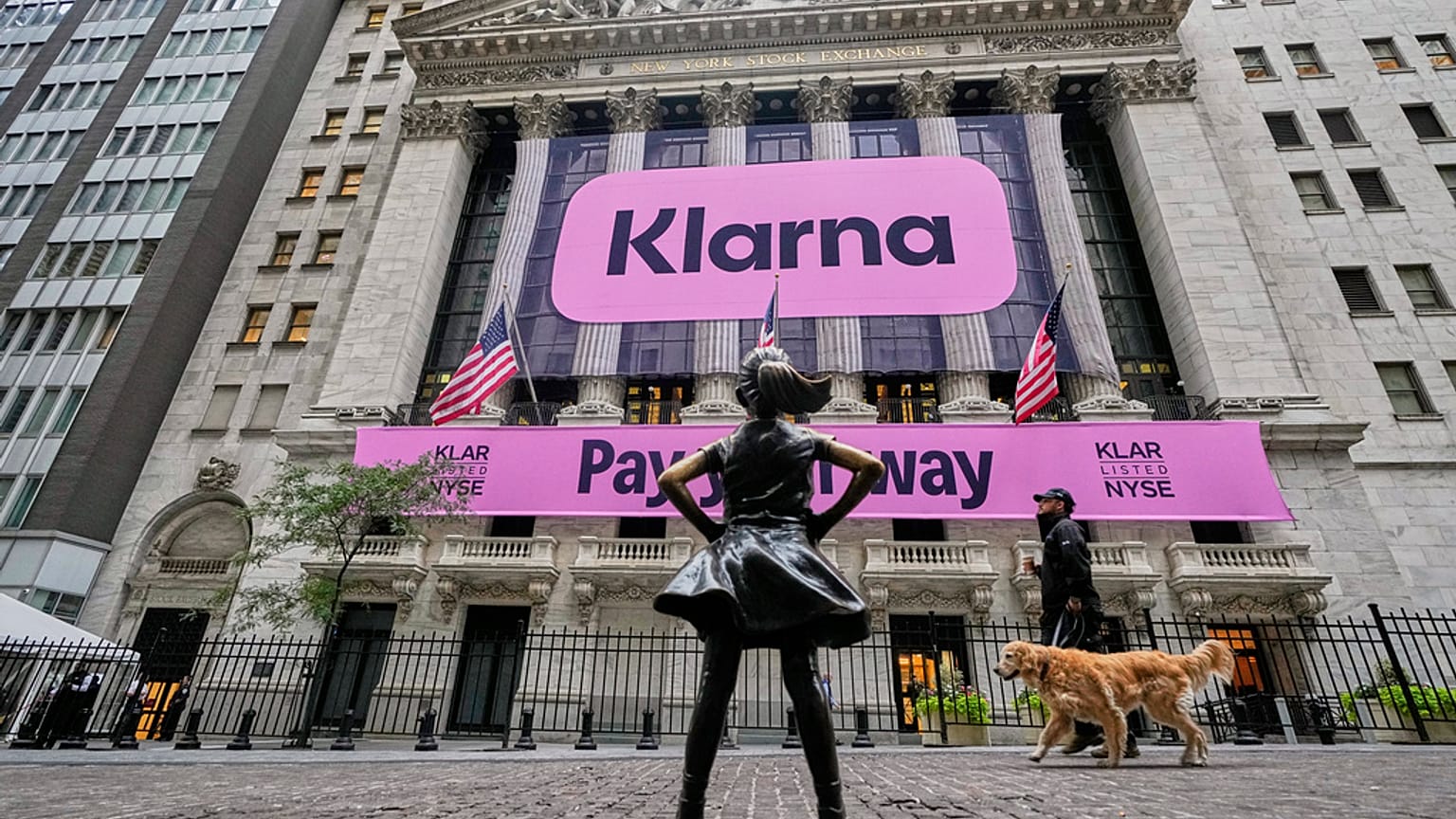
The financial world buzzes with speculation about when Klarna, the Swedish buy now, pay later (BNPL) behemoth, will make its highly anticipated public debut. As one of the most prominent names in the FinTech sector, Klarna’s journey to an Initial Public Offering (IPO) is not merely a corporate milestone; it’s a bellwether for the broader FinTech market, an investment opportunity for many, and a reflection of evolving consumer finance trends. For investors, financial analysts, and market watchers, understanding the timing and implications of Klarna going public requires a deep dive into its business model, financial health, the prevailing market conditions, and the intricate mechanics of an IPO. This article will explore the myriad factors influencing Klarna’s decision to go public, what such an event might entail for the company and its investors, and what to watch for as the world awaits the listing of this digital payment disruptor.
Klarna’s Ascent: Redefining Consumer Finance
Klarna has grown from a fledgling Swedish startup into a global financial technology powerhouse, fundamentally altering how millions of consumers approach payments and credit. Its innovative approach has positioned it at the forefront of a financial revolution.
The Buy Now, Pay Later Phenomenon
Klarna pioneered the “Buy Now, Pay Later” (BNPL) model, which allows consumers to split purchases into interest-free installments, typically paid over a short period. This model has resonated deeply with a generation of consumers seeking alternatives to traditional credit cards, offering flexibility without the immediate burden of interest or complex credit checks. Klarna’s platform integrates seamlessly with thousands of retailers worldwide, driving significant sales volumes for merchants while providing a transparent, user-friendly payment experience for shoppers. Its global adoption underscores a fundamental shift in consumer behavior towards flexible, digital-first payment solutions, with Klarna at the forefront of this transformation, boasting millions of active users across multiple continents.
Financial Milestones and Market Valuations
Klarna’s trajectory has been marked by impressive growth and significant capital injections. Through numerous private funding rounds, the company attracted top-tier investors, propelling its valuation to a peak of $45.6 billion in 2021, making it Europe’s most valuable private FinTech at the time. This staggering valuation reflected the market’s enthusiasm for its disruptive BNPL model and rapid user acquisition. However, like many high-growth tech companies, Klarna faced a recalibration of market expectations amid rising interest rates and a global economic slowdown. Its valuation subsequently adjusted, signaling a pivot in investor sentiment from pure growth to a greater emphasis on profitability and sustainable financial health—a crucial factor influencing any IPO decision.
The IPO Landscape: Timing and Market Dynamics
The decision of when to go public is multifaceted, hinging not just on a company’s internal readiness but also on the external market environment. For Klarna, navigating current economic conditions is paramount.
Navigating Economic Headwinds
The global IPO market has experienced a significant slowdown since the frenzied activity of 2020-2021. Rising interest rates, persistent inflation, and fears of a recession have dampened investor appetite, particularly for growth-oriented companies that may not yet be consistently profitable. Investors are increasingly prioritizing established profitability and robust free cash flow over speculative growth stories. For a company like Klarna, which has invested heavily in expansion and customer acquisition, demonstrating a clear and sustainable path to profitability becomes critical. The current economic headwinds mean that Klarna must choose an opportune moment when market stability returns, and investor sentiment favors companies with a strong financial footing capable of weathering economic uncertainty.
Regulatory Oversight and Competitive Pressures
The BNPL sector, once lightly regulated, is now under increasing scrutiny from financial authorities worldwide. Concerns about consumer debt, transparency of terms, and creditworthiness checks are prompting regulators in the U.S., Europe, and Australia to consider tighter rules. These potential regulations could impact Klarna’s business model, affecting its revenue streams and operational costs, and subsequently, its valuation prospects. Simultaneously, the competitive landscape is intensifying. Traditional banks are launching their own installment payment options, tech giants are exploring BNPL, and established payment networks are integrating similar features. Klarna must demonstrate its ability to innovate, diversify its offerings beyond core BNPL, and maintain its market leadership amidst this growing competition to present a compelling investment case to public market investors.
Unpacking the IPO Process: What to Expect
Preparing for an IPO is an extensive and complex undertaking, involving meticulous financial scrutiny, legal compliance, and strategic positioning to attract institutional investors. Klarna’s journey to a public listing will follow a well-defined, albeit challenging, path.

The Path to Public Listing
The IPO process typically begins with a company engaging investment banks to act as underwriters, who advise on valuation, pricing, and market timing. This leads to the preparation of a detailed registration statement (e.g., an S-1 filing in the U.S.) that discloses comprehensive financial data, business operations, and risk factors to potential investors. Following the filing, Klarna’s management team would embark on a “roadshow,” meeting with large institutional investors globally to gauge interest and build demand for its shares. This period is crucial for setting the initial offer price, which aims to strike a balance between maximizing capital raised and ensuring a successful aftermarket performance. The final step involves the shares being listed on an exchange, making them available for public trading for the first time.
Valuation Challenges and Investor Appetite
One of the most significant challenges for Klarna’s IPO will be its valuation in the public market compared to its peak private valuation. After seeing its valuation significantly reduced in later private rounds, Klarna will need to present a compelling narrative that justifies its public market pricing. Investors will scrutinize key metrics such as gross merchandise volume (GMV), customer acquisition costs, average transaction values, and, critically, its path to consistent profitability. The ability to demonstrate a clear strategy for sustained revenue growth, efficient operational scaling, and a differentiated competitive advantage will be paramount. Institutional investors will weigh Klarna’s market leadership against the inherent risks of the FinTech sector, including regulatory changes and heightened competition, to determine their appetite for the stock.
Implications for Investors and the FinTech Ecosystem
A Klarna IPO would be a landmark event, not only for the company itself but for the broader investment community and the evolving FinTech landscape.
A New Investment Opportunity
For individual and institutional investors, a Klarna IPO would introduce a significant new player to the public markets, offering exposure to the rapidly expanding digital payments and BNPL sector. Investors seeking growth opportunities in consumer finance, particularly those interested in companies with a strong brand and global reach, would find Klarna a potentially attractive option. However, investing in an IPO, especially of a growth-oriented FinTech, carries inherent risks. Potential investors would need to carefully assess Klarna’s financial performance, competitive positioning, and exposure to regulatory changes. The stock’s volatility in the initial trading periods could be high, requiring investors to have a long-term perspective and a clear understanding of the company’s fundamentals and strategic vision.
Setting a Precedent for Future FinTech IPOs
Klarna’s performance post-IPO will be closely watched by other private FinTech companies contemplating their own public listings. A successful IPO with strong market reception could rekindle investor confidence in the sector, potentially opening the door for a new wave of FinTech companies to go public. Conversely, a challenging debut or underperformance could cast a shadow over the industry, making it harder for other private FinTechs to achieve favorable valuations or attract public capital. Klarna’s journey will serve as a crucial benchmark, providing valuable insights into how public markets value mature BNPL businesses and innovative digital payment platforms in the current economic climate, thereby shaping the future trajectory of FinTech IPOs.
The Road Ahead: Anticipating Klarna’s Public Future
While the question of “when” remains central, the indicators and strategic considerations that will ultimately lead to Klarna’s IPO are becoming clearer. The company and the market are in a dynamic state of preparation.
Key Indicators to Monitor
To anticipate Klarna’s public debut, market watchers should closely monitor several key indicators. Foremost among these are Klarna’s financial results, particularly its progress towards consistent profitability and positive cash flow. Any statements from CEO Sebastian Siemiatkowski or other executives regarding strategic shifts, market expansion, or financial readiness will be highly instructive. Furthermore, the broader macroeconomic environment and the health of the IPO market will play a pivotal role. A sustained period of market stability, lower inflation, and renewed investor confidence in growth equities would likely create a more favorable window for Klarna to make its move, indicating that the conditions are ripe for a successful listing.

The Elusive Timeline
Despite the persistent speculation, a precise timeline for Klarna’s IPO remains elusive. Companies typically keep their IPO plans under wraps until they are confident about market conditions and their internal readiness. The decision to go public is a strategic one, aimed at maximizing long-term shareholder value rather than simply hitting a predetermined date. It involves complex financial engineering, legal due diligence, and navigating dynamic market sentiment. While rumors and analyst predictions may swirl, the reality is that Klarna will likely choose a moment when its financials are robust, regulatory certainty is clearer, and the broader market is receptive to a high-profile FinTech listing. This strategic patience ensures that when Klarna does go public, it is positioned for sustained success in the demanding public market environment.
In conclusion, Klarna’s eventual IPO is not just an event; it’s a testament to the ongoing evolution of consumer finance and a significant moment for the global investment community. While the exact date remains a moving target, contingent on a confluence of internal readiness and external market forces, the anticipation highlights Klarna’s pivotal role in the FinTech revolution. For investors, understanding its business, financial trajectory, and the broader market context will be key to navigating this potentially lucrative, yet complex, investment opportunity when the Swedish giant finally rings the opening bell.
aViewFromTheCave is a participant in the Amazon Services LLC Associates Program, an affiliate advertising program designed to provide a means for sites to earn advertising fees by advertising and linking to Amazon.com. Amazon, the Amazon logo, AmazonSupply, and the AmazonSupply logo are trademarks of Amazon.com, Inc. or its affiliates. As an Amazon Associate we earn affiliate commissions from qualifying purchases.