
Navigating the labyrinthine world of airline ticket pricing can often feel like a high-stakes game of chance. For budget-conscious travelers and savvy financial planners alike, the perennial question – “When is cheapest to book flights?” – isn’t just about convenience; it’s a critical component of personal finance, impacting overall travel budgets and discretionary spending. While there’s no single, universally infallible answer, understanding the underlying dynamics of airline pricing, leveraging strategic timing, and employing smart financial tools can significantly tip the scales in your favor, transforming a daunting task into a manageable strategy for savings.
The pursuit of the lowest airfare is more than just a quest for a bargain; it’s an exercise in understanding market forces, demand elasticity, and the sophisticated algorithms that govern one of the most volatile pricing models in the consumer market. This article will delve into the mechanisms behind flight pricing, offering actionable insights and practical strategies to help you identify the optimal booking windows, utilize effective tools, and ultimately, secure the best possible value for your travel investment.
The Dynamic World of Airline Pricing: More Than Just Supply and Demand
At its core, airline ticket pricing is a masterclass in dynamic pricing, a complex system designed to maximize revenue by adjusting prices based on a multitude of real-time factors. This isn’t just about basic supply and demand; it’s a finely tuned financial operation.
Understanding Yield Management
Airlines employ sophisticated “yield management” systems, which are essentially advanced algorithms that predict demand and adjust prices accordingly. These systems analyze historical data, current booking trends, competitor pricing, route popularity, seasonal variations, and even external factors like holidays or major events. The goal is to sell every seat at the highest possible price, ensuring a mix of early birds, last-minute business travelers, and everyone in between pays what the market will bear. Seats are categorized into different fare classes, each with a different price point and set of restrictions, even on the same flight. As lower fare classes sell out, the price for the remaining seats increases, even if the plane is still relatively empty.
Factors Influencing Price Fluctuations
Beyond yield management, several tangible factors constantly influence flight prices. Fuel costs are a major operational expense, and significant fluctuations can be passed on to consumers. Economic conditions, both global and regional, affect discretionary travel spending. Geopolitical events, natural disasters, and even public health crises can dramatically alter travel patterns and, consequently, pricing. Airline competition on specific routes also plays a pivotal role; a route with multiple carriers vying for passengers is likely to have more competitive pricing than a monopolized one. Lastly, seasonality and specific events (e.g., major sporting events, music festivals, school holidays) create predictable surges in demand, inevitably leading to higher prices.
The Myth of a Single “Cheapest Day”
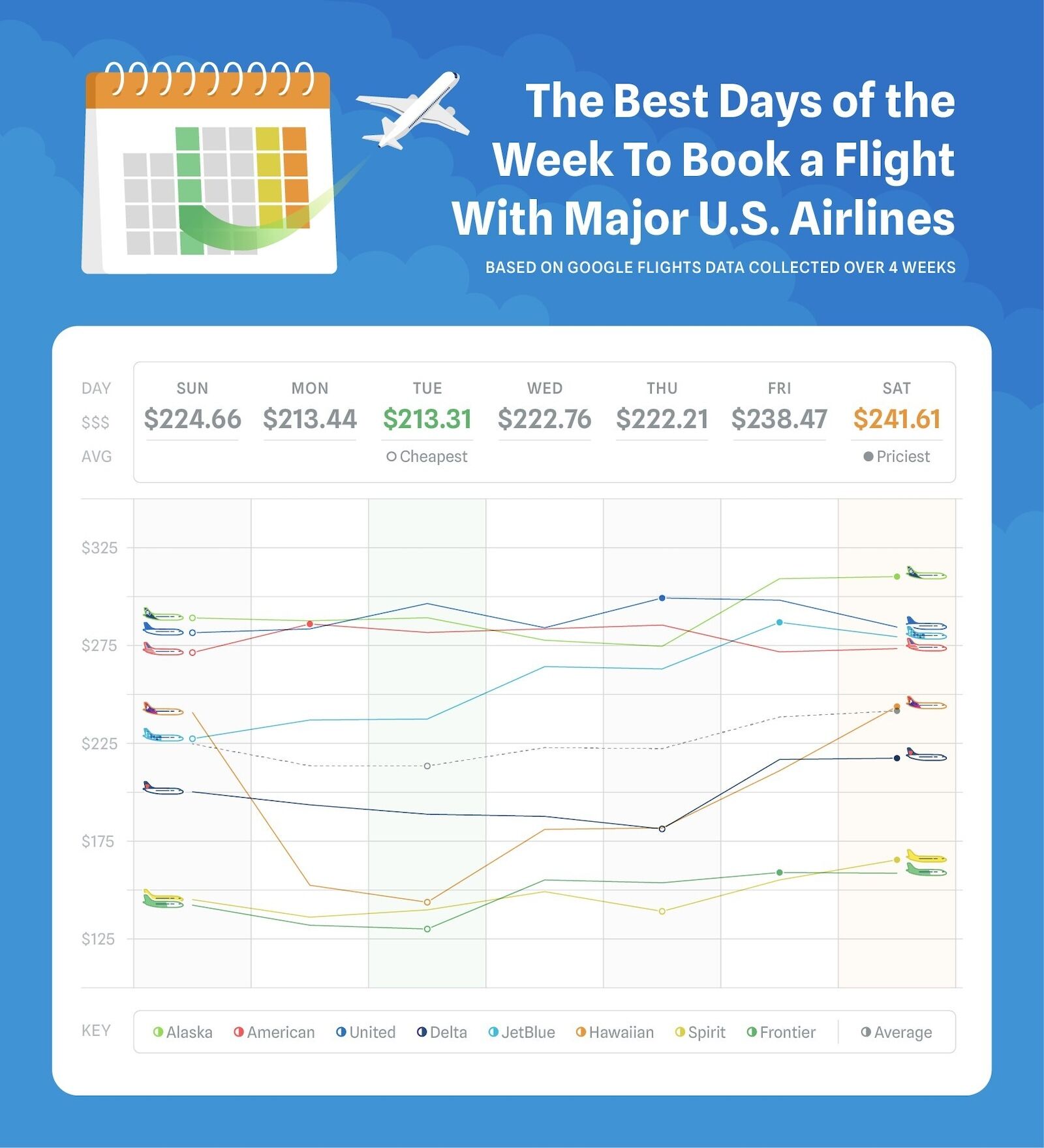
For years, travel folklore has propagated the idea of a “cheapest day to book flights” – often Tuesday. While there’s a kernel of truth in the idea that airlines might release sales or adjust prices mid-week, the reality is far more nuanced. Price changes are continuous, happening multiple times a day. While a Tuesday morning might occasionally yield a better deal, it’s not a guaranteed phenomenon. Relying solely on a specific day overlooks the broader, more influential factors that determine true savings. The “cheapest day” is less about a fixed calendar day and more about catching a dynamic price drop when it occurs, which can happen any day of the week.
Optimal Booking Windows: Navigating the Sweet Spot
Instead of focusing on a specific day, a more effective financial strategy is to understand and target the “optimal booking window” – the period leading up to departure when prices are, on average, at their lowest. This window varies significantly between domestic and international travel.
Domestic vs. International Flights: Different Timelines
The complexity of international flight logistics, coupled with varying visa requirements and larger lead times for vacation planning, means that optimal booking windows differ substantially. Domestic flights, being shorter and less logistically complex, typically have a narrower window.
The 3-Month to 3-Week Rule (Domestic)
For domestic flights within countries like the U.S., Canada, or within the EU, the “Goldilocks Zone” generally falls between 3 months and 3 weeks before departure. This period allows airlines to gauge initial demand and adjust prices before the last-minute scramble. Booking too early (e.g., 6+ months out) can mean missing out on sales or price drops as airlines refine their schedules and competitor pricing. Booking too late (e.g., within 3 weeks) often sees a sharp increase in prices as business travelers, who often book closer to departure and are less price-sensitive, start filling up remaining seats. The absolute “cheapest” day within this window is often cited as roughly 54 days out, but this is an average and can fluctuate based on specific routes and seasons.
The 6-Month to 1-Month Rule (International)
International travel demands a longer planning horizon, both for the traveler and the airline. For long-haul international flights, the optimal booking window typically extends from 6 months down to 1 month before departure. This extended period allows for better opportunities to catch sales, especially for popular routes or peak travel seasons. Booking 3-4 months out is often cited as a sweet spot for many international destinations. Beyond the 1-month mark, prices tend to escalate dramatically as availability dwindles and airlines capitalize on less flexible travelers. For extremely popular routes or peak holiday travel (e.g., Christmas, New Year’s, summer in Europe), extending this window to 9-12 months can sometimes yield better results, especially for premium cabins.
The “Goldilocks Zone” and Its Exceptions
While these rules provide a strong guideline, they are averages. The “Goldilocks Zone” – not too early, not too late – is the ideal, but exceptions abound. For instance, traveling during off-peak seasons (e.g., shoulder seasons in Europe, hurricane season in the Caribbean) can sometimes allow for cheaper last-minute deals. Conversely, booking during major holidays or events (e.g., Olympics, Super Bowl, major festivals) requires booking much further in advance, often 9-12 months out, as demand is extraordinarily high and prices will only climb. Flexibility with travel dates is often the single biggest lever for finding deals outside these optimal windows.
Strategic Timing: Day of the Week and Time of Day
While the general optimal booking window is crucial, fine-tuning your search to specific days of the week and even times of day can further refine your financial advantage.

Is Tuesday Really Cheaper? (Analyzing mid-week patterns)
The enduring myth of Tuesday being the cheapest day to book stems from airlines potentially releasing sales or matching competitor prices early in the week after weekend travel bookings have been analyzed. While price fluctuations are constant, some data suggests that mid-week (Tuesday and Wednesday) can sometimes show lower average prices for booking compared to weekends, simply because fewer people are actively shopping. However, this is more a trend than a hard rule, and the savings are often marginal compared to booking within the overall optimal window. The critical insight here is that airlines monitor and adjust continuously, so consistency in checking across several days is more valuable than rigid adherence to Tuesday.
The Best Day to Fly vs. The Best Day to Book
It’s essential to distinguish between the best day to book a flight and the best day to fly. The cheapest days to fly are almost invariably mid-week (Tuesday, Wednesday, sometimes Thursday) and typically exclude Saturdays, Sundays, and Mondays. Early morning or late-night flights also tend to be cheaper due to lower demand. Flying during off-peak seasons and avoiding major holidays will always result in significant savings, irrespective of when you book. Combining booking during an optimal window with flying on a cheaper day can lead to substantial financial benefits.
The Impact of Time Zones and Off-Peak Booking
Some experts suggest that searching for flights during off-peak hours, particularly late at night or very early morning in your target airline’s home time zone, can occasionally yield better prices. This theory suggests that fewer people are actively searching, and algorithms might temporarily drop prices to stimulate demand. While not universally proven, it’s a low-effort tactic worth trying in conjunction with other strategies. It also highlights the global nature of airline pricing; a price drop initiated by an airline in Asia might be visible to you during your local evening hours.
Leveraging Tools and Tactics for Savings
In today’s digital age, a wealth of financial tools and savvy tactics can empower travelers to make more informed booking decisions and maximize savings.
Price Comparison Websites and Aggregators
Platforms like Google Flights, Skyscanner, Kayak, Expedia, and others are indispensable. They aggregate data from hundreds of airlines and online travel agencies (OTAs), allowing you to compare prices across various providers quickly. Crucially, many of these tools offer flexible date searches (e.g., “cheapest month to fly to X”) and “everywhere” searches, which are excellent for finding inspiration if your destination is flexible. Always cross-reference prices directly on the airline’s website after finding a good deal, as sometimes they offer exclusive lower fares or better ancillary options.
Price Alerts and Prediction Tools
Many comparison websites offer price alert features. You can set up alerts for specific routes and dates, and you’ll receive notifications when the price drops. This eliminates the need for constant manual checking and is an excellent passive financial strategy. Some tools, like Google Flights, also offer “price prediction” insights, indicating whether current prices are high, low, or average based on historical data, advising you whether to book now or wait. These predictions, while not foolproof, can provide valuable guidance.
Flexibility is Your Friend (Dates, Airports)
The less rigid your travel plans, the more likely you are to find a deal. Being flexible by a day or two on either side of your preferred departure/return dates can sometimes slash hundreds off a ticket price. Similarly, considering alternative airports within a reasonable commuting distance can open up new pricing opportunities, especially in major metropolitan areas with multiple airfields (e.g., NYC, London, Paris). Sometimes, flying into a smaller, regional airport near your final destination and taking ground transport can be significantly cheaper than flying directly into the primary hub.
The Art of Incognito Browsing and Cookies
A common piece of advice is to use incognito or private browsing mode when searching for flights. The theory is that travel websites use cookies to track your searches, potentially raising prices on routes you’ve repeatedly viewed, assuming you’re highly interested and will pay more. While the impact of this is debated and not consistently proven to affect airline direct pricing (more likely to impact OTA markups), it’s a simple, harmless precaution to take. Clearing your browser’s cookies and cache regularly can serve a similar purpose.
Consider Budget Airlines and Layovers
While not for everyone, budget airlines can offer significant savings, especially for short-haul flights. Be aware of their business model, which often involves charging extra for everything from checked baggage and seat selection to in-flight meals. Factor these potential add-on costs into your total budget when comparing prices. Similarly, opting for flights with longer layovers or multiple stops can often result in considerably lower fares than direct routes. If your time is flexible and you prioritize financial savings, this can be a viable strategy.
Common Pitfalls and Advanced Strategies
Even with the best intentions, travelers can fall into common traps or overlook more advanced tactics that could lead to further savings.
Avoiding Last-Minute Premium Pricing
A cardinal rule for financial efficiency in flight booking is to avoid last-minute bookings, particularly for leisure travel. Airlines know that travelers booking within 2-3 weeks of departure are often business travelers or those with urgent needs, who are typically less price-sensitive. Consequently, prices skyrocket. Unless it’s an exceptional and rare distressed inventory sale, waiting until the last minute is a costly gamble.
The Danger of Booking Too Early (Schedule Changes, Better Deals)
While avoiding last-minute is key, booking excessively early (e.g., 10-12 months out for non-peak domestic flights) also has its downsides. Airlines often have provisional schedules that far out, and changes (times, aircraft, even cancellations) are more likely to occur, leading to potential inconvenience. Furthermore, early prices might be set high to capture early planners, and better deals could emerge as the optimal booking window approaches and airlines adjust to market dynamics.
Exploring Open-Jaw Flights and Multi-City Tickets
For international or multi-destination trips, consider open-jaw flights (flying into one city and out of another) or multi-city tickets. These can sometimes be more cost-effective than booking separate one-way tickets or round trips to/from the same airport, particularly when connecting different regions. Travel aggregators usually have dedicated multi-city search functions that facilitate this financial optimization.

Loyalty Programs and Credit Card Perks
For frequent travelers, leveraging airline loyalty programs and travel-focused credit cards can yield substantial financial benefits over time. Earning miles or points through flying or everyday spending can lead to free flights, upgrades, or discounts. Many travel credit cards also offer sign-up bonuses worth significant miles, travel credits, baggage fee waivers, or access to airport lounges, all of which contribute to reducing the overall financial burden of travel. Always evaluate the annual fees against the benefits to ensure a net positive return on investment.
Ultimately, securing the cheapest flight is less about a magical date and more about a strategic, informed approach rooted in understanding market behavior and utilizing available financial tools. By adopting a flexible mindset, planning within optimal windows, and consistently applying these tactics, you can transform the often-stressful process of booking flights into a rewarding exercise in personal financial management, leaving more money in your wallet for the journey itself.
aViewFromTheCave is a participant in the Amazon Services LLC Associates Program, an affiliate advertising program designed to provide a means for sites to earn advertising fees by advertising and linking to Amazon.com. Amazon, the Amazon logo, AmazonSupply, and the AmazonSupply logo are trademarks of Amazon.com, Inc. or its affiliates. As an Amazon Associate we earn affiliate commissions from qualifying purchases.