
For the modern investor, few events on the financial calendar carry as much weight as the quarterly earnings announcement from Advanced Micro Devices, Inc. (AMD). As a bellwether for the semiconductor industry and a cornerstone of many growth-oriented portfolios, AMD’s financial disclosures offer more than just a glimpse into one company’s health; they provide a diagnostic report on the broader global economy, the pace of AI integration, and the shifting dynamics of the data center market. Understanding when AMD reports its earnings and, more importantly, how to interpret those figures is a fundamental skill for anyone looking to master the art of equity investing.

The Financial Calendar: Timing Your Entry and Exit
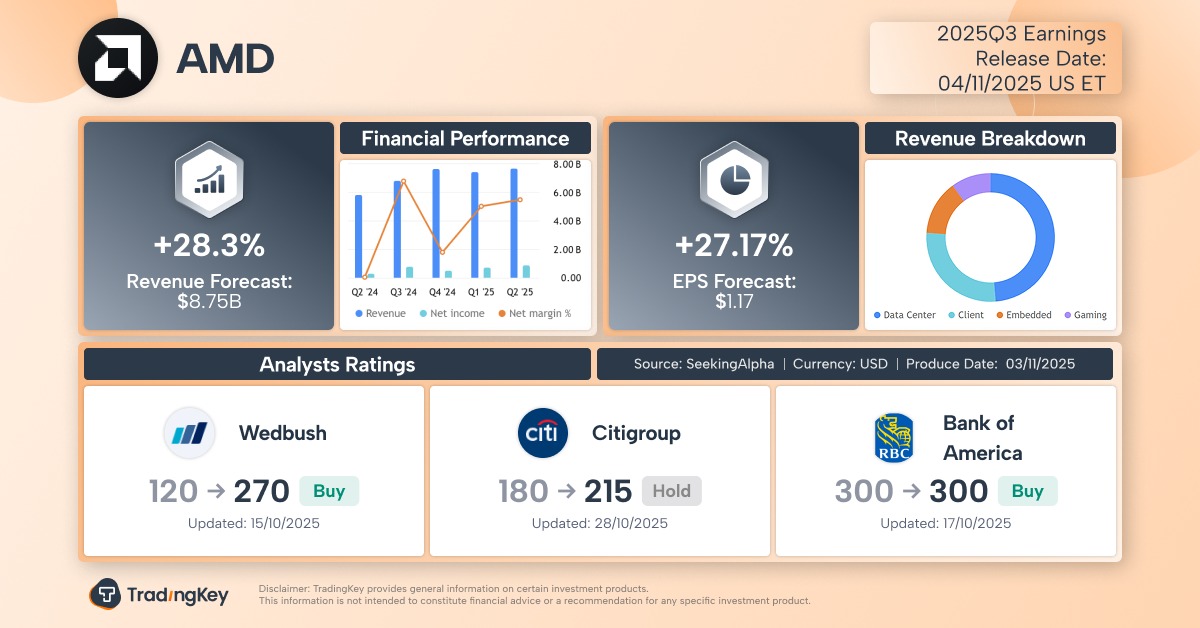
The question “when is AMD earnings?” is usually the first step in a broader tactical analysis. AMD, like most major publicly traded corporations in the United States, follows a standard fiscal year that aligns closely with the calendar year. Their earnings reports are typically released approximately 30 days after the close of each fiscal quarter.
Navigating the Quarterly Cycle
AMD generally reports its results in late January (Fourth Quarter and Full Year), late April (First Quarter), late July (Second Quarter), and late October (Third Quarter). While the exact date is usually confirmed by the company’s investor relations department two to three weeks in advance, seasoned investors look for these windows to prepare their capital allocations. These dates represent a period of heightened transparency where management must answer to shareholders, revealing whether their strategic pivots—such as the massive push into AI accelerators—are actually translating into bottom-line growth.
The Significance of the Earnings Call
The “earnings date” is actually a two-part event: the release of the financial tables and the subsequent conference call. For an investor, the call is where the real value lies. This is when CEO Dr. Lisa Su and CFO Jean Hu provide “guidance”—the company’s internal projections for future performance. In the world of finance, the stock price often reacts less to what happened in the past quarter and more to what management predicts will happen in the next six months. If you are tracking the earnings date, you are essentially tracking the moment the market recalibrates its valuation of the company based on these forward-looking statements.
Managing Volatility Around Disclosure Dates
Earnings season is synonymous with volatility. For AMD, it is not uncommon to see mid-to-high single-digit percentage swings in the share price within minutes of the report hitting the wires. This volatility is driven by the gap between “whisper numbers” (unofficial analyst expectations) and the reported data. For the disciplined investor, knowing the earnings date is a risk management tool. It allows one to decide whether to hold through the “binary event” of the earnings release or to trim positions to mitigate the risk of an unexpected miss.
Key Financial Metrics: Beyond the Topline Revenue
Knowing when the earnings are is only half the battle; knowing what to look for within the report is what separates the amateur from the professional. When AMD releases its statement, the financial community focuses on a few specific metrics that dictate the stock’s intrinsic value.
Revenue Growth and Segment Analysis
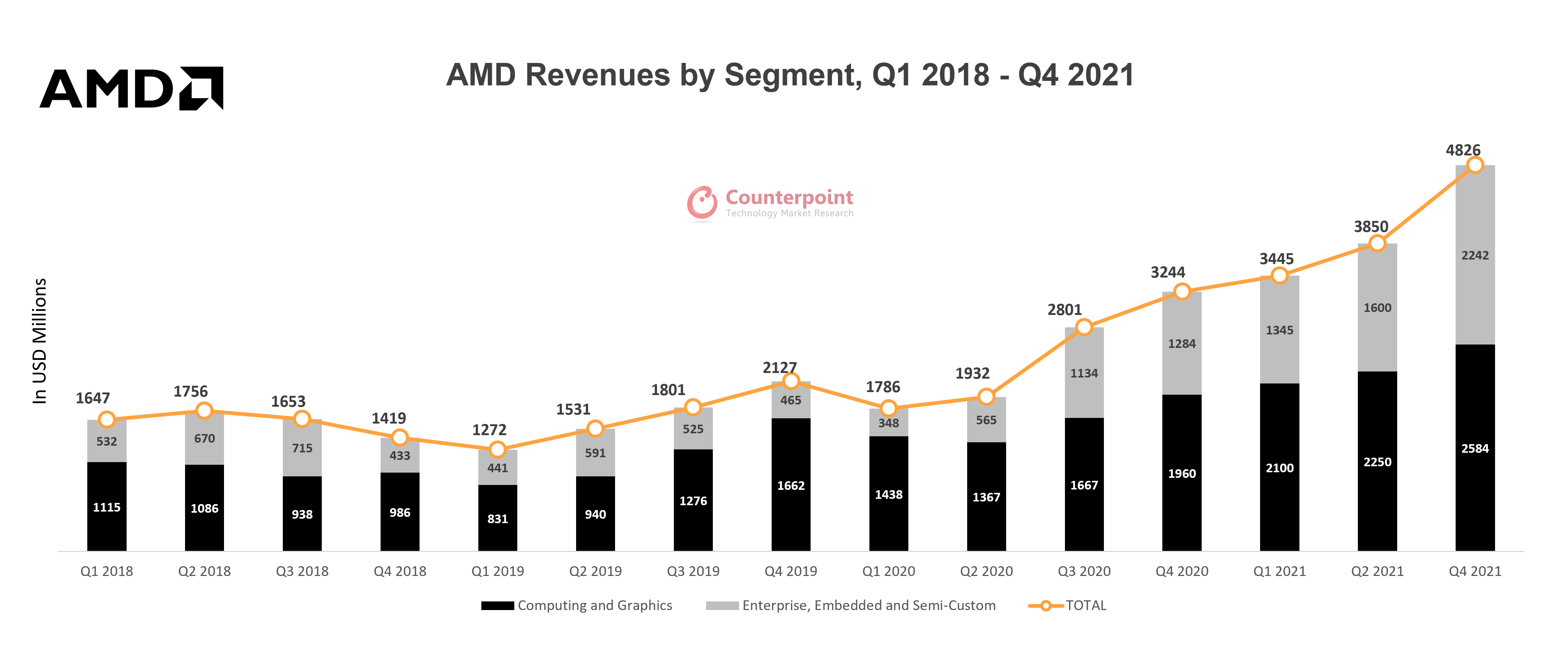
While total revenue is the headline figure, the “Money” perspective requires a deeper dive into revenue segments. AMD currently reports in four primary areas: Data Center, Client (PC chips), Gaming, and Embedded. In the current economic climate, the Data Center segment is the crown jewel. Investors are looking for exponential growth here to justify high Price-to-Earnings (P/E) ratios. If the Data Center revenue is surging while Gaming is lagging, it signals a healthy transition toward high-margin, enterprise-level income streams.
Earnings Per Share (EPS) and Profit Margins
Earnings Per Share is the portion of a company’s profit allocated to each outstanding share of common stock. It is a direct indicator of profitability. However, the sophisticated investor also watches the “Gross Margin.” This percentage represents the revenue remaining after the cost of goods sold. For a high-growth firm like AMD, expanding gross margins (often moving toward the 50-55% range) indicates that the company has “pricing power”—the ability to raise prices without losing customers—which is a hallmark of a dominant financial moat.
Free Cash Flow and Balance Sheet Health
Profits are an accounting metric, but cash is a reality. Free Cash Flow (FCF) is the cash a company generates after accounting for cash outflows to support operations and maintain its capital assets. For AMD, high FCF allows for debt reduction, strategic acquisitions (like the Xilinx merger), and potential future dividends or share buybacks. A healthy balance sheet with a strong cash position ensures that the company can survive cyclical downturns in the semiconductor market without needing to dilute shareholders by issuing more stock.
Navigating the Earnings Season: An Investor’s Playbook
Preparation for an earnings announcement should begin weeks before the actual date. To maximize the potential for returns and minimize the risk of capital loss, investors should follow a structured financial playbook.
Analyzing Consensus Estimates
Wall Street analysts spend months modeling AMD’s performance. The “consensus estimate” is the average of these professional predictions. When the earnings date arrives, the market has already “priced in” these expectations. If AMD meets these numbers exactly, the stock might actually fall if the market was hoping for a “beat.” Investors must look at the “earnings surprise” history to see if AMD has a track record of over-delivering, which can provide a psychological cushion for the stock price.
The Role of Institutional Ownership
AMD is a favorite among institutional investors—hedge funds, pension funds, and mutual funds. These large-scale players often adjust their positions in the days leading up to the earnings report. By monitoring institutional “accumulation” or “distribution” (buying or selling trends), a retail investor can get a sense of the big-money sentiment. High institutional ownership generally provides more stability, but it also means that if the company misses its targets, the sell-off can be aggressive as these large funds rebalance their portfolios.
Hedging and Options Strategies
For those who are concerned about the volatility of the earnings date but do not want to sell their long-term positions, the financial markets offer tools like options. Buying a “put” option can act as an insurance policy, protecting the investor if the stock price plummets after the earnings call. Alternatively, some investors use “straddles” to profit from the volatility itself, regardless of which direction the stock moves. These are advanced financial maneuvers, but they underscore the importance of the earnings date as a focal point for capital strategy.
Macroeconomic Influences on AMD’s Financial Outlook
No company exists in a vacuum. When AMD reports its earnings, the numbers are often a reflection of larger macroeconomic trends that every investor must consider.
Interest Rates and Capital Expenditures
The Federal Reserve’s interest rate policy has a direct impact on growth stocks like AMD. Higher interest rates increase the “discount rate” used by analysts to value future cash flows, which can lower the current stock price even if the company is performing well. Furthermore, AMD’s primary customers—large cloud service providers like Microsoft, Google, and Amazon—make their buying decisions based on their own cost of capital. When you see the earnings report, you are seeing the end result of these global monetary shifts.
Supply Chain Economics and Inflation
The cost of manufacturing chips at foundries like TSMC is subject to inflationary pressures. If AMD’s “Cost of Goods Sold” rises faster than its revenue, margins will compress, and the stock will likely suffer. Investors should look for commentary in the earnings report regarding supply chain stability. In the “Money” niche, understanding the “cost of capital” and “input costs” is just as vital as understanding the product itself.
Global Market Share and Competitive Positioning
Finally, AMD’s earnings are a report card on its battle against competitors like Intel and Nvidia. Finance is a zero-sum game in many respects; if AMD is gaining market share in the server room, it is likely doing so at the expense of a competitor’s bottom line. The earnings report will often detail market share gains, which are a leading indicator of long-term financial dominance. Investors want to see that AMD is not just growing, but growing faster than the industry average, suggesting an increasing “share of wallet” among enterprise spenders.
Conclusion: The Strategic Importance of the Earnings Milestone
The question “when is AMD earnings?” is more than a simple calendar query; it is a gateway into a complex world of financial analysis, risk management, and strategic planning. For the dedicated investor, the earnings report is the most critical piece of data available. It is the moment where the narrative of “innovation” meets the reality of “profitability.”
By focusing on the timing of these disclosures, the specific financial metrics that drive value, and the broader macroeconomic context, investors can move beyond speculation and toward a disciplined, wealth-building strategy. AMD continues to be a central figure in the global financial markets, and its quarterly reports will remain a primary catalyst for market movement. Whether you are a long-term “buy and hold” investor or a tactical swing trader, staying attuned to the AMD earnings cycle is an essential component of professional financial management. Always remember: in the world of investing, information is the most valuable currency, and the earnings report is the gold standard of information.
aViewFromTheCave is a participant in the Amazon Services LLC Associates Program, an affiliate advertising program designed to provide a means for sites to earn advertising fees by advertising and linking to Amazon.com. Amazon, the Amazon logo, AmazonSupply, and the AmazonSupply logo are trademarks of Amazon.com, Inc. or its affiliates. As an Amazon Associate we earn affiliate commissions from qualifying purchases.