
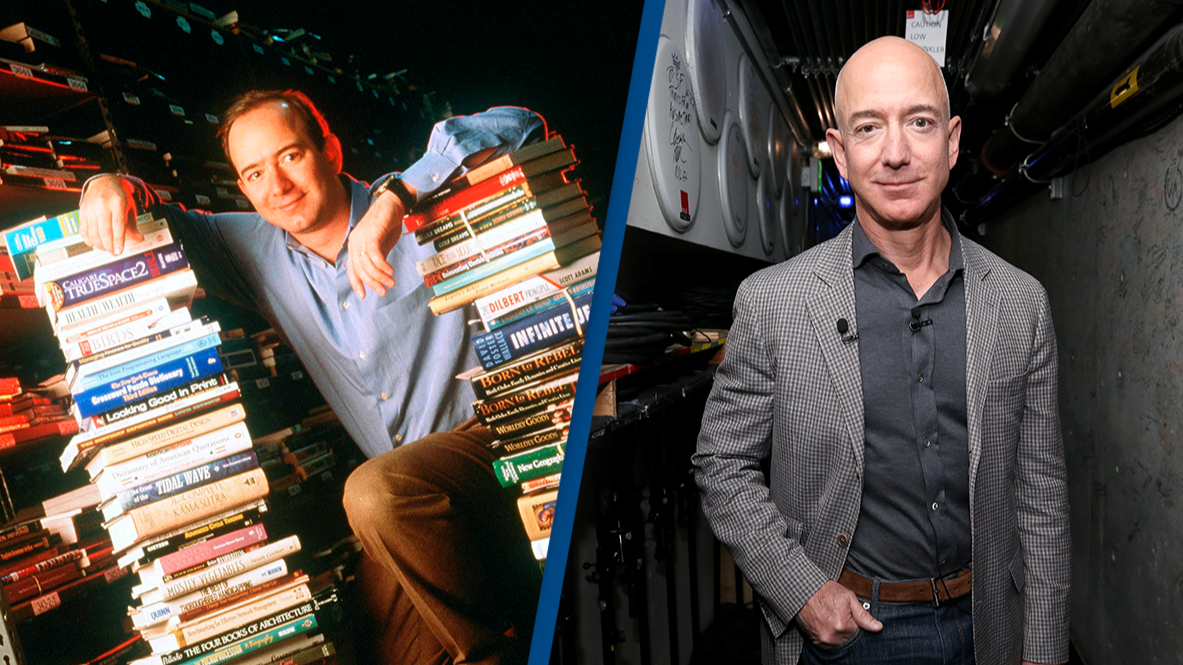
When Jeff Bezos sat in his Bellevue, Washington garage in July 1994, the concept of “The Everything Store” was little more than a meticulous business plan printed on a few sheets of paper. Today, Amazon stands as a global financial juggernaut, a member of the elite trillion-dollar market capitalization club, and a cornerstone of millions of investment portfolios. Understanding when Amazon was founded is more than a chronological fact; it is a lesson in business finance, aggressive capital reinvestment, and the power of long-term value creation.

This article explores the financial journey of Amazon, beginning with its 1994 inception, its high-stakes IPO, and the strategic financial decisions that allowed a struggling online bookseller to redefine the modern economy.
The Founding Capital: Seeding the “Everything Store” in 1994
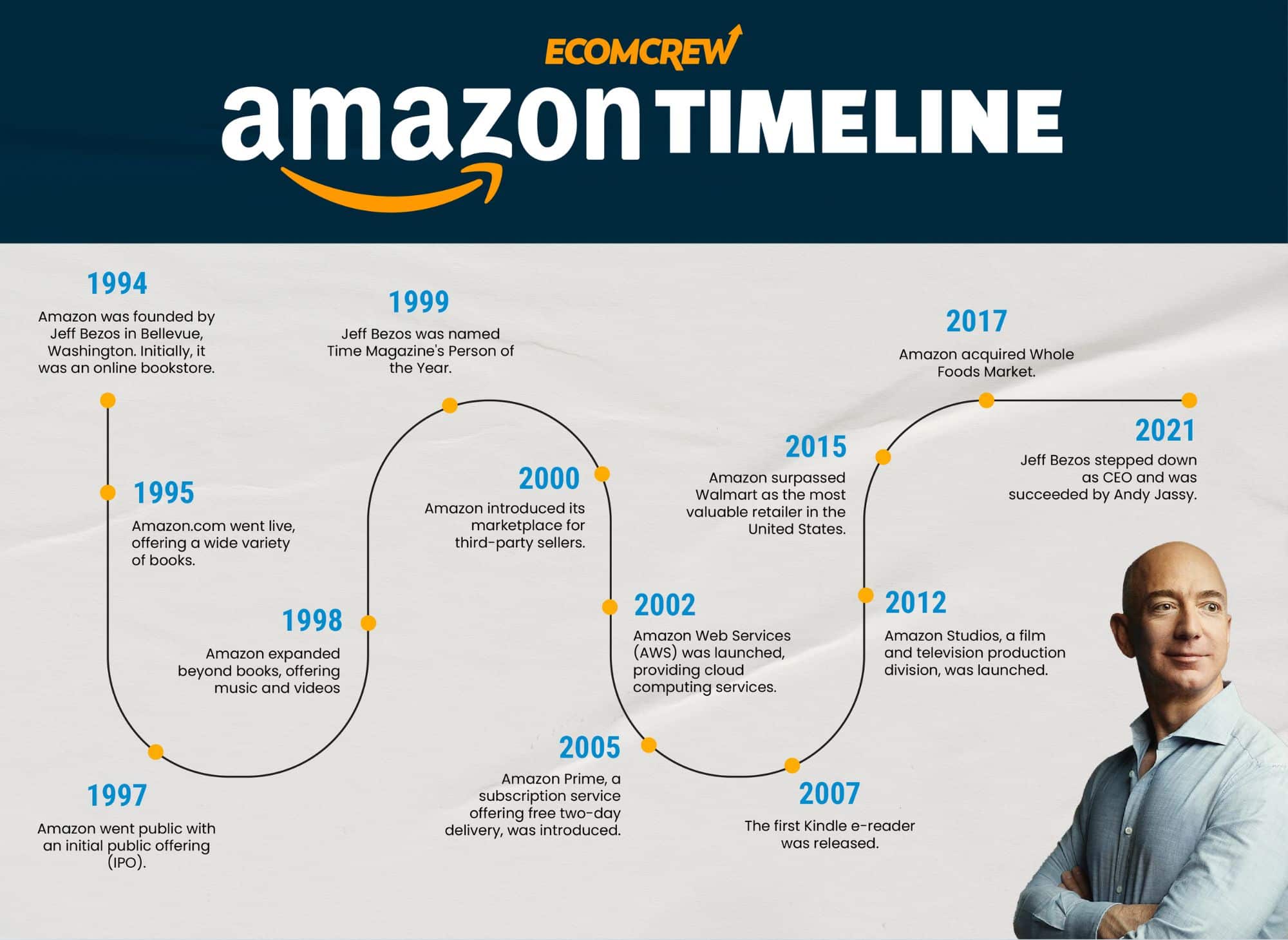
Amazon was officially incorporated on July 5, 1994. However, the financial story began months earlier when Jeff Bezos, then a senior vice president at the hedge fund D.E. Shaw & Co., noticed a startling statistic: the World Wide Web was growing at a rate of 2,300% per year. From a business finance perspective, Bezos recognized an arbitrage opportunity that was too significant to ignore.
Initial Investment and the $10,000 Starting Point
While many startup myths suggest Amazon was built on nothing, the reality is a masterclass in early-stage capital allocation. Bezos initially invested $10,000 of his own money into the venture, but he quickly realized that a garage-based operation would require significantly more “runway” to survive the logistical challenges of the 1990s internet.
In the early months, the financial structure of the company was precarious. Bezos held dozens of meetings with local investors, many of whom were skeptical of the internet’s commercial viability. He famously warned early investors that there was a 70% chance they would lose their entire investment. This transparency in risk assessment is a hallmark of sophisticated business finance, ensuring that the capital raised is “patient capital.”
The Role of Early Investors and Family Support
One of the most critical financial turning points occurred in 1995 when Bezos’s parents, Jackie and Miguel Bezos, invested approximately $245,000 into the company. At the time, this was a massive gamble on a son’s vision rather than a proven business model.
From a modern investing standpoint, this seed round is legendary. Had those early shares been held through the various splits and the company’s meteoric rise, that initial quarter-million-dollar investment would be worth tens of billions today. This early injection of liquidity allowed Amazon to move out of the garage and into a larger warehouse, providing the operational capacity to scale beyond a simple beta-test website.
Going Public: The 1997 IPO and the Era of Growth over Profit
By 1997, Amazon had grown rapidly, but it was not yet profitable. In the world of 1990s finance, companies generally sought profitability before seeking a public listing. Amazon, however, chose a different path, opting for an Initial Public Offering (IPO) on May 15, 1997.
The Dot-com Boom and Amazon’s Strategic Listing
Amazon went public at a price of $18 per share, trading under the ticker symbol AMZN on the NASDAQ. The IPO raised $54 million, giving the company a market valuation of $438 million. For many investors at the time, the valuation seemed astronomical for a company that was losing money.
However, the 1997 IPO was a strategic financial move designed to build a “moat.” By securing public capital early, Amazon could outspend its competitors in customer acquisition and infrastructure. This period marked the beginning of Bezos’s famous annual letters to shareholders, where he emphasized that Amazon would prioritize “long-term market leadership” over “short-term profits or Wall Street reactions.”
Reinvesting Revenue: The Philosophy of Long-Term Value
For nearly two decades following its founding, Amazon was frequently criticized by financial analysts for its lack of net income. To the untrained eye, the company appeared to be failing. To a student of business finance, however, Amazon was performing a brilliant maneuver: they were zeroing out their tax liability by aggressively reinvesting every dollar of gross profit back into the business.
This strategy—prioritizing free cash flow over GAAP (Generally Accepted Accounting Principles) earnings—allowed Amazon to build a massive logistics network and develop new business lines without taking on excessive high-interest debt. The company was essentially using its own revenue as an internal venture capital fund.
Diversification as a Wealth Engine: Beyond E-commerce
The financial stability of Amazon changed forever when it stopped being just a retail store. After the 2000 dot-com crash, where Amazon’s stock price plummeted from over $100 to below $10, the company had to prove it could generate diversified income streams to survive.
The AWS Goldmine: Transforming Infrastructure into Income
Perhaps the greatest financial pivot in corporate history was the launch of Amazon Web Services (AWS) in 2006. Initially an internal tool to manage Amazon’s own servers, AWS was opened to other businesses as a cloud computing service.
From a profit margin perspective, AWS was a revelation. While the retail side of Amazon operated on razor-thin margins (often 1% to 3%), AWS boasted operating margins of 25% to 30%. Today, AWS is the engine that powers Amazon’s bottom line, often providing the majority of the company’s operating income despite representing a smaller fraction of total revenue. This high-margin business provides the financial “cushion” that allows Amazon to experiment in other sectors, such as healthcare and entertainment.
Acquisitions and Capital Allocation Strategies
Amazon’s financial growth has also been defined by its calculated acquisitions. The $13.7 billion purchase of Whole Foods in 2017 was a landmark move in capital allocation, signaling Amazon’s intent to dominate the grocery sector and integrate its Prime subscription model into physical retail.
Each acquisition—from Zappos to MGM Studios—is vetted through the lens of increasing the “flywheel” effect. In finance, this refers to a business model where each component strengthens the others, ultimately driving down costs and increasing customer lifetime value. For investors, this creates a compounding effect that is difficult for competitors to disrupt.
Amazon’s Stock Performance: A Case Study in Compound Interest
For the personal finance community, Amazon is the ultimate “ten-bagger” and beyond. It is the gold standard for what happens when an investor identifies a disruptive force early and holds through periods of intense volatility.
Split History and Shareholder Value
Over its history, Amazon has undergone several stock splits, most notably the 20-for-1 split in 2022. These splits do not change the fundamental value of the company, but they increase liquidity and make the shares more accessible to retail investors.
If an investor had purchased just $1,000 worth of stock at the 1997 IPO and held it, that investment would be worth millions today. This performance highlights the importance of “time in the market” over “timing the market.” Despite the 90% drop during the dot-com bust and several 20-30% corrections since then, the trajectory has remained overwhelmingly positive due to the company’s fundamental financial health.
Lessons for the Modern Investor
The history of Amazon since its 1994 founding offers several key takeaways for those interested in personal finance and investing:
- Cash Flow is King: Look for companies that generate strong free cash flow, even if their net income looks low due to reinvestment.
- The Power of Scalability: Businesses that can grow their revenue faster than their expenses (like AWS) create the most significant shareholder wealth.
- Visionary Leadership: Financial success is often tied to leadership that is willing to be misunderstood for long periods.
In conclusion, the question of when Amazon was founded is the starting point of a complex financial narrative. From a $10,000 personal investment to a multi-trillion-dollar empire, Amazon’s journey is a testament to the power of strategic capital allocation and the relentless pursuit of long-term value. For any investor or business enthusiast, the Amazon story remains the definitive case study in how to build, scale, and sustain wealth in the digital age.
aViewFromTheCave is a participant in the Amazon Services LLC Associates Program, an affiliate advertising program designed to provide a means for sites to earn advertising fees by advertising and linking to Amazon.com. Amazon, the Amazon logo, AmazonSupply, and the AmazonSupply logo are trademarks of Amazon.com, Inc. or its affiliates. As an Amazon Associate we earn affiliate commissions from qualifying purchases.