
In the world of personal finance, travel often represents one of the largest discretionary expenses in a household budget. While the desire to explore new horizons is universal, the price of entry—specifically airfare—is notoriously volatile. For the financially savvy traveler, mastering the art of the “cheap flight” is not merely about finding a bargain; it is about strategic capital allocation and maximizing the return on investment for every dollar spent on leisure or business.
Understanding when flights are cheapest to book requires a deep dive into the intersection of market economics, consumer behavior, and financial planning. By treating airfare as a dynamic asset class rather than a static purchase, you can significantly reduce your annual travel spend, freeing up capital for investments, savings, or further experiences.

The Economics of Airfare Pricing: Understanding the Market
To understand when to book, one must first understand how airlines price their inventory. Airlines utilize sophisticated revenue management systems that adjust prices in real-time based on supply, demand, and historical data. This is known as dynamic pricing. From a financial perspective, an airline seat is a “perishable good”—once the plane takes off, the value of an empty seat drops to zero.
Understanding Dynamic Pricing Models
Airlines categorize their seats into “fare buckets.” For every flight, a certain number of seats are allocated to the lowest price tier. As these are sold, the system automatically moves to the next, more expensive bucket. This is why prices rarely drop as the departure date approaches; the airline is betting that last-minute business travelers, whose demand is “inelastic” (meaning they will pay whatever it takes), will fill the remaining seats at a premium.
The “Goldilocks Window” for Domestic vs. International Travel
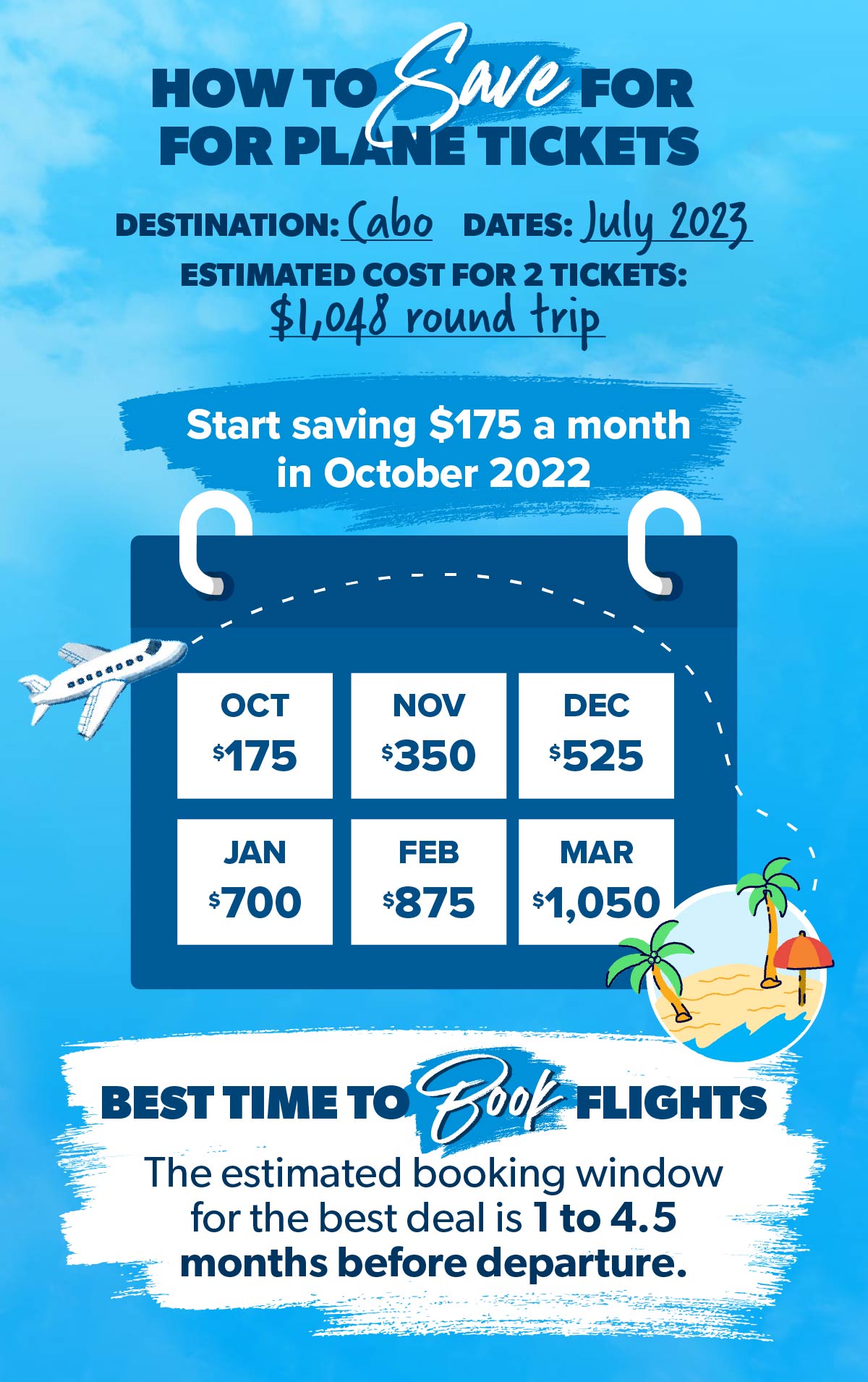
From a budgetary standpoint, timing your purchase is about hitting the “Goldilocks Window”—not too early, and not too late. For domestic travel, historical financial data suggests that the optimal booking window is between one and three months before departure. For international travel, the window expands to two to eight months.
Booking outside these windows often results in a “convenience premium.” If you book a year in advance, the airline hasn’t yet released its most competitive promotional fares. If you book two weeks before, you are caught in the high-demand surge. Recognizing these windows allows you to forecast your travel expenses with greater accuracy.
Strategic Timing: Data-Driven Booking Windows
While the “Tuesday at midnight” myth has largely been debunked by modern algorithms, the day of the week you choose to fly remains a critical variable in your personal finance strategy. The goal is to align your travel with periods of low demand to capitalize on lower pricing tiers.
Seasonal Fluctuations and the Impact on Personal Budgets
Travel costs are heavily influenced by the school calendar and major holidays. From a wealth-management perspective, traveling during “shoulder season”—the period between peak and off-peak seasons—offers the highest value. For example, visiting Europe in late September or October provides a similar experience to July but at a 30-40% discount on airfare. This reduction in cost directly improves your personal net cash flow for the quarter.
Mid-Week vs. Weekend Savings
Statistical analysis of flight data consistently shows that flying on Tuesdays and Wednesdays is significantly cheaper than flying on Fridays or Sundays. For a family of four, the price differential between a Wednesday departure and a Friday departure can often exceed $400. In terms of side hustles or hourly earnings, the “effort” of adjusting your schedule by 48 hours can yield a tax-free “return” that rivals a high-yield savings account’s annual interest.
Leveraging Financial Tools and Credit Optimization
In the modern financial landscape, the “price” of a flight is not always measured in fiat currency. Strategic use of financial tools and credit card ecosystems can reduce the out-of-pocket cost of airfare to nearly zero.
Maximizing Travel Rewards and Credit Card Points
For those with disciplined spending habits, travel rewards credit cards are essential financial tools. By funneling everyday expenses through cards that offer high multiples on travel or dining, consumers can accrue “points” or “miles” that act as a secondary currency.
When determining when flights are cheapest to book, the savvy investor also looks at “redemption value.” Sometimes, a flight might be expensive in cash but remains at a standard “saver” rate in miles. This arbitrage opportunity allows you to preserve your cash reserves while utilizing an asset (points) that is subject to inflation and devaluation if left unused.
Utilizing Price Tracking and Cashback Portals
Financial technology has provided consumers with powerful tools like price aggregators and tracking software. Setting up alerts for specific routes allows you to outsource the labor of monitoring market fluctuations. Furthermore, using cashback portals before clicking “purchase” on an airline website can provide a 1% to 5% rebate on the total cost. While this seems small, for a $2,000 international flight, a $100 rebate is a meaningful contribution to your travel budget or an automated investment account.
The Hidden Costs of “Cheap” Flights: A Total Cost Analysis
In personal finance, the lowest price is not always the best value. A “cheap” flight can quickly become an expensive mistake if you fail to account for ancillary fees and the opportunity cost of your time.
Evaluating Ancillary Fees and Opportunity Costs
The rise of Ultra-Low-Cost Carriers (ULCCs) has introduced “unbundled” pricing. A $49 flight may seem like a bargain, but once you add fees for a carry-on bag, seat selection, and a printed boarding pass, the total cost may exceed that of a legacy carrier.
From a business finance perspective, you must calculate the “Total Cost of Ownership” (TCO) for the flight. If a cheaper flight requires a six-hour layover or an airport change, you must factor in the cost of meals, transportation, and, most importantly, the value of your time. If you value your time at $50 an hour, a six-hour delay costs you $300 in “time equity.”
Strategic Stopovers vs. Direct Flights: A Cost-Benefit Analysis
Sometimes, booking a flight with a long stopover can be used as a financial strategy to visit two destinations for the price of one. Many national carriers offer free stopover programs (e.g., in Iceland, Panama, or Singapore). By leveraging these, you effectively double the utility of your airfare spend, increasing the “lifestyle ROI” of your travel budget.
Advanced Budgeting for Frequent Flyers
For those who view travel as a consistent part of their lifestyle, airfare should not be a surprise expense. It should be an integrated part of a long-term financial plan.
Sinking Funds for Annual Travel
A “sinking fund” is a strategic way to save for a specific expense over time. By calculating your expected annual travel costs and dividing by 12, you can automate transfers to a dedicated high-yield savings account. This ensures that when the “Goldilocks Window” opens for a cheap flight, you have the liquid capital ready to book immediately without relying on high-interest credit card debt. Being “cash-ready” is the best way to capitalize on flash sales and unexpected price drops.
Investing in Annual Travel Insurance and Memberships
If you travel more than twice a year, the financial math often favors annual investments over per-trip expenses. Annual travel insurance policies are frequently more cost-effective than buying coverage for each individual flight. Similarly, airline club memberships or lounge access via premium credit cards can save hundreds of dollars on airport dining and provide a productive environment for work, effectively turning “dead time” into billable or productive hours.

Conclusion: The Wealth-Building Power of Strategic Booking
Mastering the timing of airfare purchases is a foundational skill in the pursuit of financial independence. It requires a shift in mindset: seeing a plane ticket not as a fixed cost, but as a market-driven commodity that can be optimized through data, timing, and financial tooling.
By booking within the optimal windows, flying on off-peak days, leveraging credit rewards, and accounting for the total cost of travel, you transform travel from a “drain” on your finances into a manageable, high-value component of your life. In the end, the money saved on airfare is more than just extra cash—it is the capital that funds your next investment, your retirement, or your next great adventure. The goal is to see the world without compromising your financial future, and that begins with knowing exactly when to click “buy.”
aViewFromTheCave is a participant in the Amazon Services LLC Associates Program, an affiliate advertising program designed to provide a means for sites to earn advertising fees by advertising and linking to Amazon.com. Amazon, the Amazon logo, AmazonSupply, and the AmazonSupply logo are trademarks of Amazon.com, Inc. or its affiliates. As an Amazon Associate we earn affiliate commissions from qualifying purchases.